


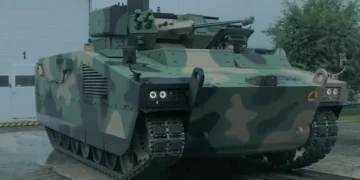













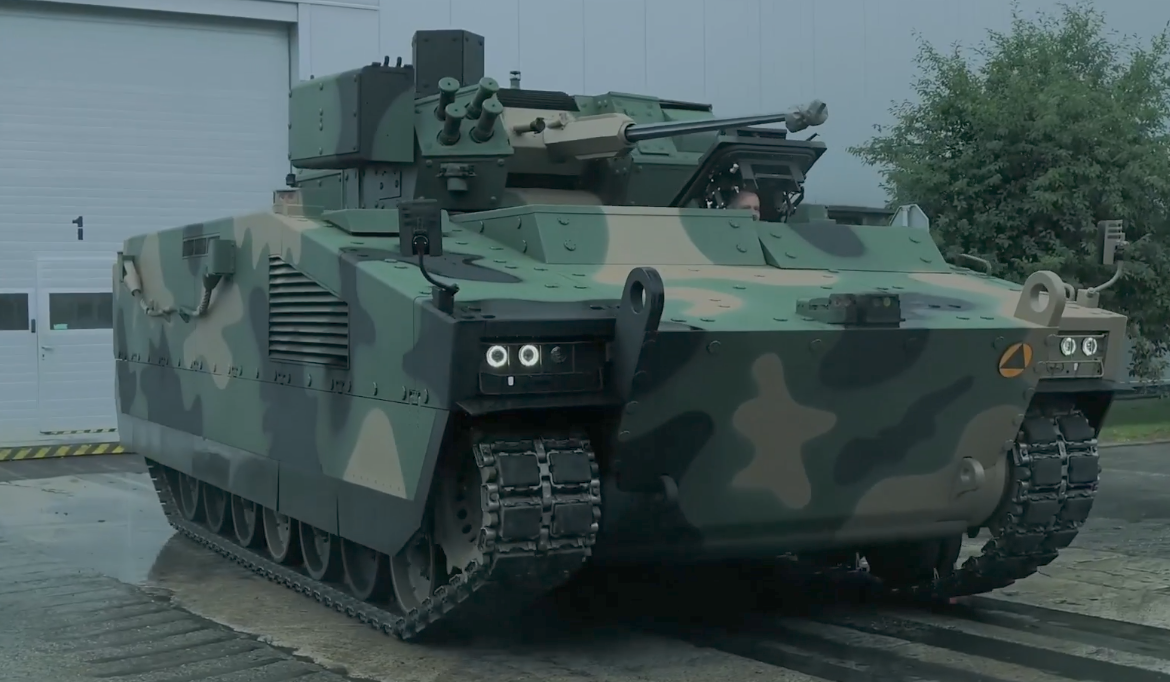
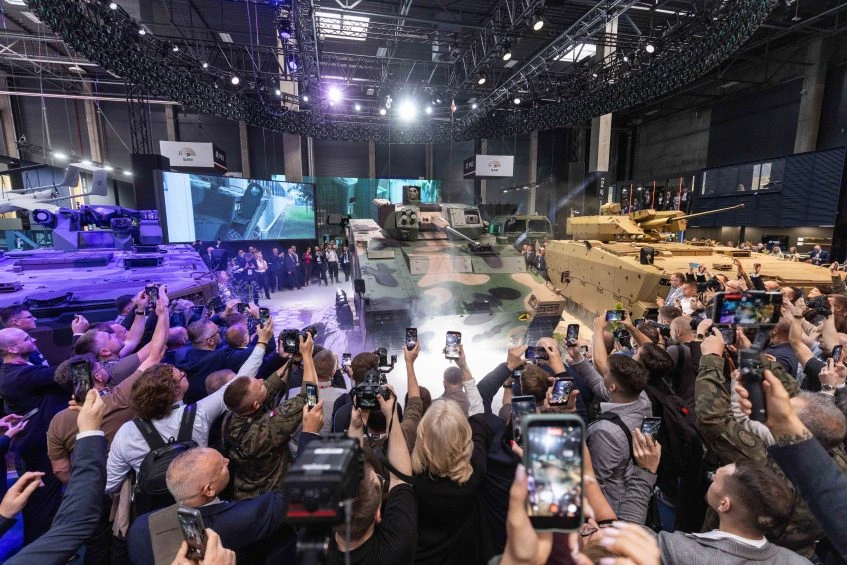
The Frontline Armoured Combat Vehicle CBWP made its world premiere at the Polska Grupa Zbrojeniowa stand during MSPO 2026, featuring a 30 mm cannon and SPIKE missiles integrated with the ZSSW‑30 turret system.

The frontline armoured combat vehicle, designed for enhanced survivability, weighs over 40 tonnes and is equipped with a 30 mm remote controlled turret and SPIKE anti‑tank guided missiles, marking a new threshold in Poland’s land systems industry. Poland’s record high defence spending and military modernisation efforts form the backdrop for such domestic platform investments. Polska Grupa Zbrojeniowa unveiled the full‑scale, mobile technology demonstrator of the CBWP at the MSPO fair in Kielce on 8 September 2026. The project, which was announced last year with a 1:4 scale model, has now been realised with this year’s delivery.
Design and Weapon System Differentiated from Borsuk
The vehicle, designed at Huta Stalowa Wola, is tasked with the safe transport, protection and direct fire support of mechanised infantry units. Unlike the Borsuk infantry fighting vehicle, the decision to forgo amphibious capability allowed the design team to achieve a significant increase in ballistic and mine protection. With an extended tracked chassis and an up‑to‑date drive system, tactical manoeuvrability is maintained while the vehicle’s weight places it in the heavy class of armoured combat vehicles within NATO inventories. This development stands out as part of the land forces modernisation effort, which was recently exemplified by the delivery of 28 K2 tanks to Poland.
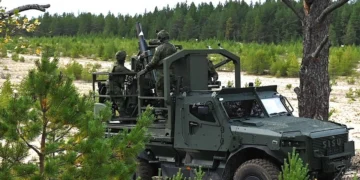
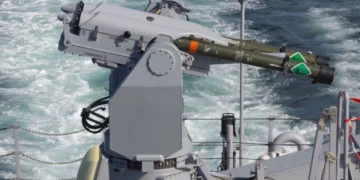
The vehicle’s main weapon system consists of the ZSSW‑30 remote controlled turret, known from the Borsuk and KTO families. In addition to the 30 mm cannon, the integration of SPIKE anti‑tank guided missiles and programmable ABM ammunition provides effective fire against aerial targets and personnel groups. Day/night sighting and firing systems enhance crew situational awareness while keeping the operator in a safer position.
Protection Systems, Capacity and Common Components
On the protection side, the vehicle is equipped with STANAG‑compliant ballistic and mine protection, OBRA‑3 laser warning modules, integration with smoke grenade launchers, and an NBC filtration system. Special seats designed to mitigate mine blast effects and an APU generator that can operate independently of the engine ensure both crew safety and uninterrupted power supply for electronic systems. This approach also eliminates the need for a hydraulic infrastructure, laying the groundwork for future integration of laser weapon systems. The vehicle has a crew of three and can carry six to eight fully equipped troops.
With cost and logistics unification in mind, HSW directly transferred components such as the APU, filtration, heating, periscopes and lighting from the Borsuk platform. Thanks to its modular design, variants compatible with turret systems other than the ZSSW‑30, as well as special mission versions, could also be considered in the future.
PGZ President Adam Leszkiewicz stated that the unveiling is an important step for both PGZ and the Polish defence industry, while HSW President Barbara Cena emphasised that the project builds on experience gained from the Borsuk programme. PGZ subsidiaries continue to expand Poland’s industrial capacity in land platforms across different fronts, as seen in the example of the maintenance centre established for the Abrams tank engine.
Prototype in 2027, Series Production Target in 2029
The project schedule envisions prototype completion in 2027, with preparations for series production to be in place by 2029. In the coming period, full integration of the powertrain and tests conducted in real field conditions will be prioritised, with a particular focus on the comprehensive validation of armour and mine protection systems. The project stands out as one of the examples strengthening the domestic production pillar of Poland’s arms procurement strategy.
🔍 You may also like
Source: C4Defence–PGZ