















Our Poland Country Report series, whose first installment we published last month, continues with a look at Warsaw’s defence strategy. The Suwałki Corridor, squeezed between Kaliningrad and Belarus; the country’s lack of strategic depth; and defence spending that has reached record levels Eren Karaduman writes the second installment of the series for C4Defence, examining the race between Poland’s military structure and the country’s geographic fate.

Geographic Analysis
Poland’s core geographic problem is that it sits on the North European Plain, a vast stretch of flatland running through Germany and Poland toward Belarus, Ukraine and Russia. There is no natural barrier running across the country, so its defensive depth is severely limited. Historically, Poland has been a battlefield precisely because of the flat terrain and absence of natural obstacles on the North European Plain. In 1939 this geography offered the Wehrmacht an ideal setting for mechanized Blitzkrieg, while giving Polish defenders very limited means of resistance.
The Sudetes and the Carpathians are the only region of Poland with any real defensive depth. These mountain ranges are less a solid wall than a barrier crossed by several passes.
Poland’s western border with Germany is drawn by the Oder and Neisse rivers. The most important reason the rivers were chosen as the border was that they formed a shorter and more defensible line than the fragmented post–World War II frontier would otherwise have been.
South of the lake belt, the region connecting to Belarus and Ukraine is a relatively open, flat-to-gently-rolling plain. This gives an attacking force room to maneuver, mass its forces and outflank the defender, while offering the defender very few natural strongpoints. The Bug River shields part of the line, but it runs largely parallel to the border rather than along an axis of advance. This is the stretch where Poland has both the least natural protection and the least strategic depth.
The capital itself sits in an unfavorable position from a defensive standpoint. Warsaw lies in the east-central part of the country, on the Vistula, roughly 200 km from the Belarusian border. That means the capital — along with a large share of the population, the seat of government and key industrial areas — sits close to the country’s hardest-to-defend eastern frontier.
In the northeast, the Masurian Lake District, the Augustów Forest and the Biebrza marshes form rugged terrain thick with lakes, forests and wetlands. This channels any mechanized force into a small number of predictable bottlenecks.
The single most analyzed chokepoint on Poland’s borders is the Suwałki Gap. It is a roughly 65-km, irregularly shaped stretch of border between Kaliningrad and Belarus, and it is the only land link between the three Baltic states and the rest of NATO. Bounded by Kaliningrad to the northwest and Belarus to the southeast, a coordinated Russian-Belarusian pincer could in theory sever the corridor and cut the Baltics off entirely. In 2015, then–commander of U.S. Army Europe Lieutenant General Ben Hodges described it as one of the most vulnerable spots on the map. The terrain here poses obstacles to attacker and defender alike: the low hills, lakes (Hańcza, Wigry), forest (Augustów) and marshland in the area complicate not just an assault but also reinforcement and resupply for a defending force. The biggest problem for Poland is that, once lost, the corridor would be extremely difficult to retake.
Russia’s Kaliningrad exclave sits like a permanently militarized fortress on Poland’s northern border. In 2018 Russia permanently stationed an Iskander-M missile brigade of roughly twelve launchers there. The exclave also hosts S-400 and S-300 long-range air defences, Pantsir-S point-defence systems, Bastion-P and Kh-35 coastal anti-ship missile systems, MiG-31 fighters capable of carrying Kinzhal hypersonic missiles, and the headquarters and main base of the Baltic Fleet. Some of these systems deployed in Kaliningrad could strike Warsaw within minutes in the event of a conflict, and they also pose a considerable threat to the air and sea approach routes NATO would need in order to reinforce its Baltic forces and the Suwałki Corridor. The war in Ukraine has been the single biggest factor easing this threat: Kaliningrad’s garrison numbered around 20,000 personnel in early 2022, but after the 11th Army Corps was sent to Ukraine in spring 2022 and suffered heavy losses near Kharkiv, Russian ground forces in the region fell by roughly 80 percent. Although air and ground assets remain present, NATO now regards Kaliningrad as a serious but manageable threat.
Poland’s 440-km Baltic coastline gives the country two key ports: the larger Gdańsk/Gdynia at the mouth of the Vistula, and the smaller Szczecin/Świnoujście in the northwest, both used for reinforcement and resupply. The biggest threat to these ports is that both fall within range of Kaliningrad’s anti-ship and air-defence systems. The coastline itself — including the Hel Peninsula, Wolin Island and the Vistula Lagoon (shared with Russia) — also carries the risk of amphibious landings.
Poland’s road and rail networks are concentrated in the west and center of the country, with roughly 421,000 km of roads and 19,600 km of rail lines overall — but the network thins out considerably in the northeast. That reinforces the channeling effect of the region’s lakes and forests and limits the ability of defending forces to maneuver toward the Suwałki Corridor. The large forested area in the east offers concealment to both defenders and infiltrating forces alike. Today, the growing prevalence of drones, combined with mines and prepared fortifications, can give even a defender positioned in open terrain a serious advantage.
Armed Forces Structure
Under Article 134 of the 1997 Constitution, the President of Poland also serves as Supreme Commander of the Armed Forces (Zwierzchnik Sił Zbrojnych). In peacetime, however, this authority is largely ceremonial, and administrative and operational control of Poland’s military structure runs through the Minister of National Defence. Since December 2023 that post has been held by Władysław Kosiniak-Kamysz, leader of the Polish People’s Party (PSL) and also Deputy Prime Minister. In the event of war, the President — on the recommendation of the Prime Minister — appoints a Commander-in-Chief (Naczelny Dowódca) to direct the armed forces and may declare general mobilization.
The Polish Armed Forces (Siły Zbrojne RP) consist of the following components:
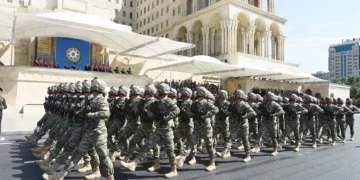
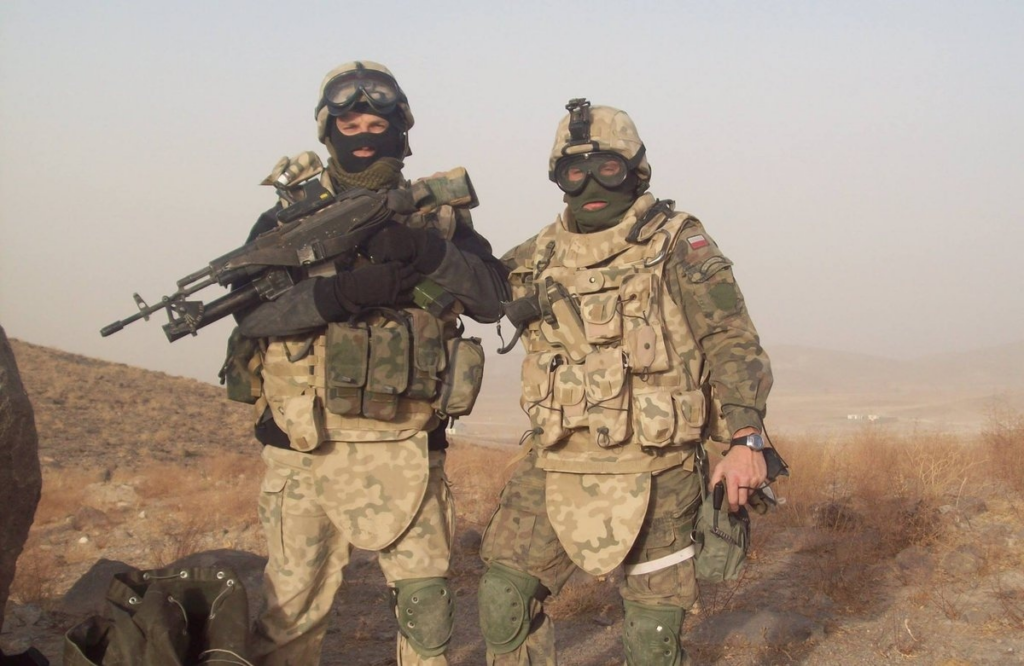
- Land Forces (Wojska Lądowe): The largest branch of the armed forces, with roughly 110,000 personnel. It has undergone particularly intensive modernization and rearmament since the war in Ukraine began.
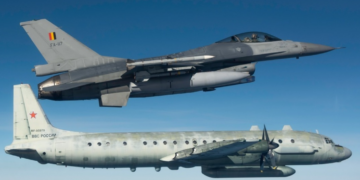
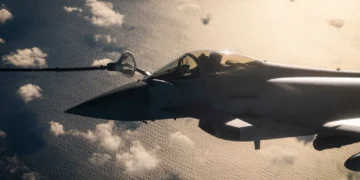
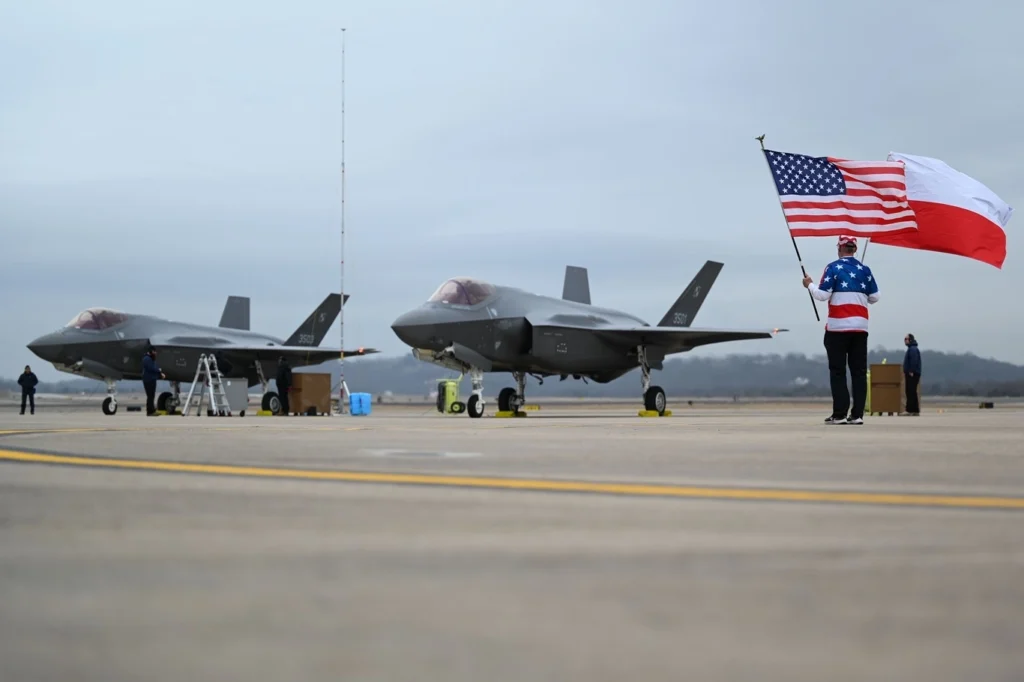
- Air Force (Siły Powietrzne): Like the land forces, it has been rapidly modernizing since 2022. The biggest step in this process was the order for 32 F-35A Husarz aircraft.
- Navy (Marynarka Wojenna): The smallest branch of the armed forces, focused mainly on mine warfare in the Baltic Sea and on using submarines to interdict Russian vessels.
- Special Forces (Wojska Specjalne): Organized as a distinct “mini-SOCOM” under the Special Operations Component Command (DKWS) in Kraków, made up of GROM, JWK, FORMOZA, NIL and AGAT.
- Territorial Defence Force (WOT): A volunteer homeland-security/militia force established in 2016. As of early 2025 it numbered roughly 40,000 personnel, organized into brigades across 16 voivodeships, with a target strength of around 50,000.
- Cyberspace Defence Forces (Wojska Obrony Cyberprzestrzeni): Established in 2022 as a separate branch under General Karol Molenda, though its functionality and operational scope remain fairly limited.
The Polish Armed Forces have a total of roughly 200,000 personnel, including reserves, making Poland NATO’s third-largest army after Turkey and the United States. Under the goals set out in the March 2022 Homeland Defence Act, the plan is to reach around 300,000 active personnel (500,000 including reserves). Many Polish analysts, however, argue that given constraints on equipment, training and demographics, the 300,000 figure will remain an unreachable aspiration. The Tusk government has also approached this target with less enthusiasm than the previous PiS government did.
Poland’s defence spending has climbed sharply as planned, from roughly 2.2% of GDP in 2021 to 4.8% in 2026. This financial push has allocated a budget of roughly 200 billion zloty (about $55 billion) to Poland’s modern military structure. These investments are funded both through the regular Ministry of National Defence budget voted by the Sejm and through the off-budget Armed Forces Support Fund (Fundusz Wsparcia Sił Zbrojnych, FWSZ), created under the 2022 Homeland Defence Act and managed by the state development bank Bank Gospodarstwa Krajowego (BGK). The FWSZ finances large-scale procurement through loans and bonds outside normal fiscal limits — which is also the system’s chief vulnerability. In the 2026 plan, a significant share of defence spending (roughly 36.7%, or about $20.2 billion) is being debt-financed through FWSZ instruments, and the fund’s debt could reach $46.9 billion by the end of 2026, creating a substantial repayment burden for the state budget between 2027 and 2031.
Allies
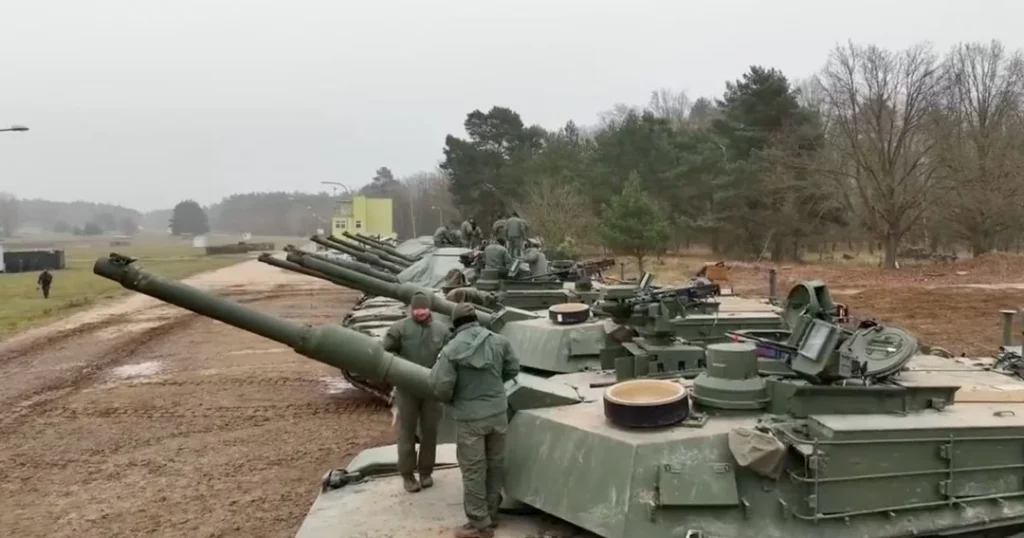
United States: The foundation of Poland’s security, shaped by the Enhanced Defence Cooperation Agreement (EDCA, 2020). Roughly 10,000 U.S. troops are stationed in Poland, the large majority still on a rotational basis. Key elements of this cooperation include the U.S. Army Garrison Poland at Camp Kościuszko in Poznań (established March 21, 2023 — NATO’s first permanent U.S. Army garrison on the eastern flank, hosting the forward command post of V Corps); the Aegis Ashore ballistic missile defence site at Redzikowo (declared operational by NATO on July 19, 2024, and formally opened on November 13, 2024, with roughly 355 U.S. personnel and 24 Patriot/SM-3 interceptors); and facilities at Powidz along with the Drawsko Pomorskie training area.
The greatest concern in this relationship is dependence colliding with unpredictability. In June 2025 the Pentagon canceled the planned deployment to Poland of the 4,000-strong 2nd Armored Brigade Combat Team, part of the 1st Cavalry Division. Then, on May 22, 2026, U.S. President Donald Trump abruptly reversed course and announced the U.S. would send an additional 5,000 troops to Poland, attributing the decision to his political rapport with Polish President Karol Nawrocki, whom he had backed.
Ukraine: Poland is the main logistics gateway through which Western support flows to Ukraine, via the Rzeszów-Jasionka base (Logistics Enabling Node–Poland). After visiting the base, President Karol Nawrocki said that more than 95% of all donations from the more than 40 countries supporting Ukraine pass specifically through this logistics hub. The base has been integrated into the NATO Security Assistance and Training for Ukraine structure, agreed at the July 2024 Washington Summit and headquartered at Clay Kaserne in Wiesbaden, Germany. NATO took over command of the base’s air defence in early 2025, with allies rotating responsibility for it: first U.S. Patriots (through April 2025), then German Patriots (from January 2025, roughly 200 troops from the 21st Luftwaffe Anti-Aircraft Missile Group), and, in a protection mission running from December 1, 2025 to June 1, 2026, Dutch and Norwegian Patriot/NASAMS systems. Since 2022, Poland has supplied Ukraine with more than 1,300 major pieces of equipment worth over €4.5 billion.
France: On May 9, 2025, in Nancy, Prime Minister Tusk and President Macron signed the Treaty on Enhanced Cooperation and Friendship, which includes a mutual-defence clause. Under the agreement, in the event of an armed attack on either country’s territory, the two sides will provide mutual assistance, including military means — France’s first mutual-defence treaty with a country other than Germany. Macron stressed that the clause “does not replace NATO or the EU, but reinforces the mutual interests of the two countries,” while Tusk called the agreement “groundbreaking.” The treaty also opened the way for reciprocal talks on French nuclear deterrence, defence-industrial cooperation and civil nuclear energy.
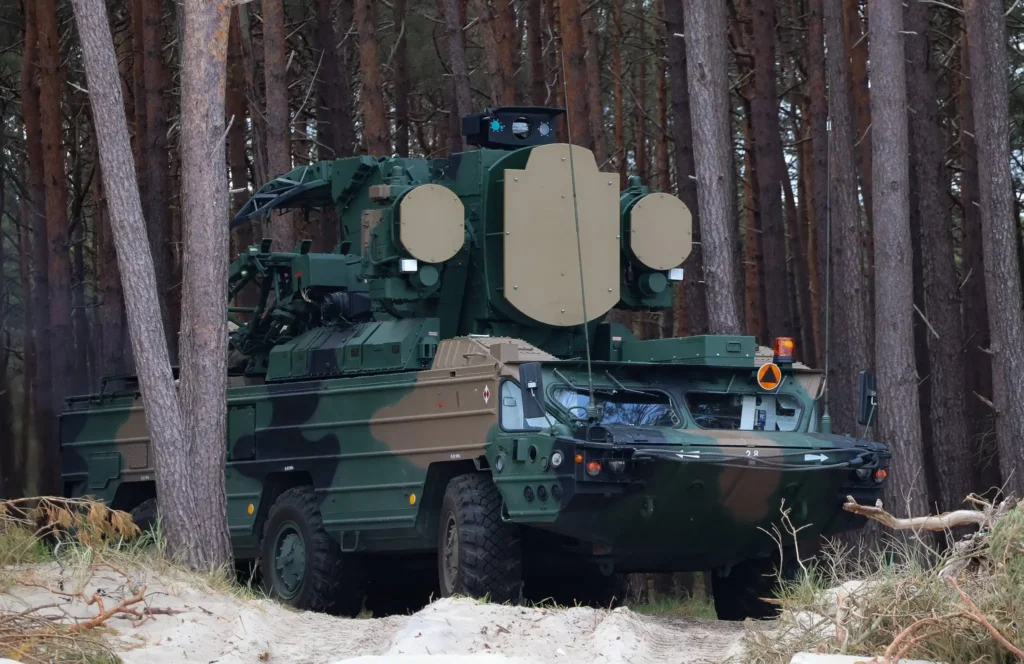
United Kingdom: On May 27, 2026, Tusk and Prime Minister Keir Starmer signed a new defence and security treaty — dubbed the “Northolt Treaty” after the RAF base linked to Polish pilots in World War II. Starmer called it “the biggest step forward in a generation in our defence and security relationship with Poland.” The treaty covers joint development and production of next-generation advanced weapons — including the joint production of a new medium-range air-defence missile — as well as large-scale joint ground exercises, unmanned systems to reinforce NATO’s eastern flank, and cooperation against hybrid threats.
Germany: Relations between the two countries, long strained, have been slowly improving since Chancellor Friedrich Merz’s visit to Warsaw in May 2025. Germany has offered concrete support to Poland, deploying two Patriot batteries with around 200 troops to protect the Rzeszów logistics hub, flying various air patrols in the region, and supporting Poland’s East Shield border-fortification program. Friction persists, however, over World War II reparations: Warsaw continues to raise the issue, while Berlin considers it legally closed.
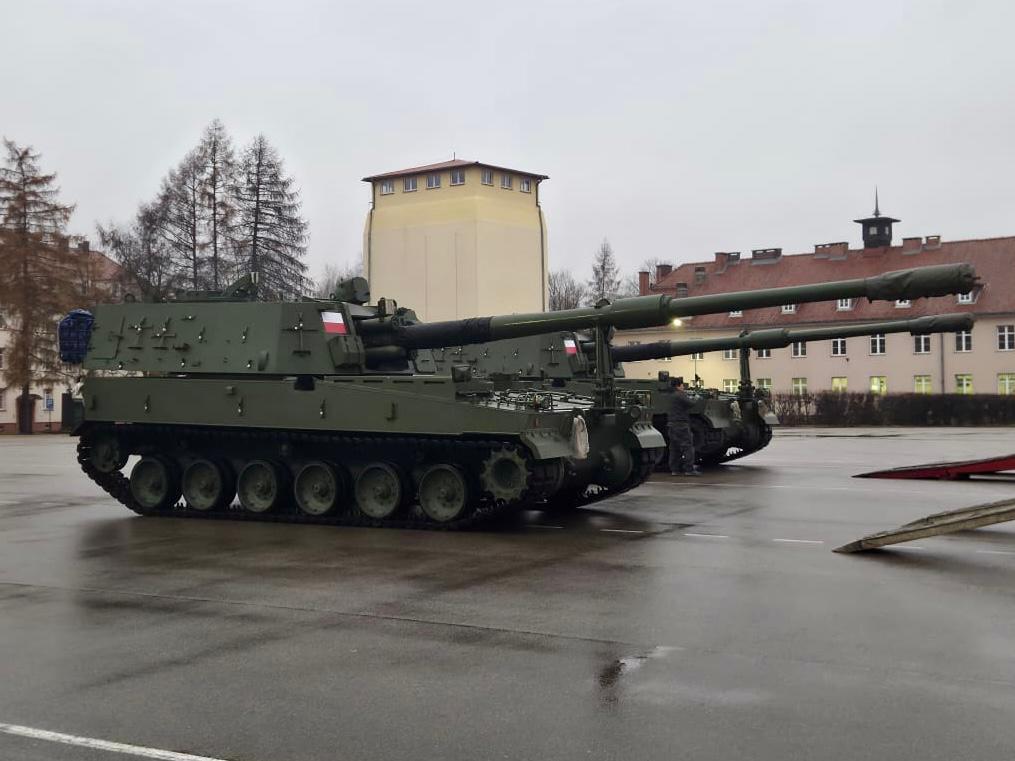
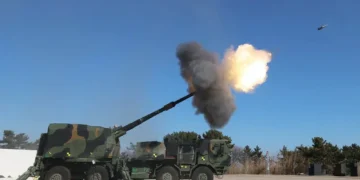
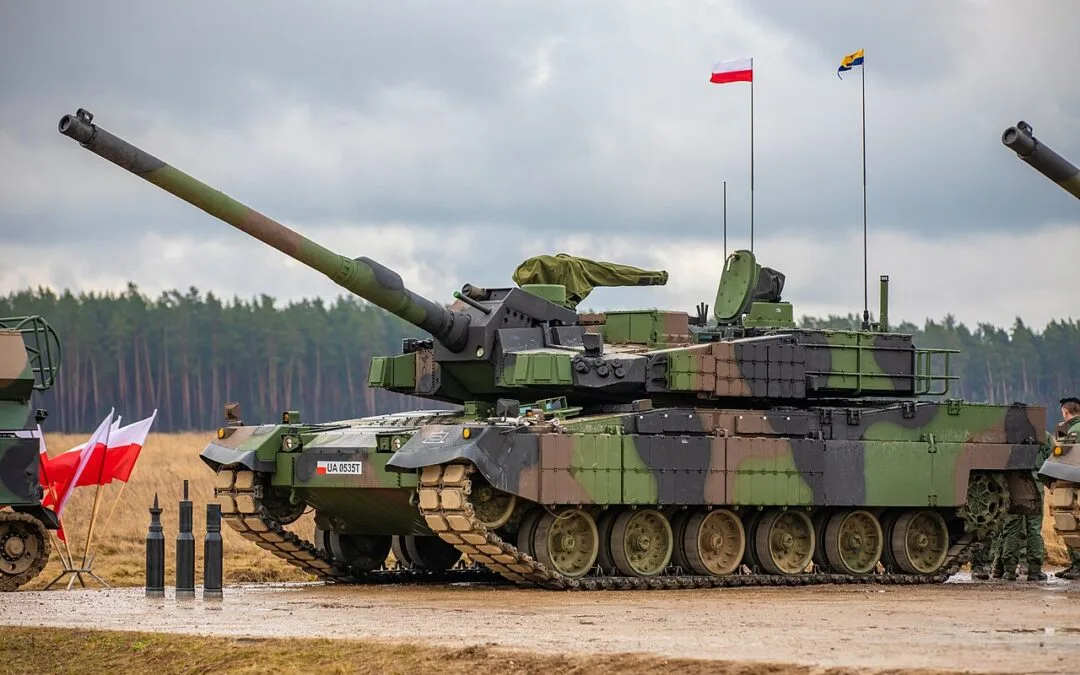
South Korea: Since early 2022, Poland has signed contracts worth roughly $16 billion with South Korean firms — its largest and most strategically significant diversification of arms suppliers away from the United States. The agreements envisage the delivery of up to 1,000 K2 Black Panther tanks. A second implementation contract worth roughly $6.5 billion, covering 180 K2 tanks and 81 accompanying vehicles, was signed in Gliwice on August 1, 2025. Deliveries, running from 2026 to 2030, will include 116 South Korean–built K2GF tanks and 64 K2PL variants to be produced in Poland (K2PL production will begin at Bumar-Łabędy in 2028). The package also includes hundreds of K9 Thunder self-propelled howitzers, 48 FA-50 light combat/trainer aircraft, and the K239 Chunmoo rocket artillery system.
Military Doctrine
Poland has moved away from its post–Cold War expeditionary doctrine (Iraq, Afghanistan) and returned, since 2014, to a homeland-defence posture under what is known as the “Komorowski Doctrine.” The currently published doctrine — the 2020 National Security Strategy (signed by President Duda on May 12, 2020) — identifies “the neo-imperial policy of the Russian Federation” as the most serious threat and calls for increased defence spending.
Poland’s doctrine now centers on territorial defence and forward defence along the eastern border — “defending every inch of territory” — and explicitly rejects any notion of trading space for time. NATO’s Article 5 and the presence of allied forces, particularly American, form the backbone of deterrence.
Defence Industry
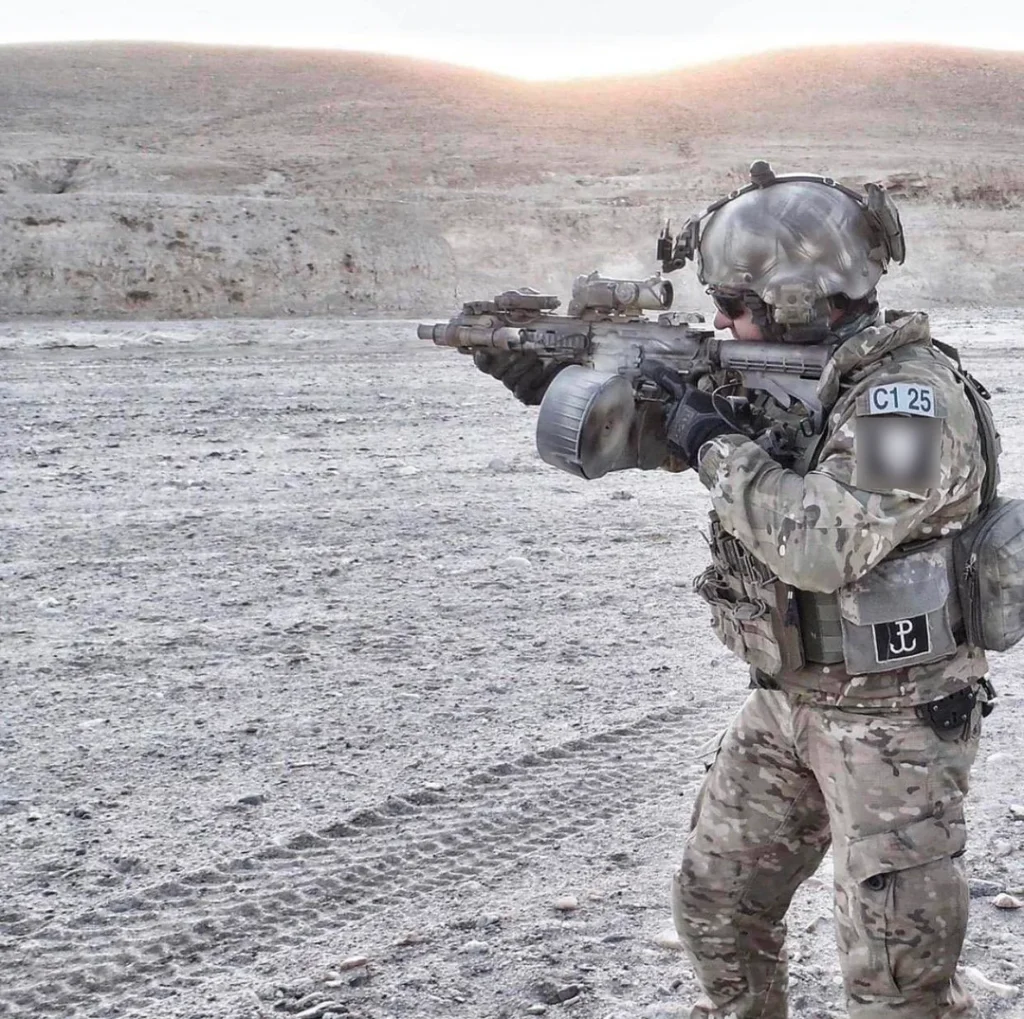
Polska Grupa Zbrojeniowa (PGZ), headquartered in Radom and established in 2013, comprises more than 50 subsidiaries, employs more than 18,000 people, and reports annual revenue of roughly 5.5 billion zloty. SIPRI ranked PGZ 51st in its 2024 Top 100 list. PGZ’s flagship products include the AHS Krab 155mm self-propelled howitzer (built by Huta Stalowa Wola by combining the K9 chassis with a BAE AS-90M turret and 155mm gun, paired with WB Electronics’ “Topaz” fire-control system); the M120 Rak 120mm self-propelled mortar; the Borsuk amphibious armored combat vehicle; the KTO Rosomak armored personnel carrier (a Polish license-built version of the Patria AMV); the Baobab-K minelaying vehicle; and the Piorun shoulder-fired short-range air-defence system. The private company WB Group, meanwhile, produces the FlyEye reconnaissance drone and the Warmate loitering munition.
In the end, Poland remains locked in a race between the geographic fate that has shaped much of its history and the deterrent capability it is now trying to build.
🔍 You may also like
Source: C4Defence