














Poland sits at a critical crossroads in Northern Europe, where Central and Eastern Europe meet. It is bordered by Germany to the west, the Czech Republic and Slovakia to the south, Ukraine and Belarus to the east, and Lithuania along with Russia’s Kaliningrad Oblast to the northeast. The country has roughly 770 kilometres of coastline along the Baltic Sea. In recent years, Poland’s NATO defence strategy and massive weapons procurement have become a major topic in regional security dynamics. This geography places the country squarely on the Alliance’s eastern flank, right on top of the Suwałki Gap. This corridor is a narrow stretch of land – about 65 to 100 kilometres wide running along the Polish-Lithuanian border between Kaliningrad and Belarus, and it forms the only land link between the Baltic states and the rest of NATO.

Historical Background and Transition to Democracy
Once a major European power during the Polish-Lithuanian Commonwealth, Poland was erased from the map in three partitions in 1772, 1793, and 1795 by Russia, Prussia, and Austria, and ceased to exist as a sovereign state for 123 years. It regained independence on 11 November 1918 as the Second Polish Republic, led by Józef Piłsudski. Invaded in 1939 with the outbreak of the Second World War and once again partitioned, Poland remained under Soviet influence after the war as the communist Polish People’s Republic from 1947 until 1989. The Round Table Agreement and the election victory of the Solidarność (Solidarity) movement in 1989 paved the way for a peaceful transition from one‑party rule to multiparty democracy under the Third Republic. Following this transition, Poland joined NATO on 12 March 1999 and the European Union on 1 May 2004.
Today, Poland is a parliamentary democracy with a bicameral National Assembly consisting of a 460‑seat Sejm and a 100‑seat Senate. The country is divided into 16 voivodeships. The head of state is conservative President Karol Nawrocki, backed by the Law and Justice (PiS) party, who took office on 6 August 2025 for a five‑year term. The government, however, has been led since 13 December 2023 by Prime Minister Donald Tusk of the centrist, pro‑EU Civic Coalition. Relations between the two leaders are strained. On the international stage, Poland is now best known as the leading military power on NATO’s eastern flank.
National Security Strategy and Energy Independence Moves
Poland’s strategic objectives are rooted in the National Security Strategy of the Republic of Poland, signed by former President Andrzej Duda on 12 May 2020, which remains legally in force. The strategy rests on four pillars: the security of the state and its citizens, Poland’s place in the international security system, national identity and heritage, and social and economic development along with environmental protection. The document explicitly identifies Russia’s neo‑imperial policy, pursued in part through military force, as the most serious threat facing the country. It cites the example of Georgia, the annexation of Crimea, and the war in eastern Ukraine as precedents.
Energy independence is another key element of the country’s national objectives. In line with policies developed after February 2022, dependence on Russia has been urgently severed. The Baltic Pipe, carrying Norwegian gas, was opened in September 2022, the Świnoujście LNG terminal was expanded in 2025, and a second floating terminal is being built in Gdańsk, with a target date of around 2028. Poland has also reduced its gas imports from Russia to nearly zero, covering about 87 percent of its needs, and has halted Russian crude oil shipments via the Druzhba pipeline. The country’s first nuclear power plant, featuring three Westinghouse AP1000 reactors, is planned for Pomerania and is targeted for the mid‑2030s.
Regional Alliances and Diplomatic Frictions
Poland’s most fundamental regional goal is to become the leading country in Central and Eastern Europe within NATO and the European Union.
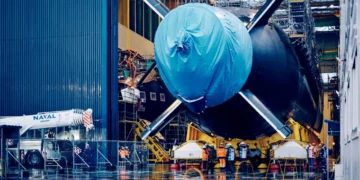
🔍 Related News: Saab and Poland Sign New Agreement for A26 Submarine Supply
The Bucharest Nine, established in 2015 by the presidents of Poland and Romania following the annexation of Crimea, coordinates the stance of the eastern flank and pushes for stronger Alliance deterrence and higher defence spending. Members pledged at their June 2025 summit to work toward spending five percent of GDP. The Lublin Triangle, formed in 2020 with Lithuania and Ukraine, supports Kiev’s Euro-Atlantic integration and forms the basis of the LITPOLUKRBRIG tri‑national brigade. The long‑dormant Weimar Triangle, comprising France, Germany, and Poland, was revived after Tusk’s government took office. Talks resumed in 2024, and it was decided that Poland would host joint Weimar military exercises starting in 2025.
The Three Seas Initiative, which Poland co‑founded in 2015 with the aim of linking the Baltic, Adriatic, and Black Seas, now encompasses thirteen EU member states. The initiative is developing north‑south transport, energy, and digital infrastructure to reduce the region’s historical east‑west orientation and decrease dependence on Russia.
None of these agreements and alliances are without friction. The Bucharest Nine, in particular, is prone to problems arising from diverging threat perceptions. The Russia‑leaning governments of Hungary and Slovakia have opposed the consensus on Ukraine. The revival of the Weimar Triangle, meanwhile, is seen by many analysts as more symbolic than substantive, given the ongoing disagreements over Russia policy.
🔍 Related News: Turkish Defence Industry Boosts Its Global Power with NATO Standards
Logistics Role and Military Aid in the Ukraine War
Poland serves as the primary logistics hub for Western military aid to Ukraine. It hosts NATO’s logistics network, which funnels roughly eighteen thousand tonnes of military equipment each month toward the Ukrainian Armed Forces, under the protection of allied Patriot batteries. The country’s own contributions have also been considerable. Since 2022, it has delivered more than forty aid packages, including over three hundred tanks, hundreds of armoured vehicles and artillery systems, MiG-29 fighter jets, and utility helicopters. The total value of this assistance has exceeded four billion dollars. Poland has also taken in the largest number of Ukrainian refugees in proportional terms.
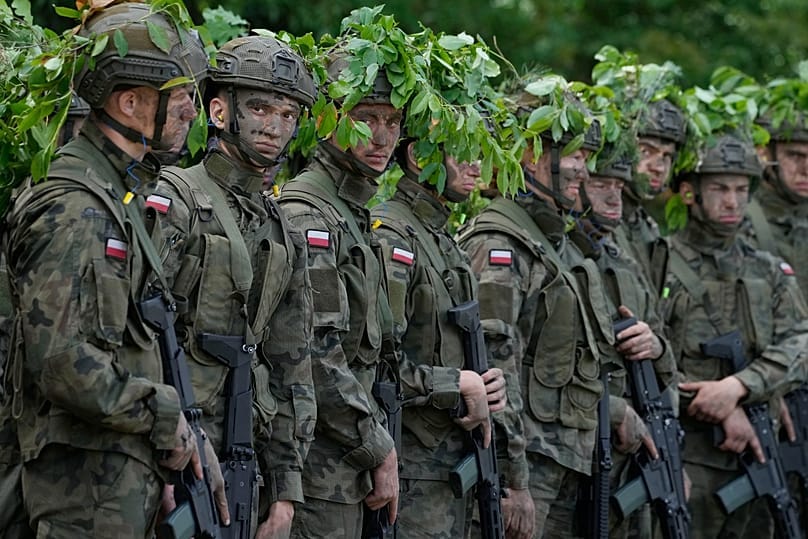
Poland’s military strategy is proof of how economic and security objectives reinforce each other. In 2025, Poland spent 4.48 percent of its GDP on defence – the highest share among NATO members. The 2026 budget allocates a record amount of roughly 200 billion zlotys for defence, equivalent to about 4.8 percent of GDP and nearly a quarter of the entire state budget. Poland has also set a target to expand its armed forces personnel to 300,000 troops. By 2025, it had grown its military to roughly 210,000 personnel, making it NATO’s third-largest army, after the United States and Turkey. However, this growth has also brought challenges related to the pace of expansion. The 300,000‑troop target has now been pushed back toward 2035, and personnel expenditure planned under the 2026 budget has been revised downward.
Major Arms Procurement: US and South Korea Partnership
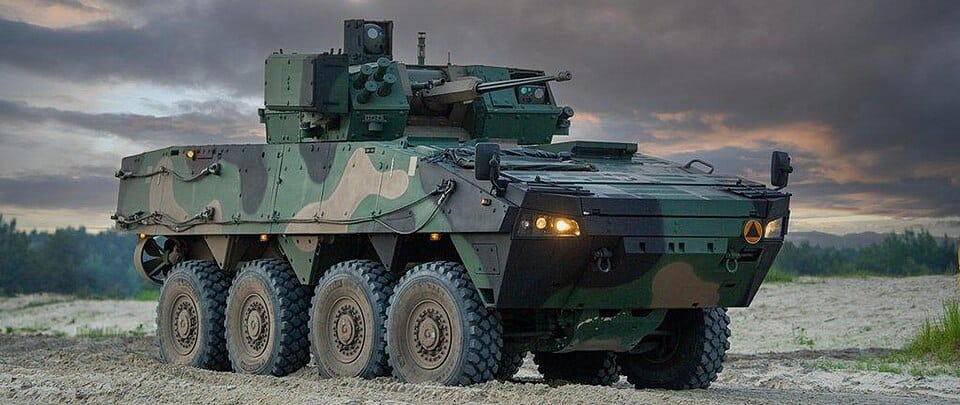
Poland is backing this growth with equipment as well. Procurement efforts under this effort are split primarily between American and South Korean suppliers. From the United States, Poland has ordered 366 M1 Abrams tanks in two batches, 32 F-35A fighter jets, an M142 HIMARS package worth roughly ten billion dollars, 96 AH-64E Guardian Apache attack helicopters, and Patriot air defence batteries integrated with the Northrop Grumman IBCS command system under the Wisła programme.
🔍 Related News: Critical Engine Maintenance Center for Abrams Tanks to be Established in Poland
🔍 Related News: Polonya’n Related News: Poland’s First F-35 “Husarz” Fighter Jet Enters Inventory”
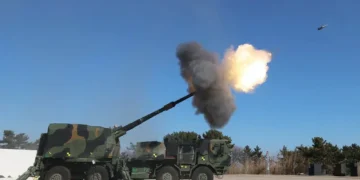
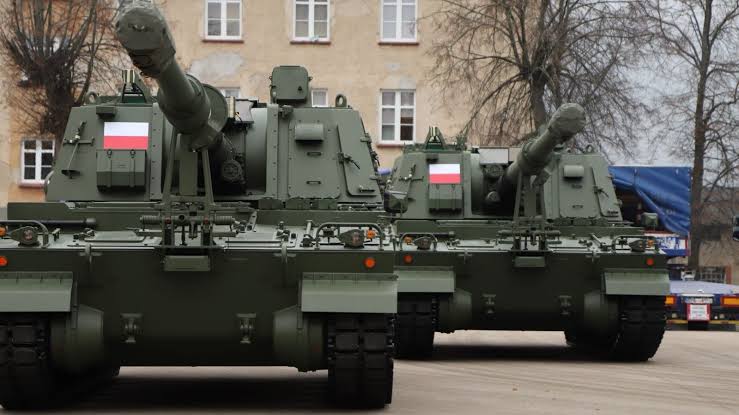
Poland, which has become South Korea’s largest defence customer in Europe, has signed contracts for approximately one thousand K2 Black Panther tanks, roughly 350 K9 self-propelled howitzers, forty‑eight FA‑50 light combat and training aircraft, and the Chunmoo artillery rocket system. The agreements have been accompanied by deals for local assembly and missile production on Polish soil for most of these systems.
East Shield Project and Allied Military Presence
Two other key elements complete the country’s procurement drive for national security: static regional defence and allied base deployments. The East Shield programme, announced in May 2024 at a cost of roughly ten billion zlotys and expected to be completed by 2028, will fortify the approximately 700‑kilometre border with Belarus and Kaliningrad using anti‑tank obstacles, bunkers, minefields, and a layered detection and anti‑drone network. This effort will be coordinated with the Baltic Defence Line. To move forward, Poland, the Baltic states, and Finland have withdrawn from the Ottawa Convention, which bans anti‑personnel mines. The other key element – allied bases – revolves around the roughly ten thousand American troops stationed in the country, most symbolically around the US Army Garrison established at Camp Kościuszko in Poznań in March 2023. This garrison hosts the forward command post of the reactivated V Corps, which oversees forces stretching from the Baltic to the Black Sea.
Most of the friction during all these defence efforts has been financial. A significant portion of defence spending has been financed through off‑budget borrowing, with repayments due between 2027 and 2031. Poland’s overall deficit is among the largest in the European Union, and contracted orders are facing constant delays.
Poland’s threat perception is one of the sharpest in NATO and is built around a single dominant actor. The National Security Strategy, signed in May 2020, identifies the neo‑imperial policy of the Russian Federation, pursued in part through military force, as the most serious threat facing the state. The report highlights the spread of Russian anti‑access/area denial (A2/AD) systems in the Baltic Sea region and large‑scale Russian exercises based on a warfighting scenario against NATO. The Kaliningrad exclave hosts a dense A2/AD complex, with S‑400 air defence systems, Iskander‑M missiles capable of carrying nuclear warheads with a range of about 500 kilometres, and K‑300P Bastion coastal defence anti‑ship missiles scattered throughout the exclave. In response to Finland’s NATO accession, Russia officially re‑established the Leningrad and Kaliningrad military districts in February 2024.
Despite all these systems, the war in Ukraine has forced the redeployment of the majority of ground forces from the region, including the 11th Army Corps, which was sent to the front. According to one European official’s estimate, Russian ground troops in the exclave have declined by roughly 80 percent. Nevertheless, Russia’s missile, air, and naval defence systems remain in place. For now, however, the potential ground manoeuvre threat from Kaliningrad has significantly weakened.
Concrete Threats: Airspace Violations and Sabotage
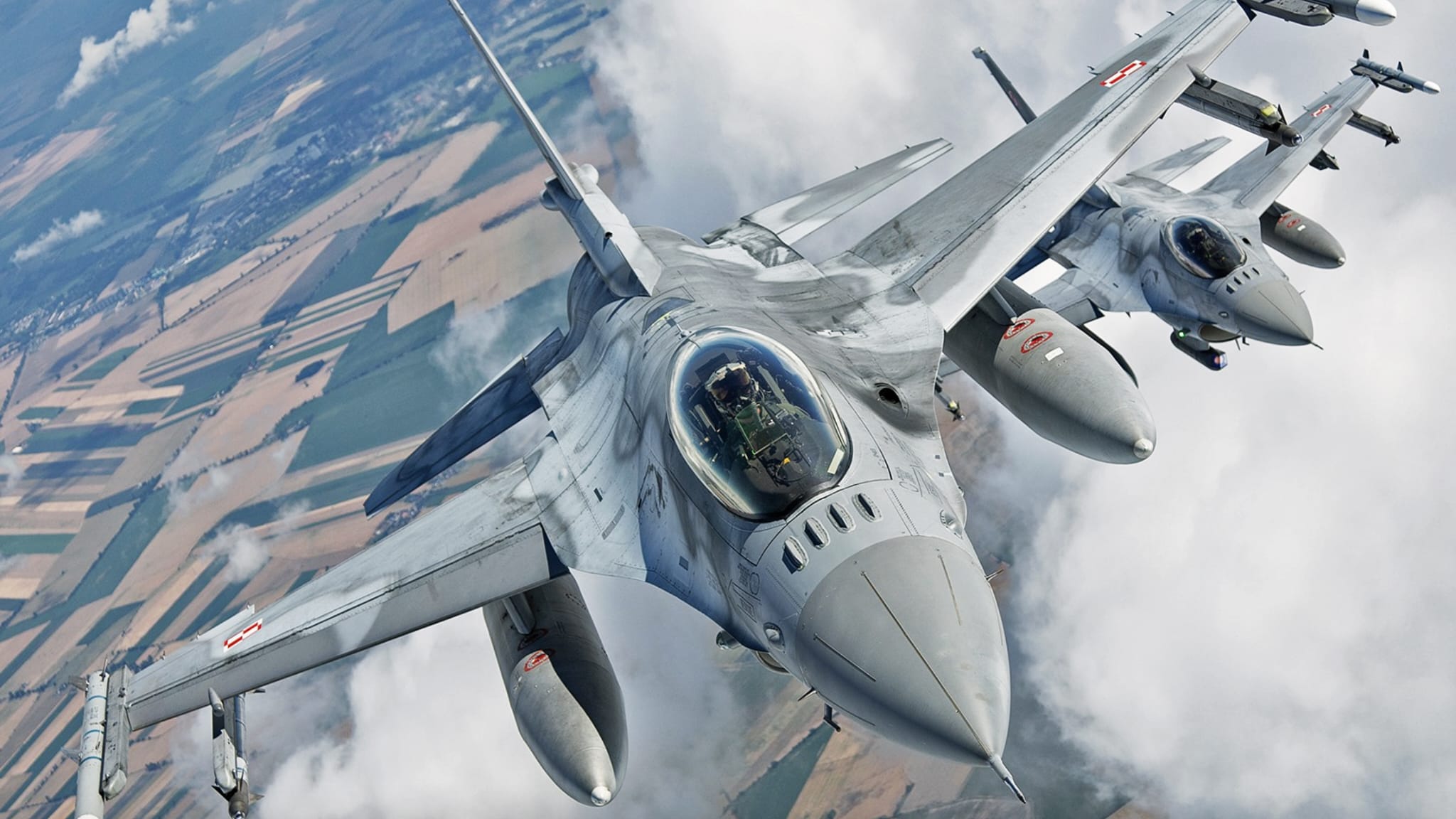
From 2024 onward, Poland’s threat perception has begun to shift once again, though the underlying concept remains the same. The reason is that the abstract threat has repeatedly become tangible on Polish soil. On the night of 9–10 September 2025, between nineteen and twenty-three Russian drones entered Polish airspace. Most were transiting over Belarus during a mass attack on Ukraine, and some were shot down by Polish F-16s, Dutch F-35s, German Patriot batteries, and a NATO surveillance aircraft. With this incident, Allied forces engaged Russian elements over NATO territory for the first time since the invasion of Ukraine. Warsaw invoked Article 4, NATO launched Operation Eastern Sentry, and the sheer number of violations was seen by Polish and EU officials not as an accident but as evidence of deliberate intent.
Two months later, on 16 November 2025, a homemade explosive device destroyed a section of the Warsaw–Lublin railway line used to transport aid to Ukraine. Prime Minister Tusk described it as perhaps the most serious national security issue in Poland since the start of the invasion. Investigators identified two Ukrainian nationals working for Russian intelligence, both of whom fled to Belarus. The Internal Security Agency announced dozens of new investigations and numerous arrests in 2024 and 2025, while persistent cyber threats attributed to Russian and Belarusian threat groups continued to target hospitals, water treatment facilities, and energy infrastructure. There was also systematic GPS jamming emanating from Kaliningrad, affecting thousands of flights. In response, Poland gradually closed three Russian consulates, leaving only the embassy in Warsaw operational.
Hybrid Warfare on the Belarus Border and the Nuclear Dimension
Belarus is treated less as an independent actor and more as a Russian forward operating base. Since August 2021, the Lukashenko regime has been funnelling migrants toward the Polish border in what Warsaw classifies as hybrid warfare, generating tens of thousands of crossing attempts. In May 2024, after a Polish soldier was stabbed to death near the border, the restricted zone was re‑established and the rules on the use of live fire were relaxed. In March 2025, with support from the European Commission, the right to apply for asylum at the Belarus border was suspended.
Following the Wagner mutiny in June 2023, the redeployment of Wagner elements to Belarus, with their proximity to the Suwałki Gap, triggered alarm in Poland. In September 2025, during the Zapad‑2025 exercises, Poland completely closed the border, including railway links. The threat also has a nuclear dimension. Russia announced in 2023 that tactical nuclear weapons had been deployed to Belarus, and Belarus revised its military doctrine to authorise their use. During Zapad‑2025, Minsk confirmed that its forces were rehearsing launch planning and the deployment of the Oreshnik system. However, independent observers in the region have not been able to visually confirm the presence of deployed warheads and missiles, leaving a significant question mark between the rhetoric and confirmed reality.
Diverging Analyses on Suwałki Gap Scenarios
The Suwałki Gap is the focal point of conventional war concerns. However, its significance is less a regional matter and more a major security issue for the West. The prevailing view holds that Russian forces could quickly seize the corridor and isolate the Baltic states within an A2/AD environment. Yet a number of studies conducted under various organisations have argued that this assessment is overstated. Russia already has a functioning transit route through Kaliningrad and would gain little from seizing the corridor, while opening new fronts against Polish and German forces. The significant reduction in Russian ground troops in Kaliningrad following the war in Ukraine further weakens the near‑term seizure scenario. In reality, while the corridor remains an important element in defence planning, the rapid conquest scenarios reflect a pre‑2022 force posture.
Structural Economic Vulnerabilities and Off‑Budget Borrowing
Beneath the external threats lies a quieter structural vulnerability in Poland’s own finances. The sweeping rearmament drive that gave Poland NATO’s highest defence spending – 4.48 percent of GDP in 2025 and a planned 4.8 percent for 2026 – has been funded largely off‑budget, above official budget and public debt limits. These expenditures are financed through the Armed Forces Support Fund and via borrowing. The Supreme Audit Office has criticised this structure, projecting that the fund’s debt will exceed 300 billion zlotys by the end of the decade, with servicing costs threatening to outpace the actual growth of the military. Poland’s overall deficit, at or near 60.5 percent of GDP, has placed the country under the EU’s excessive deficit procedure since 2024. Although Brussels has exempted defence spending from its fiscal rules, allowing Poland to become the first country to draw on the SAFE credit facility, this trajectory has reinforced claims that the drive is being carried out with borrowed money on a borrowed timeline.
Procurement Delays and the Demographic Crisis
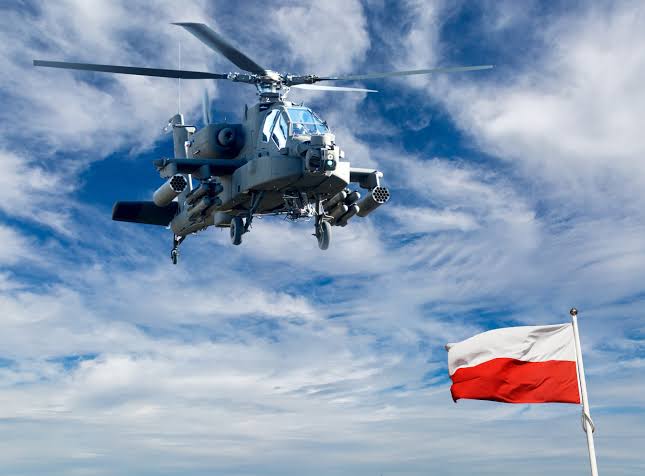
Persistent delays in procurement deliveries and the fact that the vast majority of signed procurement agreements are letters of intent rather than firm contracts have strengthened criticism against the government. Deliveries of K2 Black Panther and M1 Abrams main battle tanks, FA‑50 light attack and jet trainer aircraft, AH‑64E Guardian Apache attack helicopters, and F‑35 Lightning IIs have proceeded more slowly than agreed or have been postponed for years. Meanwhile, the value of existing commitments – over 130 billion euros – leaves little fiscal room for new contracts before 2028. The 300,000‑troop target (with half a million including reserves) is also colliding with a demographic crisis at home, with record‑low birth rates and a shrinking, ageing population, alongside a roughly one‑quarter drop in personnel recruitment between 2023 and 2024.
Political fragility within Poland threatens the continuity required for sustainable rearmament. The 2025 presidential victory of nationalist, PiS‑backed Karol Nawrocki has created a strained dynamic with Donald Tusk’s coalition government. Nawrocki has deliberately refused to sign an updated National Security Strategy, arguing it should be realigned with Washington’s priorities, leaving the 2020 document legally in force and delaying the associated armed forces development programme. Both sides agree that Russia is the primary threat and that the American relationship is indispensable, but they diverge sharply on the European Union, European defence cooperation, and Ukraine policy. Parliamentary elections due by 2027 are encouraging the opposition to weaponise foreign policy and defence issues.
Uncertainty in Transatlantic Relations and Future Projections
Finally, Poland’s deepest strategic risk lies, paradoxically, in its own security arrangements. The country’s posture relies heavily on the American guarantee, which has become unpredictable under the Trump administration. The Trump administration abruptly cancelled a planned rotational deployment of four thousand troops in mid‑2025, then reversed course in 2026 with a pledge of five thousand additional troops. This has reinforced the perception, in Poland and many European countries, that the United States today is confusing and unreliable. Most American troops in Poland are rotational rather than permanently based, and rotational forces are not included in NATO’s standing deterrence and defence plans. Poland is thus caught between Tusk’s push for a stronger European defence pillar and the opposition’s insistence on prioritising the bilateral relationship with the United States. This tension is sharpened by EU procurement rules, which largely exclude American and South Korean suppliers.
🔍 You may also like
Source: C4Defence