



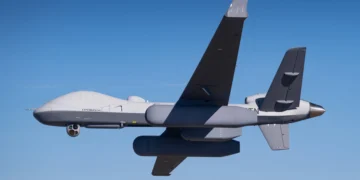

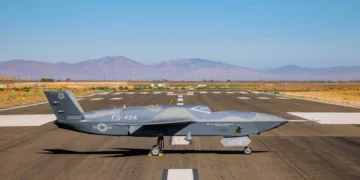






















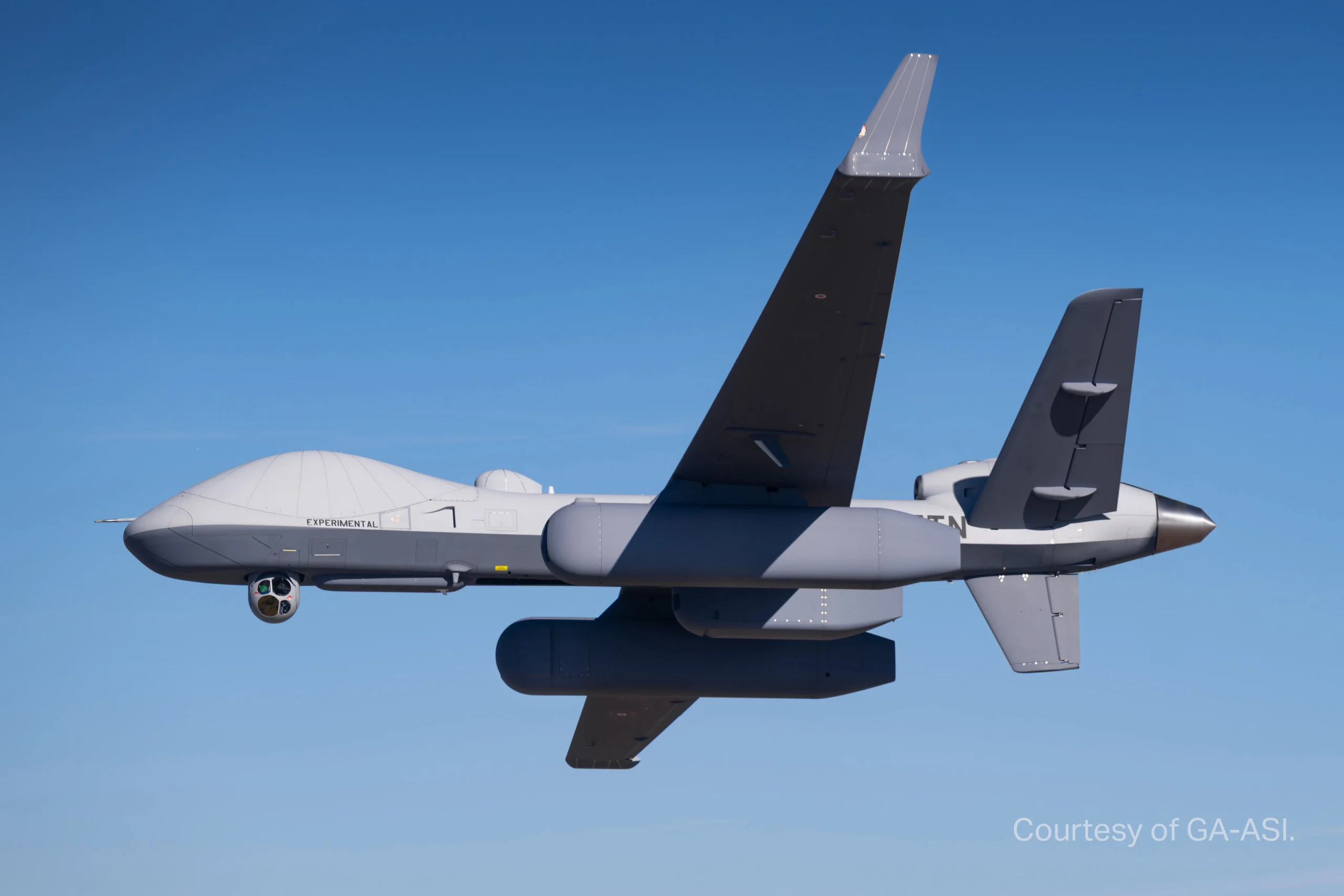
Saab and General Atomics Aeronautical Systems (GA-ASI) flight-tested the LoyalEye system on the MQ-9B, designed to complement crewed airborne early warning platforms.
The flight test, which integrated Saab’s LoyalEye Airborne Early Warning (AEW) radar onto the MQ-9B remotely piloted aircraft system, validated the uncrewed platform’s ability to detect, track and classify aerial targets. Participants observed the flight in real time under a scenario representative of operational conditions at GA-ASI’s Desert Horizon Flight Operations Facility in Southern California. The test forms part of an evaluation programme that began with the system’s first flight in May 2026.
Carl-Johan Bergholm, Head of Saab’s Surveillance business area, stated that the flight test marked an important milestone in the development of uncrewed airborne early warning capabilities. Emphasising that the test validated the system’s capabilities in a scenario representative of operational conditions, Bergholm noted that LoyalEye was designed to complement existing Airborne Early Warning and Control (AEW&C) solutions, providing additional operational flexibility and long-endurance mission capabilities.
LoyalEye MQ-9B Designed for Long-Endurance Surveillance
David R. Alexander, President of GA-ASI, stated that the test was one of the company’s most highly anticipated flight tests. Alexander noted that global customer interest in airborne early warning capabilities on the MQ-9B platform was exceptionally high.
Integrated onto the MQ-9B platform, LoyalEye is designed to operate independently or alongside crewed AEW&C platforms. The uncrewed airborne early warning capability is intended to enable long-duration surveillance over wide areas. The system is particularly intended for operational environments where endurance, geographical reach and reducing aircrew exposure to risk are key considerations.
🔍 You may also like
Source: C4Defence –SAAB