












Key Takeaways
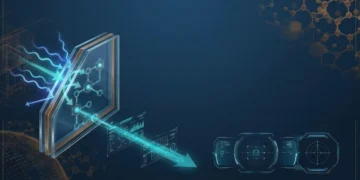
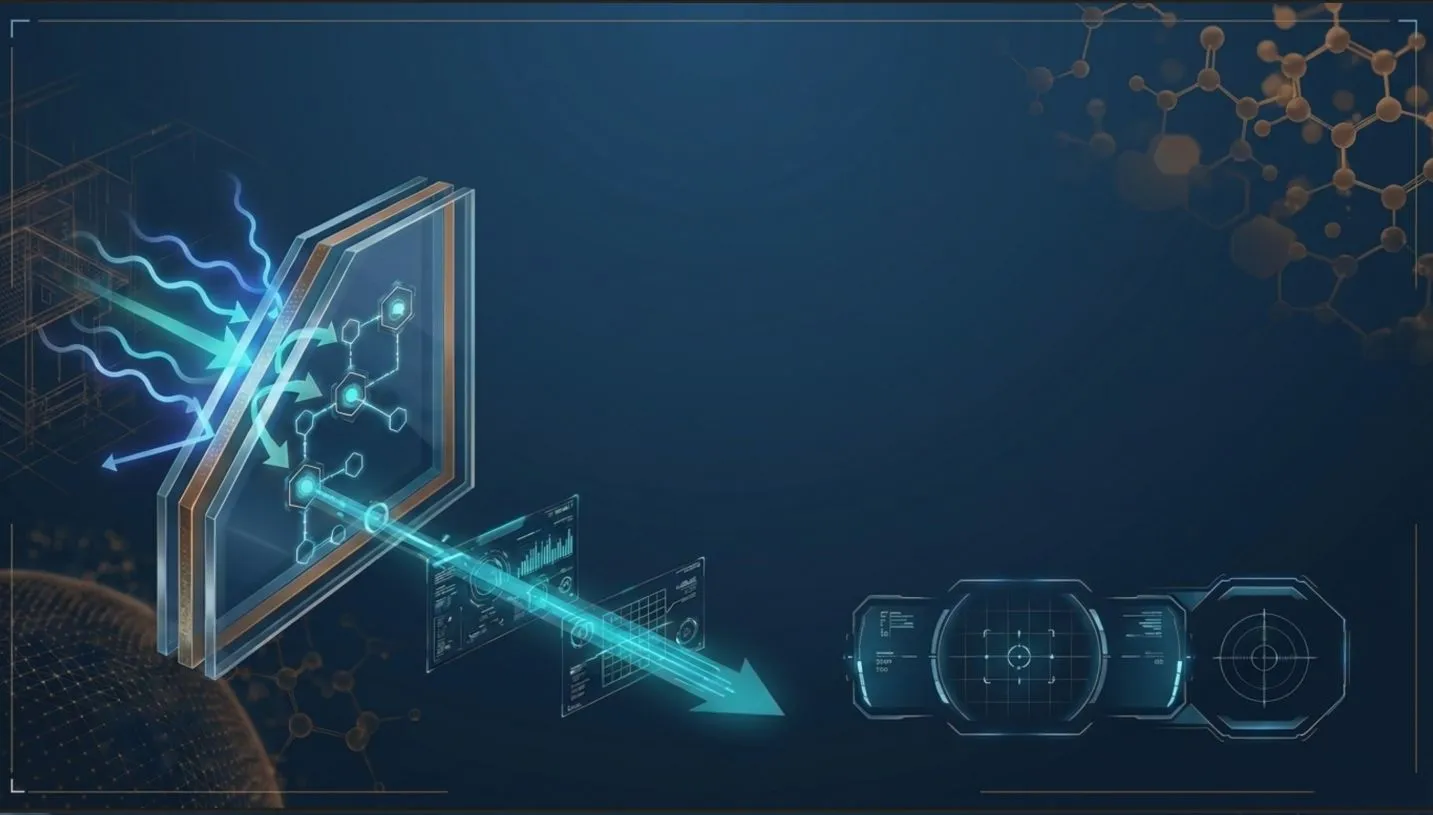
- Nano-active glass transforms from a passive material to an active surface that can process data and sense the environment.
- Nanotechnology enhances glass’s ballistic performance, making it lighter, thinner, and more durable with multifunctional capabilities.
- Materials like transparent aluminum and spinel provide superior ballistic protection while reducing weight and thickness.
- Emerging applications include smart cockpits and self-cleaning surfaces, improving situational awareness and operational continuity.
- Overall, nano-active glass is crucial for modern defence architecture, providing technological superiority on the battlefield.
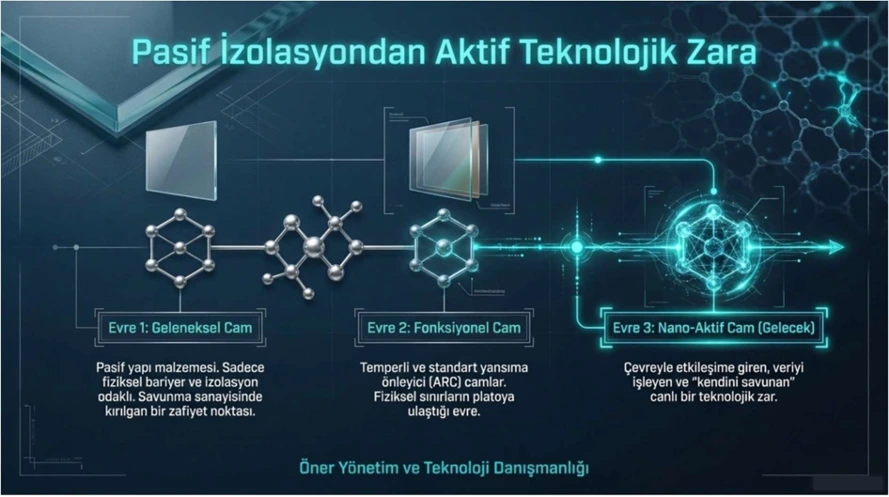
Glass, present in almost every aspect of life, is viewed from a defence and aerospace perspective as a century-old passive technology product that merely provides light transmission and basic physical protection, with limited functionality. Functional Glass within this scope represents today’s “stagnation phase,” continuing to serve conventional applications as a product stuck at a stage that has not yet moved beyond efficiency and effectiveness.

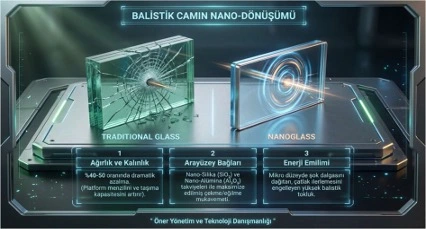
In military vehicle and aerial platform designs, glass has traditionally been regarded as a “passive isolation layer” separating crew members from external conditions. However, the increasingly digitalized and asymmetric nature of the modern battlefield renders this traditional approach obsolete. Today, glass needs to evolve beyond being a transparent barrier into an active surface concept—one that processes data, senses the environment, and directly influences operational decisions.
In this context, the limited ballistic resistance, optical losses, contamination-induced data degradation, and thermal vulnerabilities of current systems create fundamental bottlenecks that threaten operational success for the evolving demands of future solutions and applications. The physical burden of thickness and weight in conventional glass, high light loss from reflection, and sensor blinding caused by environmental contamination form the strategic rationale behind this technological leap.
To eliminate these shortcomings, the defence sector’s nanotechnology-based glass solutions—transparent aluminum, nano-coated Low-E glass, nano-reinforced laminates, and nano-ceramic hybrids—offer lighter, thinner, more durable, and multi-functional solutions (self-cleaning, anti-reflective, anti-fog, EMI shielding) compared to traditional ballistic glass.
Nanomaterials fundamentally enhance glass’s ballistic performance by increasing mechanical strength and toughness, improving impact energy absorption, and inhibiting crack propagation—opening new application areas. The US Army uses this technology in pilot-side rear windows of UH-60 Blackhawk and CH-47 Chinook helicopters, armored vehicle windows (HMMWV-type), periscopes and sensor shields, spacecraft viewing windows, and Cupola-type modules.
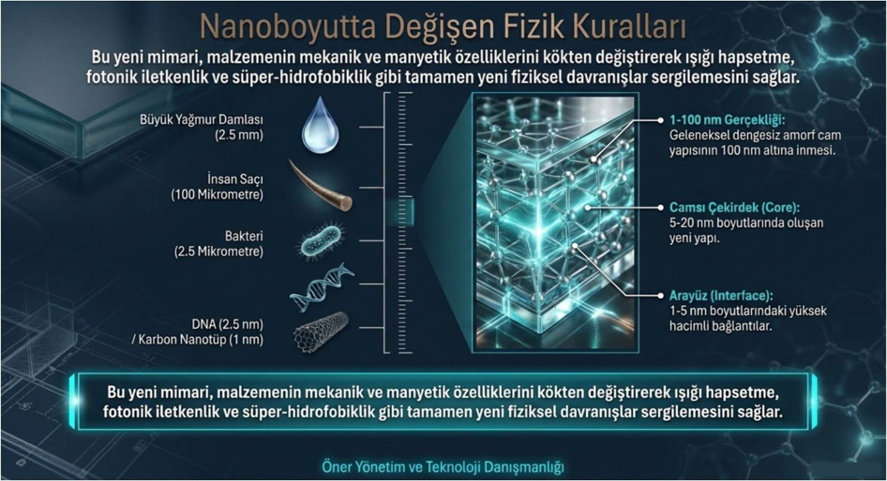
Behind these technologies lies nanotechnology itself: when matter is reduced to the 1-100 nm scale, the rules of macro-scale physics give way to a reality in which the mechanical and magnetic properties of materials fundamentally change. This paradigm and technological shift is the key factor transforming glass, for the defence industry, from an ordinary material into a “technological engine.”
At the atomic architectural level, when the conventional amorphous structure is reduced below 100 nm, glassy cores of 5-20 nm and interfaces of 1-5 nm are formed. These high-volume interfaces act as the primary governing mechanism determining the material’s mechanical and magnetic performance. This microscopic precision grants entirely new physical behaviors, such as light trapping at the glass surface and super-hydrophobicity.
This technology, along with the paradigm shift demanded by our era, is making the transition of glass from a “passive structural material” to a “Nano-Active Glass” phase a tactical necessity. This article examines the new technologies within the scope of Nano-Active Glass that are used in the defence industry and are set to emerge in the near future as a result of ongoing research.
Thinner and Lighter Armor
ALON
ALON (Transparent Aluminum), produced through the sintering of nano-scale aluminum oxynitride and manufactured exclusively worldwide by Sunmet, is 4-5 times harder than conventional glass, with hardness approaching that of sapphire. Its polycrystalline structure allows the production of large and complex-shaped components (domes, large windows). It is more cost-effective than sapphire, enabling large-scale production. For example, 41 mm thick ALON can stop .50 BMG armor-piercing rounds while being 50% thinner and 50% lighter than traditional laminated bulletproof glass.
Thanks to its superior mechanical strength and toughness, it demonstrates very high resistance against impacts, projectiles, shrapnel, and micrometeoroids. Compared to systems providing the same ballistic protection, its weight and thickness are cut in half—translating into fuel savings, increased payload capacity, and improved vehicle performance.
It provides a Broad Spectral Transmission (UV–visible–MWIR) ranging from 0.2 μm to 6.0 μm. This means better MWIR transmission than sapphire and isotropic behavior (identical optical properties in every direction), minimizing optical distortion. Its high melting point and low thermal expansion provide resistance to the extreme conditions of hypersonic flight, high missile speeds, and space environments.
It is up to 10 times more resistant than glass to sand, rain, dust, and chemical effects, extending equipment service life and reducing maintenance costs.
It is resistant to radiation, UV, and oxidation in space environments.
Spinel (MgAl₂O₄)
Thanks to its cubic crystal structure, Spinel is an isotropic material (identical properties in every direction). Its optical transmission range spans 0.2–5.5 μm (from UV to mid-wave infrared—MWIR), making it ideal for both visible light and infrared sensors. Used across various fields and applications, Spinel’s strength and ballistic performance increase as its nano-scale grain size decreases.
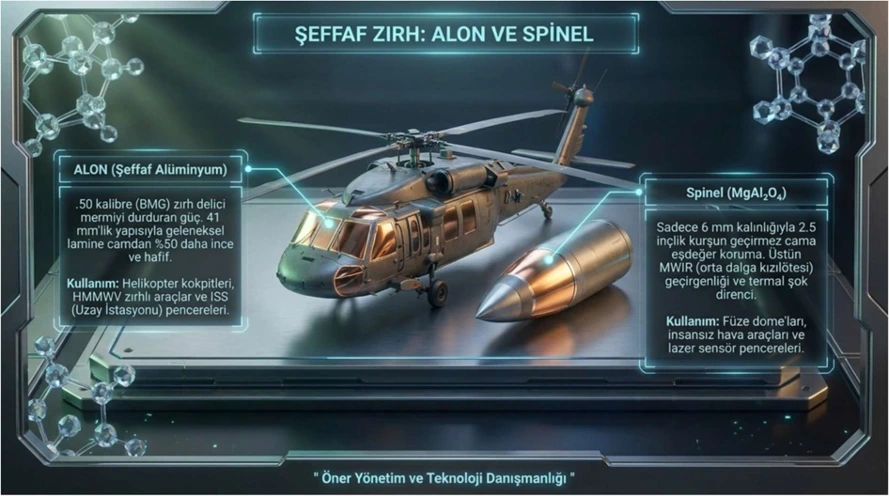
In aerospace applications, ¼ inch (approximately 6 mm) of Spinel provides the same level of protection as 2.5 inches of bulletproof glass, offering 50% thinner and 50% lighter solutions alongside high mechanical strength, toughness, and superior ballistic performance. Its high-temperature resistance makes it suitable for hypersonic aircraft fairings, missile domes, and spacecraft windows. It can achieve better MWIR transmission results than both sapphire and ALON.
Smart Cockpits
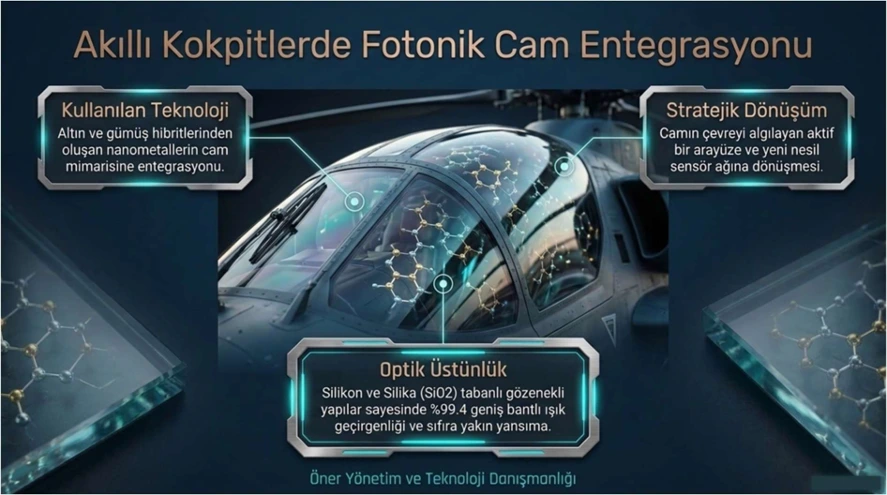
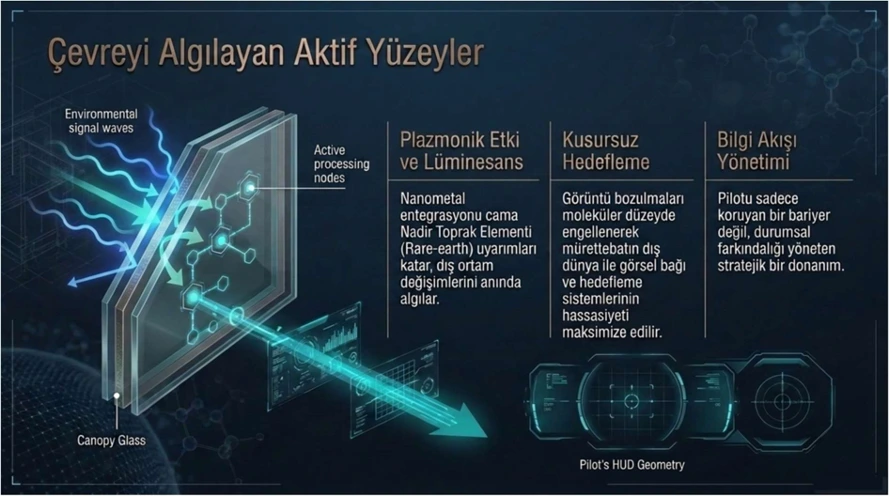
One of the applications of nanoengineering in the defence industry, this technology also creates photonic integration and situational awareness in smart cockpits. The transformation of cockpit glass into a “sensor network” has a direct force-multiplier effect on crew decision-making speed and targeting precision. Through photonic integration, glass becomes not merely a window to the outside world but a strategic piece of hardware managing the flow of information.
The plasmonic effects produced by nano-structured gold and silver hybrids, along with rare-earth element excitations, go beyond enhancing the glass’s luminescent capacity—enabling it to function as an integrated signal amplifier or filter for specific tactical wavelengths. This capability transforms the cockpit’s environmental sensing capacity into an active data-collection process, moving beyond passive observation systems.
On the other hand, optical integrity is vital, particularly for high-precision targeting systems. The 99.4% light transmission achieved through dual-layer porous silica (Porous SiO₂) applications reduces image distortion to near zero, maximizing targeting system accuracy. This clarity ensures an uninterrupted flow of visual data even under the most challenging lighting and environmental conditions.
Nano Low-E Glass
Low-Emissivity (Low-E) glass applications in defence, aerospace, and space systems are critically important for thermal control, infrared (IR) signature reduction (stealth), heat insulation, and optical performance. While classic Low-E glass relies on thin metal (Ag, Al, etc.) or dielectric layers, nanomaterials reinforce these layers, making them thinner, more durable, lighter, and multi-functional.
Below is a summary of the nanomaterials with high potential for use in these sectors and the key benefits they provide.
Graphene and Graphene Oxide (GO) / Graphene Nanoplatelets (GNP)
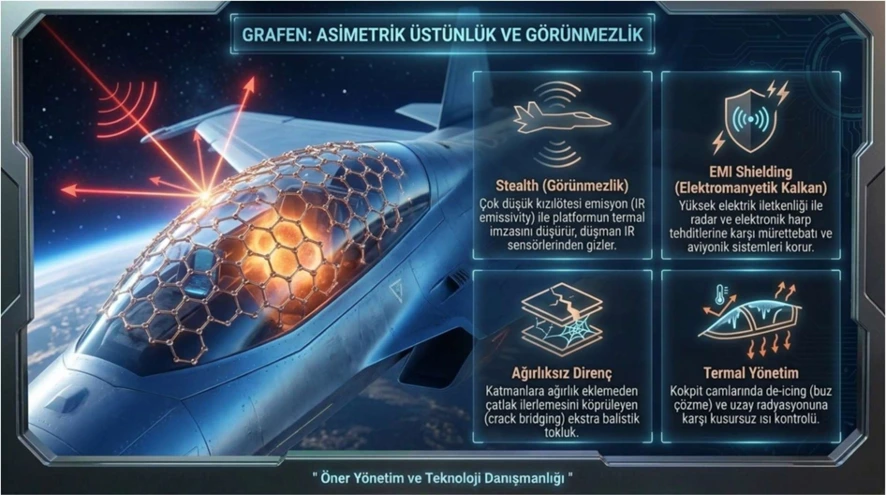
Used in Low-E coatings as a conductive layer or hybrid metal-graphene film, or as an interlayer or surface coating. They provide very low infrared emissivity, reduced thermal visibility (stealth), and evasion from IR sensors on military vehicles and aircraft, alongside high electrical conductivity for EMI shielding.
They are preferred for de-icing and thermal management applications in cockpit glass.
Carbon Nanotubes (CNT – MWCNT)
When dispersed into PVB or epoxy interlayers or Low-E coatings, they increase impact and energy absorption, enhancing mechanical strength while providing low emissivity. They are preferred in the defence industry for transparent armored glass where ballistic performance and IR reduction are both required.
Silica Nanoparticles (Nano-SiO₂)
When used in Low-E coatings as a matrix reinforcer or anti-reflective/thermal barrier layer, they improve the glass’s thermal stability and insulation properties. While preserving optical transparency, they slow crack propagation and increase mechanical strength (tensile, bending). They are ideal for heat protection and glass durability during spacecraft atmospheric re-entry in aerospace applications.
Metal Oxide Nanoparticles (ZnO, TiO₂, SnO₂, Al₂O₃, etc.)
Core-shell structures (such as Al/ZnO, TiO₂/MnO₂) stand out as semiconductor additives in Low-E films, balancing visible light transmission alongside low infrared emissions, and providing UV and radiation protection for space environments. They are used for stealth in defence vehicles and IR control in aerospace sensor windows.
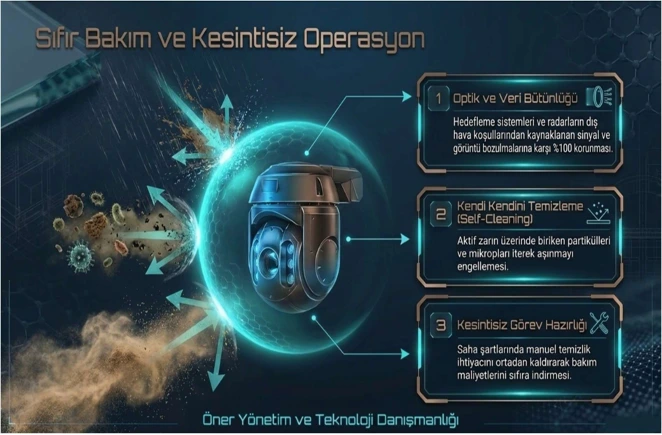
Operational Continuity
In challenging field conditions, the accumulation of rain, dust, and mud is one of the greatest operational risks, blinding optical sensors and cameras. The biomimetic engineering adaptation of the natural “Lotus Effect” solves this problem on a “zero maintenance” principle.
Thanks to Titanium Dioxide (TiO2) nano-columns, the water contact angle on the glass surface is increased to 147°, while the Sliding Angle is reduced to below 10°. The operational meaning of this technical data is as follows:
- Contaminants on the surface are dynamically shed through high-speed maneuvers or airflow.
- Water droplets and moisture slide away before adhering to the surface, functioning as an anti-icing mechanism.
- The super-hydrophobic structure preserves sensor data integrity by preventing signal distortion.
This system eliminates the need for personnel to exit the vehicle for manual cleaning—putting their lives at risk—and maximizes operational continuity.
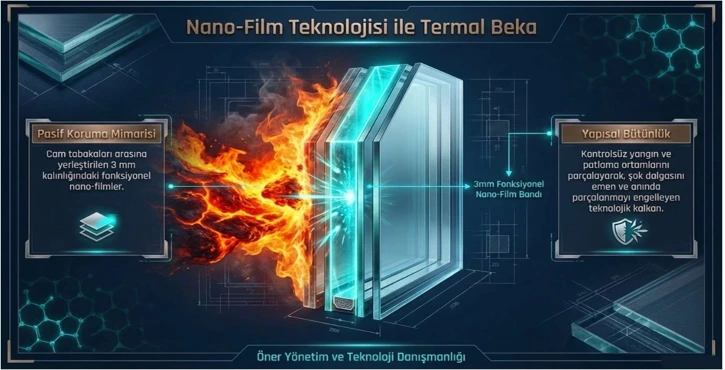
Nano-Film Architecture and Personnel Safety
On the battlefield, vehicles constantly face thermal shock risks such as explosions, ambushes, and intense munitions fire. The 3 mm thick functional nano-films integrated between glass layers offer a life-saving “Passive Protection” architecture during these critical moments. This technology enables glass to withstand temperatures above 1000°C for more than 120 minutes. For crew members, this is not merely an ordinary duration of resistance but a vital “evacuation time window.” In extreme conditions where standard glass shatters within seconds, nano-films preserve structural integrity, preventing flames from entering the vehicle and shielding personnel from thermal shock.
Furthermore, thanks to high crack resistance, the visual connection between sensors, personnel, and the outside world is preserved even at the moment of an explosion. This ensures that the visual data flow required for a vehicle under attack to determine a safe evacuation route or respond immediately to a threat is not interrupted.
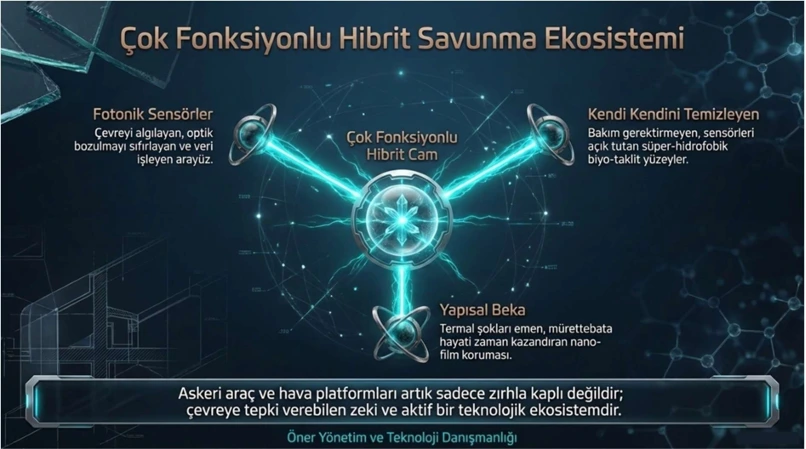
Conclusion: A Multi-Functional Hybrid Smart Glass Ecosystem
The convergence of photonic, nano-film, and super-hydrophobic technologies within a single glass structure creates an exponential increase in value for defence platforms. This hybrid structure transforms glass into a “self-defending living technological membrane.”
| Comparison Criteria | Conventional Glass | Nano-Enhanced Glass |
| Light Transmission | ~91.6% | 99.4% (Porous SiO2) |
| Solar Heat Gain Coefficient (SHGC) | > 0.40 | < 0.25 (Optimum: 0.23) |
| U-Value (Heat Transfer) | High | Low: 1.55 |
| Surface Cleanliness | Prone to Contamination | 147° WCA / <10° Sliding Angle |
| Fire Resistance | Fragile / Weak | >1000°C (>120 Min. Resistance) |
| Environmental Standard | Uncontrolled | Antimony-Free |
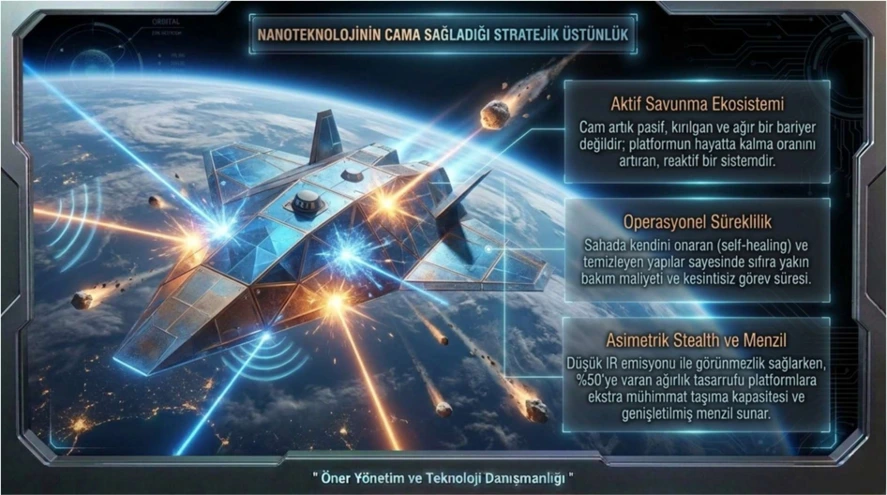
The U-value of 1.55 in the table above is a highly significant criterion—it represents not only the material’s heat insulation properties but also its capacity to minimize the vehicle’s thermal signature, which plays a key role in visibility and detectability. A lower U-value reduces interior climate control loads by more than 20%, freeing up energy budgets for electronic systems, and particularly lowers a vehicle’s detectability during “silent watch” operations. Additionally, antimony-free production technology maximizes personnel health and sustainability in modern crew environments.
In conclusion, glass is no longer a passive barrier but the technological engine of the battlefield. Türkiye’s localization of these advanced material technologies will not only enhance platform survivability but will also ensure complete technological sovereignty across all visual and sensor-based interfaces. Possessing these technologies is poised to become one of the most fundamental requirements for operational superiority in modern defence architecture.
Ali Öner– Chemical Engineer
This analysis was originally published in C4Defence Magazine.