

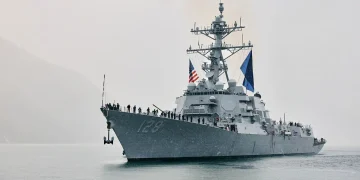








For a country surrounded by sea on three sides, naval power is not a symbol but a geopolitical necessity. The picture emerging from Mavi Vatan shows how this necessity has been transformed into an indigenous production and technology capacity in Türkiye. Turkish Navy Mavi Vatan doctrine demonstrates clearly Türkiye’s maritime strategy in this context.
Türkiye’s land borders cover 783,000 square kilometres. But the map does not end there. The maritime areas where sovereignty and jurisdiction rights are held reach 462,000 square kilometres, an area nearly half the size of the country’s landmass. Often overlooked and remembered only as a line on the map, behind this second homeland lies an industrialisation drive that Türkiye has built up in recent years.
TEKNOFEST Mavi Vatan and Naval Production Figures
Speaking at the opening, Naval Forces Commander Admiral Ercüment Tatlıoğlu said, “We are also a very strong naval force,” and shared current production figures. According to the data provided by Tatlıoğlu, construction is currently underway on more than 50 warships simultaneously, 37 for the Turkish Naval Forces and 24 for foreign countries. Frigate, landing ship and corvette projects have been completed and entered the inventory. Design and production work is now continuing on aircraft carrier, air defence destroyer and submarine projects. Minister of National Defence Yaşar Güler also stated that the Naval Forces are serving as an effective, deterrent and respected force.
Field Capacity and New Technologies
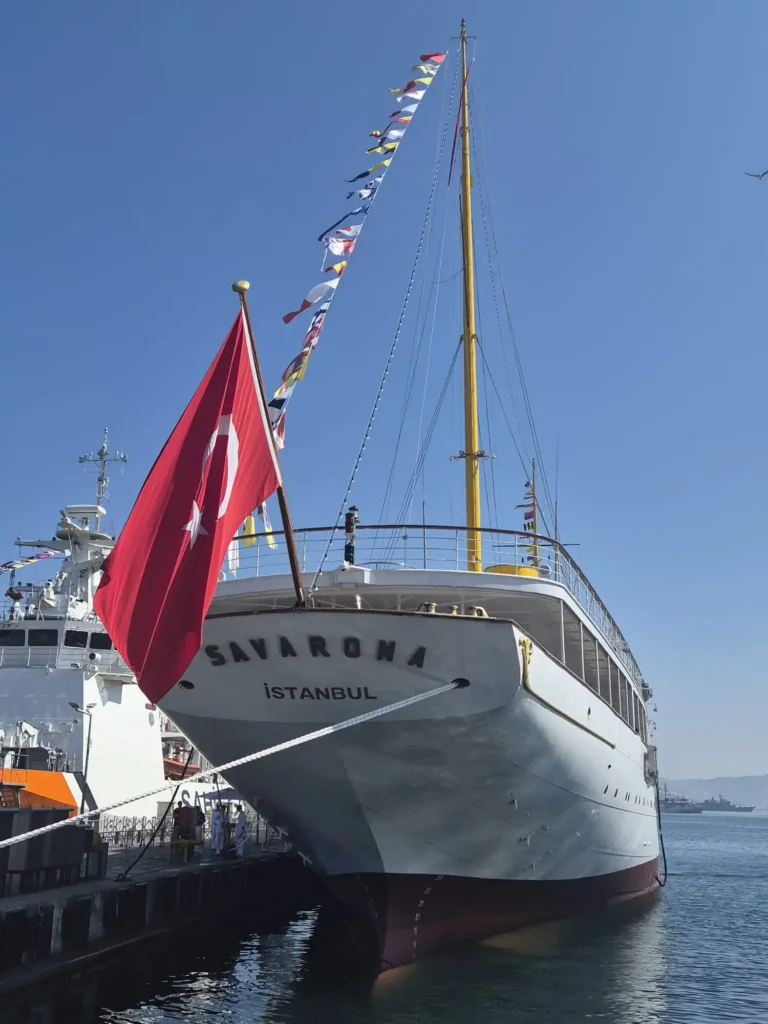
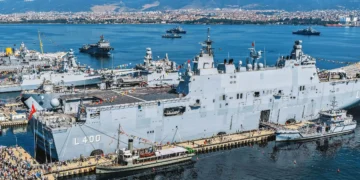
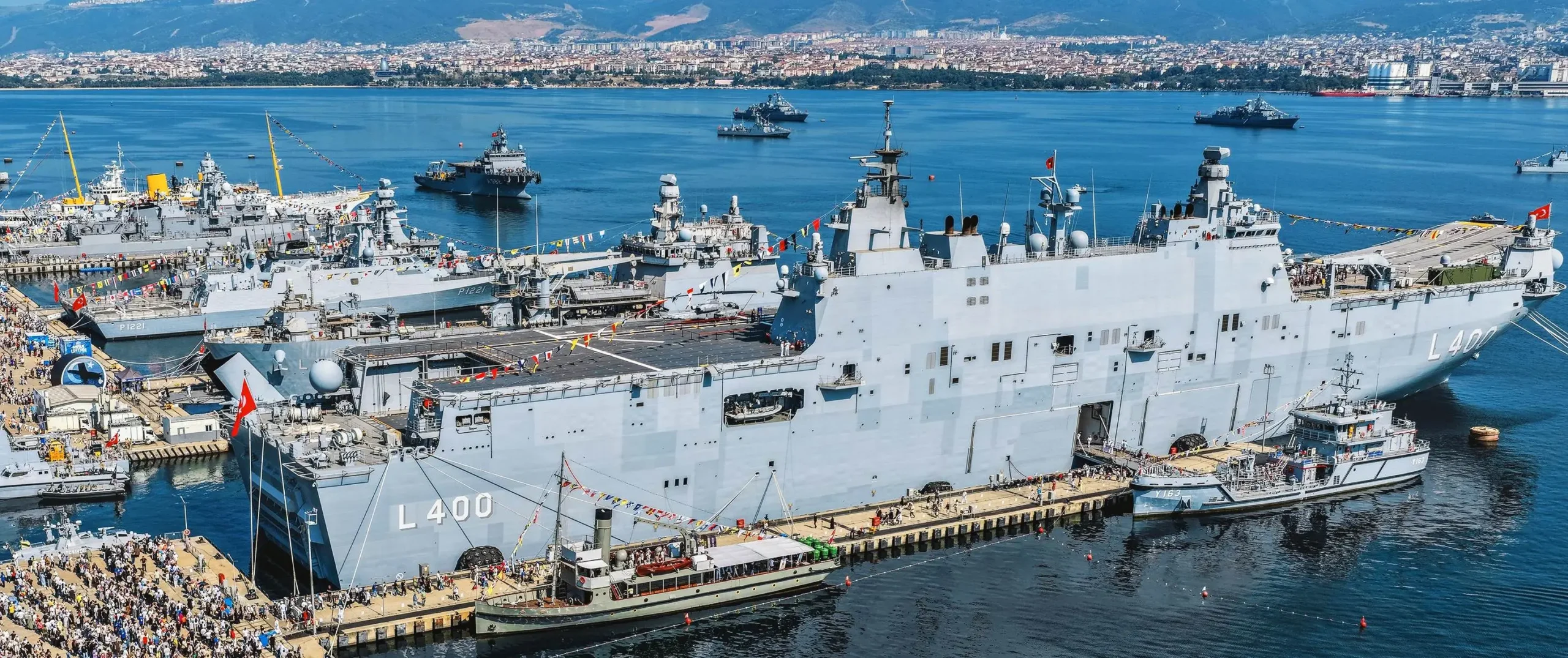
Within the scope of TEKNOFEST Mavi Vatan, a wide range of defence technologies were showcased, from different classes of Turkish Naval Forces platforms to unmanned systems. The platforms in the Navy’s inventory provided the most concrete evidence of this production. The world’s first SİHA (armed UAV) carrier TCG Anadolu, the first national frigate TCG İstanbul for which STM served as the prime contractor, submarines and the historic Savarona, which has been included in the Naval Forces Command inventory, were among these platforms.
Visitors to the event had the chance to tour flagship vessels of the Turkish Navy, including TCG Savarona, TCG Anadolu, the TCG 18 Mart submarine and the TCG Murat Reis submarine.
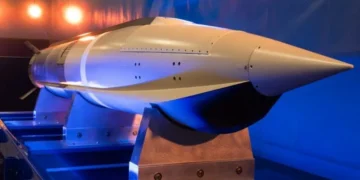
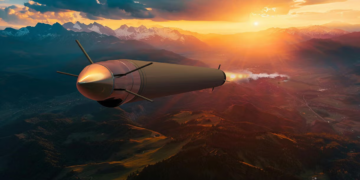
On the weapons front, Turkish engineering products such as the ATMACA guided missile, the AKYA torpedo, the HİSAR DENİZ air defence missile and the MALAMAN naval mine stood out.
Among aerial vehicles, the fixed wing TB3 unmanned aerial vehicle, deployed on the TCG Anadolu at the port and capable of operating from the ship, drew attention. Vertical takeoff and landing unmanned aerial vehicles that can be used from all ships were also on display. In this context, the Bayraktar KALKAN VTOL UAV was also added to the inventory during the event.
Similar production capability was also demonstrated underwater and on the surface. The ASELSAN KILIÇ Kamikaze USV and the TUFAN Kamikaze Unmanned Surface Vehicle were displayed in the waters off Gölcük. HAVELSAN’s AVISTA unmanned underwater vehicle, MKE’s PİRANA, and the FNSS built multi‑mission modular unmanned amphibious vehicle İ‑ZAHA, which was introduced for the first time, were also featured at the event.
Tomorrow’s Technologies and Youth Competitions
The reach of this production chain extended all the way to young people. Competitions sponsored by ASELSAN in the Unmanned Underwater Systems category and by Roketsan in the Underwater Rocket category saw young participants developing tomorrow’s technologies. The main aim of the competitions was to give young people skills in autonomous underwater navigation, stabilisation, communication, and targeted firing capabilities such as torpedo and rocket launches. These efforts functioned like a laboratory shaping the next generation of the capability displayed in the waters off Gölcük.
Building on a 945 Year Legacy
The roots of this picture go back to 1081, when the Turkish Naval Forces were established in Anatolia. While the 945th anniversary of the founding was celebrated this year in Çeşme, İzmir, the 100th anniversary of the Gölcük Shipyard, one of the Navy’s most important production centres, was also celebrated with great joy and pride. Turkish maritime history extends even further back, to the presence on the Caspian Sea before Anatolia.
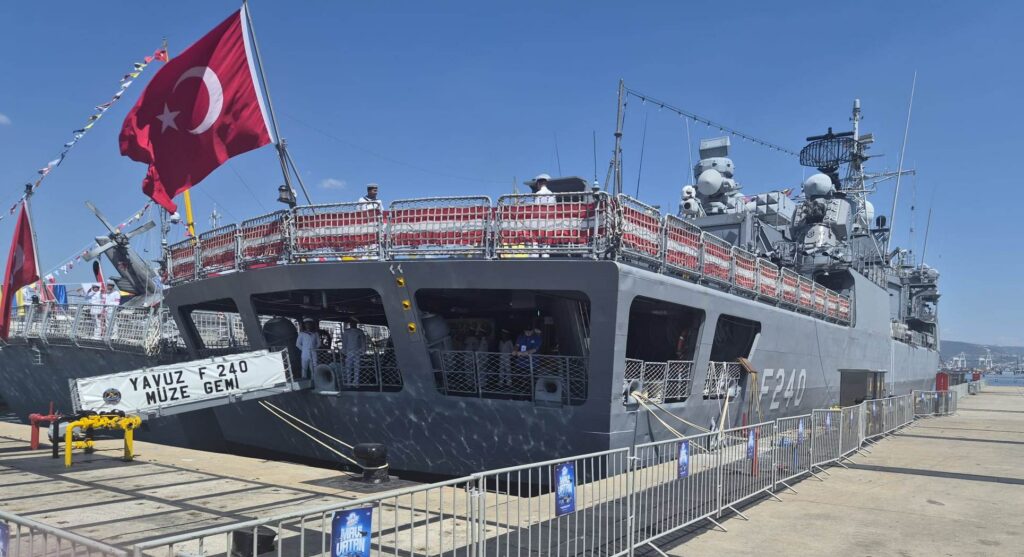
The traces of this historical continuity were also tangible at the event site. The TCG Yavuz frigate, which was decommissioned and turned into a museum ship, was opened to visitors. A replica of the shell used on the Yavuz battleship was displayed at the museum, while the Atatürk Hall on the ship conveyed the importance Mustafa Kemal Atatürk placed on maritime affairs to visitors.
The Savarona, Atatürk’s personal legacy and not a combat vessel, remains in the Naval Forces Command inventory. Alongside modern combat platforms such as TCG Anadolu, the ship took its place at the event as the most important symbol representing the Navy’s historical continuity and maritime vision.
As Admiral Ercüment Tatlıoğlu emphasised in his speech, this deep rooted legacy is encapsulated in the words of Barbaros Hayreddin Pasha: “He who rules the seas, rules the world.” Today, the Turkish engineering platforms operating in Mavi Vatan demonstrate that this legacy has been combined with modern production power. This 462,000 square kilometre area is no longer just a geographical boundary; it is the most concrete shield of Türkiye’s sovereignty and deterrence at sea, forged by its own engineering from ships to munitions, from unmanned vehicles to submarines.
This article was originally published in Turkish in the 160th issue of C4Defence Magazine.
Source: C4Defence