













Highlights
- Belgian defence gained its footing on independence under permanent neutrality and NATO membership in 1949.
- The country has a complex federal structure made up of three regions and three communities.
- Belgium’s strategic objectives centre on being a reliable partner within alliances rather than pursuing autonomous capability.
- Regional integration is deepening mainly through bilateral cooperation, most notably the naval partnership between Belgium and the Netherlands.
- Beyond its naval forces, Belgium plays an active role in NATO and broader European security cooperation.
Belgian defence is rooted in a paradox: a small, exposed state with no defensive depth that nonetheless hosts NATO’s political and military headquarters. The Kingdom of Belgium is a northwestern European state on the North Sea coast, whose territory has successively formed part of the Spanish Netherlands, the Austrian Netherlands (1714–1795), France (1795–1815) and the United Kingdom of the Netherlands (1815–1830). Independence followed the 1830 Revolution and was recognised through the 1839 Treaty of London, which imposed permanent neutrality on the new state. The 1831 Constitution established a hereditary constitutional monarchy. Neutrality was abandoned after the Second World War, and Belgium became a founding member of NATO in 1949. Six successive state reforms carried out between 1970 and 2014 turned what began as a unitary state into a federation, a structure formalised by the 1993 Constitution.

Today the country comprises three Regions (Flanders, Wallonia, Brussels-Capital), three Communities (Flemish, French and German-speaking) and ten provinces. The federal legislature is bicameral: a directly elected 150-seat Chamber of Representatives and a 60-seat Senate made up largely of delegates from the regional and community parliaments. Government is formed on the basis of a majority in the Chamber of Representatives, while the constitution requires an equal number of Dutch- and French-speaking ministers in the federal cabinet. Combined with a party system split along linguistic lines, this requirement has produced repeated government-formation crises lasting months at a time. Forming the current government, led by Prime Minister Bart De Wever, took 236 days of negotiation. De Wever has held office since February 2025, under King Philippe, who has been head of state since 2013. Internationally, Belgium is best known as the state hosting NATO’s political and military headquarters.
Belgian Defence’s Strategic Objectives
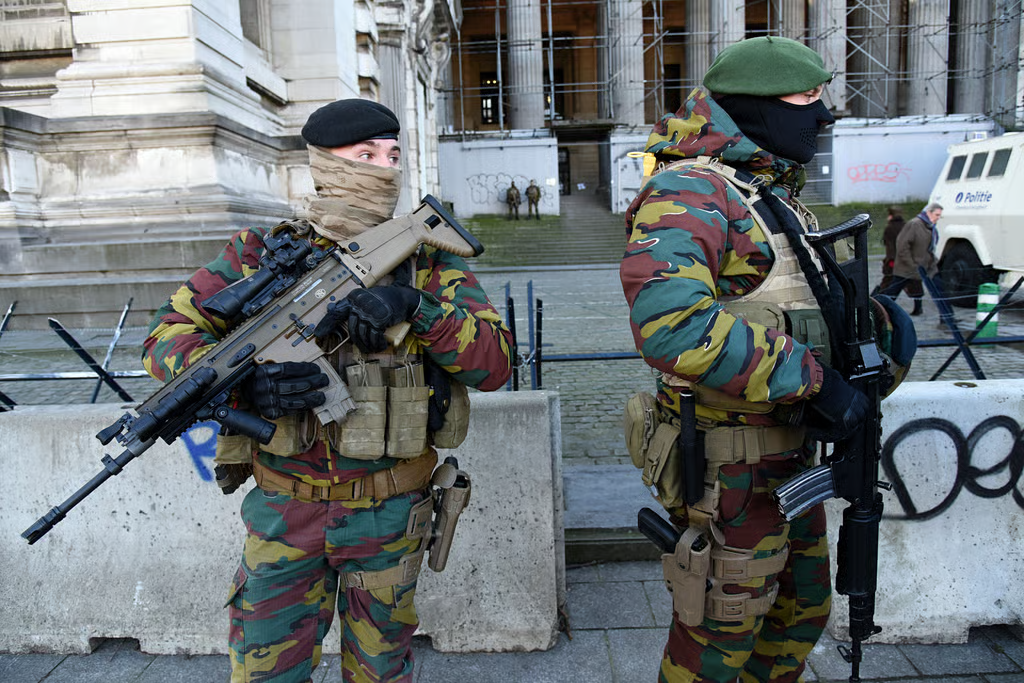
Belgium’s strategic objectives stem not from an asset it controls but from a dependency it has accepted. With a force of roughly 26,000 personnel, the country cannot secure itself alone —so the goal is not autonomous capability but reliable partnership within alliances. This is stated explicitly in the roughly 100-page Strategic Vision 2025 document, which governs the 2026–2034 period. Defence Minister Theo Francken frames the country in that document as one that can remain free and sovereign only by standing alongside loyal and strong partners and can only expect that loyalty in return by showing solidarity itself. The document rests on three pillars: a strong Belgian defence industry, clearly defined military capabilities, and targeted investment in research and innovation. Its core doctrinal shift is the abandonment of the expeditionary-force model in favour of a force structured for deterrence and high-intensity combat. The Ministry of Defence describes current readiness levels as inadequate. The tension between the two poles of Belgian policy is structural: Belgium argues that the United States’ pivot toward Asia has made a degree of European strategic autonomy necessary, and so supports building a European defence pillar within NATO. On this basis — and despite Francken’s own reservations about the programme — Belgium has joined FCAS, though without shifting the government’s broader pro-American, pro-NATO stance. Economically, the aim is to convert spending into domestic industrial capacity, including direct state investment in defence companies through sovereign wealth funds.
Regional Objectives
Belgium’s regional focus is the southern North Sea — one of the world’s busiest zones for maritime traffic and offshore infrastructure, and the sea lane connecting to Antwerp and Rotterdam. Accordingly, the navy’s core tasks extend beyond coastal defence to protecting undersea cables, pipelines and wind farms, and securing maritime shipping routes. Belgium leads NorthSeal, a six-nation infrastructure-protection platform created under a joint declaration signed with the Netherlands, Germany, Norway, the United Kingdom and Denmark in April 2024 and operational since January 2025; the platform collects satellite and underwater sensor data, archived so as to be accessible to NATO. Belgium also commands NATO’s Standing Mine Countermeasures Group.
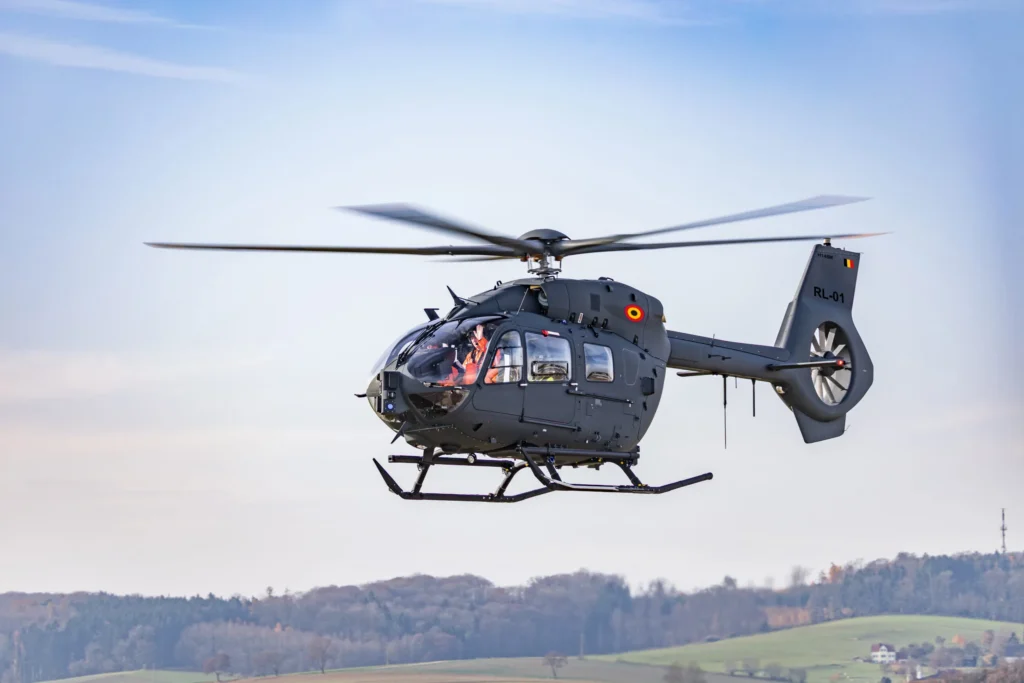
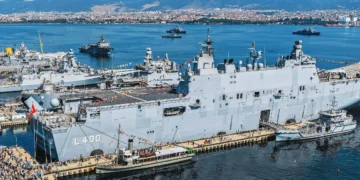
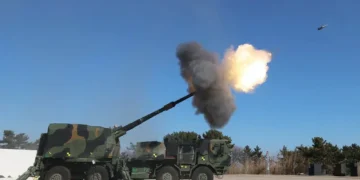
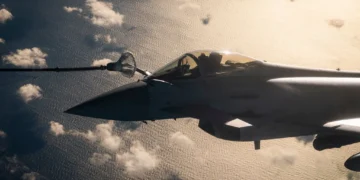
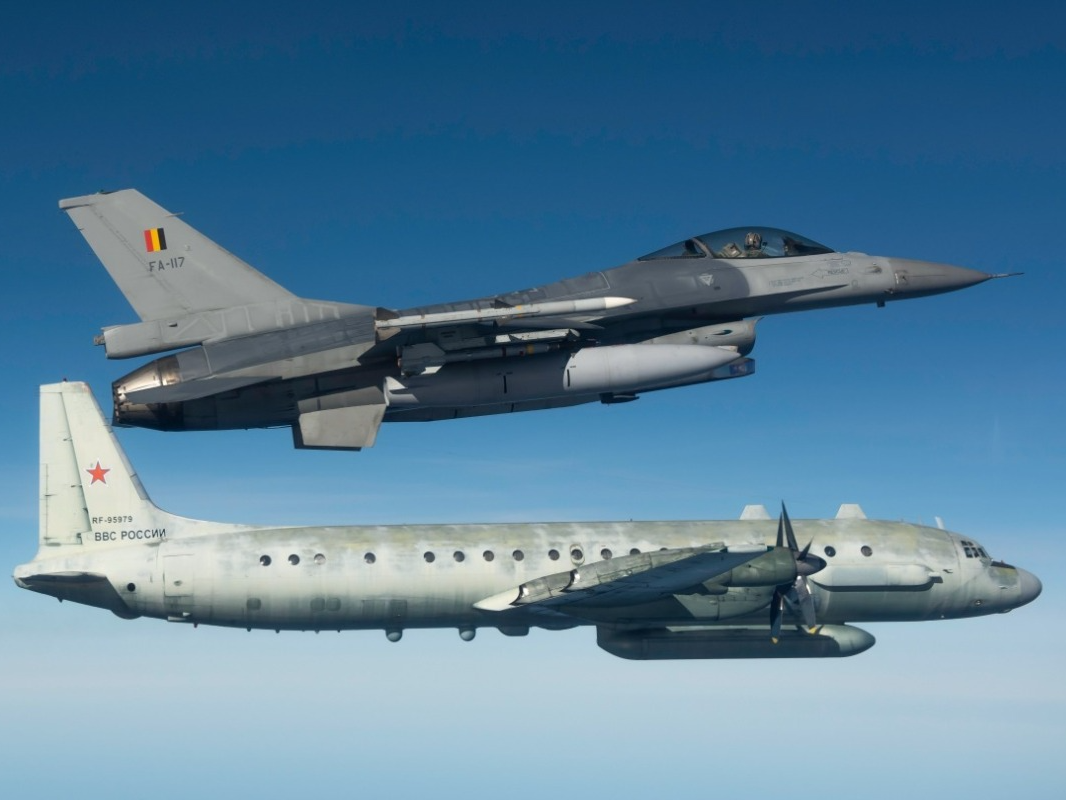
Regional integration proceeds mainly through bilateral rather than multilateral channels, and naval cooperation with the Netherlands is the deepest of these ties — spanning the joint procurement and operation of the anti-submarine warfare frigate and rMCM mine-countermeasures programmes, alongside the CaMo land-forces partnership with France. That dependency carries risk: after costs rose by more than 100% and delivery slipped from 2027 to 2033–2034, Francken launched a request-for-information (RFI) process in July 2026 with French, German, Italian, Spanish and Türkiye shipyards, ahead of an October decision on whether Belgium will withdraw from the Belgian-Dutch frigate programme. Beyond the region, Belgian forces contribute to Baltic air-policing, NATO’s forward presence in Romania and Operation Aspides in the Red Sea, and have donated F-16s and Caesar howitzers to Ukraine.
Military Objectives of Belgian Defence
Belgium’s military objectives are shaped by two imperatives: alliance integration and industrial return. The country has no national alternative capable of substituting for either. Hosting NATO’s political headquarters in Brussels and SHAPE in Mons, and — under a nuclear-sharing arrangement widely reported but never officially confirmed — the assignment of the B61 mission at Kleine Brogel to the F-35A, gives Belgium political weight that national capability alone could never provide.
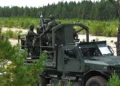
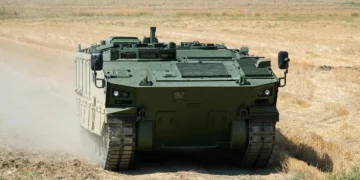
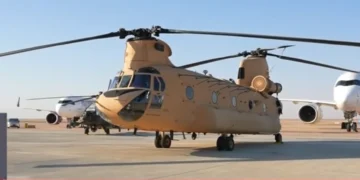
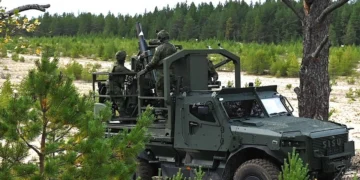
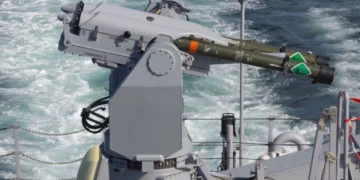
Near-term objectives centre on reconstituting the force and closing capability gaps. Plans call for raising uniformed strength from 26,000 to 29,000 by 2029 and 34,500 by 2034, increasing the reserve force fivefold to 12,800, and launching a voluntary military service scheme in 2026. Capability priorities are closing the air-defence gap and meeting a need for thousands of new armoured vehicles. Air defence is being built up in layers through the Patriot, SAMP/T, NASAMS, Piorun and Skyranger systems, alongside a third frigate, a combat drone battalion, new helicopters, MQ-9B SkyGuardian, and R&D in the space and cyber domains. A further €2.3 billion has been allocated to munitions stockpiles.
Threat Perception
Belgium faces no territorial dispute and has no hostile neighbour. Its threat perception instead rests on exposure: it hosts institutions, infrastructure and assets that make it a target, without the means to defend them.
The clearest current expression of this is hybrid pressure. Between September 2025 and January 2026, Belgium logged 558 reports of suspected drone activity, prompting closures at Brussels and Liège airports and emergency funding for counter-drone systems. Francken has described flights over Kleine-Brogel — believed to host US B61 nuclear munitions under the NATO nuclear-sharing arrangement — as coordinated and resembling espionage, though he has stopped short of citing evidence. German officials and Belgian security services have suspected Russian involvement, and the UK and Germany have sent counter-drone support. The evidence remains contested: Dutch reporting from November 2025 found that most of the reports were unfounded and that concrete evidence of Russian involvement remained limited.
The structural problems are financial. Roughly €210 billion in frozen Russian state assets sit in Europe, the bulk of it (around €185 billion) held in Belgium, at the Brussels-based custodian Euroclear. De Wever has raised concerns that, should the sanctions regime collapse, Euroclear could face a repayment obligation it cannot meet; that Russia could sue Belgium under a bilateral investment treaty; and that the war could end in a settlement that fails to produce full compensation. The Prime Minister has also pointed to the seizure of European companies’ assets in Russia and to threats against Euroclear’s management. The December 2025 EU summit ultimately financed the €90 billion Ukraine loan through EU borrowing rather than through the frozen assets themselves.
Military Geography
Belgium’s central geographic reality is its lack of defensive depth. The German border lies roughly 150 km from the coast, Brussels about 130 km from Germany and 100 km from the Netherlands. No Belgian defence plan has ever been able to sustain a battle using national territory alone — none was ever designed to. The terrain question, then, is not how Belgium defends itself but which axes an adversary would use, and which ground would channel or delay an ally’s advance enough to matter.
The coastal polders and Flemish plain sit at or below sea level, laced with canals and dikes — terrain unsuited to armoured operations and, if necessary, capable of being flooded. This is the same mechanism that halted the German advance at the Yser in 1914; its modern equivalent is that the same drainage network still forces any approach along dike routes. Central Belgium, the loess plateau between the Scheldt and the Meuse, is a classic corridor by contrast — gently rolling and highly suited to operations. It remains the fastest route from the North German Plain to the Channel, and the ground an adversary would use. The Ardennes rise to 694 metres at Signal de Botrange, densely forested and deeply cut by the Ourthe, Amblève, Lesse and Semois rivers. The Ardennes are not an obstacle in themselves, but movement there is constrained to a limited number of roads, defiles and bridges — and if these chokepoints can be held, Belgium could buy time until allied reinforcements arrive.
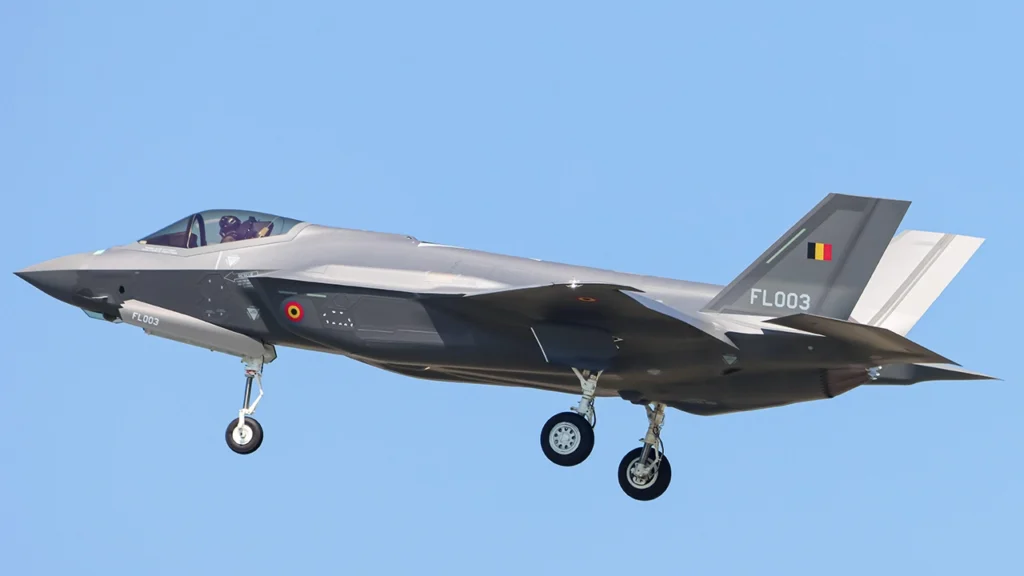
The Meuse, along the Liège–Namur–Dinant line, is Belgium’s only defensive line; the Brialmont fortress ring and later Eben-Emael were built to hold it. Eben-Emael was also the site of a bitter episode in Belgian airborne history: the country’s strongest fortification was neutralised in under half a day by roughly 80 glider-borne engineers. Central Belgium’s flat, open, obstacle-poor farmland remains a favourable drop and landing zone today, while the Ardennes — unsuited to unit-scale airborne operations — remain highly suited to infiltration.
Belgian Defence: Overall Force Structure
Under the constitution, the King holds formal command of the armed forces as commander-in-chief, though this authority is exercised by the federal government. Defence policy is set by the Council of Ministers and the Ministry of Defence, currently led by Theo Francken, while the budget is drawn up through the federal budget process and voted on by the Chamber of Representatives.
Belgium moved away from separate service-command structures in the 2002 reform; there are no independent army, navy or air force headquarters. A single Chief of Defence commands the Land, Air, Navy, Medical and Cyber Components, together with the ministry’s headquarters units and directorates-general, covering more than 30,000 military and civilian personnel. The Chief of Defence heads the armed forces and reports directly to the Minister of Defence, advising the minister and implementing defence policy. Appointed by royal decree on the minister’s recommendation, the Chief of Defence also represents Belgium on NATO’s Military Committee. Lieutenant General Frederik Vansina, from the Air Component, has held the post since July 2024, supported by a Deputy Chief of Defence and a Secretary-General.
Manpower
The armed forces have been fully voluntary since conscription was suspended in 1992 and formally ended in 2006. Active strength stood at 26,389 in 2025, with a reserve of around 6,600. Targets call for 29,000 by 2029 and 34,500 by 2034, alongside more than tripling civilian personnel. The 2026 recruitment drive opened 4,800 posts: 2,800 military, 1,050 reserve, 960 civilian.
The problem is not recruitment but retention. Between 2020 and 2022, 7,086 recruits were taken on, but 3,116 left or were discharged during basic training — a 44% attrition rate, meaning the institution lost more personnel in basic training over three years than it takes in during an average single year. Without a change in that ratio, the 34,500 target is arithmetically out of reach regardless of application volume.
Economic Strength
Belgium is a roughly €650 billion, high-income, services- and trade-driven economy, with GDP per capita around €55,000. But what the country can sustain militarily is determined by its fiscal position, not its output. The economy grew 1% in 2025, driven by private consumption, while investment slowed and net exports turned negative. Growth is expected to slow to 0.6% in 2026 before recovering to 1.1% in 2027 and 1.3% in 2028. Headline inflation, driven by energy prices, is set to rise from 3% in 2025 to 3.4% in 2026 before easing to 2.6% in 2027. Automatic wage indexation — unusual within the EU — passes inflation directly through to labour costs and public-sector wages.
The structural problem is a persistent budget deficit on top of an already high debt stock. General government gross debt stood at 107.9% of GDP at the end of 2025 and is projected to reach 112.8% by 2027. The budget deficit was 5.2% of GDP in 2025 and, with rising interest costs, is expected to widen to 5.7% by 2028; the Federal Planning Bureau projects debt approaching 120% of GDP by 2030. The Commission draws the link explicitly: the deficit’s renewed rise in 2027 is attributed directly to increased defence and interest spending.
Belgian Defence Doctrine
Belgian doctrine rests on a deliberate gap. Rather than maintaining a balanced national force, Belgium sustains specialised modules designed to plug into allied structures — accepting permanent dependency in exchange for capability it could not otherwise afford. Armoured forces have been abandoned entirely (the last Leopard 1s were retired in 2014, the gun-armed Piranhas in 2015), leaving Belgium without a main battle tank. Until NASAMS, the country had no ground-based air-defence system at all.
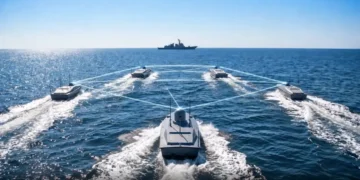
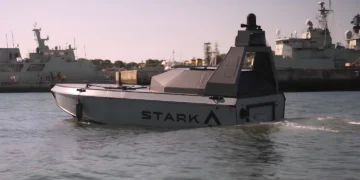
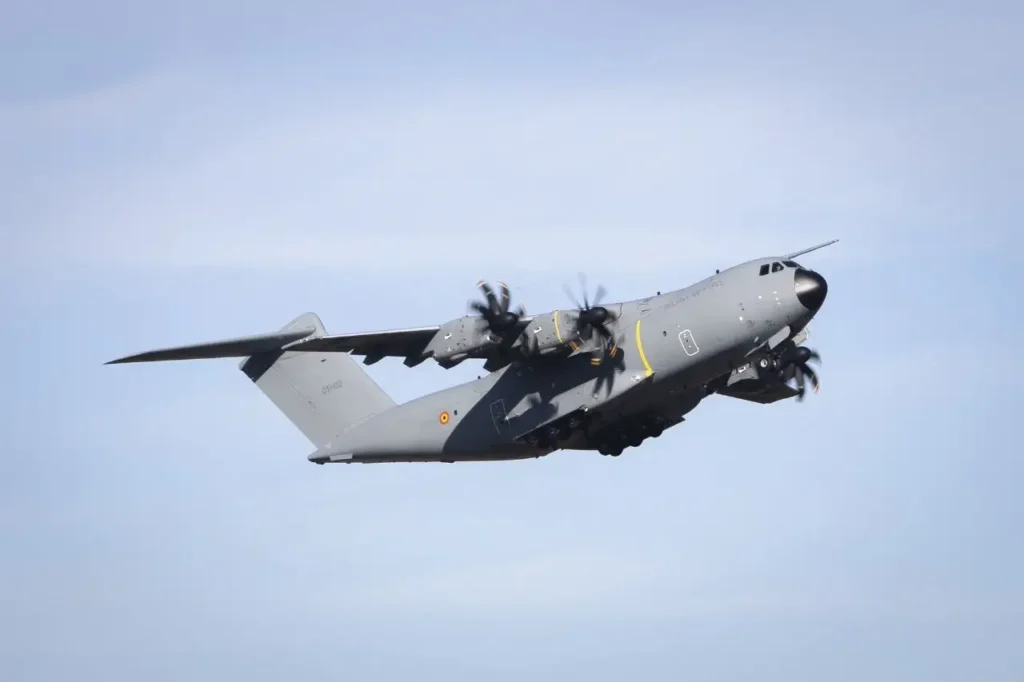
This integration goes beyond cooperation into institutional structure. Belgian and Dutch naval forces operate under a single command, Admiral Benelux, sharing personnel, training and procurement, while the CaMo partnership integrates Belgian land forces into French Land Forces doctrine, training and equipment standards. Air transport runs through the European Air Transport Command, and the nuclear-sharing mission at Kleine Brogel ties the air component directly into NATO’s deterrence posture. Mine countermeasures is the one area where Belgium seeks recognised leadership beyond mere participation, and the rMCM programme is likewise built around unmanned systems.