














Taiwan’s Air Force has set aside NT$1.56 billion (roughly US$49.2 million) to overhaul the TC-1L, the short-range air defence missile that guards Taiwan’s air bases until American-made NASAMS batteries take over. The funding will keep the system, already in service for more than two decades, running through at least 2031.

A budget bill submitted by the Ministry of National Defence to the Legislative Yuan lists a project for the TC-1L under the Air Force’s logistics and communications budget line, titled “Vehicle-Mounted Chien I Depot-Level Maintenance.” The NT$1.56 billion allocated to the project will be spent between 2027 and 2031 through Taiwan’s National Chung-Shan Institute of Science and Technology (NCSIST). The first year alone accounts for NT$268.59 million of that five-year total.
Why the TC-1L Needs an Overhaul?
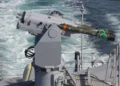
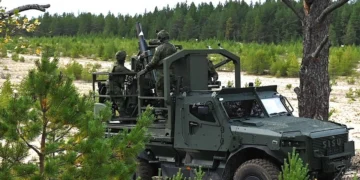
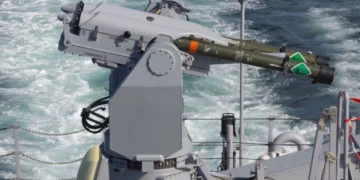
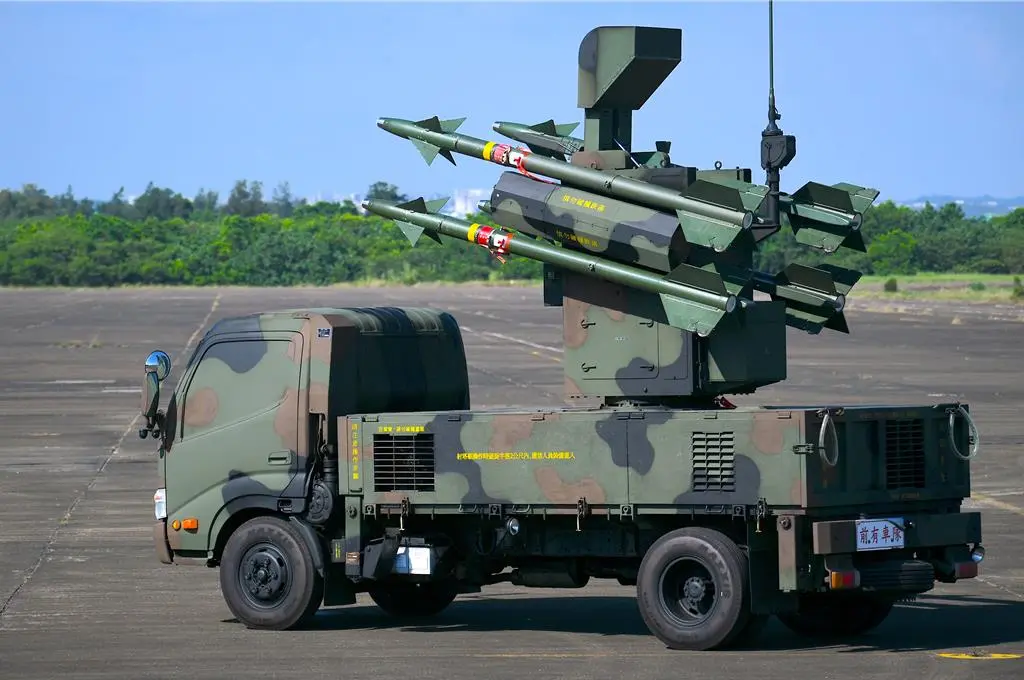
Taiwan has fielded the TC-1L since 2000. Over the years, the Air Force’s anti-aircraft artillery units have acquired somewhere between 17 and 20 of the systems, spreading them across major air bases nationwide to cover low-altitude, short-range threats. Mounted on a civilian truck chassis, each launcher carries four domestically built TC-1L missiles with a range of about 9 kilometers, guided by a laser rangefinder and electro-optical targeting system.
The TC-1L’s age is showing in two ways. Inside the missiles, the solid rocket motor, electronic seeker, and battery are all nearing the end of their rated service life. On top of that, years spent parked along the coast and at air bases have left the launch vehicles’ chassis corroded by salt. The new funding covers both problems — replacing the missiles’ worn components and refurbishing the chassis and short-range search radars.
TC-1L Holds the Fort Until NASAMS Arrives
Taiwan’s longer-term plan is to phase out the TC-1L entirely once NASAMS is fully online. An initial batch of three NASAMS batteries has already been procured, with more orders expected, and the system is projected to reach initial operational capability by the end of 2031. The gap between the two systems is stark: the TC-1L’s fire control computer still runs on Microsoft Windows, while NASAMS relies on a far more capable Fire Distribution Center that pulls real-time data from multiple sources over a tactical data link. The missiles tell the same story — NASAMS fires the medium-range AIM-120, dwarfing the TC-1L’s 9-kilometer reach.
🔍 You May Also Like
Source: C4Defence- China Times