










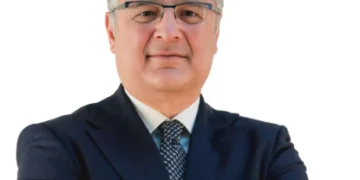





Founded with the dream of hypersonic civil aviation, Destinus now defines itself as a “European defence manufacturer.” In an exclusive interview with C4Defence, CEO Mikhail Kokorich detailed the strategy behind this transformation, the Rheinmetall partnership that opened the door to the German Bundeswehr, how battlefield feedback translates directly to the production line, and possible collaboration scenarios with Türkiye’s defence industry. Kokorich emphasised that the company’s geographic footprint spanning Spain, the Netherlands, Switzerland, and Ukraine is not merely a production network but a strategy in and of itself.
C4Defence: Destinus started out with a vision for hypersonic civil aviation, yet today your website defines the company as a “European defence manufacturer.” Was this a deliberate strategic pivot, or a transformation that was anticipated from the very beginning? What was the primary driving force behind that shift?
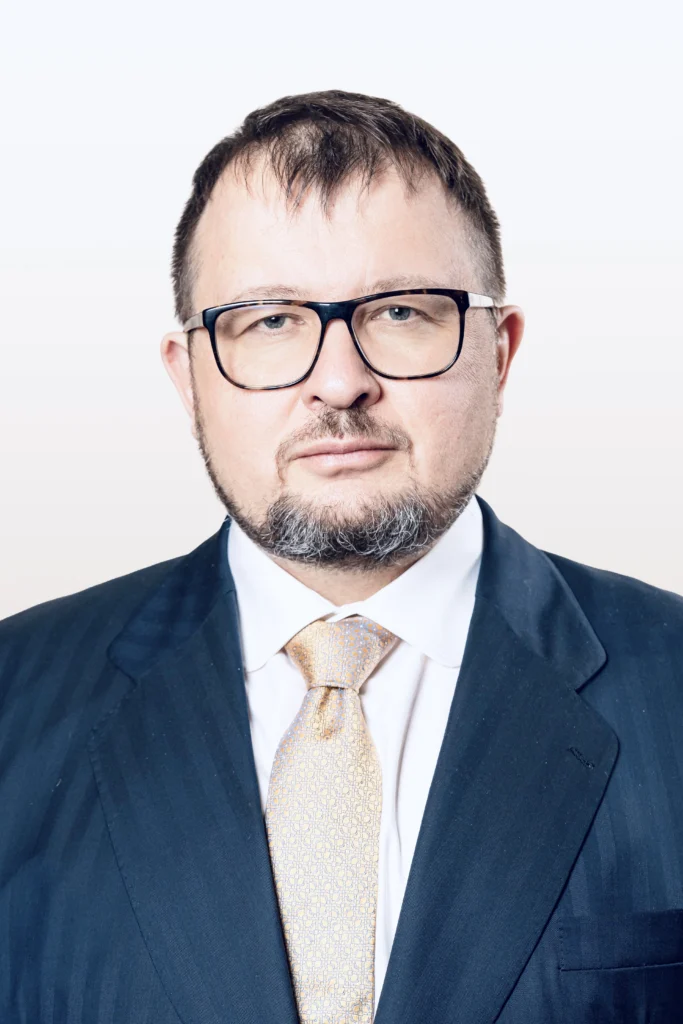
Destinus CEO Mikhail Kokorich: It was a deliberate strategic pivot, but not a random one. Destinus began with a strong base in propulsion, high-speed flight, autonomy, and advanced aerospace engineering. What changed was the European security environment, and with it the practical industrial question Europe needed answered.
The central lesson of the past few years is that Europe’s challenge is no longer recognising the threat. It is turning urgency into deployable capability at scale. That pushed Destinus toward a much sharper mission: building scalable strike and air-defence systems around propulsion, guidance, autonomy, and repeatable industrial output.
In that sense, the company did not abandon its engineering DNA. It redirected it toward what we see as one of the most urgent sovereign capability gaps in Europe: the missing deep-strike layer. Europe does not only need high-end systems on paper. It needs systems that can actually be produced, fielded, and replenished in meaningful numbers within NATO and allied frameworks. That is the industrial problem Destinus is built to address.
C4Defence: The war in Ukraine has produced critical lessons for the defence industry: low cost, high production rates, and electronic warfare resilience among them. How has that real-world combat feedback shaped Ruta’s design and Destinus’s development cycle? How different is building a product around battlefield data compared to conventional development processes?
Mikhail Kokorich: The biggest difference is tempo. Conventional defence development often runs on multi-year cycles between design, testing, review, qualification, and fielding. Operational experience in high-intensity environments compresses that cycle dramatically. Direct feedback on navigation resilience, launch architecture, survivability in EW-contested environments, operator workflows, and structural performance changes what needs to be improved in the next iteration.
That has shaped Destinus in two ways. First, it reinforced the idea that production architecture is part of combat power. If a system is to matter operationally, it must not only work. It must also be manufacturable and replenishable at the rate conflict consumes it. Second, it accelerated engineering iteration through what we describe as a battlefield-to-bench flywheel: deployment, feedback, redesign, retest, and redeployment. Destinus’ own materials describe this as a core differentiator, with operational feedback directly linked to engineering and production updates.
🔗Related News: All Details on the Missile Partnership Between Rheinmetall and Destinus
More broadly, the lesson is not just about range. It is about cost, mass, launch density, and replenishment. That is why the company frames the transition as one from slow attritable drone logic to faster, containerised, scalable cruise systems. It changes both strike economics and the burden placed on air defence.
The Deep Strike Layer of the Destinus and Rheinmetall Partnership
C4Defence: Your partnership with Rheinmetall and the planned production at Unterlüß are significant steps. What concrete advantages will this bring in terms of NATO integration, both in prototyping and across the supply chain? Would reaching Bundeswehr and broader European institutional customers have been feasible without Rheinmetall?
Mikhail Kokorich: The advantage is practical, not symbolic. Rheinmetall brings German manufacturing scale, qualification capability, programme execution discipline, and established industrial credibility in one of the most important defence markets in Europe. Destinus brings strike-system architecture, propulsion, autonomy, and an existing serial-production logic. Together, that creates a German industrial route for a sovereign European strike layer rather than another long policy debate about it.
From a NATO perspective, the key point is not branding by association. It is that the systems are designed to integrate into NATO-relevant architectures and allied command environments, while production, qualification, and supply-chain depth move into a German industrial framework. Destinus’ architecture is explicitly built around defined external interfaces for ISR, battle-management systems, launcher platforms, and partner autonomy layers, while retaining control over safety-critical and control-critical architecture.
Could Destinus have reached institutional customers without Rheinmetall? In principle, yes. In practice, much more slowly and with a higher institutional-access burden. Germany is one of the few places in Europe where industrial depth, sovereign demand, manufacturing credibility, and political weight converge at scale. That matters if the objective is not a niche programme, but a replenishable arsenal layer for NATO and allied users.
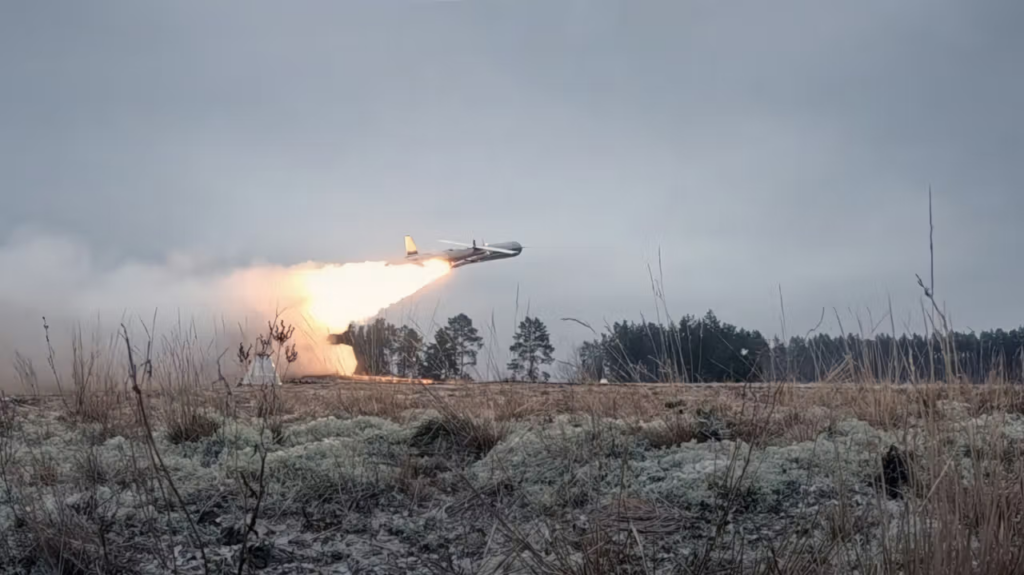
A New Defense Model Scaling to Mass Production in Five Years
C4Defence: Reaching serial production, forming multiple partnerships, and acquiring companies such as Daedalean and Aerialtronics all within roughly five years represents an exceptionally fast pace. What is the operational model that makes this speed possible? And what is the single most critical constraint on Destinus’s growth today?
Mikhail Kokorich: The operating model is architecture-first and bottleneck-driven. Destinus is not trying to become a loose federation of niche products. The company’s strategic framework is explicit: it exists to solve the cost-scale-control equation of modern conflict. That means central design authority, shared technology across strike and air defence, selective vertical integration where bottlenecks matter, and production architecture designed for serial output from the start.
That is what makes speed possible. Shared propulsion, guidance, seekers, autonomy, communications, warheads, and fuzes reduce duplication across the portfolio. The broader architecture is built to let each product family inherit proven subsystems and production logic rather than start from zero. Destinus’ own materials describe this as a unified architecture under central design authority, with systems designed for production in the thousands per year rather than bespoke assembly.
The single most critical constraint today is not demand, and not concept generation. It is controlled production at scale under qualification, supply-chain, and delivery pressure. Europe has plenty of ideas. The hard part is converting them into certified, replenishable output fast enough to meet the market window. That is why the company is so focused on qualification, production discipline, and industrial partnerships that compress time without fragmenting architectural control.
🔗 Related News: Destinus Launches New 2,000 km Range Missile Program
C4Defence: Türkiye has built serious momentum in recent years across ammunition, UAVs, and propulsion systems, making it a country that could be seen as both a potential competitor and a cooperation partner. Is meaningful collaboration between Destinus and Turkish defence industry companies a realistic scenario going forward? In that equation, does competition or complementarity come to the fore?
Mikhail Kokorich: Meaningful collaboration is realistic. The right frame is not either competition or cooperation. It is selective complementarity in areas where industrial strengths are different and where systems can remain interoperable without diluting control-critical architecture.
Türkiye has built real strength across tactical and operational-level systems, including UAVs, guided munitions, propulsion, and broader defence manufacturing. That deserves serious respect. Destinus’ core strength sits in a somewhat different layer: strike-and-interception architecture, GNSS-denied navigation, guidance and autonomy, in-house propulsion, and production logic built around scalable European sovereign capability.
Those strengths are not automatically contradictory. In a NATO context, the more interesting question is where complementarity can produce faster capability generation, stronger resilience, and lower cost-per-effect for allies. At the same time, Destinus’ doctrine is clear: modules can be open for cooperation, but system integration and architecture control are not. So there is room for cooperation, but only within a framework where design authority, certification-critical architecture, and sovereignty logic remain intact.
C4Defence:How do you assess Spain’s evolving role in European defence and aerospace? We note that Destinus Spain has been developing propulsion and auxiliary systems technologies under the CRIPICOM project with EU funding, suggesting Spain is not merely a commercial base for you, but an active R&D hub. What is Spain’s precise role in Destinus’s growth strategy? And has France been left behind?
Mikhail Kokorich: Spain is not a commercial outpost. It is one of Destinus’ core engineering and manufacturing anchors. The company’s own materials describe Spain as a major R&D and manufacturing node, particularly for interceptor systems, with a substantial engineering and production team there. In other words, Spain plays an active role in product development and industrial scale-up, not just market access.
More broadly, Destinus operates through a distributed European model rather than a single-country stack. That is part of its industrial doctrine: distributed manufacturing, internalisation of bottlenecks, and a footprint designed for resilience, regulatory diversification, and scale. In that structure, different countries play different roles. Spain contributes interceptor R&D and manufacturing. The Netherlands anchors headquarters and propulsion. Switzerland adds AI, autonomy, and engine testing. Germany adds industrial depth and the Rheinmetall route. Ukraine contributes manufacturing and the operational feedback loop. France contributes R&D capability.
France has not been left behind. It remains an important part of both the European defence ecosystem and Destinus’ footprint. But its role within the company is currently more focused on R&D than on large-scale production. That is not a political statement. It is simply a functionally differentiated industrial model. And for a company whose proposition is sovereign European strike and interception capability, the footprint itself is part of the product.
Originally published in Turkish in C4Defence magazine, Issue 158.
🔍 You may also like
Source: C4Defence