




































Contents
- Why Are the 2026 U.S. Midterm Elections Important, and What are their Implications?
- Powers of the U.S. Congress and Possible Election Outcomes
- The U.S. Senate: The Legislative Branch
- The U.S. House of Representatives: A Check and Balance in the Legislative Branch
- The Implications of Israel’s October 27 Elections for the United States
- How Do the US Electorate and Inflationary Pressures Impact the Ballot Box?
- Rising Household Expenditures on Food, Fuel, Education and Healthcare in the United States
- Conclusion: Election Results and Their Potential Impact on US Foreign Policy
- Iran and the Strait of Hormuz: A Sharp Sword Between Peace and War
- Ceasefire in the Ukraine War: Russia–China–U.S. Summit
“The Most Important Midterm Elections in Our Country’s History” Donald Trump
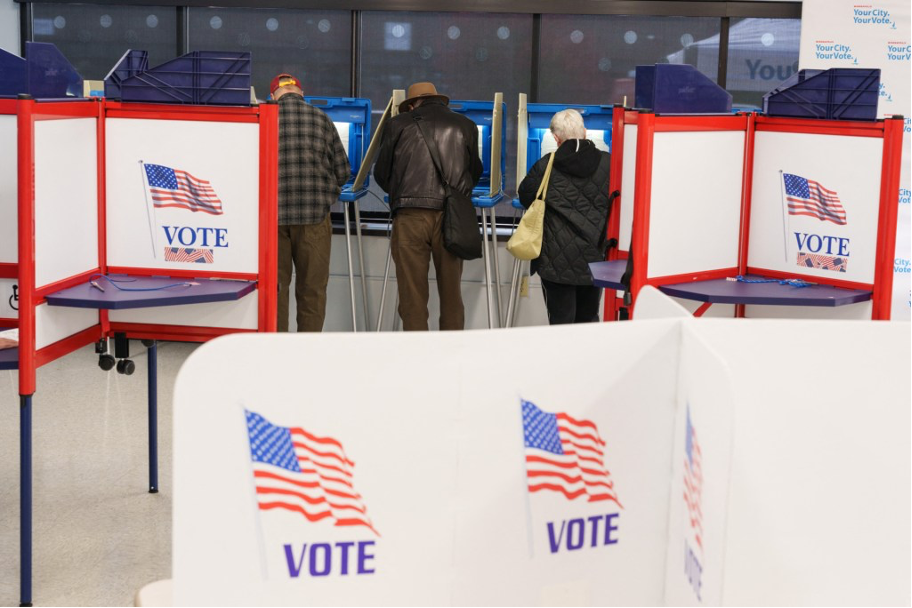
On November 3, Americans will head to the polls to elect all members of the House of Representatives, where the Republican Party secured a majority in 2024, and one-third of the Senate. Although Donald Trump will not be on the ballot, these elections represent the first major national test of his second term. Therefore, the outcome will test the confidence that the voter base which returned Trump to the presidency continues to place in him. More importantly, however, it will determine the institutional checks on his power and influence the debate within the Republican Party over the continuation of his agenda ahead of the 2028 presidential election.[1] The midterm elections scheduled for next month will test Donald Trump’s second term and determine whether Democrats can regain political power in Washington. Polls show that Trump’s approval ratings are at their lowest levels across his two presidencies due to widespread economic dissatisfaction and the unpopular war against Iran.[2] In the United States, incumbent presidents and their parties generally suffer setbacks in midterm elections. Indeed, Donald Trump’s public support is at historically low levels for a president still in the first year of his second term. Moreover, the first year of this term has been even more turbulent than that of his first term. Senior positions within the administration continue to change hands frequently. Trump’s unpredictable decisions, made through an early-morning tweet or impulsive remarks delivered in front of cameras, continue to shake markets and societies around the world.[3] Control of Congress is likely to be fiercely contested in the 2026 midterm elections; while Democrats have a slightly higher chance of regaining the House of Representatives, Republicans hold an advantage in the Senate. The midterms could increase the likelihood of divided government, which may limit major legislation but increase risks related to oversight, spending deadlines and debt ceiling negotiations. Markets generally experience election-related volatility, but history shows that investors are usually better served by focusing on long-term objectives rather than making portfolio decisions based on election results. Voters across the country will head to the polls on November 3 to elect 435 members of the House of Representatives, 35 senators, 36 governors and thousands of local officials.
Why Are the 2026 U.S. Midterm Elections Important, and What are their Implications?
The U.S. midterm elections scheduled for November 3, 2026, could significantly alter the political balance in Washington as Democrats attempt to overturn Republican control of Congress midway through Donald Trump’s second presidency. If turnout reaches a level similar to that of the 2022 midterm elections, more than 100 million Americans could vote; this is a relatively high figure compared with the more than 155 million votes cast in the 2024 presidential election. Although the president himself will not be on the ballot, the results will serve as a national assessment of his economic policies, leadership and legislative priorities. Republicans currently control both the House of Representatives and the Senate, giving Trump a significant advantage in pursuing his agenda. Losing either chamber would make it more difficult to pass major legislation and subject the administration to greater congressional oversight. The election also comes at a sensitive economic time, with high consumer prices, rising energy costs and concerns about household purchasing power influencing voter sentiment. These issues could affect both the election outcome and the direction of economic policy over the next two years.[4] Midterm elections are almost always a referendum on the president and his party; in this case, that president is Donald Trump, two years after his return to Washington. Much of the national attention will focus on the battle for Congress. Will Democrats be able to capitalize on concerns about the cost of living and disappointment with the president to secure majorities in the House of Representatives and the Senate, or will Republicans successfully defend their agenda with the help of a favorable electoral map? However, there are also critical down-ballot races in every state, numerous important gubernatorial contests that could influence the next presidential election, and issues such as abortion access and data centers.[5]

Powers of the U.S. Congress and Possible Election Outcomes
The U.S. Congress, as the legislative branch, consists of two separate chambers. This structure is known as the bicameral system and emerged as a result of the Connecticut Compromise (Great Compromise). House of Representatives: It consists of a total of 435 members. The number of representatives allocated to each state is determined by its population (e.g., California, with its large population, has more representatives, while Wyoming has fewer). Members are elected for two-year terms. The House has a more dynamic structure, designed to represent the direct and immediate will of the people. Senate: It consists of a total of 100 senators. Regardless of population, each state is equally represented by two senators. Senators are elected for six-year terms, and one-third of the Senate is renewed every two years. It was designed as a more stable chamber of “wise men”, intended to protect states’ rights and be less susceptible to populist fluctuations. The U.S. Electoral System and the Electoral College: U.S. presidential elections are determined through the Electoral College system rather than directly by the popular vote. This is one of the most widely debated electoral mechanisms in the world.
Both chambers have significant powers affecting the executive and judicial branches. The most prominent of these is legislative authority. During each congressional term, Congress passes hundreds of bills into law from an average of 17,000 bills and resolutions introduced by its members. Through these laws, Congress can override certain presidential directives. One of the fundamental powers associated with Congress is the appointment confirmation process. Specifically, the president nominates ambassadors, Foreign Service officers, federal judges and Supreme Court justices, officials in cabinet-level departments, independent agencies and military units, as well as U.S. marshals, and appoints them following Senate confirmation. Senate approval is also required for the ratification of international treaties. However, in recent decades, presidents have increasingly preferred to use “executive agreements” to conclude international arrangements without submitting them to the Senate for approval.
Another important and highly visible congressional power is the authority to compel individuals or organizations to provide testimony, documents or other evidence through investigations and subpoenas as part of its investigative and oversight functions. Since the 2000s, Congress has launched major investigations, including the September 11 Commission, investigations into the 2007–2009 financial crisis, and the Select Committee established to investigate the January 6 attack on the U.S. Capitol. The Constitution also grants the House of Representatives the power of impeachment and the Senate the authority to conduct impeachment trials. A conviction requires a two-thirds vote in the Senate, and the penalty for an official found guilty is removal from office without the possibility of appeal. Finally, both chambers judge the qualifications of their own members in contested elections, and both have the authority to censure or expel their members under certain circumstances, although such actions are rare.[6] If Republicans lose their congressional majorities, it will become considerably more difficult for them to pursue their policies.
This year’s elections, however, are primarily for congressional seats rather than the presidency. They are called “midterm elections” because they take place halfway through a four-year presidential term. Members of the U.S. House of Representatives serve two-year terms. Therefore, every seat in the House is contested in each national election, which always takes place in even-numbered years. Senators, by contrast, serve six-year terms, with approximately one-third of Senate seats contested every two years. In the 2026 midterm elections, 33 of the 100 Senate seats will be contested. In addition, gubernatorial elections will be held in 36 of the 50 U.S. states.[7]
The U.S. Senate: The Legislative Branch
The current Senate majority consists of 53 Republicans and 47 Democrats, including two independent senators who caucus with the Democrats. To gain control of the Senate, Democrats need to win four additional seats in November. Gaining three seats would not be sufficient because, in the event of a 50–50 tie, Republican Vice President JD Vance would cast the deciding vote. A total of 35 Senate seats will be contested in the 2026 elections, of which 22 are currently held by Republicans and 13 by Democrats. Thirteen incumbent senators will not return, including 10 who are retiring (six Republicans and four Democrats), two Republicans who lost their primary elections in their bids for re-election, and the late Senator Lindsey Graham (R-S.C.), who passed away last month.
The U.S. House of Representatives: A Check and Balance in the Legislative Branch
Republicans have used redistricting to improve their structural position, but the national political climate still favors Democrats. Changes to electoral maps have turned what appeared to be a relatively straightforward Democratic victory into a more competitive contest. Nevertheless, polls, election assessments and forecasting models indicate that Democrats are modest favorites to take control of the House of Representatives in January 2027. A Democratic victory by a margin of eight to twelve seats would be considered a strong performance. However, a few races going in the opposite direction could be enough for Republicans to retain control by a narrow margin.[8]

Meanwhile, more than 40 countries are expected to hold, or have already held, national elections in 2026, representing more than 1.5 billion people worldwide and making it another landmark year for democracy. From established democracies to more fragile political systems, several significant elections will shape both domestic political trajectories and international relations. Among the most closely watched elections, the U.S. midterms, which will determine control of Congress in November, are attracting considerable attention worldwide.
The Implications of Israel’s October 27 Elections for the United States
The political situation in Israel adds another potentially explosive variable. Prime Minister Benjamin Netanyahu faces elections on October 27, with his bloc struggling to secure a majority. He has built his political reputation on the claim that only he can neutralize the Iranian threat.[9] Israel’s upcoming elections could change its leadership, but experts believe that its strategic approach will remain largely unchanged and that Iran will continue to be its primary adversary. Military action is likely to remain Israel’s preferred approach, while the prospect of establishing a Palestinian state remains remote. The assumptions underpinning Israeli policy have been reinforced by the Hamas attacks of October 7, 2023, and the conflicts in Gaza, Lebanon and Iran. Analysts suggest that if Prime Minister Benjamin Netanyahu wins again with the support of his far-right coalition partners, he could intensify military operations, tighten control over the occupied West Bank and further marginalize diplomatic efforts.[10]
As is known, Israel’s elections are scheduled for October 27. According to tracking data from the Israeli news outlet Haaretz, the opposition alliance led by Gadi Eisenkot’s Yashar party is expected to win the largest number of seats, with 52, while the coalition led by Netanyahu’s Likud party is projected to secure 51 of the 120 seats in the Knesset.[11]
On Sunday, President Donald Trump endorsed embattled Israeli Prime Minister Benjamin Netanyahu in the final stages of his re-election campaign. Given Trump’s popularity, this was a highly sought-after endorsement. However, the American president had withheld his support for months as the election approached and the leaders’ strategies in the Middle East diverged. In a social media post, Trump described Netanyahu as “a great wartime prime minister in confronting the Islamic Republic of Iran and an even greater partner for peace.” In a statement published in Hebrew on X, Netanyahu said, “Thank you, President Trump, for your tremendous support and cooperation. Together, we will finish the job!”[12]


Israeli Prime Minister Benjamin Netanyahu’s main opposition challenger in the October 27 elections is former General Gadi Eisenkot.
Netanyahu said, “I am deeply honored and grateful for your extraordinary support. Israel has never had a greater friend in the White House. And that would be an understatement.” Netanyahu also praised Trump for being “unaffected by domestic criticism” over the war against Iran. He directed several parts of his speech at American voters in an effort to rally support for Trump’s Republican Party amid questions about the rising cost of living.[13] Trump said that if Netanyahu were not re-elected, the United States would be left alone in the war against Iran. He also described the two countries as the “Great Satan and Little Satan,” recalling a slogan frequently chanted at events by Iran’s Islamic Revolutionary Guard Corps calling for the deaths of both the United States and Israel. “If Israel gets the wrong leader, which could be anybody other than Bibi, America will have to do this ourselves, and I have no intention of doing that,” Trump said.[14]
How Do the US Electorate and Inflationary Pressures Impact the Ballot Box?
Foreign policy rarely determines US elections. The general consensus is that voters know very little about international relations and care even less. Instead, economic issues like gas and grocery prices drive their choices. There are two important exceptions to the rule that US voters do not care about foreign policy, and both apply this year. First, voters care about foreign relations when an administration’s choices directly impact their daily lives. Second, voters care about what foreign policy choices reveal about a president’s competence as commander-in-chief. According to research by the Chicago Council on Global Affairs, a large majority of voters across the political spectrum (37% overall) point to inflation and the cost of living as the most important factor influencing their vote. In contrast, only 2% cite the war in Iran as the top issue—a situation likely stemming from the relatively low number of US casualties.[15]
Rising Household Expenditures on Food, Fuel, Education and Healthcare in the United States
Financial pressures on households: The failure to fulfill political promises to reduce food, housing and energy costs has offset recent wage increases, leaving the bottom 40% of American households with virtually no disposable income.Domestic costs of foreign wars: The prolonged conflict with Iran and disruptions in the Strait of Hormuz have driven up retail gasoline and diesel prices, putting pressure on consumers and severely affecting agricultural supply chains in rural areas.Economic consequences of strict immigration enforcement measures: Empirical data indicate that sudden increases in immigration enforcement, rather than creating jobs, cost local economies four jobs per arrest by halting projects and reducing demand. According to polls, these measures have also led to a significant decline in support among Latino voters.According to data from the U.S. Energy Information Administration, nationwide gasoline prices stood at approximately $2.90 per gallon in February 2026. However, following President Donald Trump’s initiation of the war with Iran, average prices rose rapidly, reaching $4 by the end of March.[16]
On October 9, Trump announced that he had signed a new diesel agreement with Putin, a move that surprised many U.S. allies. Experts argue that the agreement could undermine Western economic pressure on Russia and efforts to demonstrate solidarity with Ukraine, while doing little to reduce fuel prices.In a social media post, Trump stated that Russian President Vladimir Putin had agreed to immediately supply more than 300,000 tonnes (2.25 million barrels) of diesel fuel to U.S. and global markets, followed by an additional 500,000 tonnes in November and 1 million tonnes “shortly thereafter.”
Russia would also release another 3 million tonnes of diesel fuel “within a short period,” depending on the condition of its refineries.Immediately following the announcement, the Treasury Department issued a temporary license suspending U.S. sanctions on diesel fuel deliveries from Russia until April 2027.
Beyond lowering fuel prices, the Trump administration reportedly hopes that the agreement will demonstrate Washington’s willingness to cooperate with Moscow and bring Russia back to the negotiating table to end the war.According to the Russian Foreign Ministry, Putin stated, “I am confident that this will have a positive impact on the entire global economy.”However, Ukrainian President Volodymyr Zelenskyy described Trump’s decision as “a weak decision” that benefits Russia. In a social media post, he wrote, “Gifts to Putin will not bring peace, but will instead lead to more terror and treachery.”European officials and a bipartisan group of U.S. lawmakers also criticized the agreement.[17]

U.S. voters may express their concerns over rising fuel prices at the ballot box.
Trump has launched not one but two wars against Iran. The first was relatively short and largely successful in setting back Iran’s nuclear programme. The second attempt, however, turned into a stalemate with major consequences for the prices Americans pay for gasoline. Given the dependence on cars and other forms of transportation in the United States, this is, of course, a significant factor for most Americans.The situation has also had broader implications for the prices people pay for food and other consumer goods, directly affecting their household budgets.As a result, the policy itself has led to a war that has lasted far longer than expected and has brought the United States into conflict with many of its traditional partners, both in the region and around the world. Iran, a relatively small country with considerably fewer technological and economic resources, has managed to resist the United States and close the Strait of Hormuz.Even the efforts of the president and the Department of War to restore oil flows through the Strait of Hormuz to levels close to those seen before the war have come at an extremely high cost of approximately $30 per barrel. Ensuring the passage of this oil required the deployment of approximately one-third of U.S. naval forces stationed in the Middle East.This is something Americans are feeling both in their wallets and in their perception that the administration’s foreign policy has not been successful.

What can a Democratic-controlled Congress do, and what can it not do, to block Trump’s agenda and reverse his legacy? Forecasts suggest that the Democratic Party is likely to regain control of the U.S. House of Representatives and possibly the Senate in the November 3 midterm elections. As the U.S. midterm elections approach, forecasts indicate that Democrats are on track to retake the House of Representatives. As of October 8, Decision Desk HQ estimated Democrats’ chances of winning the House at 76%, while their probability of gaining control of the Senate was estimated at a much closer 57%.[18] Unlike the House of Representatives, the entire Senate will not be up for election in 2026. Under the regular election cycle, only approximately one-third of its 100 seats are contested. Therefore, Democrats cannot simply benefit from a favorable national political environment. They need to win specifically in states where Republican-held Senate seats are up for election in 2026. The battle for control of the U.S. Senate in the 2026 midterm elections is concentrated on a surprisingly small number of seats: just eight.[19]
For many Americans heading to the polls in November, economic issues are among their top concerns, and most believe that their political leaders are not paying sufficient attention to critical economic matters. Recent primary elections in key U.S. states have also helped reveal divisions in American support for Israel. When Americans were asked to rate their feelings toward Israel on a thermometer scale, with 100 representing the warmest possible feelings, they gave an average score of 44 out of 100, the lowest rating ever recorded in Chicago Council Surveys.[20] President Donald Trump’s record-low popularity, voter frustration over the cost of living and the intense battle over immigration are shaping the November 3 midterm elections, which will determine whether Republicans retain control of Congress or Democrats gain the power to scrutinize his administration. Republicans hold narrow majorities in both the House of Representatives and the Senate. Democrats need to gain no more than four additional seats to take control of both chambers. Despite his record-low popularity, the president has placed himself at the forefront of the final stage of the election campaign, with rallies scheduled in Florida, Iowa, Michigan and Texas. According to a Reuters/Ipsos poll, Trump’s approval rating has fallen to an all-time low of 31%.[21]

A Democratic victory in both chambers would give the opposition greater powers to challenge Trump’s agenda, allowing it to launch investigations into the administration’s decisions and summon witnesses. Recent polls indicate that Democrats have more than an 85% chance of winning the House of Representatives, for which they need to gain only a few additional seats. The Senate presents a more difficult challenge for Democrats, as they need to gain four additional seats to secure a majority, including at least two in states that Trump won by double-digit margins in 2024.[23]
A Democratic majority could take control of House committees and intensify investigations into the Trump administration. Jeffries has already stated that Democrats would investigate allegations of corruption involving the president and his associates, as well as other controversial activities. Nationwide, registered voters favor Democrats by a 12-point margin in congressional elections, although the contest is likely to be more about President Donald Trump than Congress itself.

Voters are more likely to say that their congressional votes are primarily a vote against President Trump rather than a vote in support of him. Voters now view the Democratic Party as better equipped to handle issues such as the economy, foreign policy and gasoline prices. However, they remain divided over whether Democrats or Republicans are better equipped to address immigration. The battle for Congress is taking place at a time when President Trump’s job approval rating remains below 40%.[24]


Representative Robert Garcia (D-California), Ranking Member of the House Oversight Committee. Democrats could reopen previous investigation files.
Democrats will also seek to advance legislation aimed at improving affordability for households, particularly in healthcare, food, housing and energy costs. Their ability to implement these policies will depend on the Senate and the president’s willingness to approve the legislation. However, even without control of the White House, a Democratic-majority House of Representatives could block major Republican proposals and exert greater influence over budget negotiations. If Republicans retain their majority, current House Speaker Mike Johnson, or another Republican elected by the House, will continue to lead the House of Representatives.

The party will likely prioritize additional tax cuts, increased defence spending and further reductions in social safety net programmes, building on Trump’s 2025 legislative agenda. However, everything would change if Democrats win control of the House of Representatives and the Senate in November. Taking control of the House would give Democrats not only the authority to lead the chamber but also larger staffs and the power to demand documents and testimony. They have been unusually outspoken about how they intend to use these powers. Robert Garcia, the top Democrat on the House Oversight Committee, outlined his priorities in September: Trump family businesses, the Epstein files, immigration enforcement, excessive corporate profits and Robert F. Kennedy Jr.’s position on vaccines. Raskin, the ranking Democrat on the House Judiciary Committee and its likely future chairman, described the potential scope of the work as “enormous.” House Minority Leader Hakeem Jeffries, meanwhile, pledged to “hold wrongdoers accountable.”[25]
Conclusion: Election Results and Their Potential Impact on US Foreign Policy
“We are holding productive talks with the Islamic Republic of Iran.” “We will not attack Iran under any circumstances before the U.S. midterm elections on November 3.” U.S. President Donald Trump argued that Washington had received “nothing” in return for its support for Ukraine and called on Ukrainian President Volodymyr Zelenskyy to reach an agreement with Russia. Trump also stated that he was ready to meet Russian President Vladimir Putin and Chinese President Xi Jinping in China. He confirmed reports that the three leaders could meet during the Asia-Pacific summit to be held in Shenzhen.[26]
The U.S. elections represent a test of the constitutional principle of separation of powers among the legislative, executive and judicial branches, as well as the sustainability of the democratic structure within the U.S. presidential system. The U.S. constitutional and electoral system was built upon the principles of “checks and balances” and a “bicameral” legislative structure to prevent the concentration of power in a single institution. Designed by the Founding Fathers in 1787, this system aims to prevent the tyranny of the majority and preserve the balance of power among the states. As outlined above, the U.S. political system operates through the constitutionally established system of checks and balances. Essentially, this system enables the legislative (Congress), executive (President) and judicial (Supreme Court) branches to oversee and restrain one another. No single branch can acquire absolute power. The November 3, 2026 midterm elections are being closely watched around the world as a test of the system’s effectiveness. In our assessment, it would not be surprising if Democrats gained voter support and achieved a more balanced distribution of seats in the Senate and House of Representatives.
From an economic perspective, it is important to note that the U.S.Israeli attacks launched on February 28 disrupted Middle Eastern oil exports and drove up global oil prices, as could have been anticipated. Had American voters and foreign allies been provided with sufficient justification before the war, or had the conflict been postponed to allow time for Iran’s domestic opposition to strengthen, oil prices might not have risen so sharply. This did not happen. Consequently, economic concerns are among the most pressing issues for American voters. Many citizens believe that their political leaders are not paying sufficient attention to critical economic matters. They feel these pressures at gasoline stations while filling up the pickup trucks that are part of everyday life in the United States or driving their children to school. Between 81% and 86% of voters say that the war with Iran has increased the cost of living, while only 29% approve of Trump’s handling of foreign affairs. At the United Nations General Assembly in September, Trump told the world, “I will not be a candidate. I will be here for another two and a half years.” The 22nd Amendment to the Constitution prevents a third term, yet he continues to hint at the possibility of running for another term. A Democraticcontrolled House of Representatives would gain subpoena powers and greater influence over war funding, including the tens of billions of dollars expected to be requested for Iran. However, it would not be able to control diplomacy, an area that the Constitution largely leaves to the president. Moscow received a diesel license and sanctions exemption valid until April 2027 without providing anything permanent in return.[27]
As the most important conclusion of this brief article, we believe that despite the intense political competition expected during the election campaign, the outcome of the 2026 national elections will not significantly change domestic policies or the direction of American foreign policy.
Iran and the Strait of Hormuz: A Sharp Sword Between Peace and War
- Is the United States planning another attack on Iran alongside Israel? Could a different situation emerge on November 4? In June, both chambers passed a war powers resolution directing Trump to end hostilities with Iran. The White House stated that the resolution had no legal force, and the war continued. In September, Congress imposed sanctions on Russia with veto-proof majorities.
- The U.S. president can veto legislation restricting military operations, and Congress needs a two-thirds majority in both chambers to override such a veto. Even if Democrats win a landslide victory in November, they will almost certainly not have such a majority. A defeat in the midterm elections will not turn Trump into a silent and ineffective president. On the contrary, it could turn him into a president seeking agreements.
- Iranian officials are intensifying attacks on commercial vessels in the Strait of Hormuz in an effort to drive up energy prices, impose economic costs on American consumers, and weaken Trump and the Republican Party ahead of the midterm elections.
- Trump could declare that the main military objectives have been achieved, scale back operations, and accept a costly compromise with Iran to restore normal maritime traffic through the Strait of Hormuz.
- Second, he could maintain the current strategy while also carrying out retaliatory strikes. The United States has increased the flow of oil from the Gulf by helping commercial vessels pass through the Strait of Hormuz while blockading Iranian ports, imposing increasingly severe economic costs on Iran.
- Third, Trump could pursue more ambitious objectives. Trump may decide that Iran is the defining foreign policy issue of his second term and that he has a limited opportunity to reshape the Middle East before leaving office. This could mean expanding Israel’s campaign against Iran and its regional partners and providing greater support to Saudi Arabia against the Iran-backed Houthi militias in Yemen.[28]
Ceasefire in the Ukraine War: Russia–China–U.S. Summit
Following the diesel fuel agreement with Russia, Trump said that Ukraine needed a new leader. The U.S. president argued that Ukrainian President Volodymyr Zelenskyy was not doing enough to end the war. A day after reaching an agreement with Vladimir Putin to purchase large quantities of Russian diesel, Donald Trump said that Ukraine needed a “new leader.”[29] Russia accused NATO of preparing to blockade its territory bordering Lithuania and Poland and stated that it was even prepared to use nuclear weapons if the West attempted to isolate Kaliningrad from the rest of Russia. NATO called on Moscow to end its “nuclear threats,” emphasizing that it is a defensive alliance seeking to de-escalate the situation.[30] NATO, several European countries and the United Kingdom accused Russia of conducting hybrid warfare, including cyberattacks, sabotage and espionage operations, in an effort to undermine their support for Ukraine.[31]

Ukrainian Front, October 19, 2026
Trump is rushing to fulfill his campaign promise to “end the war quickly.” Ahead of the summit, Trump has lifted some critical sanctions against Russia through executive orders and is also increasing pressure on Kyiv to come to the negotiating table. The November 3 midterm elections will determine the pace of these foreign policy moves. Analysts suggest that if Democrats gain control of one or both chambers of Congress, Trump could act much more hastily in foreign policy to avoid becoming a “lame-duck” president, potentially leading to rapid agreements involving concessions that favor Russia at the expense of U.S. allies.[32] Following the upcoming November 3 midterm elections in the United States, significant developments in foreign policy are expected as President Donald Trump pursues his goal of ending the war in Ukraine and reshaping global balances. According to recent diplomatic contacts, two major negotiation processes focused on the war in Ukraine and a historic leaders’ summit are being planned immediately after the midterm elections:
1. U.S., Russia and China Trilateral Summit (Shenzhen)
The administration of U.S. President Donald Trump has intensified its diplomatic efforts this autumn to revive stalled negotiations aimed at ending Russia’s war in Ukraine. Washington is seeking to offer a series of concessions, including an agreement involving Russian diesel exports to the United States and the temporary easing of certain sanctions, while increasing pressure on Kyiv and its European partners to bring Moscow back to the negotiating table. However, the Kremlin appears to be in no hurry to resume meaningful peace talks.[33] China is arranging a potential trilateral meeting involving the leaders of Russia, the United States and China during the Asia-Pacific Economic Cooperation (APEC) summit in Shenzhen. The meeting is expected to take place in mid-November, on the sidelines of the APEC Leaders’ Summit scheduled for November 18–19 in China. Following a proposal by Russian President Vladimir Putin and Trump’s approval, the United States, Russia and China are preparing to hold their first-ever trilateral summit at the leaders’ level. The Situation in Ukraine: The most widely debated aspect of this summit is that the future of the war in Ukraine will be discussed without Ukraine being represented at the negotiating table. Kyiv and its European allies are deeply concerned that Trump could reach an agreement to end the war in Moscow’s favor while excluding Ukraine. If held, the APEC summit could serve as a critical forum for dialogue on major global issues and strengthen diplomatic ties among Russia, the United States and China. Given the current tensions between the United States and Russia and China’s influential role as a mediator in international relations, the meeting has the potential to significantly affect global politics. In light of recent developments, such as the release of an American detainee, this trilateral summit could represent an important step toward improving relations among these major powers and addressing urgent global concerns.[34]
2. Resumption of Trilateral Ukraine Peace Talks (Abu Dhabi)
- The talks are expected to begin on November 10 or later, following the midterm elections. Participants: The United States, Russia and Ukraine (technical-level delegations). As a result of shuttle diplomacy conducted by Trump’s special envoy Steve Witkoff with both Kyiv and Moscow, an agreement has been reached to resume the trilateral negotiations in Abu Dhabi, which have been suspended since February. These talks will focus on establishing “security guarantees” for both Ukraine and Russia in the post-war period.
- Three critical events in the short and medium term could determine Ukraine’s future. First is Election Day in the United States, which will take place in two weeks. Leaders in Kyiv are concerned that if Democrats win control of one or both chambers of Congress, President Trump could take an even tougher stance toward them during the final weeks of full Republican control in Washington. Second is a summit scheduled for mid-November in southern China, where Russian President Vladimir Putin wants to meet with Trump and Chinese President Xi Jinping to plan how to end the war—but Ukraine will have no seat at the table.[35]
- Earlier this week, Trump confirmed that he was ready to hold a trilateral summit with the Russian leader and Chinese President Xi Jinping, where Ukraine could also be discussed. Moscow subsequently announced that it would resume trilateral talks with Kyiv and Washington.[36]

- In a statement, the Kremlin said that Russian President Vladimir Putin had agreed to resume U.S.-mediated peace talks with Ukraine by next month at the latest, following his meeting with U.S. envoy Steve Witkoff as part of Washington’s latest effort to end Europe’s bloodiest conflict since World War II. Russia says the trilateral talks could begin on November 10 or later. As a gesture of goodwill, Russia released a retired American teacher. Putin offered to help the United States with fertilizer supplies regarding Iran. Putin and Witkoff discussed a possible meeting in China with Xi and Trump.[37]
- Finding a resolution to this exhausting conflict, now entering its fifth year, would not only stop the killing of those Trump described as “thousands of young, beautiful children being slaughtered on the front lines every month,” but would also, importantly, be extremely profitable. Sanctions imposed on Moscow could be lifted, and lucrative trade agreements would inevitably follow. In other words, peace and prosperity would prevail.[38]
References
[1] https://www.caixabankresearch.com/en/economics-markets/public-sector/are-midterms-important-trump-and-us
[2] https://www.theguardian.com/us-news/ng-interactive/2026/oct/20/voter-issues-midterms-elections
[3] https://www.aa.com.tr/tr/analiz/2026-abd-ara-secimleri-yaklasiyor-kongreyi-kim-kazanacak/4057696
[4] https://www.equiti.com/jo-en/news/global-macro-analysis/2026-us-midterm-elections-polls-key-races-and-congress/
[5] https://www.nbcnews.com/politics/2026-elections/midterms
[6] https://www.europarl.europa.eu/RegData/etudes/BRIE/2026/791533/EPRS_BRI(2026)791533_EN.pdf
[7] https://www.gisreportsonline.com/r/american-midterms/
[8] https://www.schwab.com/learn/story/what-2026-midterms-could-mean-markets
[9] https://time.com/article/2026/10/21/trump-iran-war-midterm-elections-deadlock/
[10] https://moderndiplomacy.eu/2026/10/21/israels-election-may-oust-netanyahu-but-will-it-change-the-iran-war-strategy/
[11] https://www.aljazeera.com/news/2026/10/19/trump-backs-netanyahu-is-the-us-planning-a-new-iran-attack-with-israel
[12] https://www.npr.org/2026/10/19/g-s1-148731/trump-endorses-netanyahu
[13] https://www.aljazeera.com/news/2026/10/18/trump-endorses-netanyahu-in-israeli-legislative-elections
[14] https://www.dw.com/en/israel-trump-endorses-netanyahu-ahead-of-elections/a-79693698
[15] https://www.chathamhouse.org/2026/10/why-us-midterms-are-rare-foreign-policy-election
[16] https://pennsylvaniaindependent.com/economy/2026-sets-new-record-for-days-with-average-gas-price-above-4/
[17] https://www.cfr.org/articles/trumps-russian-diesel-deal-explained
[18] https://blogs.lse.ac.uk/usappblog/2026/10/09/democratic-congress-check-trump/
[19] https://a3mglobe.com/en/2026/08/31/us-midterms-2026-can-the-democrats-win-the-senate-too/
[20] https://globalaffairs.org/research/public-opinion-survey/americans-foreign-policy-and-2026-midterms
[21] https://www.reuters.com/world/us/three-issues-defining-2026-us-midterm-elections-2026-10-20/
[22] https://www.latimes.com/politics/story/2026-08-23/will-trump-interfere-in-midterms-democrats-their-allies-are-preparing
[23] https://www.thenationalnews.com/news/us/2026/10/20/us-midterms-iran-foreign-policy/
[24] https://maristpoll.marist.edu/polls/2026-midterm-elections-september-2026/
[25] https://www.theguardian.com/us-news/2026/oct/09/democrats-control-house-senate-priorities
[26] https://tr.euronews.com/2026/10/08/trump-3-kasimdaki-ara-secimlerden-once-irana-saldirmayacagiz, https://tr.euronews.com/2026/10/20/trump-cinde-putin-ve-si-ile-uclu-zirveye-acik-oldugunu-belirtti, https://tr.euronews.com/2026/10/20/trumptan-zelenskiyye-cagri-anlasma-yapmanin-zamani-geldi
[27] https://moderndiplomacy.eu/2026/10/21/lame-duck-trump-midterms-us-global-credibility-2028/
[28] https://edition.cnn.com/2026/10/21/politics/mcgurk-on-iran-midterms-effect
[29] https://www.theguardian.com/world/2026/oct/10/ukraine-russia-strikes-war-trump-diesel-deal-zelenskyy
[30] https://www.bbc.com/news/articles/cqg7k7v499jjo
[31] https://edition.cnn.com/2026/10/01/europe/putin-kaliningrad-warning-ukraine-latam-intl
[32]https://www.bangkokpost.com/world/3341133/trump-faces-fresh-questions-over-ties-to-humanitarian-putin
[33] https://www.dw.com/en/trump-putin-and-xi-at-one-table-without-ukraine-what-moscow-wants-from-the-proposal-and-why-beijing-might-agree/a-79726190
[34] https://inkorr.com/en/kitaj-gotue-tristoronnu-zustric-lideriv-rf-ssa-ta-knr-pid-cas-samitu-ates-u-senczeni-351713
[35] https://www.theatlantic.com/national-security/2026/10/trump-putin-russia-ukraine-midterms/689096/
[36] https://www.france24.com/en/live-news/20261021-trump-faces-fresh-questions-over-ties-to-humanitarian-putin
[37] https://www.reuters.com/world/europe/putin-hosts-trump-envoy-new-ukraine-peace-talks-frees-us-citizen-held-russia-2026-10-21/
[38] https://edition.cnn.com/2026/10/21/world/trump-putin-deal-analysis-latam-intl
🔍 You may also like
Source: C4Defence