


















Key Takeaways
- Farnborough 2026 showcased a shift in global aviation from commercial priorities to military supply chains due to geopolitical tensions.
- Türkiye emerged as a new power in global aviation, exhibiting advanced defense capabilities and integrated combat systems at the airshow.
- Significant partnerships and agreements, notably the Eurofighter Typhoon deal with the UK, signal Türkiye’s serious role in global defense collaborations.
- The Turkish defense industry now demonstrates self-sufficiency in key areas like engines and sensors, positioning itself as a leader in global aviation markets.
- Overall, Türkiye’s defense advancements reflect a robust strategy aiming for long-term influence and capability in global aviation.
We are passing through a historical juncture where defence budgets are being revised to the level of 3.5 per cent of gross domestic product, and multinational aviation programs across European skies are shaken by deep crises. The picture emerging in the wake of the recent major gathering held by global aerospace and defence actors in London confirms that optimistic commercial order races in global aviation have completely given way to the urgency of military supply chains.
The recently concluded Farnborough International Airshow 2026 served as much more than just an event, declaring the power balances of a new era where geopolitical fault lines are shifting and reshaping global aviation. The satellite, radar, and unmanned aerial vehicle advertisements located throughout London’s streets, train stations, and bus stops served as the clearest proof that civil priorities in global aviation have long since been replaced by next-generation military preparations.
A notable level of activity was also experienced on the commercial aviation front. The achievement of 342 firm orders and options—pushing total commitments beyond 399 platforms—during the first three days of the exhibition demonstrated that the sector maintains its dynamism. While the total value of agreements announced on the opening day alone reached 48.8 billion Dollars, Boeing signaled normalization with its B737 MAX 7 and MAX 10 models approaching the final stages of FAA certification, refreshing balances in the civil market. Meanwhile, Airbus consolidated its commercial leadership with ambitious operating profit targets and increasing delivery rates set for 2029, while continuing negotiations to overcome bottlenecks in the engine supply chain. The largest-scale agreement in the engine market was the historic memorandum of understanding signed between CFM International and India’s IndiGo for more than 1,000 LEAP-1A engines.
However, the real headlines of Farnborough 2026 stemmed from the partnerships established to shape future combat air power and the fractures experienced within these partnerships. Britain made a veritable show of strength thanks to the technology development contracts signed with BAE Systems under the Global Combat Air Programme (GCAP) and a 4.6 billion pound budget brought to life through the Edgewing joint venture. In contrast, the official collapse of the rival Franco-led Future Combat Air System (FCAS) program driven by technological sovereignty and data-sharing crises between Airbus and Dassault Aviation brought a new division to European skies. While Berlin and Paris, shaken by the collapse of FCAS, sought a new roadmap focusing on autonomous systems and combat cloud technologies, Leonardo CEO Lorenzo Mariani’s 12-month deadline for new partners was recorded as a strategic move directly inviting Germany into the GCAP fold.
Türkiye’s Integrated Power Showcase in Global Aviation
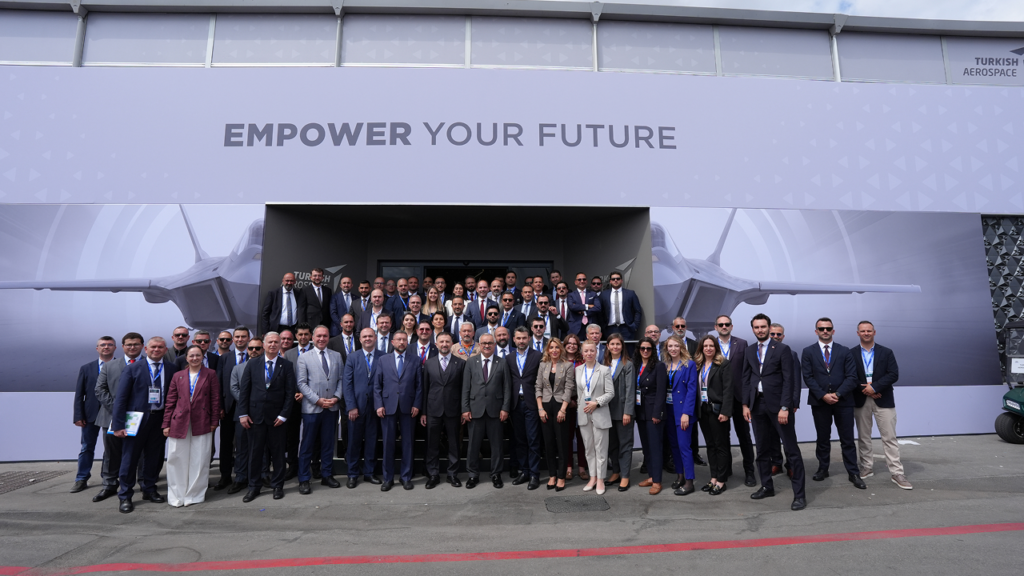
Amidst this painful restructuring period of global powers, the Turkish defence and aerospace industry participated in Farnborough 2026 not merely as a participant, but as a new power center equipped with a broad technology infrastructure and matured platforms brought out to the field. Following a modest beginning two years ago, Türkiye carried an integrated combat air power structure featuring its own sensors, avionics, munitions, and indigenous engine projects onto the global showcase. At the center of this integrated approach lay the holistic strategy demonstrated by pioneer institutions such as TUSAŞ, TEI, and ASELSAN.
Projects carried out under the umbrella of TUSAŞ materialized Türkiye’s global market ambitions alongside its operational capabilities. Speaking right next to the full-scale HÜRJET mockup displayed in the exhibition area, TUSAŞ CEO Dr. Mehmet Demiroğlu announced that the aircraft is a clear contender in the program conducted by the British Royal Air Force to select the successor to Hawk T1 and T2 jet trainer aircraft. This move stood as the clearest indicator that Türkiye is now targeting not only local requirements but also markets adhering to the most stringent NATO standards. Having already reached 500 flight hours with two prototypes and preparing to fly its combat and light-attack variants within this year, HÜRJET is also being prepared for the MUGEM aircraft carrier through naval version studies initiated in May 2026.
On the National Combat Aircraft KAAN front, a strategic threshold eliminating engine uncertainty was successfully crossed. The approval of export licenses by the US Congress for the GE F110 engines to be used in KAAN’s serial production marked a historic development securing the program schedule. Indonesia’s order commitment of up to 48 units for KAAN, alongside system integration efforts enabling the aircraft to operate jointly with unmanned platforms such as ANKA-III and KIZILELMA, successfully completed Türkiye’s multi-layered modern air combat vision.
Engine Independence and Sub-System Competence
Of course, the true driving force behind these advanced platforms lies in engine independence and the competence of domestic sub-system manufacturers. Participating under the theme of engine portfolio and advanced manufacturing capabilities, TEI demonstrated its resolve to solve the most critical bottleneck of our aerospace industry. Progress in the TF6000 and afterburner-integrated TF10000 engine projects developed for ANKA-III and KIZILELMA illuminates the path toward the 35,000-pound thrust TF35000 turbofan engine, which will serve as KAAN’s ultimate indigenous heart. TEI’s identity as a licensed producer in global commercial engine programs positions it simultaneously as a domestic developer and an indispensable supplier to world giants. ALP Aviation’s precision structural component manufacturing for global leaders ranging from Lockheed Martin to Boeing, paired with Kale Havacılık’s doubled production capacity in missile engines, convincingly proved the industrial maturity of this integrated manufacturing base.
In sub-systems the complement of operational power ASELSAN made a distinct difference with the integrated mission capabilities showcased at the fair. The MURAD national aircraft radar, the FULMAR 500-A AESA radar outperforming competitors with a measured range exceeding 320 nautical miles, and the ASELFLIR 500 electro-optical system proven in NATO exercises revealed the depth of Turkish system integration. When combined with ANTIDOT electronic warfare pods and the TOLUN guided munition series, these sensor families exported to over 20 countries and flying on all national platforms forge a comprehensive protection and attack shield that many allied nations cannot provide single-handedly. The company’s revenues reaching 180.4 billion Turkish Liras (approximately 4.11 billion dollars) and export contracts exceeding 2 billion dollars in 2025 stand as tangible proof that this technological superiority has successfully translated into financial triumph.
Strategic Milestone and Future Outlook
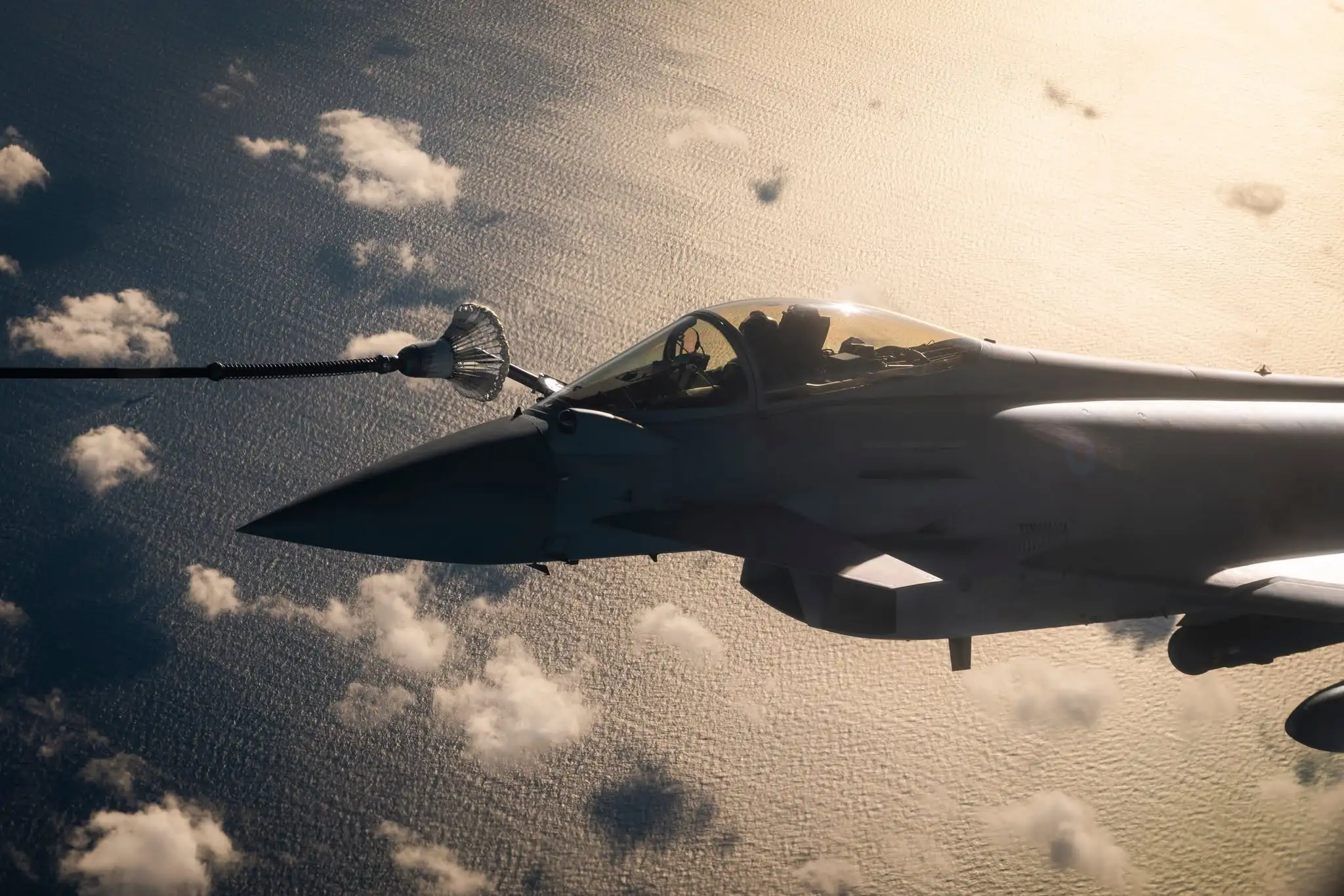
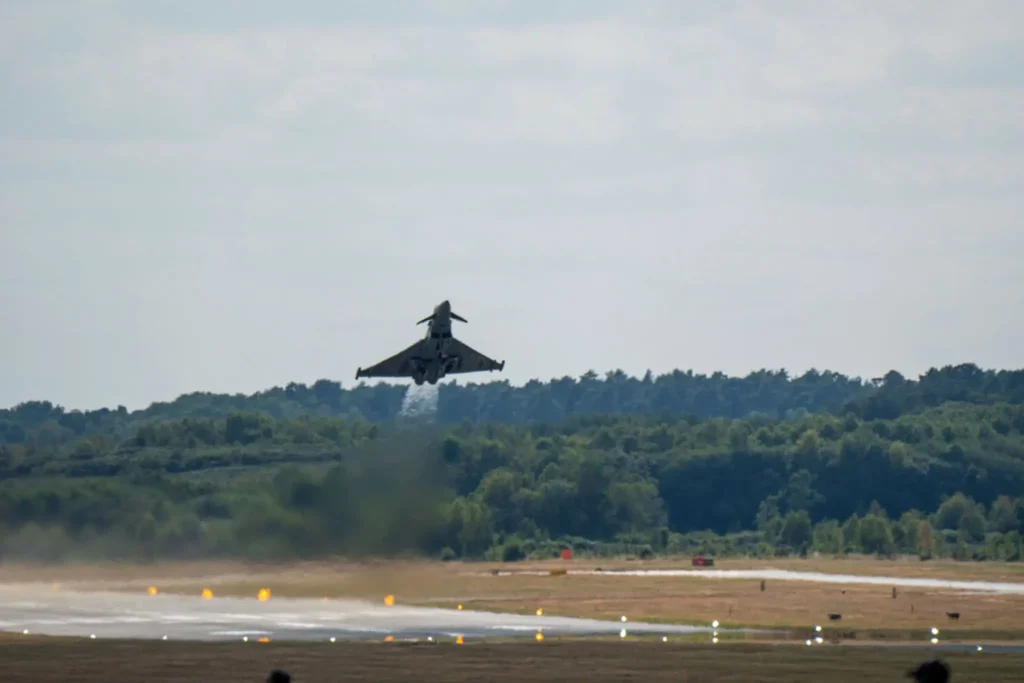
The most critical diplomatic and industrial development rising above this entire landscape was the Eurofighter Typhoon contract signed with the United Kingdom. Described by UK Defence Secretary John Healey as the vanguard of the defence partnership between the two nations, this agreement will make Türkiye the tenth operator of this advanced combat aircraft starting in 2030. This step signifies much more than a temporary procurement project; it implies joint production, technology transfer, and the deeper integration of Turkish defence industry components into the NATO air power architecture.
Indeed, this technological maturity manifested in global markets and the skies of London is not the result of an accidental industrial leap, but rather the consequence of a multi-dimensional undercurrent spreading across the societal foundation. TEKNOFEST, which we highlighted extensively in this issue of our magazine, symbolizes the core human capital and indigenous technology motivation underpinning the global self-confidence displayed by our aviation industry in Farnborough. The organic bond between the showcase in London and this great engineering cradle in Türkiye demonstrates that our power to determine our own destiny in aviation is crowned not just by today’s platforms, but by a determination that will endure for generations.
The general picture emerging in the wake of Farnborough 2026 shows that the Turkish defence industry is no longer merely a player chasing orders or trying to prove its mettle at exhibitions. Our sector has reached a maturity where it can stand self-sufficient with its platforms, engines, sensors, and munitions, offer alternative solutions amidst global crises, and most importantly, assume the role of a game-making partner in global programs. Türkiye is marching confidently toward the future, having sealed its power to determine its own destiny in aviation not only through designs, but through industrialized and exported systems.
This article was originally published in Turkish in the 160th issue of C4Defence Magazine.
Discover Other Analyses by Sami Atalan
Source: C4Defence