


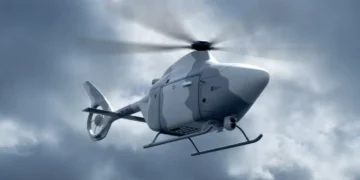





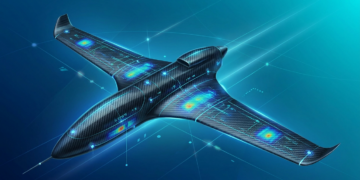












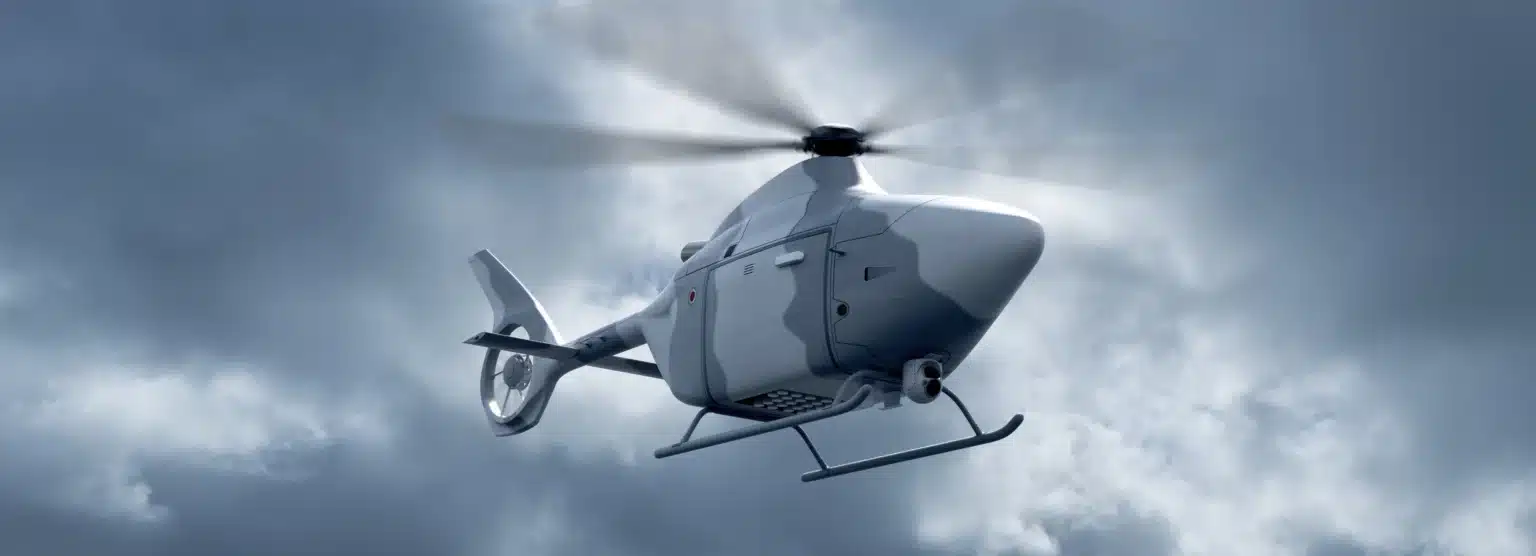
Leonardo has selected Shield’s Hivemind autonomy software for Proteus, an uncrewed rotary-wing aircraft capable of carrying approximately one tonne of payload.
Shield announced that it had signed an agreement with Leonardo to develop autonomy capabilities for rotary-wing aircraft. Under the agreement, Leonardo engineers will use the Hivemind Software Development Kit (SDK) to develop their own mission autonomy software.
Hivemind Mission Autonomy for Leonardo Proteus
The agreement is intended to enhance Leonardo’s capacity to develop mission autonomy software for its current and future systems. As part of the collaboration, the two companies will work together on software integration using the Hivemind Software Development Kit (SDK). Leonardo engineers will be able to develop new autonomy capabilities for rotary-wing missions, including anti-submarine warfare (ASW), intelligence, surveillance and reconnaissance (ISR), and helicopter logistics operations in contested environments.
Tom Schaefer, Vice President of Hivemind Engineering at Shield, noted that Leonardo manufactures rotary-wing aircraft widely used around the world and stated that Hivemind provides the company’s engineers with new tools to develop autonomy capabilities for these platforms. Schaefer emphasised that autonomy software requires continuous development depending on mission requirements, threats and the sensors installed on aircraft. He added that Leonardo engineers would be able to adapt Hivemind software to their operational needs while retaining control over the capabilities they develop.
Adam Wardrope, Vice President of Helicopter Market Development at Leonardo UK, highlighted the need for AI-enabled autonomy in military and security operations during both wartime and peacetime. Wardrope stated that developing and integrating mission autonomy capabilities for the Proteus platform using Hivemind would support the operational deployment of autonomous systems. He also noted that combining Leonardo’s experience in the design, development and production of crewed and uncrewed rotary-wing aircraft with Shield’s software capabilities could contribute to the development of autonomous solutions. Wardrope added that the collaboration could be expanded to include Leonardo’s other rotary-wing aircraft programmes in the future.
Hivemind Software and the Proteus Platform
Selected for Leonardo Proteus, Hivemind software enables partners to develop, integrate, test, deploy and continuously update their own autonomous pilot systems. This allows companies to develop autonomy software tailored to their platforms and mission requirements, while updating these capabilities in response to changing operational conditions, environmental factors and threats. Partners retain ownership of the capabilities developed using Hivemind, enabling them to maintain and adapt these capabilities independently. The reuse of software components and accelerated development processes are expected to reduce the lifecycle costs of the systems.
Developed under the Rotary Wing Uncrewed Air System (RWUAS) CCD Phase 3B Technology Demonstration Programme, Proteus supports the Royal Navy’s Maritime Aviation Transformation (MATx) strategy, which outlines the transformation of naval aviation through to 2040. Proteus is an uncrewed vertical take-off and landing (VTOL) technology demonstrator developed by Leonardo in collaboration with the UK Royal Navy and UK Defence Innovation (UKDI). Designed with a large, modular payload bay capable of carrying approximately one tonne of payload or two standard NATO pallets (463L), Proteus allows the integration of different payloads tailored to user and mission requirements. The platform is intended for a range of missions, including anti-submarine warfare, airborne early warning and intra-theatre transport.
Following demonstrations conducted in fully synthetic operational scenarios, Proteus successfully completed its maiden flight in early 2026 using autonomy capabilities developed by Leonardo. Shield’s Hivemind software is expected to support further development of the platform’s existing autonomy capabilities. The agreement between Leonardo and Shield is also expected to lay the groundwork for broader future collaboration by combining the autonomy capabilities supported by Hivemind with Leonardo’s extensive portfolio of products and services.
🔍 You may also like
Source: C4Defence – Shield