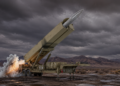








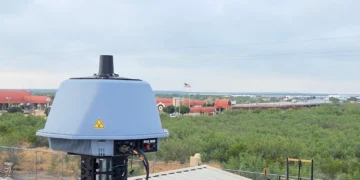






























The new passive radar technology uses existing signals, including television and radio broadcasts, to detect and track targets ranging from small drones to large aircraft.
BAE Systems engineers have developed a passive radar that can detect and track airborne threats without revealing its location. Drawing on the company’s experience in radar development, the engineers designed a system that, according to BAE Systems, can cost as little as one-tenth as much as existing passive radar systems.
The radar gathers intelligence using local infrastructure and signals already present in the area without giving away its position.
Chris Shepherd, CUxS Product Manager at BAE Systems’ Digital Intelligence and Land Systems unit, said that using everyday signals gives police and armed forces a secure way to protect sites at a lower cost than existing passive radar systems. He said the technology can help protect critical infrastructure, including power plants and air bases, against drone attacks without disrupting television or radio broadcasts.
Passive Radar Detection and Tracking Capabilities
In addition to reducing costs, the new radar can support military operations on the battlefield. Signals transmitted by conventional radars can reveal their positions to an adversary. Passive radar eliminates that risk by monitoring airspace without transmitting a signal of its own. It detects and tracks objects using signals from sources such as digital television transmitters and mobile networks.
The system is compact enough to be mounted on an SUV, allowing it to operate in almost any urban environment. It can track targets ranging from small drones to larger aircraft and build a three-dimensional air picture showing each target’s speed, heading, range and altitude. These data can support both tracking and targeting of hostile threats. For law enforcement agencies and military users, the system offers a way to protect critical national infrastructure.
Civilian Applications and Planned Trials
Originally developed for defence applications, the technology also addresses growing civilian demand. At airports and critical infrastructure sites, where electromagnetic emissions often limit the use of active radar, passive radar can operate without interfering with existing signals.
Real-world trials are planned throughout 2027 with law enforcement agencies, defence organisations and partners in the critical infrastructure sector.
🔍 You may also like
Source: C4Defence– BAE Systems