

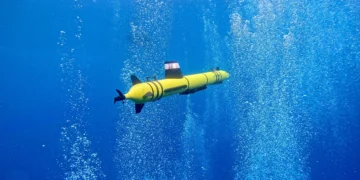












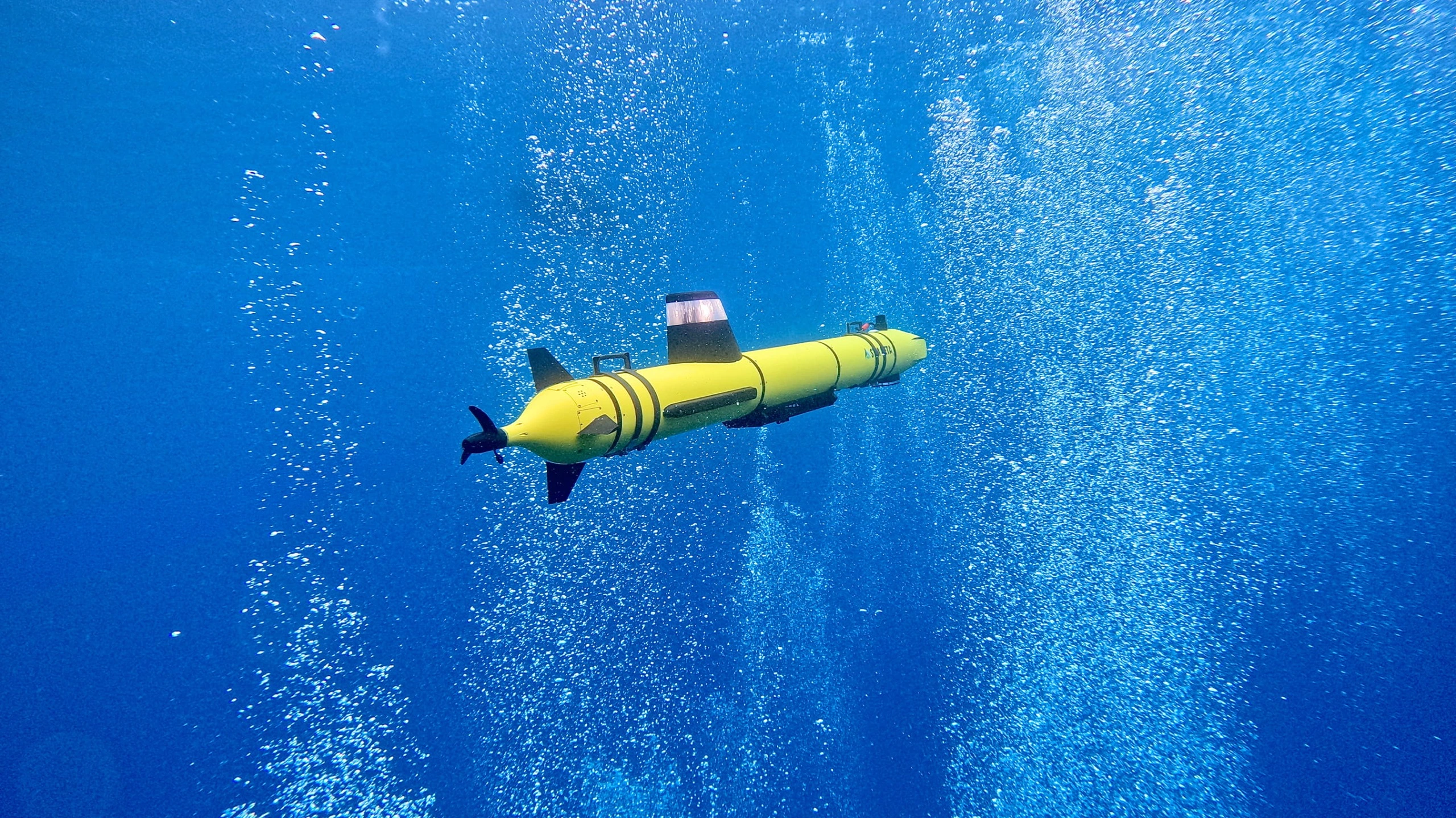
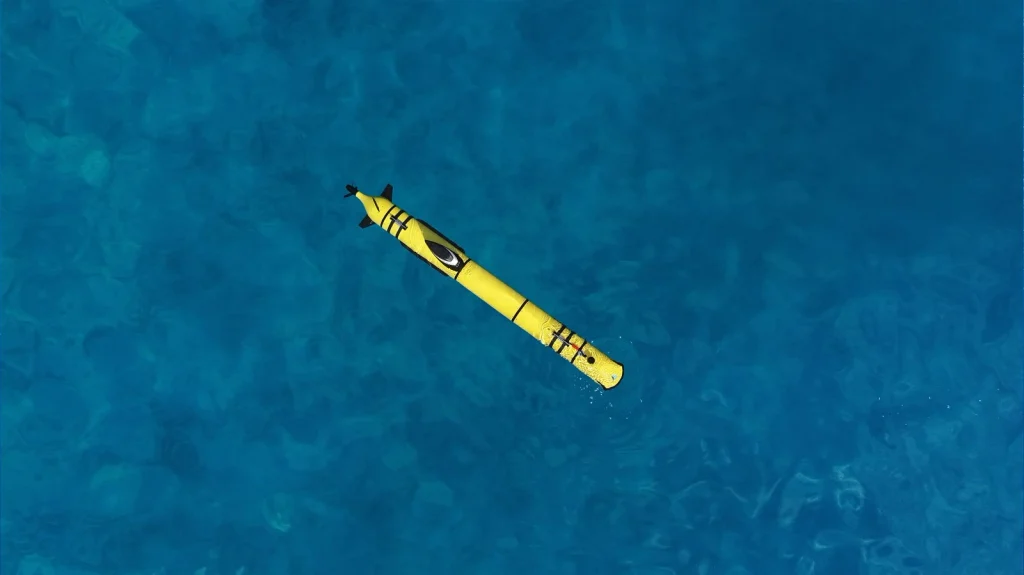
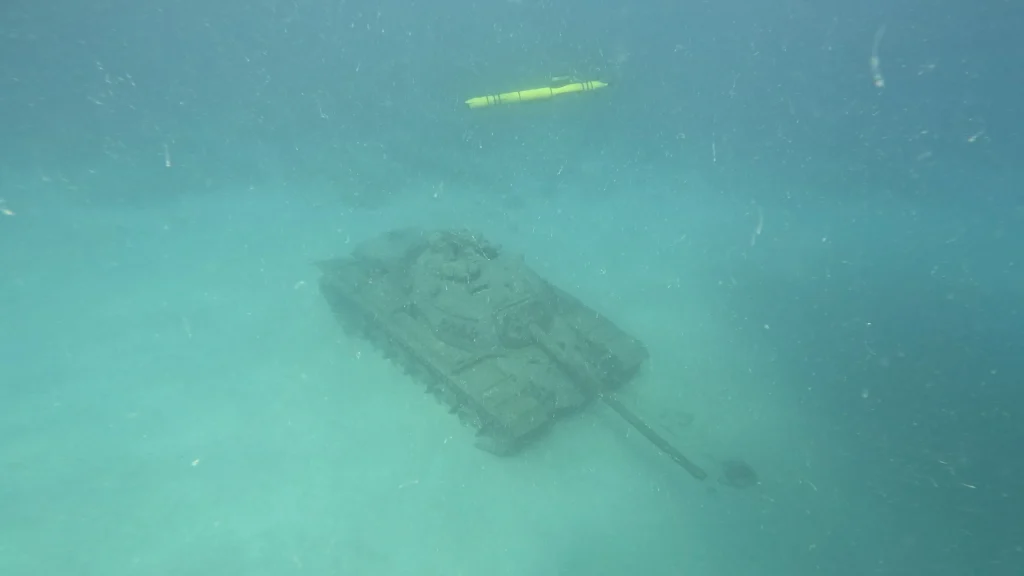
STM NETA 300 captured sonar images of a sunken tank during an autonomous reconnaissance mission off Güvercin Island in Kaş.
The lightweight autonomous unmanned underwater vehicle, developed domestically by STM, scanned the underwater environment using advanced sonar systems and high-resolution imaging capabilities as part of search and rescue, wreck detection and identification activities. Upon completing the mission, the vehicle demonstrated its underwater reconnaissance, object detection and imaging capabilities under real-world maritime conditions.

STM General Manager Özgür Güleryüz stated that unmanned maritime systems are playing an increasingly critical role in future naval operations, noting that the development of autonomous systems is driving a significant transformation in maritime security. Güleryüz explained that STM is developing new systems by combining its engineering experience in military naval technologies with artificial intelligence and autonomy technologies. He added that the autonomous reconnaissance mission carried out by STM NETA 300, the first member of the company’s unmanned maritime systems family, in the Mediterranean demonstrated the level reached by Türkiye’s national engineering capabilities in the underwater domain.
Güleryüz emphasised that STM has expanded its product family with the TENGİZ unmanned submarine and the STM YAKTU kamikaze unmanned surface vehicle following STM NETA 300, developing solutions for various underwater and surface operational requirements. He added that STM would continue developing new technologies for autonomous maritime systems and strengthening the naval operational capabilities of the Turkish Naval Forces, as well as those of friendly and allied countries.
The tank imaged by STM NETA 300 had been placed underwater off Güvercin Island in Kaş in 2017 to support diving tourism and create an artificial reef after reaching the end of its service life in the Turkish Armed Forces inventory. STM NETA 300 also participated in the TURNAs-2026 Exercise held in Antalya in October, contributing to the safe navigation of main naval units by autonomously detecting and identifying mines and mine-like underwater threats along their transit route using advanced sonar systems and high-resolution sensors.
During the exercise, the vehicle also conducted scanning and detection activities as part of seabed warfare operations to support the security of critical facilities and the inspection of pipelines. Named after the maritime term “NETA”, meaning “clear, safe and always ready”, STM NETA 300 can be carried by two people thanks to its compact and modular design. Equipped with advanced sonar systems, the vehicle can operate at depths of up to 300 metres for up to 24 hours and reach speeds of 5 knots. The vehicle supports the detection, classification and identification of mines and mine-like objects.
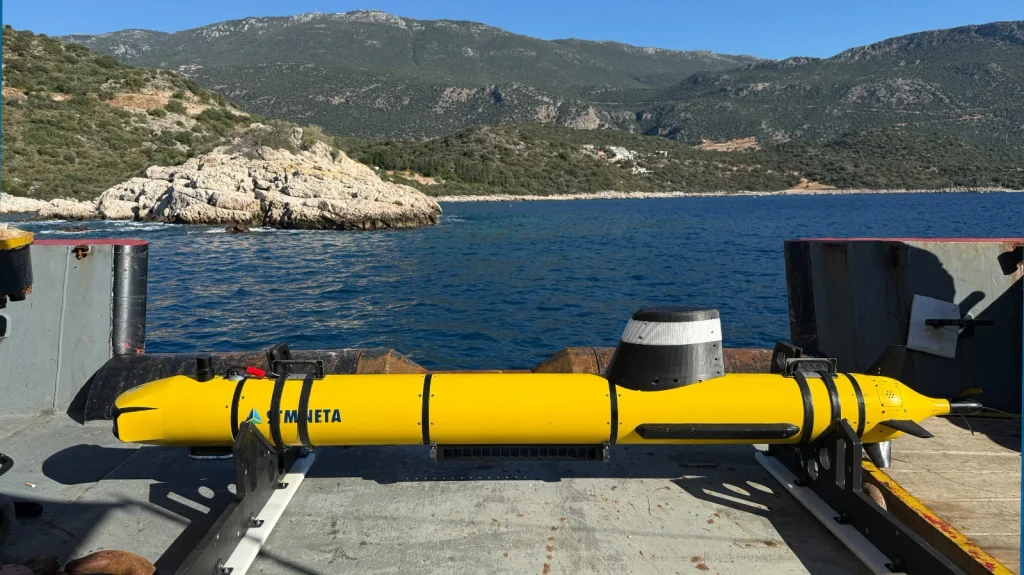
The domestically developed autonomous unmanned underwater vehicle (AUV) can scan mine-threatened maritime areas using side-scan sonar and gap-filling sonar. The vehicle enables operators to rapidly and effectively detect, classify and identify mines and mine-like objects, while optional synthetic aperture sonar (SAS) integration is available to provide wider area coverage and higher horizontal resolution. In military applications, the vehicle can be used for intelligence, reconnaissance, surveillance, mine countermeasure (MCM) operations and harbour defence. Its civilian applications include seabed surveys, pipeline inspections, renewable energy facility inspections and maritime archaeology. STM NETA 300, for which the first domestic sales contract has been signed, will enter service with the Turkish Naval Forces.
🔍 You may also like
Source: C4Defence