


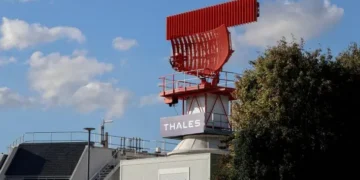
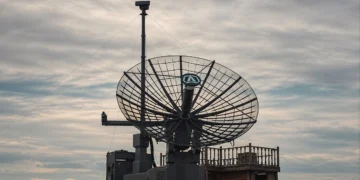















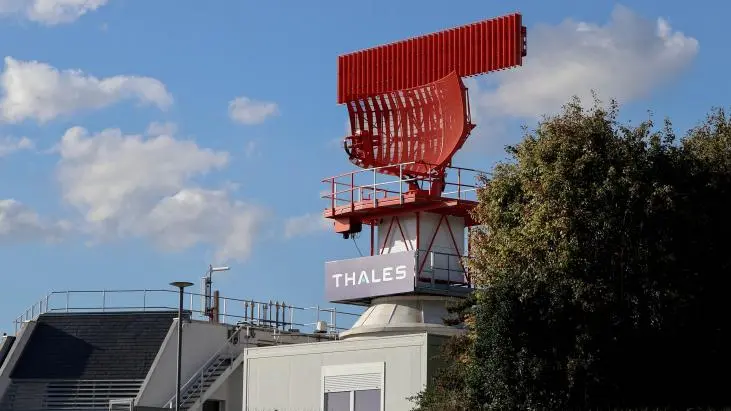
Thales has signed a contract to modernize the Netherlands’ military air traffic control and airspace surveillance infrastructure. The agreement covers the Thales STAR NG and RSM NG radars, which offer improved target detection and greater resistance to electronic jamming. It also includes installation and long-term maintenance.
Under the contract signed by the Dutch Ministry of Defence’s Materiel and IT Command (COMMIT), Thales’ next-generation primary and secondary surveillance radars will replace the existing systems.
Capabilities of the STAR NG and RSM NG Radars
The Thales STAR NG primary surveillance radar and RSM NG secondary surveillance radar will replace the systems currently in service. The new radars are designed to improve detection of airborne targets, increase resistance to electronic jamming and reduce the impact of wind turbines on radar performance.
The systems will use existing infrastructure wherever possible and will support both military operations and air traffic control at joint civil-military airfields. This approach is expected to improve cost efficiency and support long-term sustainment.
The systems are expected to meet the applicable standards set by EUROCONTROL, the European Union Aviation Safety Agency (EASA) and the International Civil Aviation Organization (ICAO).
The turnkey contract covers radar supply, installation and commissioning, as well as long-term maintenance and support for managing technological obsolescence. The Netherlands will become the fourth NATO member to select the STAR NG and RSM NG systems, following France, the United Kingdom and Romania.
Thales Radar Systems in the Netherlands
Thales has a long-standing relationship with the Royal Netherlands Air and Space Force and has previously supplied the country with navigation aids, SMART-L Multi Mission radars and Ground Master radars. The new agreement is expected to strengthen that relationship.
Eric Huber, Vice President of Surface Radars at Thales, highlighted the role of dual-use radars such as the STAR NG and RSM NG in civil and military airspace management. He said the systems would strengthen coordination between civil and military authorities, contributing to national security and air traffic safety.
🔍 You may also like
Source: C4Defence – Thales