

















Key Takeaways
- Although it is 15 times stronger than steel, UHMWPE is lighter than water, making it one of the most critical composite materials in defence and aerospace.
- It is used across many fields, from the medical sector and maritime to the defence industry and industrial machinery.
- In UAVs/UCAVs, it plays many roles, from radome and sensor protection to landing gear bushings, and from weight savings to vibration damping.
- In personal armour, it is used in soft vests, hard plates and helmets; stopping armour-piercing rounds requires a ceramic-backed composite structure.
- In modern defence, the advantage lies in systems that deliver more performance with less weight, and UHMWPE is one of the key building blocks of this shift.
Ultra-High Molecular Weight Polyethylene (UHMWPE) is a high-performance engineering plastic made of extremely long polymer chains, with an exceptionally high molecular weight of 3 to 6 million g/mol. It is lightweight, has a very low coefficient of friction, and offers remarkable resistance to abrasion.
Although it is 15 times stronger than steel, UHMWPE is lighter than water, which makes it one of the most critical composite materials in the modern defence and aerospace industry. The extraordinary length of its molecular chains gives the material high impact damping and ballistic protection capability.
Areas of Use
UHMWPE is produced in sheet, rod, yarn (fibre) and fabric forms and is used across a very wide range of industries. These areas include:
- Medical sector: Thanks to its biocompatible structure, it is widely used in orthopaedic implants such as hip and knee prostheses, as well as in surgical sutures.
- Defence industry: Converted into fibres that are many times stronger than steel yet extremely light, it is preferred in bulletproof vests and military armour.
- Industry and machinery: It is used in conveyor belts, guide rails, gears, hydraulic seals and mining chute liners to prevent wear.
- Maritime: Because it does not absorb water and resists impact, it is used in port pier fender systems (fender surfaces) and heavy-duty ship ropes.
Key Properties of UHMWPE* Products
As a natural result of the areas of use described above, UHMWPE stands out as a material that combines chemical, mechanical, biological and morphological, electrical and thermal properties.
- Extreme Purity (99.9%): The absence of foreign matter or standard polyethylene chains in the structure maximizes the homogeneity of mechanical strength.
- Density of 0.94 g/cm³: It is lighter than water, and many times lighter even than the lightest metals used in aviation.
- Impact Strength of 70–120 kJ/m²: The material’s resistance to fracture under impact is among the highest values of any engineering plastic.
- Melting Point of 146°C: It has a higher and more stable melting temperature than standard polyethylenes, which is an advantage during processing (curing cycles).
- Ultra-Low Volatile Content (0.1%): It does not release gas when heated, a property that is critical for vacuum environments (space).
- High Wear Resistance: It is more durable against friction and abrasion than most commonly used metals.
- Very Low Coefficient of Friction: It is self-lubricating, providing slip between surfaces.
- High Impact Resistance: It can flex without breaking under the toughest mechanical impacts and shocks.
- Chemical and Moisture Resistance: Its water absorption is close to zero, and it is unaffected by acids, alkalis and aggressive chemicals.
- Wide Temperature Range: It retains its mechanical properties between -200°C and +80°C and does not become brittle even in extremely cold environments.
- Biocompatibility: It coexists perfectly with body tissue and is non-toxic.
* In addition to the general properties of UHMWPE, the article particularly highlights the properties of the Nanoshel product, a product type suited to defence and aerospace use.
Uses in the Defence Industry
Within the framework of the properties above, this article covers in detail the use of UHMWPE in the defence industry and in personal armour protection in particular.
In the defence sector, UHMWPE is used mainly in fibre and fabric form to provide ballistic protection for personnel and equipment.
- Personal Armour Systems: It is one of the main materials in the production of bulletproof vests, ballistic helmets and tactical protective clothing. Compared with traditional materials such as Aramid, it provides protection with much lighter and thinner layers.
- Military Vehicle Armour: It is used as a lightweight armour plate in the interior linings and doors of armoured vehicles, tanks and tactical wheeled vehicles.
- Aircraft and Helicopter Structural Parts: It serves as an impact-absorbing protective layer in helicopter floor armour, cockpit protection panels and aircraft cargo liners.
- Cryogenic Fuel Tank Sealing Elements: In next-generation hydrogen-powered aircraft or rocket engines that use liquid hydrogen or liquid oxygen, valves and seals must operate at temperatures as low as -250°C. In particular, the high-purity polymer structure of Nanoshel UHMWPE makes it possible to produce seals and bearings for the connection points of liquid gas tanks that do not freeze or crack from extreme cold and retain their flexibility.
- Radomes and Antenna Systems: 99.9% purity ensures that the dielectric (insulating) constant of the material stays perfectly uniform across the entire surface. When used in the protective covers (radomes) of the radar and communication antennas of UAVs and aircraft, it causes no refraction or attenuation of the signal. This level of purity is vital for the satellite-control (SATCOM) antenna housings of military UAVs.
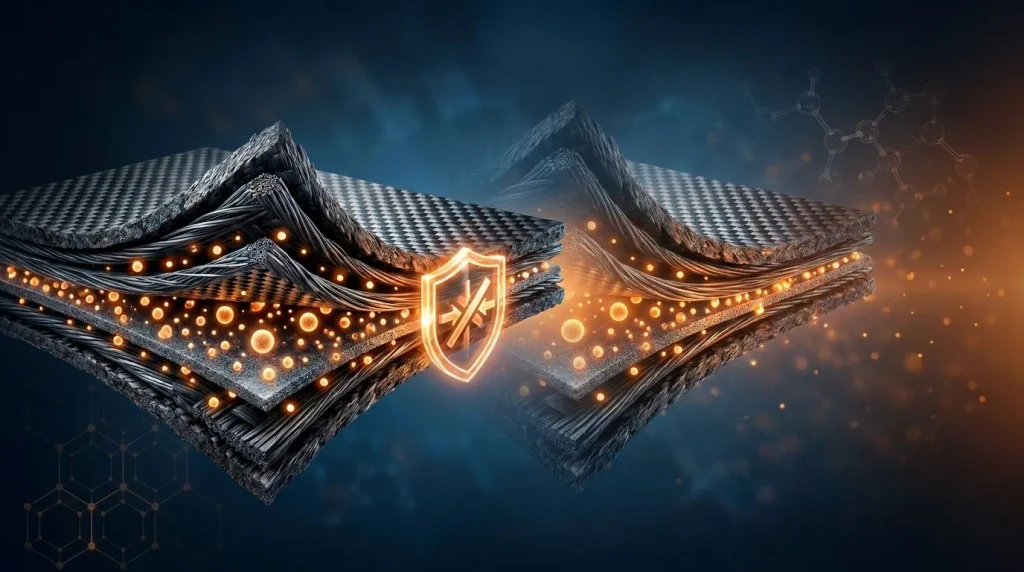
- Interior and Cabin Components: It is used in moulding seat covers, wear-resistant wall panels and aerodynamic coatings that reduce friction. Because the product is available in micro-powder form (100–200 mesh), it revolutionizes carbon fibre–UHMWPE hybrid lamination processes. These powders can be sprinkled electrostatically between carbon fibre fabrics or mixed homogeneously into the resin (epoxy). In this way, the fibre adhesion (interface) problem is solved directly from within the matrix, and the risk of delamination (layer separation) in aerospace parts is minimized. The biggest engineering obstacle in UHMWPE–carbon fibre hybrid lamination is that UHMWPE is chemically inert and cannot bond with aerospace-grade epoxy resins. To overcome this, the fibre surface is modified at the molecular level and specially formulated matrix materials (resins) are used.
- Satellites and Spacecraft: In the thermal protection systems and structural components of satellites, it acts as a lightweight shield against the harsh conditions of the space environment. In addition, when satellites and spacecraft enter a vacuum, volatile substances inside materials can turn to gas (outgassing) and stick to optical lenses or sensitive sensors, rendering them unusable. UHMWPE’s extremely low volatile content of 0.1% makes it an excellent candidate for the internal structural components and thermal protection shields of satellites.
- Military Textiles: It is preferred for military uniforms resistant to heavy abrasion and cuts, and for high-strength parachute lines.
UHMWPE in UAV and UCAV Applications
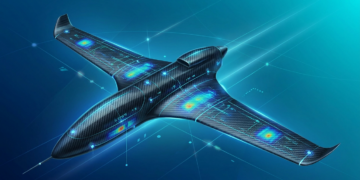
The use of UHMWPE in Unmanned Aerial Vehicles (UAVs) and Armed Unmanned Aerial Vehicles (UCAVs) plays a vital role, particularly in projects focused on weight optimization, durability and avionics protection.
The detailed technical applications of UHMWPE in the design and components of a UAV/UCAV platform, and the engineering advantages it provides, are as follows:
- Avionics and Sensor Protection Compartments (Radomes and Housings): Sensitive electronics located in the nose or under the fuselage of UAVs, such as cameras (gimbals), radar, FLIR and artificial intelligence processing units, must be protected against external factors. Because UHMWPE is a dielectric material that is transparent to X-rays and electromagnetic waves, it provides both physical protection and electrical insulation in radar and sensor housings (radomes) without degrading signal quality.
- Landing Gear and Mechanical Connection Points: UHMWPE (as plate or machined part) is used in landing gear bushings, bearing seats and skid systems to absorb the shock loads UAVs experience during hard landings. Thanks to the material’s self-lubricating property, these moving mechanical parts operate with zero wear and without lubrication, even in desert or dusty operating regions.
- Munition Release and Cargo Securing Rails: UHMWPE coatings are preferred to minimize friction in the under-wing munition release mechanisms of UCAVs or in the cargo bays of cargo UAVs. They allow the mechanical locks to slide smoothly at the moment a bomb or missile is released.
- Wing Leading Edges and Underbelly Protection Layer: The wing leading edges of low-altitude tactical UAVs (because of bird-strike risk) and their underside (against stones thrown up when landing on gravel or dirt runways) are covered with UHMWPE composite fabric laminates. Thanks to its outstanding impact resistance, it prevents the fuselage from tearing or being punctured.
- Increased Range and Endurance: While the density of conventional aviation aluminium (Aluminium 6061-T6) is about 2.7 g/cm³, the density of UHMWPE is between 0.93 and 0.95 g/cm³ (lighter than water). Replacing aluminium components with UHMWPE significantly reduces airframe weight, allowing the UAV to carry more fuel or batteries and directly extending its endurance.
- Maximizing Payload Capacity: Every gram saved on structural airframe parts means the UCAV can carry heavier munitions, more advanced electro-optical cameras or electronic warfare (EW) pods.
- Vibration Damping: In piston or turboprop UAVs, the high-frequency vibrations produced by the engine disrupt camera (gimbal) stabilization and shorten the life of avionics systems. Thanks to its high molecular structure, UHMWPE acts as a structural damper, preventing engine vibrations from spreading to the airframe and sensitive sensors.
- Extreme Altitude Environmental Resistance: At altitudes of 30,000+ feet (about 10,000 metres) reached by UCAVs, the air temperature drops to around -50°C to -60°C. While standard plastics become brittle as glass at such temperatures, UHMWPE retains its structural flexibility and impact resistance down to -250°C with zero loss.
UHMWPE in Personal Armour Systems
UHMWPE has radically changed the balance between lightness and stopping power in personal armour systems (body armour, helmets and shields).
Today, this material allows law enforcement and military personnel to receive maximum protection without restricting their mobility.
The detailed use of UHMWPE in personal armour applications, the engineering approaches behind it and its place in global standards are as follows:
Soft Body Armour
Soft armour is generally used in concealable vests (undershirt type), police patrol vests, or in the flexible joint areas of tactical vests.
- Layered Structure (Unidirectional / UD): Instead of being woven, UHMWPE fibres are arranged in cross-plied layers (unidirectional strips) perpendicular to each other (at 0°/90° angles). Roughly 30–40 thin UHMWPE layers are pressed on top of one another to obtain a flexible protection panel.
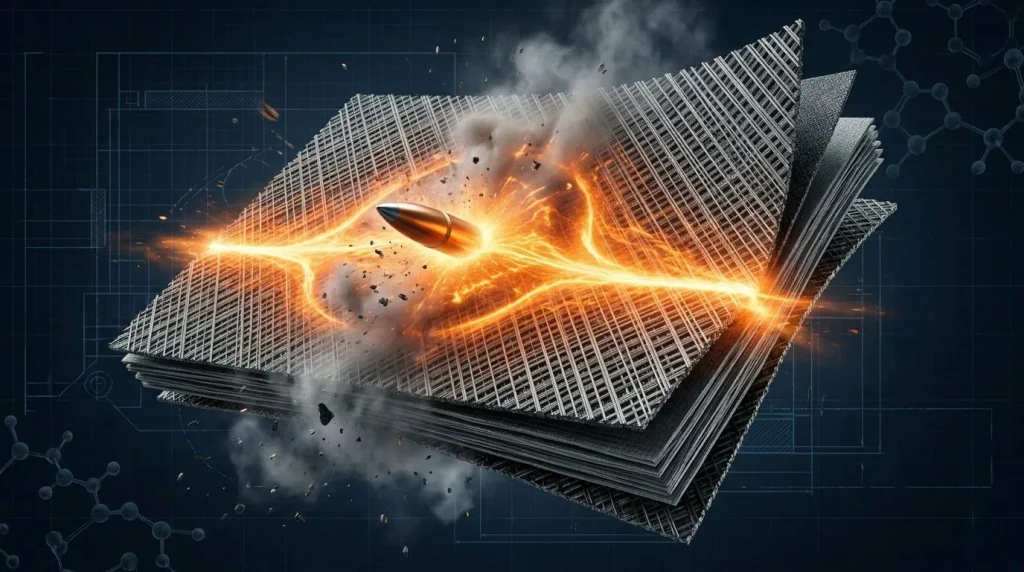
- Bullet-Stopping Mechanism: When a high-velocity handgun bullet (for example 9mm or .44 Magnum) hits the vest, the bullet’s rotational motion and kinetic energy are caught in this cross-ply network. The energy is distributed from the point of impact across the entire surface of the vest within seconds. The bullet cannot penetrate the vest; it flattens and stops as if caught in a net.
- Ballistic Level: It provides HG2 (formerly Level IIIA) protection according to the American NIJ Standard 0101.07. It stops handgun bullets and shrapnel but is insufficient on its own against long-barrel rifle rounds.
Hard Armour Plates (Rifle Plates)
These are rigid panels placed in the front, back and side pockets of tactical vests that protect against rifle rounds (7.62mm, 5.56mm, etc.). UHMWPE is used here in two different ways:
- Standard / Pure Polyethylene Plates (RF1 / Level III): UHMWPE fibres are compressed under tons of hydraulic pressure and heat into a monolithic, rigid plate. They offer incredible lightness compared with steel plates (steel plate: about 3.5 kg, UHMWPE plate: about 1.3–1.8 kg). They can stop Kalashnikov (7.62x39mm) and NATO standard (7.62x51mm M80) rounds with their own density alone.
- Ceramic-Backed Composite Plates (RF3 / Level IV): Pure polyethylene is insufficient to stop heavy armour-piercing (AP) rifle rounds, because the bullet can melt through the polyethylene with frictional heat. For this reason, a boron carbide or silicon carbide ceramic plate is placed on the outermost layer, and a UHMWPE layer is laminated behind it as a backer. The ceramic layer shatters and slows the bullet’s hard steel core, while the UHMWPE behind it fully absorbs the broken fragments and the remaining massive shock.
Ballistic Helmets (Military / Police Helmets)
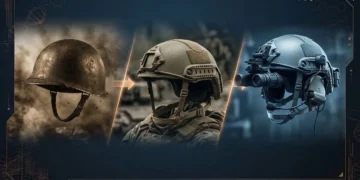
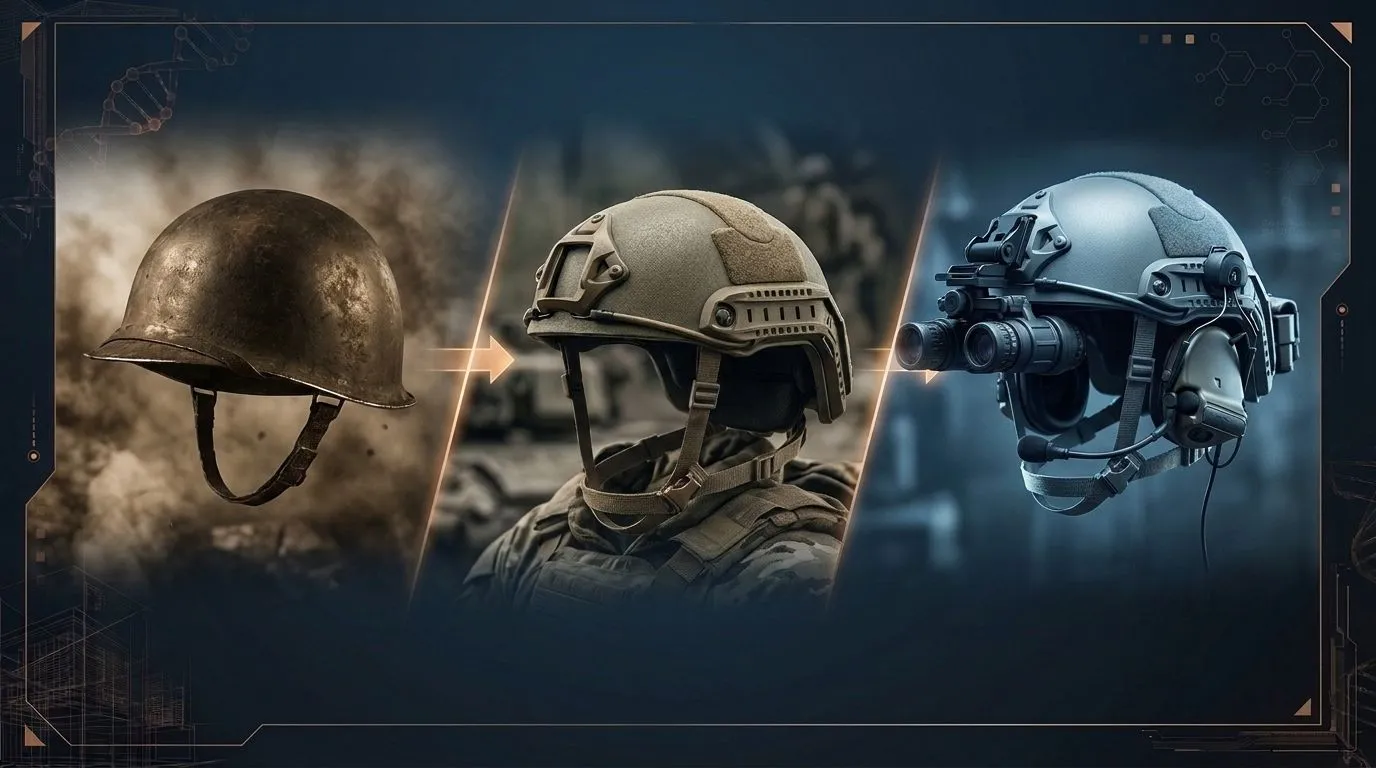
Old-generation steel helmets and first-generation Aramid helmets are rapidly being replaced by UHMWPE-based helmets.
Advantages and Disadvantages Compared with Aramid
In the personal armour market, UHMWPE and Aramid are in constant competition. The strengths and weaknesses of UHMWPE in this competition are as follows:
| Criterion | UHMWPE | Kevlar (Aramid) |
|---|---|---|
| Weight | ✔ 30–40% lighter | Heavier |
| Water Resistance | ✔ Does not absorb water and does not rot | May be affected by moisture |
| Multi-hit Performance | ✔ Much better resistance to consecutive impacts | Structural degradation after impact |
| Thickness Profile | ⚠ More layers required for the same protection | Thinner profile |
| Heat Sensitivity | ⚠ Begins to degrade at 130–140°C | Has high heat resistance |
| AP Round Performance | ⚠ Can be penetrated by frictional heat; ceramic plate required | Partial thermal tolerance |
For the reasons above, the value of UHMWPE is not measured merely by whether it is “stronger than Aramid.” The material’s low density opens up a different optimization space from a systems engineering perspective, and UHMWPE stands out as an alternative material that can deliver the protection Aramid provides in certain missions at lower weight.
Backface Deformation (BFD), or Backface Signature (BFS) as it is called in the ballistics literature, is a vital trauma metric that measures how much shock energy an armour system transfers to the living tissue behind it (the human body), even though it stops the bullet without being penetrated.
Even if the armour does not let the bullet through, the excessive indentation that forms inwards at the moment of impact can be lethal by causing internal bleeding, bone fractures and even organ damage. The most competent authority standardizing this globally is the American National Institute of Justice.
The Role of UHMWPE in BFD Performance
In personal armour design, UHMWPE catches the bullet over a wider area than Aramid thanks to its elasticity. However, because of its flexible structure, the backface deformation (indentation depth) in pure polyethylene vests can approach the limit. To eliminate this risk, modern armour manufacturers place thin trauma pads (foam layers) behind UHMWPE plates, safely bringing the 44 mm limit down to 20–30 mm levels.
The New Material Doctrine of Modern Combat
Superiority on the modern battlefield is no longer defined solely by higher speed, more powerful engines or more advanced weapon systems. The real strategic advantage lies in the capacity to deliver the same or higher operational performance with lower weight, greater durability, longer mission life and a lighter logistics burden. A UCAV operating at 10,000 m being able to sustain its performance under extreme cold, vibration and environmental conditions, and personnel in the field being protected against ballistic threats without losing mobility, may look like different platforms, but they point to the same fundamental engineering problem: redefining the boundary between performance and weight.
At this point, UHMWPE and advanced composite materials should be regarded not merely as material options for improving existing systems, but as strategic technology components that will shape the design of future defence systems. A high strength-to-weight ratio, ballistic protection, impact resistance, low density and potential for integration with different composite systems place these materials at the centre of a broad technology axis, from air vehicles to personal protective systems, and from armoured platforms to naval and space applications.
In future defence platforms, success will depend less on the superiority of a single material than on the joint optimization of materials science, nanotechnology, composite engineering, manufacturing technologies and digital design. For Türkiye, therefore, the issue should be approached not merely as the procurement of advanced materials, but from the perspective of developing indigenous technology, reducing dependence on foreign sources for critical materials, optimizing platform weights and increasing the global competitiveness of the defence industry.
In short, on the battlefield of the future, the advantage will lie with systems that produce more performance with less weight, not with systems that carry more. UHMWPE and next-generation composites are among the important building blocks of this transformation. The new material doctrine of modern defence represents a shift from the notion of “heavier protection” to one of “smarter, lighter, more durable and mission-focused protection.”
Indeed, in future defence systems, material selection will be made not on the superiority of one material over another, but by jointly evaluating the threat, temperature, weight limit, mission duration and platform architecture.
* In addition to the general properties of UHMWPE, the article particularly highlights the properties of the Nanoshel product, a product type suited to defence and aviation use.
Ali Öner– Chemical Engineer
This article was originally published in Turkish in the 162ns issue of C4Defence Magazine.
🔍 You may also like
Source: C4Defence