























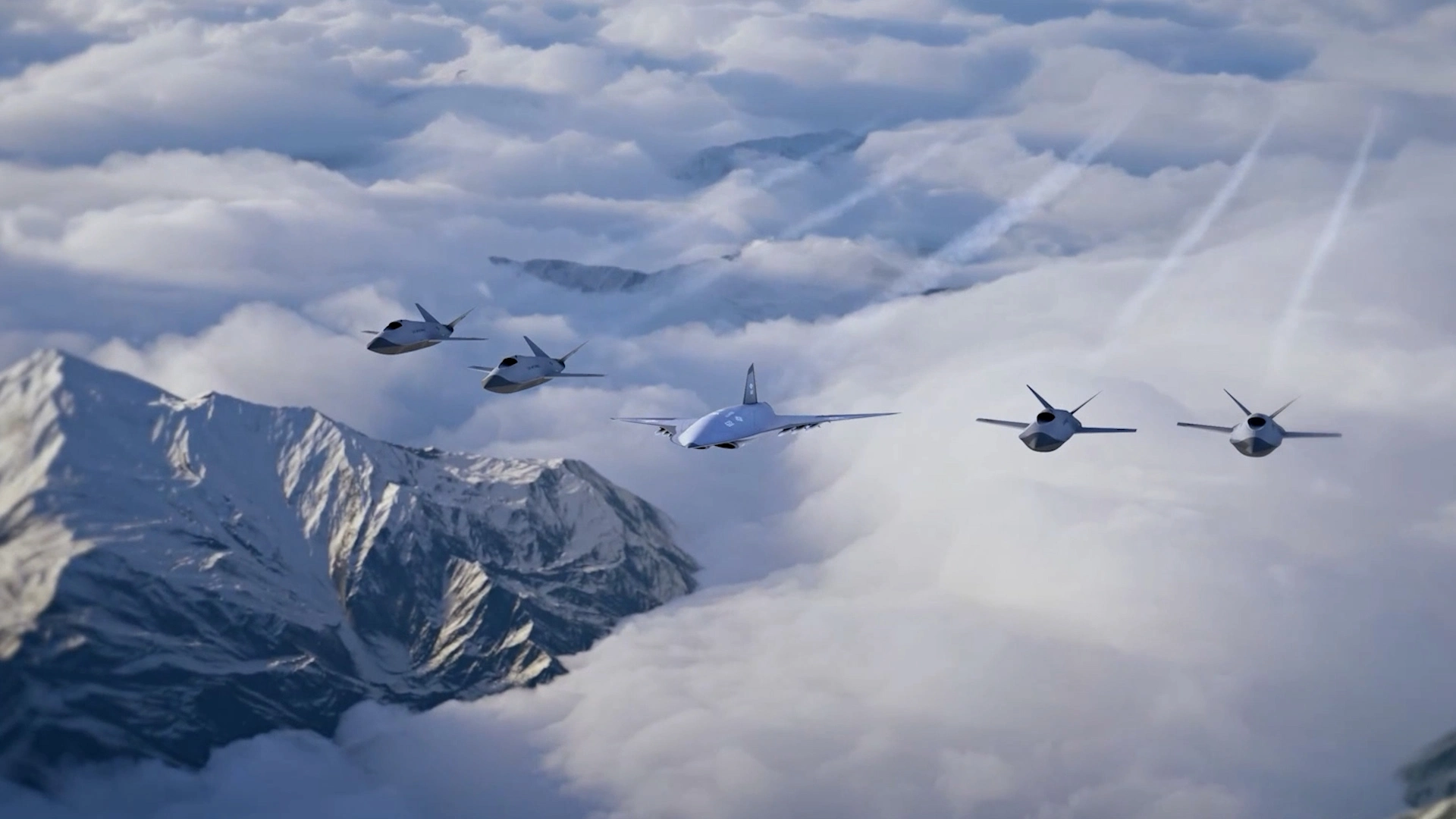
The US Air Force’s XQ-67A autonomous collaborative platform demonstrated the ability to manage unmanned platforms across different operational areas using beyond-line-of-sight data links during its latest test flight in Nevada.
The US Air Force Research Laboratory (AFRL) and Air Combat Command’s (ACC) Experimental Operations Unit conducted a flight of the XQ-67A Autonomous Collaborative Platform (ACP) at the Nevada Test and Training Range. Conducted under the Demonstration of ACP Performance and Effectiveness (Demon APE) project, the flight aims to accelerate ACP development and delivery in support of National Defense Strategy priorities.
Colonel Matthew Caspers, Deputy Program Executive Officer for Air Technologies at the Department of the Air Force (DAF), stated that combining AFRL’s rapid prototyping efforts with ACC’s operational test units shortens the time required to transition from concept to warfighter capability. During the flight, the integration of various mission systems aboard the XQ-67A was demonstrated, including advanced sensors, mission computers, and power and thermal management equipment. These systems were designed to operate together in challenging combat environments.
Reliable Data Transmission in Real-World Scenarios with the XQ-67A
During the flight, the integration of beyond-line-of-sight (BLOS) data links with live, virtual and constructive simulations demonstrated the ability to manage unmanned platforms distributed across different operational areas. This capability was reported to strengthen deterrence by supporting a resilient, layered command-and-control architecture. Trenton White, an aerospace engineer at AFRL’s Air Warfare Directorate, stated that the flight demonstrated the ability of autonomous system architectures aligned with AFRL’s Autonomy and Agile Mission Package Government Reference Architectures to reliably process and transmit combat-relevant data in real-world scenarios.
Research and development investments in integrated platforms such as the XQ-67A highlight the potential of unmanned systems to extend the operational reach of formations comprising manned fighter aircraft. These systems are intended to enhance commanders’ situational awareness, provide the fleet with additional cost-effective operational capacity and significantly reduce the risks faced by aircrews.
🔍 You may also like
Source: C4Defence – Air Force