









Contents
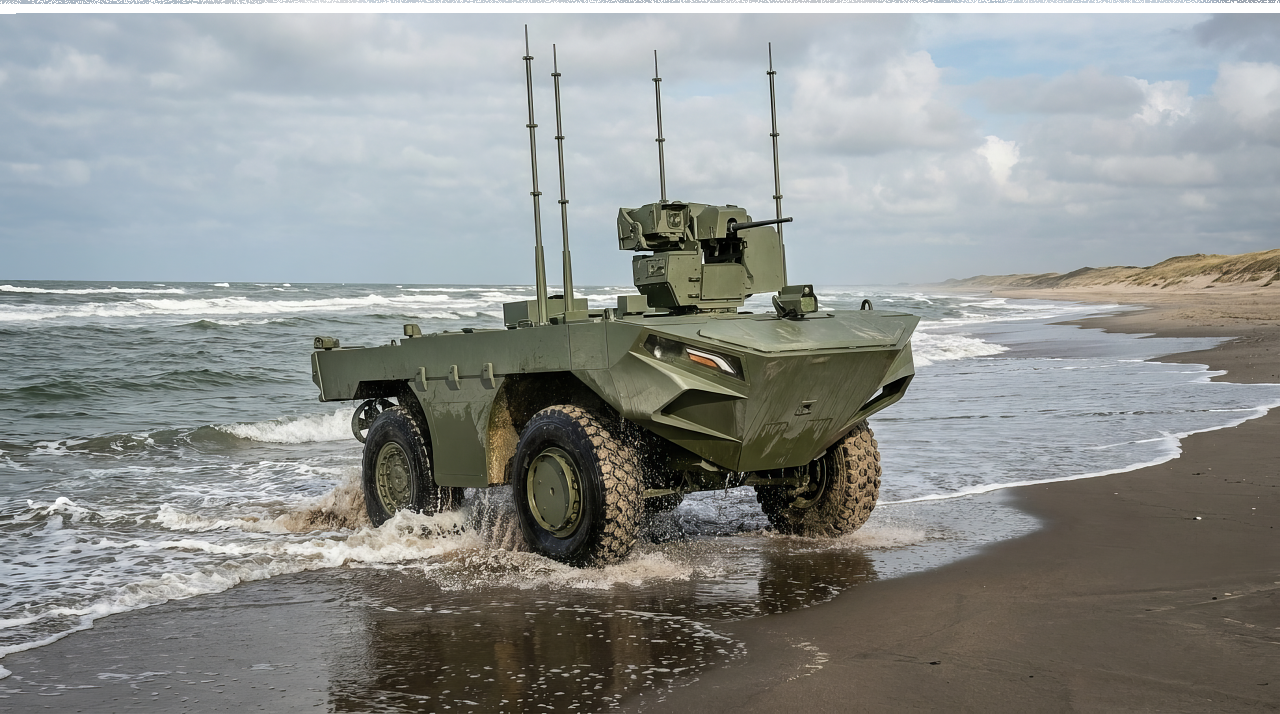
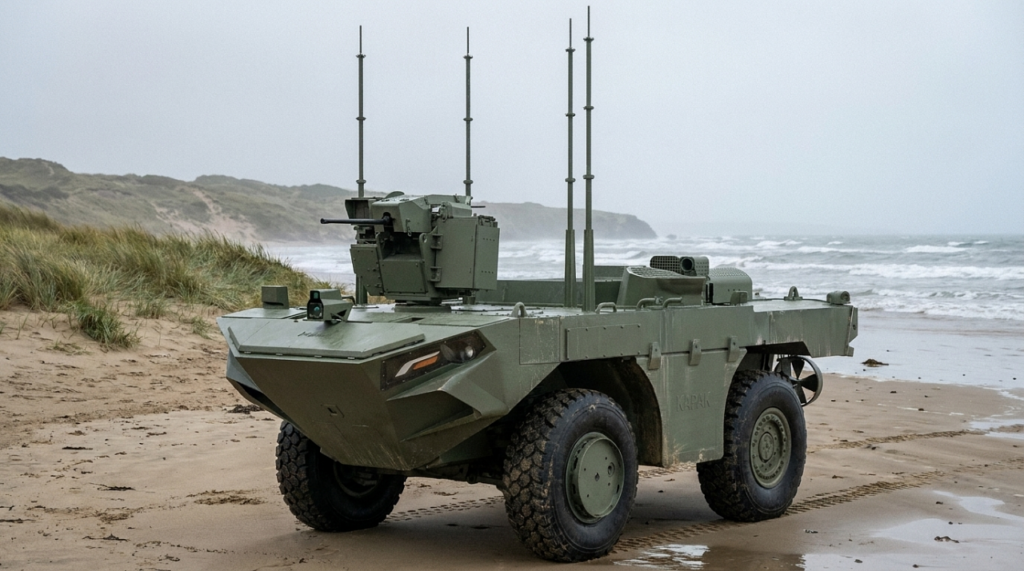
FNSS showcased the İ-ZAHA for the first time at TEKNOFEST Mavi Vatan 2026, a vehicle designed to spearhead the first contact with enemy coastal defences during amphibious assault operations. Weighing in at 8 tons, the İ-ZAHA has been developed to operate in manned-unmanned teams alongside the ZAHAs already in the Turkish Naval Forces’ inventory.

The vehicle was introduced at an event hosted by the Kocaeli Gölcük Shipyard Command between August 20-23, 2026. Designed and manufactured by FNSS, the İ-ZAHA can reach speeds of 7 knots in water and 70 km/h on land. Thanks to its payload modules, which can be swapped out in the field in approximately 40 minutes, the vehicle can be configured for ten different mission profiles.
The İ-ZAHA’s First Contact with Shore Defence Mission
During amphibious assault operations, the most dangerous phase comes when enemy forces seal off the coastline with mines and fixed engineering obstacles, while also positioning machine gun and anti-tank guided missile positions overlooking the beach. These obstacles slow down the landing forces, funneling them into narrow lanes and amplifying the enemy’s firepower.
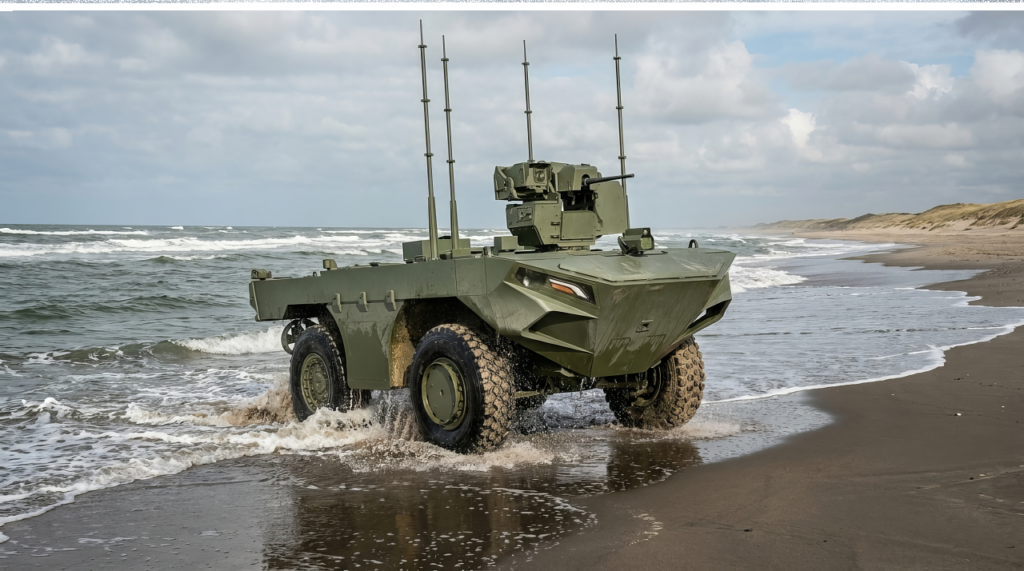
The İ-ZAHA’s job is to make first contact with enemy shore defences ahead of the ZAHAs and, depending on its mission payload, neutralize mines and obstacles to pave the way for the ZAHAs’ landing. The vehicle can operate in autonomous, remote-controlled, or hybrid control modes, keeping operators safely away from the line of fire throughout the mission. After that initial contact, the platform also takes on roles in supporting the landing and securing the beachhead in subsequent phases.
One Platform, Ten Different Missions
One of the İ-ZAHA’s standout features is its ability to be reconfigured on the same base platform with different payload modules. With a module swap completed in about 40 minutes in the field, the vehicle can be adapted for ten distinct mission configurations: Fire Support, Mine Clearance, Engineering Work Machine, Electronic Warfare, Reconnaissance, Tactical Deception, Counter-UAS, Navigation and Marking, Logistics Support, and Casualty Evacuation. Multiple variants can take on simultaneous roles in the same operation, and thanks to the shared platform and supply infrastructure, the logistical burden is reduced while operational readiness is maintained.
With its 300-horsepower power pack and an 8-ton amphibious combat weight, the platform achieves a power-to-weight ratio of 37.5 hp/ton. This ratio ensures performance is sustained when transitioning from wet sand lines to rough terrain. An independent suspension system enhances maneuverability, while selectable tire options allow adaptation to various ground conditions. The vehicle’s low silhouette, low thermal signature, and low noise levels reduce its chances of detection as it approaches the coast. It also offers generous cargo volume for evacuating wounded personnel and carrying mission equipment. Beyond road, rail, and sea transport, the İ-ZAHA can be airlifted by heavy transport helicopters and aircraft such as the CH-47F Chinook, Mil Mi-26, C-130 Hercules, A400M, C-17 Globemaster, C-5 Galaxy, An-124, and Il-76.
How is Command and Control Continuity Maintained on the İ-ZAHA?
An encrypted mesh network infrastructure, GNSS/INS navigation system, and IFF identification module work in concert to ensure continuous command and control throughout the operation. The inertial navigation unit can maintain position estimation in environments where satellite signals are lost or degraded. The line-of-sight communication range is 3 kilometers, and this can be extended across all variants with UAV relay support. Should the data link drop, the vehicle first moves to a safe hold position, then either returns along its logged route or continues its navigation mission, depending on the configuration.
The vehicle’s AI-powered image processing system analyzes camera feeds in real time and transmits data over radio links, providing low-latency target awareness even in bandwidth-constrained environments. Detected objects are marked with color-coded visuals and intelligence cards based on threat scores, type, and status. Automatic target detection and fire control systems present prioritized targets to the operator, speeding up the engagement process. Detected targets are logged with timestamps, and any new target or rule defined in the field is instantly reflected in the live video feed.
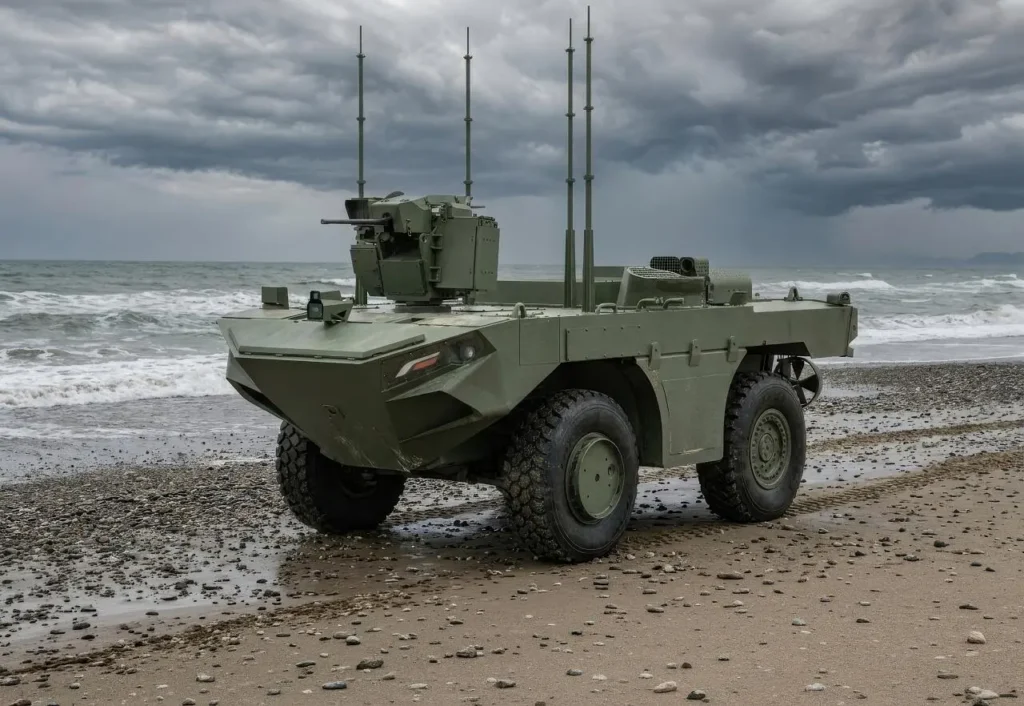
This unmanned amphibious vehicle is the first unmanned system to integrate the “Armor Integrity” structural health monitoring system developed by Nurol Technology. Instead of relying on crew assessment after a hit, this system handles post-impact evaluation: sensors detect the impact’s location, direction, and severity, calculate the remaining structural capacity of the affected area, and monitor for potential hidden damage that could accumulate over time. The resulting data is relayed to the operator and chain of command; based on real-time data and tactical analysis, the system offers the commander options such as maneuvering to protect weakened areas, repositioning behind cover, continuing the mission, or assuming a passive role. In case of disconnection, data is stored locally and transmitted once the link is reestablished.
Baybaş: Few Companies in the World Produce at This Scale
FNSS CEO and Board Member Selim Baybaş described the İ-ZAHA as a next-generation heavy-class unmanned amphibious vehicle that brings together FNSS’s engineering capabilities, the field-proven performance of the ZAHA, and ongoing R&D efforts. Baybaş noted that the number of companies worldwide capable of producing an unmanned ground vehicle with this scale and amphibious capability is extremely limited. He emphasized that with over 35 years of experience in the sector and active production lines, FNSS is one of the few NATO suppliers able to manufacture different platforms simultaneously.
🔍 You may also like
Source: C4Defence–FNSS