





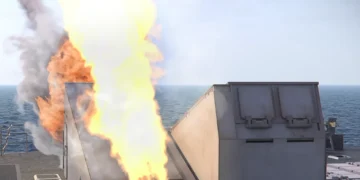

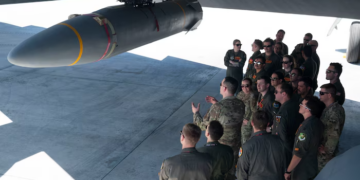



























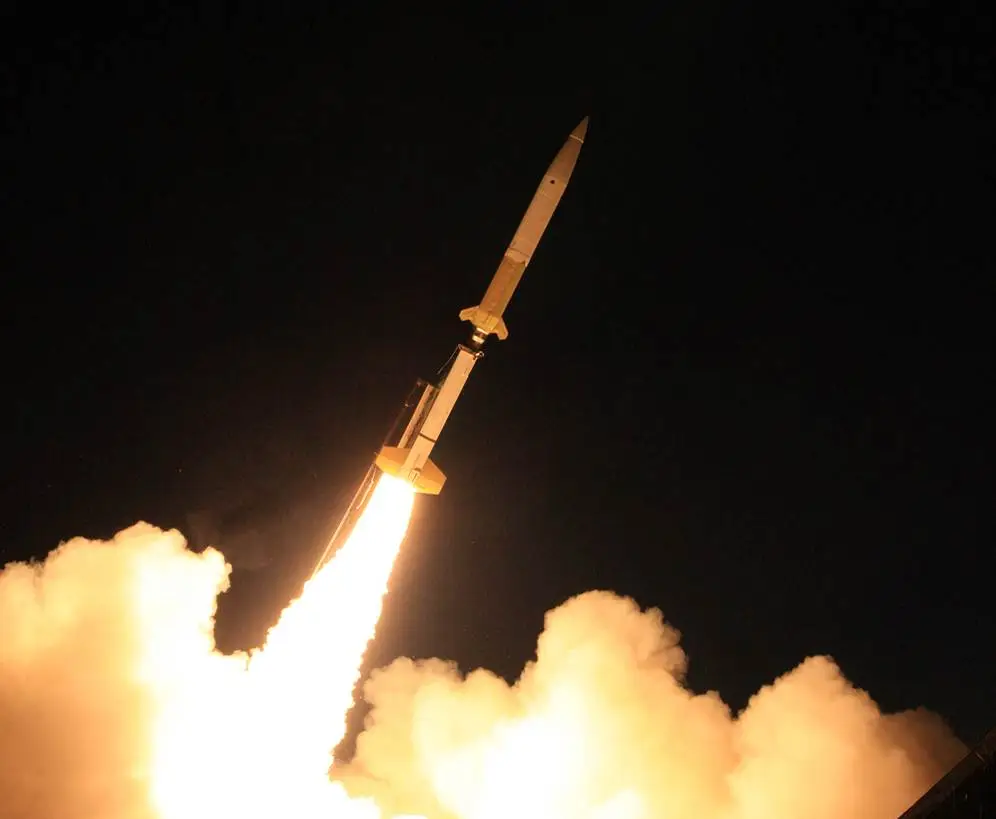
The U.S. Department of War has signed a seven-year PAC-3 THAAD agreement with General Dynamics Ordnance and Tactical Systems (GD-OTS) and Lockheed Martin to triple PAC-3 MSE interceptor production and quadruple THAAD interceptor production. Structured as multiyear procurement (MYP) framework agreements, the deals aim to increase production quantities and accelerate delivery schedules for missile subcomponents supporting the Terminal High Altitude Area Defense (THAAD) and Patriot Advanced Capability-3 Missile Segment Enhancement (PAC-3 MSE) programs.
Under the agreements, General Dynamics will carry out a rapid scale-up of specialized interceptor components. Alongside the increases in PAC-3 MSE and THAAD interceptor production, output will also rise for subcomponents including motor cases, seeker housings and midsections, and shroud deployment systems. L3Harris’s efforts to quadruple THAAD propulsion production mark another instance of this expansion across the supply chain.
PAC-3 THAAD Agreement: Duffey on Industry Partnership
Under Secretary of War for Acquisition and Sustainment Michael P. Duffey described the agreement as an example of the partnership model built with industry. “Today’s announcement represents an example of the evolution of how we partner with industry to expand the Arsenal of Freedom, outpace emerging threats, and ensure the Warfighter never faces a fair fight,” Duffey said. He noted that General Dynamics and Lockheed Martin had answered the call, adding that red tape was being cut, timelines shortened, and domestic manufacturing capacity rapidly scaled.
L3Harris Technologies had earlier signed a $400 million propulsion contract for the THAAD system.
Funding Subject to Annual Appropriations
Funding for the PAC-3 THAAD agreement is subject to annual appropriations. The framework agreements provide industry with a long-term demand signal by guaranteeing minimum annual procurement quantities. This structure is said to allow General Dynamics and its lower-tier suppliers to make long-term investments in workforce expansion, bulk material purchases, and facility upgrades.
🔍 You may also like
Source: C4Defence-war.gov