





























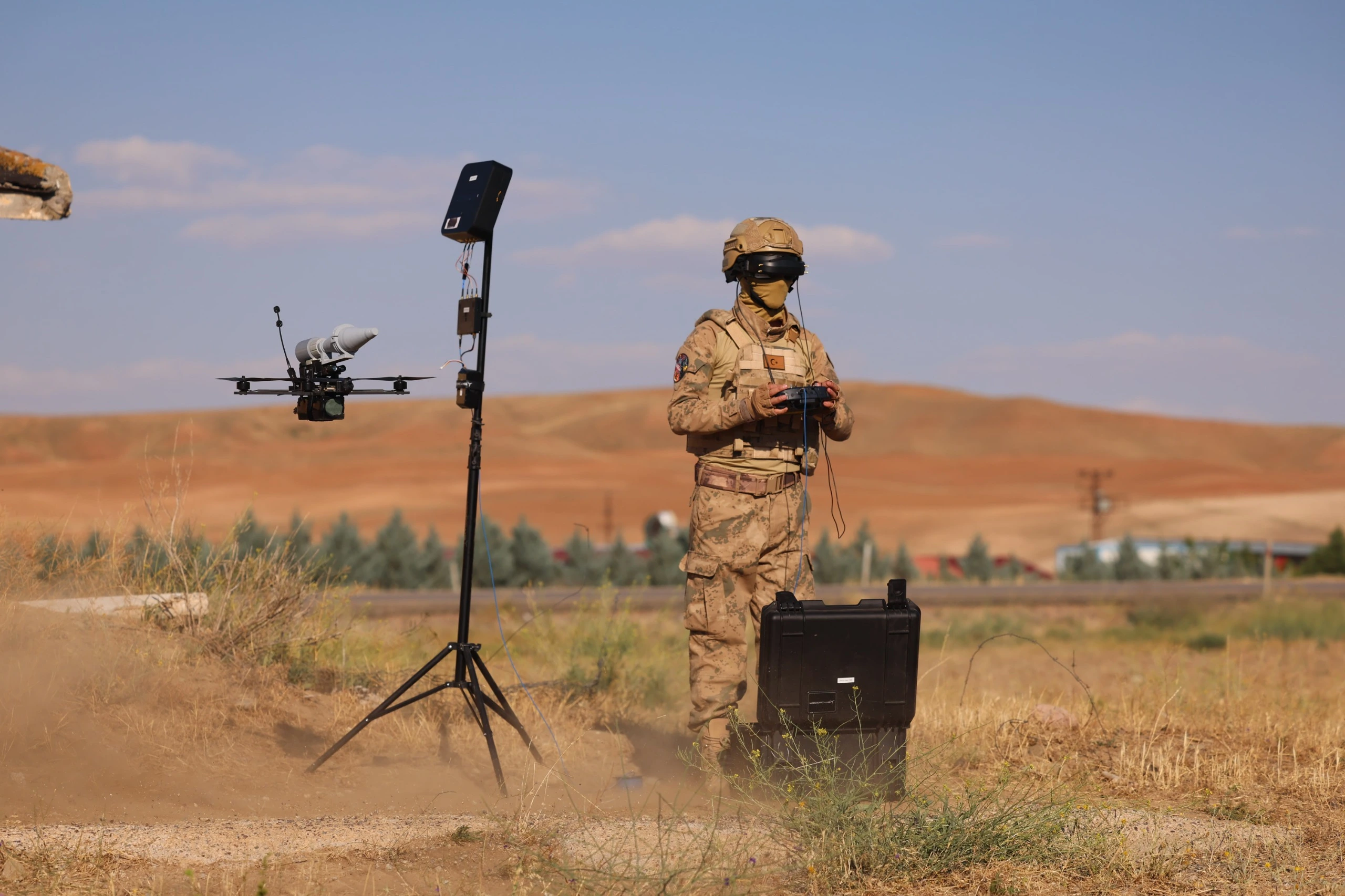
STM ALKAN FPV has successfully completed acceptance tests with its military-grade safety fuze system, autonomous terminal dive capability and fiber-optic control option. With an operational range of 10 kilometres, the domestically developed kamikaze FPV drone offers precision strike capabilities against stationary and moving targets.
Developed by STM to meet the requirements of the modern battlefield and previously introduced as KARGUFPV, the domestically developed kamikaze UAV has successfully completed acceptance tests and entered service with Turkish security forces. Building on its experience in tactical UAV systems, STM has extended its expertise to FPV technologies and completed the first deliveries of several ALKAN FPV units following the acceptance procedures.
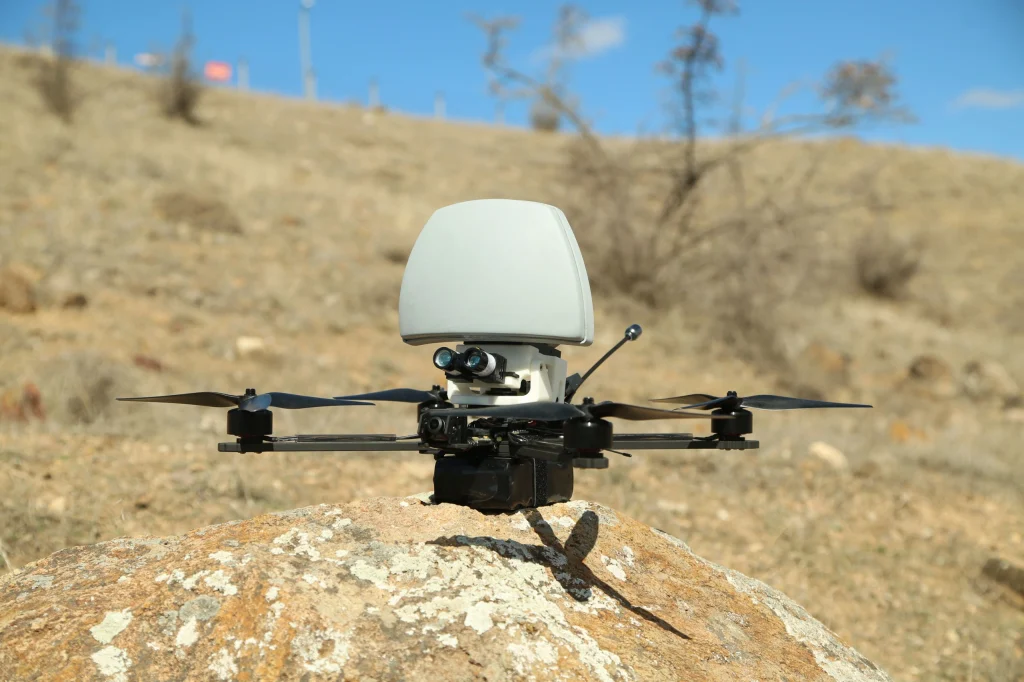
Previously introduced as KARGUFPV, the system has been renamed STM ALKAN FPV. Developed to address dynamic threats in asymmetric warfare environments, the platform allows operators to control it using real-time video feeds. Equipped with either anti-personnel or armour-piercing warheads, ALKAN FPV can carry out precision strikes against stationary and moving targets, supported by its high manoeuvrability, day-and-night operational capability and low radar cross-section.
STM ALKAN FPV’s Fuze System
Developed in accordance with the MIL-STD-331 standard, the military-grade safety fuze system enhances safety during transport and operations, while its proximity fuze sensor enables automatic detonation at a preset distance. The image processing-assisted autonomous terminal dive capability allows the system to precisely engage targets designated by the operator.
With an operational range of 10 kilometres and a maximum speed of 140 km/h, ALKAN FPV operates at a mission altitude of 500 metres and can reach a maximum altitude of 5,500 metres above sea level. The system has an endurance of more than 20 minutes in its kamikaze configuration, while its endurance increases to up to 44 minutes in the observation configuration without a warhead or fuze.
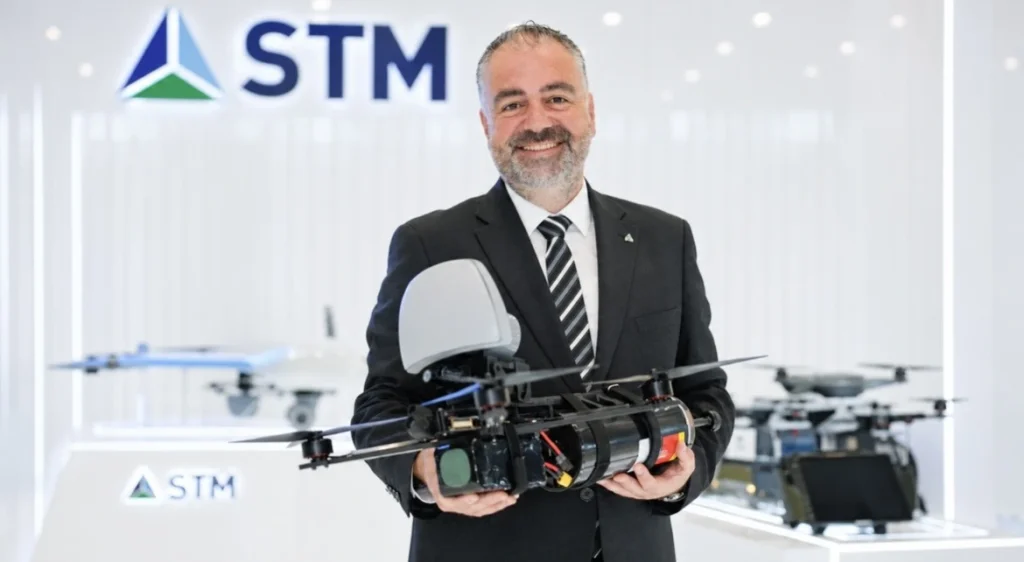
Highlighting STM’s leading position in autonomous systems, STM General Manager Özgür Güleryüz stated that the company had delivered domestically developed systems such as KARGU, BOYGA, TOGAN and ALPAGU to Turkish security forces and exported its products to more than 15 countries across four continents.
Güleryüz noted that STM had transferred its field experience and engineering expertise in autonomy to FPV technologies, adding that STM ALKAN FPV, the company’s first product in this field, had entered service with Turkish security forces following the completion of acceptance tests.
Emphasising that one of the key features distinguishing ALKAN FPV from conventional FPV systems is its advanced military-grade safety fuze system, Güleryüz explained that it ensures safe handling during transport and operations. He added that integrating STM’s autonomy and image processing capabilities into the platform enables autonomous terminal dives and precision strikes once the operator designates a target, reducing operator dependence while improving strike accuracy and mission effectiveness.
Güleryüz stated that further ALKAN FPV deliveries would continue in the coming period and reaffirmed STM’s commitment to supporting Turkish security forces with innovative, domestically developed systems.
STM ALKAN FPV can be controlled via fiber-optic cable as well as radio frequency (RF) communications. Its fiber-optic communication capability provides resistance to electromagnetic jamming, allowing the system to maintain flight and targeting operations without relying on GPS or RF signals.
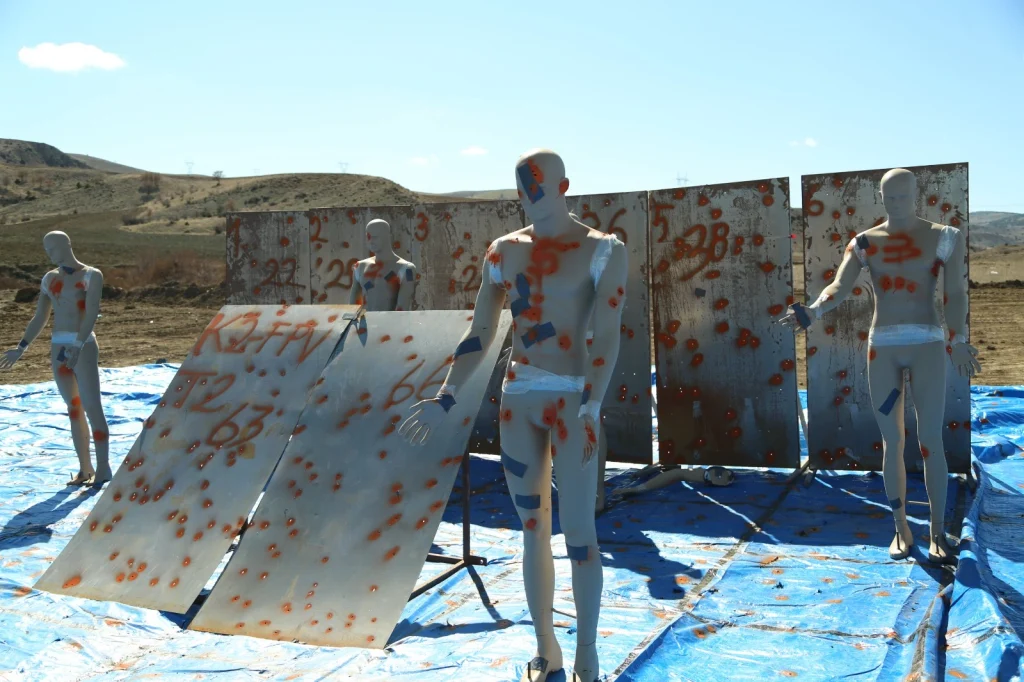
ALKAN FPV shares a common ammunition and fuze system with KARGU, STM’s domestically developed loitering munition system. Both platforms can use anti-personnel and armour-piercing warheads equipped with STM-designed, military-standard fuzes without requiring any modifications. This compatibility allows ammunition already in the inventory for KARGU to also be used with ALKAN FPV.
🔍 You may also like
Source: C4Defence