









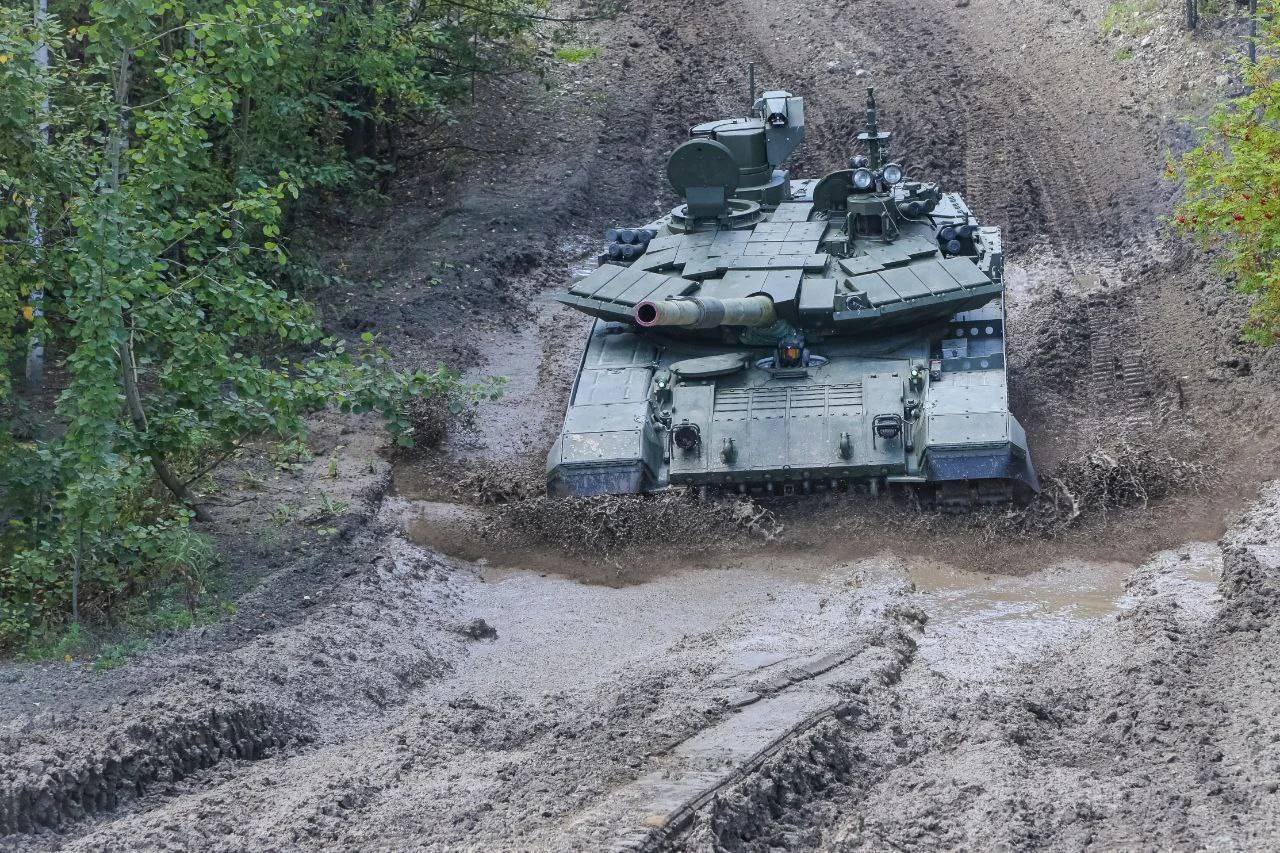
Facing the growing threat of drones on the modern asymmetrical battlefield, Russia has moved to urgently strengthen the upper-hemisphere and engine-transmission protection on its T-90M Proryv tanks. What’s more, Moscow is now actively funneling frontline personnel directly into the R&D process, putting them through engineering training so their firsthand combat experience can shape future upgrades.

Nikolay Volobuyev, Deputy Director General of the state corporation Rostec, announced at Bauman Moscow State Technical University (Baumanka) the launch of a special program tailored specifically for veterans of Russia’s so-called “Special Military Operation” (SVO). According to Volobuyev, the initiative is designed to equip these service members with technical skills and ultimately absorb them into the defense industry as full-time employees.
Frontline Know-How Drives the R&D Cycle
The program, spearheaded by Rostec in partnership with the “Defenders of the Fatherland” foundation and backed by the Ministry of Science and Higher Education, aims to structure the practical experience of personnel who operate military hardware in combat zones at an academic level. Volobuyev noted that while the T-90 platform has proven itself as a highly capable armored vehicle, the development process never stands still. He stressed that the knowledge and combat insights of soldiers with real-world experience with these systems are absolutely invaluable—not just for modernizing existing equipment, but also for designing entirely new platforms. He added that Rostec has put all the necessary conditions in place to bring these veterans on board as engineers.
Drone and Electronic Warfare Upgrades for the T-90M
Acting on real-time feedback from the front lines, Uralvagonzavod has rolled out a host of critical structural and electronic enhancements to the T-90M Proryv over the past few months. In particular, the tank’s electronic warfare suites have been substantially upgraded to neutralize FPV kamikaze drones and asymmetric UAV threats in mid-air. At the same time, additional passive armor modules and protective countermeasures have been fitted over the engine and transmission compartment—one of the platform’s most sensitive logistical and mechanical choke points—specifically to defend against top-attack strikes from above. The core focus of the engineering work underway at Uralvagonzavod is synchronizing the tank’s active and passive defense systems to maximize crew safety and overall survivability.
A New Era of Veteran Employment in Russia’s Defense Sector
More than just a social responsibility project, the program at Bauman University is emerging as a strategic institutional move designed to tighten the feedback loop in defense logistics. By retraining troops who have personally experienced the tank’s technical limitations, failure dynamics, and weak spots under actual combat conditions, and then embedding them in R&D departments, the initiative holds real potential to slash the design and modernization timelines for next-generation military systems.
🔍 You may also like
Source: C4Defence