


























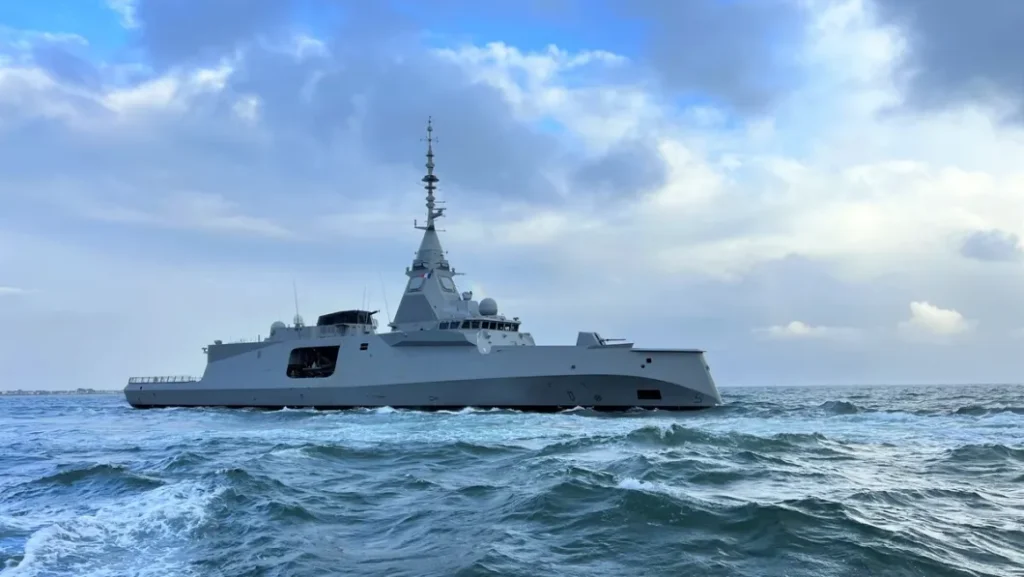
Sweden has signed a €4.3 billion contract with French shipbuilder Naval Group for four air defence frigate vessels, a deal that will triple the country’s current air defence capability. The Swedish Defence Materiel Administration finalised the agreement, with delivery of the first air defence frigate expected in 2030.
The contract was signed in Stockholm on 31 August during a ceremony attended by Swedish Prime Minister Ulf Kristersson and French President Emmanuel Macron. At the same event, Swedish Defence Minister Pål Jonson and France’s Minister of the Armed Forces and Veterans Affairs Catherine Vautrin signed a separate framework agreement between the two countries’ defence ministries, laying the groundwork for a long-term partnership covering operational cooperation as well as defence industrial development.
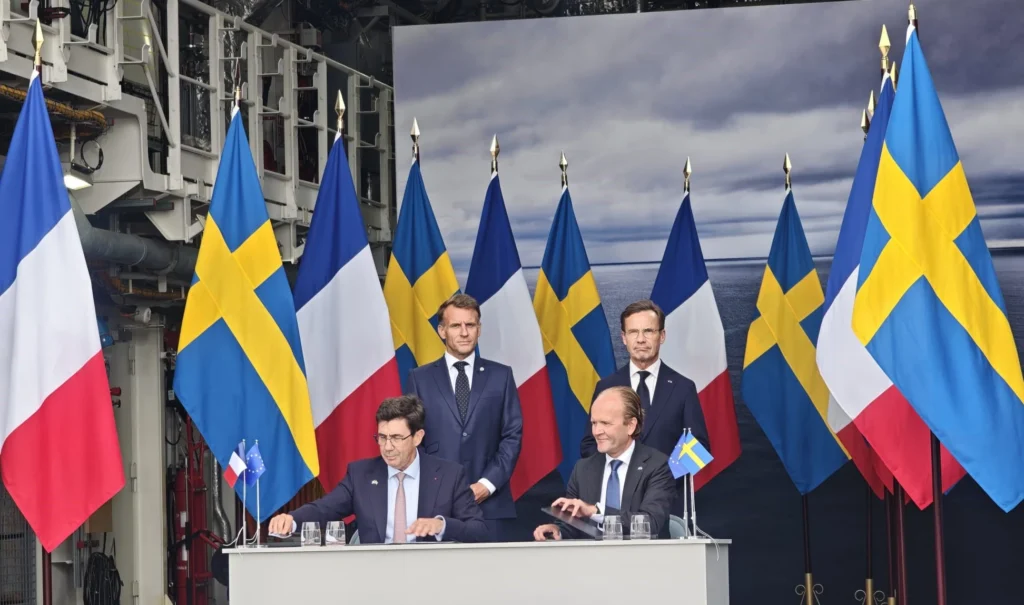
Kristersson said the agreement deepens the partnership between Sweden and France, adding that as allies the two countries need to stand together at a time of global uncertainty, and that the closer cooperation benefits both European defence and NATO. Jonson described the air defence frigate programme as a major boost to Sweden’s naval capability, noting that tripling the country’s air defence output matters both for Sweden’s own security and for NATO given the deteriorating international situation.
Air Defence Frigate Deliveries to Run through the Early 2030s
With the contract now signed, construction of the air defence frigate vessels can begin alongside training for Swedish naval personnel. The first ship is due to reach the Swedish Defence Materiel Administration in 2030, with the remaining three following in stages.
The vessels will be built to Sweden’s own configuration — designated the Luleå class — based on Naval Group’s Frégate de Défense et d’Intervention (FDI) design. Each air defence frigate will carry advanced anti-air and anti-submarine warfare systems and is intended to give Sweden the ability to assert control at sea, protecting maritime shipping lanes and keeping them open.
The programme involves close coordination between government agencies and industry on both sides. It represents a substantial long-term expansion of Sweden’s naval fleet, aimed at defending Swedish territory and improving interoperability with NATO allies during joint operations. Officials describe the added air defence frigate capacity as a key contribution to both Sweden’s national security and NATO’s broader capability.
🔍 You may also like
Source C4Defence–Sweden Government