

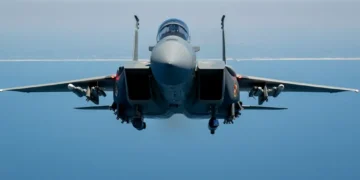








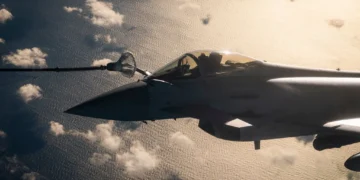








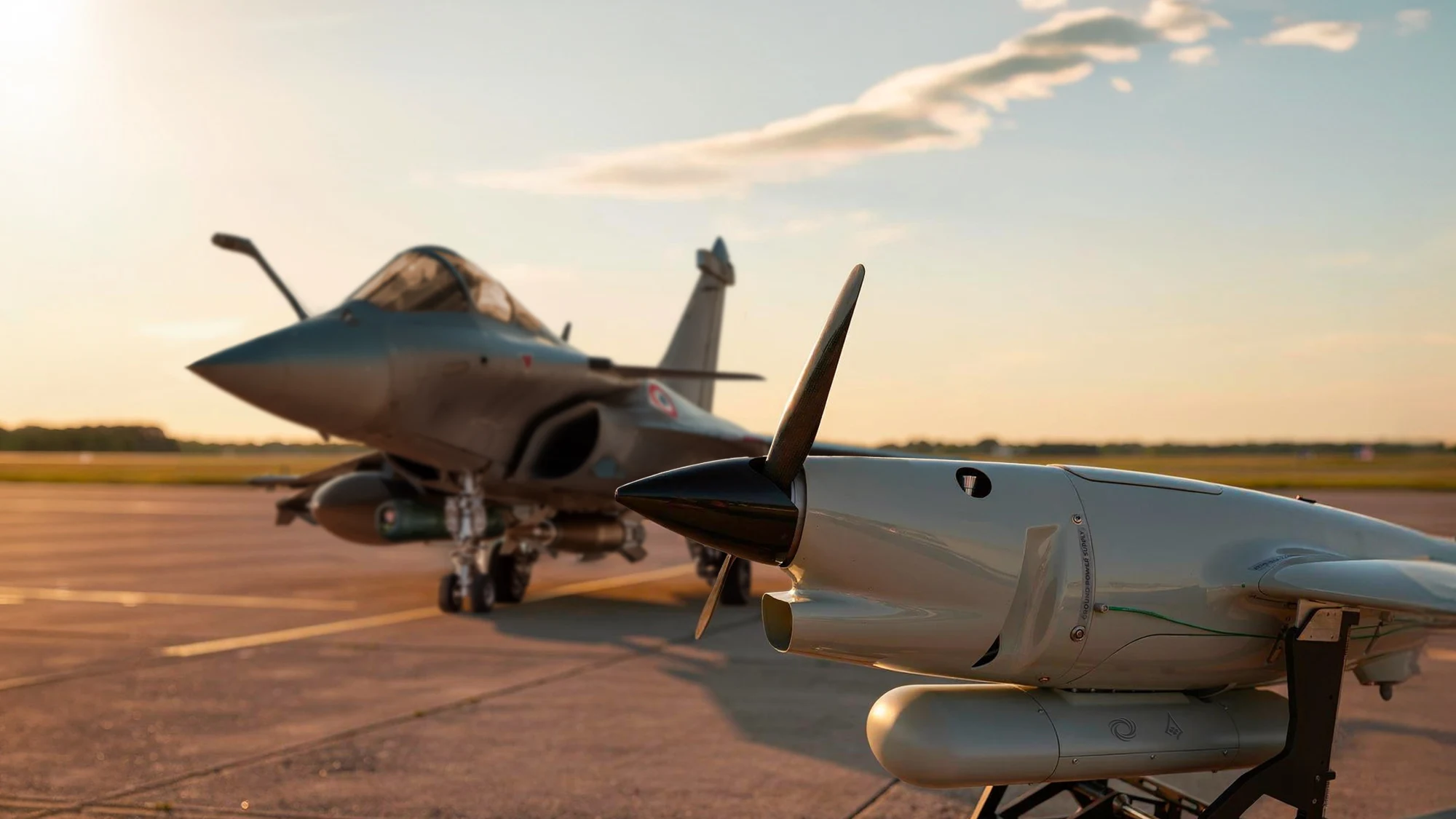
Dassault Aviation and Harmattan AI have completed the first successful cooperative flight between a Rafale F4 fighter jet and an autonomous drone using the NAMIB electronic warfare system.

The NAMIB development programme, launched in January 2026, is one of the key components of the collaboration between Dassault Aviation and Harmattan AI. The demonstration provided concrete proof of how the high-low mix strategy can deliver operational superiority when combined with autonomous systems.
A New Solution Against Electromagnetic Threats with NAMIB
NAMIB, jointly developed by Harmattan AI and Dassault Aviation, is an innovative electronic warfare payload optimised for detecting, identifying and precisely locating electromagnetic emissions from enemy air defence systems. What sets the system apart is its platform independent architecture. The technology can be used across a wide range of platforms, from quadcopter type tactical drones to fixed wing platforms conducting long endurance surveillance missions.
During the flight demonstration, NAMIB detected and precisely located a radar from several tens of kilometres away. The data was transmitted in real time to the Rafale F4 cockpit, and the target was neutralised in a simulated strike by the Rafale. This process validated NAMIB’s role in the manned-unmanned teaming concept and its effectiveness on the battlefield.
Strategic Assessment from Industry Leaders
Eric Trappier, Chairman and CEO of Dassault Aviation, said this success takes the Rafale F4 architecture’s multi domain combat capabilities to the next level. He noted that the Rafale seamlessly adapts to the high-low mix approach, which combines sophisticated complex systems with expendable and autonomous platforms. He also stressed that the F4 standard enables seamless communication with a wide range of elements, including ground forces, allowing maximum use of NAMIB’s detection capabilities.
Mouad M’Ghari, Co Founder and CEO of Harmattan AI, shared his views on the future of electronic warfare. He said electronic warfare has become the most critical element of operational superiority today, and that NAMIB allows these capabilities to be delivered to the areas closest to the threat through lightweight and autonomous systems. He added that by combining Dassault Aviation’s aerospace expertise with Harmattan AI’s artificial intelligence know how, they are building the combat architectures of the future today.
NAMIB is not just an electronic warfare payload. It is seen as one of the fundamental building blocks of future collaborative combat architectures. This autonomous solution, which minimises the risks that manned aircraft may face, stands out as a critical milestone in the integration of artificial intelligence and electronic warfare across the defence industry.
🔍 You may also like
Source: C4Defence-Dassault Aviation