




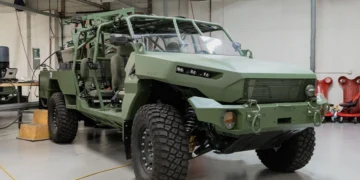



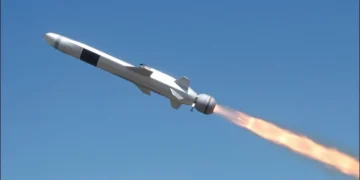
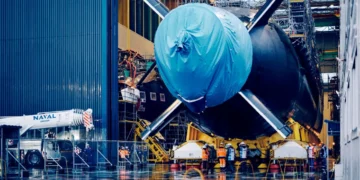

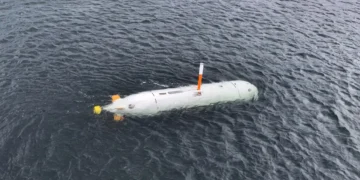












An Engineering Perspective on Critical Component Management
“Critical component management is not simply about delivering the right part at the right time — it is about preserving the engineered performance of that part throughout the entire logistics process.”

The reliability of defence systems depends not only on successful design and manufacturing processes but also on the ability of critical components to preserve their engineering characteristics throughout the logistics chain until they reach the operational environment. Therefore, logistics should be considered not merely as a transportation activity but as a strategic engineering function supporting system reliability.
This study examines the strategic importance of time-critical logistics in the defence industry from an engineering perspective. It discusses how the engineering mindset developed during my postgraduate research on the low-velocity impact behaviour of composite laminates has influenced my professional evaluation of critical component management within defence logistics.
The purpose of this paper is not to establish a direct scientific relationship between composite impact mechanisms and logistics processes. Instead, it aims to demonstrate how an engineering approach to identifying hidden risks can provide an alternative perspective for managing critical components in defence logistics.
While the existing literature mainly addresses defence logistics through supply chain management, integrated logistics support and life-cycle management, this paper introduces an interdisciplinary perspective by combining engineering reliability with logistics processes. Particular emphasis is placed on minimum handling, traceability, controlled transportation conditions and operational continuity.
The study concludes that the success of defence logistics should be evaluated not only by delivery speed but also by its ability to preserve the engineering performance of critical components until they become part of the operational system.
Introduction
The defence industry is a strategic sector that requires not only the development of high-technology systems but also their reliable sustainment. Today, an air platform, missile system, radar, electronic subsystem, or armored vehicle is made up of thousands of components manufactured in different countries and working together with extremely high precision. Any delay, loss of quality, or functional nonconformity in even one of these components can directly affect not just the production process, but also the operational readiness of the system.
For this reason, the concept of logistics in the defence industry extends well beyond the traditional idea of moving materials. In NATO’s logistics doctrine, logistics is defined as an integrated field of activity encompassing materiel, maintenance, supply, transportation, technical support, and life-cycle management. Similarly, Integrated Logistics Support (ILS) and Performance Based Logistics (PBL) approaches both demonstrate that logistics processes are an inseparable part of systems engineering.
Over the course of my career, I have had the opportunity to work in both mechanical engineering and international logistics at different points. During my master’s research, while experimentally studying the low-velocity impact behavior of composite laminates, I observed that even when surface deformation was limited, significant damage mechanisms could still develop within the internal structure of the material. That experimental work gave me an important engineering perspective: the reliability of a system cannot be judged solely by what is visible at first glance.
The field experience I have since gained in defence industry logistics shows me that the same way of thinking applies in a very different discipline. When I look at the journey a critical component takes from the production facility to the field, I believe it is not only the delivery time that matters, but also the conditions the component is exposed to throughout the logistics process — conditions that need to be considered from an engineering reliability standpoint.
This brings me to the central question of this article:
Does a critical component reach the system it will serve while retaining the engineering performance it had at the moment it was manufactured?
That question is the starting point for this article.
Again, the purpose of this study is not to establish a direct scientific connection between the damage mechanisms found in composite materials and defence logistics. Instead, it aims to show how the engineering approach I developed during my experimental work on composite materials has shaped the way I now think about critical component management in defence industry logistics.
With this in mind, the study first reviews the literature on critical component management and engineering reliability in the defence industry, then examines this approach within the framework of time-critical logistics practices. The final section presents my own engineering assessment of defence industry logistics, along with directions for future research.
Critical Component Management and Engineering Reliability in the Defence Industry
The success of systems developed in the defence industry depends not only on design and manufacturing capability, but also on sustaining the reliability of their critical components throughout the life cycle. The conditions a critical component used in an air platform, missile system, radar infrastructure, or armored vehicle is exposed to — from production to the field — can directly affect the system’s mission performance. For this reason, logistics in the defence industry should be treated not merely as a function that manages the flow of materials, but as a strategic process that supports engineering reliability.
NATO’s Allied Joint Doctrine for Logistics (AJP-4) defines logistics as an integrated field of activity covering the planning and management of materiel, transportation, maintenance, supply, storage, and technical support (NATO, 2018). This framing shows that logistics is an inseparable part of operational readiness: a defence system’s mission capability is tied not just to parts arriving on time, but to those parts retaining their technical adequacy at the moment they are needed.
Similarly, the Integrated Logistics Support (ILS) approach treats systems engineering and logistics as two disciplines that cannot be separated. Blanchard (2004) argues that logistics planning should be addressed from the very beginning of product development, recommending that maintenance planning, technical documentation, training, spare parts management, and life-cycle costs all be considered within a single systems approach. The core aim of this approach is to keep systems at a high level of availability throughout their operational life.
The Performance Based Logistics (PBL) model, which has become more widespread in recent years, evaluates logistics activities in terms of system performance rather than the number of parts delivered. Under this model, the key performance indicators are parameters such as mission capability rate, maintenance continuity, system availability, and operational readiness. As a result, the success of logistics processes is measured not simply by whether a shipment was completed, but by the contribution it makes to system performance (U.S. Department of Defense, 2023).


Damage zones in composite specimens following low-velocity impact / Source: Akın & Şenel (2010).
Transferring these experimental findings directly to defence logistics would not be scientifically accurate. The mechanical behavior of composite materials and logistics processes are different disciplines, and one cannot substitute for the other. Even so, I believe the engineering way of thinking that this research gave me has meaningfully shaped how I now approach the processes I encounter in defence industry logistics today.
Just as hidden damage mechanisms in engineering can affect system performance, certain operational risks that are not immediately obvious in defence logistics can also affect the reliability of critical components. Repeated handling, unsuitable packaging methods, prolonged waiting times, environmental conditions, vibration, and sudden mechanical loads are all factors that — depending on the nature of the product — need to be evaluated from a technical performance standpoint. This is why I believe logistics processes should be analyzed not only in terms of time and cost, but also in terms of engineering reliability.
Based on my professional observations, I believe critical component management in the defence industry should rest on three fundamental pillars:
Preserving engineering performance: sustaining the technical characteristics a critical component had at the point of manufacture throughout the entire logistics process.
Operational continuity: ensuring that production, maintenance, and assembly processes proceed without interruption through proper time-critical logistics planning.
Traceability and risk management: recording the transport conditions of critical components and proactively managing the risks that may arise throughout the process.
Taken together, these three pillars can help logistics in the defence industry move beyond being a purely supporting function and become a strategic capability that strengthens engineering reliability.
The Journey of a Critical Component in the Defence Industry and Potential Risk Points
Supplier → Production → Packaging → International Transport → Customs → Delivery → Assembly → Operation
Source: Prepared by the author.
An Engineering Perspective on Critical Component Management
Logistics processes in the defence industry are generally evaluated through the lens of supply chain management, cost optimization, delivery times, and operational planning. These factors are, without question, critically important. But based on my professional experience, I don’t think it’s enough to explain critical component management purely in terms of logistics planning. To me, this process is also a systematic approach to preserving engineering reliability.
As a mechanical engineer, during my master’s research I had the opportunity to study the low-velocity impact behavior of composite laminates. Across tests conducted at different impact energies, I observed that even when the outer surface showed only limited deformation, significant damage mechanisms could still develop within the material’s internal structure. That research taught me more than just how composite materials behave — it also showed me that, in engineering, what is visible and what is actually happening are not always the same thing.
When I look today at the processes I encounter in defence industry logistics, I find that the same engineering mindset applies, even in a completely different field. Of course, it would not be correct to draw a direct scientific link between the mechanical damage that occurs in composite materials and logistics processes. But there is a shared engineering principle: the reliability of a system cannot be judged from externally observable outcomes alone — the risks that aren’t visible also need to be analyzed.
After leaving the production facility, critical components in the defence industry pass through many stages — packaging, storage, international transport, customs procedures, intermediate transfers, assembly, and final delivery to the end user. Throughout this journey, components can be exposed to a wide range of environmental and operational conditions. Even when a delivery happens exactly on schedule, there are other engineering parameters that still need to be taken into account.
In my view, the key performance indicator in defence industry logistics should not simply be “delivered.” What really matters is whether a critical component reaches the system it will serve while still retaining the technical adequacy, quality criteria, and functional characteristics it had when it was manufactured. Many of the components used in defence systems are produced to extremely tight tolerances and are designed to operate within very specific working limits.
For this reason, I believe the success of logistics processes should not be judged only by delivery time, cost, or transport capacity — the operational conditions that could affect engineering reliability also need to be taken into account. In particular:
- Repeated handling operations
- Unsuitable packaging practices
- Vibration and mechanical loads that can occur during transport
- Temperature and humidity fluctuations
- Unexpected delays
- Storage conditions
…should all be considered, depending on the nature of the product, among the risks that can affect engineering performance.
At this point, I believe time-critical logistics solutions should not be seen simply as operations that guarantee fast delivery. Operational models that minimize transfers and handling, use direct transport, provide high traceability, and maintain effective communication throughout the process can make a meaningful contribution to critical component management. That said, this contribution clearly needs to be backed up scientifically through vibration analyses, environmental resistance testing, and operational performance measurements across different product categories.
In my view, the performance indicators of the future in defence industry logistics should cover engineering reliability, not just delivery times. With that in mind, I believe it would be valuable to incorporate the following parameters into performance evaluation systems:
- Total number of handling operations
- Monitoring of environmental conditions experienced during transport
- Vibration and shock load records
- Packaging verification criteria
- End-to-end traceability
- Pre-operational functional verification results for critical components
I believe this approach can contribute not only to improving logistics processes, but also to maintenance planning, system availability, and reducing life-cycle costs. Treating engineering and logistics as two complementary disciplines in the defence industry will help build more resilient and sustainable supply chains.
Critical Component Management from an Engineering Perspective
COMPOSITE ENGINEERING
↓
ANALYSIS OF HIDDEN RISKS
↓
ENGINEERING RELIABILITY
↓
CRITICAL COMPONENT MANAGEMENT
↓
DEFENCE INDUSTRY LOGISTICS
↓
OPERATIONAL CONTINUITY
Source: Prepared by the author.
The Role of Time-Critical Logistics in Critical Component Management
Based on my professional experience, I think it’s an incomplete view to treat time-critical logistics purely as an operating model aimed at shortening delivery times. In the defence industry, the core purpose of time-critical logistics is not only to deliver critical components as quickly as possible, but also to minimize the operational risks they may be exposed to along the way.

Every transfer point, every storage stage, and every additional handling step a critical component goes through can introduce a different level of risk, depending on the nature of the product. For this reason, time-critical logistics should be seen not just as a transport model built for speed, but as a holistic logistics approach that helps preserve a component’s engineering characteristics by reducing unnecessary operational steps along the way.
This is particularly true for the high-precision electronic systems, avionics equipment, composite structural parts, precision-machined mechanical components, and mission-critical subsystems used in the defence industry. Operating models that reduce the number of transfers, minimize handling, maintain controlled transport conditions, and ensure uninterrupted traceability are considered to offer meaningful advantages from an engineering reliability standpoint.
For all these reasons, I believe time-critical logistics should be treated not merely as a way to improve delivery performance, but as a strategic engineering approach that helps critical components reach the field while retaining the technical characteristics they had at the point of manufacture. That said, I believe this assessment would benefit from further support — through vibration analyses, environmental resistance testing, and operational performance measurements carried out across different product categories — which would also represent a valuable contribution to the scientific literature on the subject.
Conclusion and Assessment
The success of platforms developed in the defence industry cannot be explained by advanced engineering design, high-end manufacturing technology, or the use of quality materials alone. For these systems to achieve operational success, the critical components they depend on throughout their mission life must be available at the right time, under the right conditions, and in a state that preserves their engineering characteristics. For this reason, logistics processes should be regarded as one of the strategic engineering activities that sustain the operational continuity of defence systems.
In the literature, defence logistics is most often discussed within the framework of supply chain management, Integrated Logistics Support (ILS), Performance Based Logistics (PBL), and life-cycle management. These approaches offer an important theoretical foundation for improving system availability and operational effectiveness. That said, I believe the perspective on preserving the engineering performance of critical components throughout the logistics process still needs to be developed further.
The core argument put forward in this study is not that there is a direct scientific relationship between the low-velocity impact behavior of composite materials and defence logistics. Rather, it is an attempt to share the perspective that the engineering approach I gained during my master’s research has given me as I evaluate critical component management in defence industry logistics today.
During my experimental work on composite materials, I observed how hidden damage mechanisms could affect structural performance. That experience later shaped a different engineering perspective as I encountered various processes in defence logistics throughout my career. The idea that a critical component should not merely be delivered on time, but should reach the system it will serve while retaining the technical characteristics it had during manufacturing, is the central premise of this study.
In this light, I believe time-critical logistics should not be viewed simply as an operating model for reducing delivery times. Time-critical logistics practices that reduce handling, enable direct transport, provide high traceability, maintain controlled environmental conditions, and ensure effective process management can be regarded as strategic tools that support critical component management. At the same time, validating this view through experimental studies, environmental resistance analyses, vibration tests, and field data across different product categories will be an important requirement for future research.
Another contribution of this study is the suggestion that the relationship between engineering and logistics disciplines should be evaluated not only in terms of operational efficiency, but also from a system reliability perspective. Organizations operating in the defence industry would benefit from a more holistic approach — one where logistics performance indicators are not limited to delivery time, cost, or stock levels, but also include metrics that support the engineering reliability of critical components.
With that in mind, future research could contribute meaningfully to the defence logistics literature by:
- Conducting transport-related risk analyses for different categories of defence industry components
- Experimentally examining the effects of vibration, shock, temperature, and humidity on product performance
- Using smart sensors and digital traceability systems to monitor transport conditions in real time
- Quantitatively analyzing the impact of critical component management on system reliability
In conclusion, the success of logistics in the defence industry should not be measured solely by whether critical components are delivered on time. True success lies in delivering these components to the systems they will serve while preserving, throughout the logistics process, the engineering performance they were designed to have at the point of manufacture. Based on my professional experience, I believe that addressing engineering reliability and logistics processes together will make a significant contribution to building more sustainable, more resilient, and more reliable supply chains in the defence industry.
References
- Abrate, S. (1998). Impact on Composite Structures. Cambridge University Press.
- Akın, C., & Şenel, M. (2010). An Experimental Study of Low Velocity Impact Response for Composite Laminated Plates. Journal of Reinforced Plastics and Composites, 29(11), 1751–1760.
- Blanchard, B. S. (2004). Logistics Engineering and Management (6th ed.). Pearson Prentice Hall.
- Blanchard, B. S., & Fabrycky, W. J. (2011). Systems Engineering and Analysis (5th ed.). Pearson.
- Cantwell, W. J., & Morton, J. (1991). The impact resistance of composite materials: A review. Composites, 22(5), 347–362.
- Department of Defense. (2023). Performance Based Logistics (PBL) Guidebook. U.S. Department of Defense.
- Department of Defense. (2023). Defense Acquisition Guidebook. U.S. Department of Defense.
- Department of Defense. (2022). Integrated Product Support (IPS) Element Guidebook. Defense Acquisition University.
- INCOSE. (2023). Systems Engineering Handbook: A Guide for System Life Cycle Processes and Activities (5th ed.). Wiley.
- International Organization for Standardization. (2015). ISO 9001:2015 – Quality Management Systems – Requirements.
- International Organization for Standardization. (2019). ISO 22301:2019 – Security and Resilience – Business Continuity Management Systems – Requirements.
- Mallick, P. K. (2007). Fiber-Reinforced Composites: Materials, Manufacturing, and Design (3rd ed.). CRC Press.
- NATO. (2018). Allied Joint Doctrine for Logistics (AJP-4, Edition B Version 1).
- NATO. (2020). AAP-48: NATO System Life Cycle Stages and Processes.
- NATO. (2021). NATO Logistics Handbook.
- NATO Support and Procurement Agency (NSPA). (2023). Logistics Capabilities Overview.
- Richardson, M. O. W., & Wisheart, M. J. (1996). Review of low velocity impact properties of composite materials. Composites Part A: Applied Science and Manufacturing, 27(12), 1123–1131.
- SAE International. (2021). ARP6243 – Aerospace Logistics Guidance.
- Savunma Sanayii Başkanlığı. (2023). Entegre Lojistik Destek (ELD) Rehberi (TSSÖDYP-04).
- SX000i Working Group. (2020). International Guide for the Use of the S-Series Integrated Logistic Support (ILS) Specifications.
- U.S. Department of Defense. (1983). DoD Directive 5000.39: Acquisition and Management of Integrated Logistic Support for Systems and Equipment.
- U.S. Department of Defense. (2020). MIL-STD-810H: Environmental Engineering Considerations and Laboratory Tests.
Ceyla Akın – Mechanical Engineer (M.Sc.)
This analysis was originally published in C4Defence Magazine.