













Data Centres, New Energy Technologies, and Strategic Infrastructures
Table of Contents
- Data Centres, New Energy Technologies, and Strategic Infrastructures
- Is Artificial Intelligence Triggering a New Energy Crisis?
- The Invisible Barrier Facing Data Centres
- APR Energy and the Mobile Power Concept
- Why Are New Energy Technologies Gaining Importance?
- Small Modular Reactors (SMRs): A Long-Term Energy Solution for AI?
- Türkiye’s Position: Opportunity or Vulnerability?
- Defence Industry and Energy: The New Frontier of Strategic Autonomy
- The Energy Competition Is No Longer Just About Generation
The recent advancements in artificial intelligence are widely regarded as one of the most significant transformations in the technology world. However, the less visible side of this transformation lies not in algorithms or processors, but in a far more fundamental element: electrical infrastructure. Today, while generative AI systems such as ChatGPT, Gemini, Claude, and Copilot are perceived by the public as a software revolution, behind these systems lie massive data centres that are rapidly becoming some of the world’s largest energy consumers. This dynamic is shifting AI beyond the realm of information technology and positioning it squarely as a matter of energy security and national power.

In the past, the primary goals of the IT sector were to develop smaller processors, faster networks, and greater storage capacities. Today, that race has been replaced by a competition to build the energy infrastructure capable of powering millions of graphics processing units (GPUs) simultaneously. In this sense, the AI revolution is also ushering in a new global electricity era—one in which the advantage will belong not only to those who write the best algorithms, but to those countries and private enterprises that can generate the most uninterrupted electrical power.
Currently, a typical enterprise data centre consumes approximately 20–40 MW of electricity. However, next-generation AI data centres are being designed on entirely different scales. Major AI clusters now demand 100–250 MW of continuous power, while hyperscale data centres require 300–500 MW. Industry estimates suggest that newly developed GPU clusters will require between 700 MW and 1 GW of electrical capacity. A single facility of this magnitude consumes energy comparable to the needs of a mid-sized city or roughly one million households.
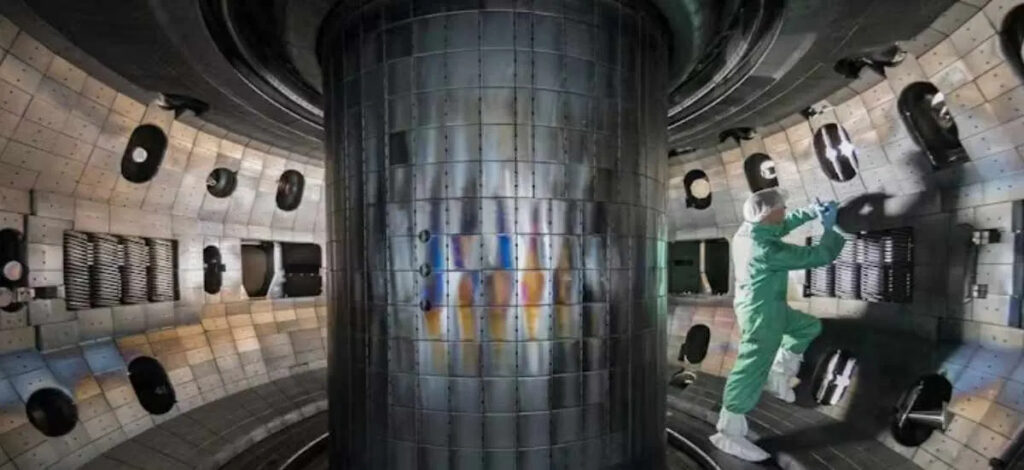
This shift does not merely mean higher electricity consumption; it also changes the fundamental operating logic of energy systems. Whereas traditional industrial facilities experience fluctuating power demand throughout the day, AI data centres run at near-constant load 24 hours a day, seven days a week, 365 days a year. As a result, even the slightest disruption in power supply can lead to millions of dollars in economic losses and critical service interruptions.
Is Artificial Intelligence Triggering a New Energy Crisis?
International organisations and industry analyses converge on one point: AI-driven electricity demand is set to grow exponentially over the next fifteen years. Global AI data centre capacity, estimated at around 60 GW in 2025, is projected to reach 165 GW by 2030, 280 GW by 2035, and 420 GW by 2040. In terms of electricity consumption, the figures are even more striking. Annual AI data centre consumption, estimated at roughly 280 TWh in 2025, is expected to rise to 650 TWh by 2030, approximately 980 TWh by 2035, and 1,450 TWh by 2040.
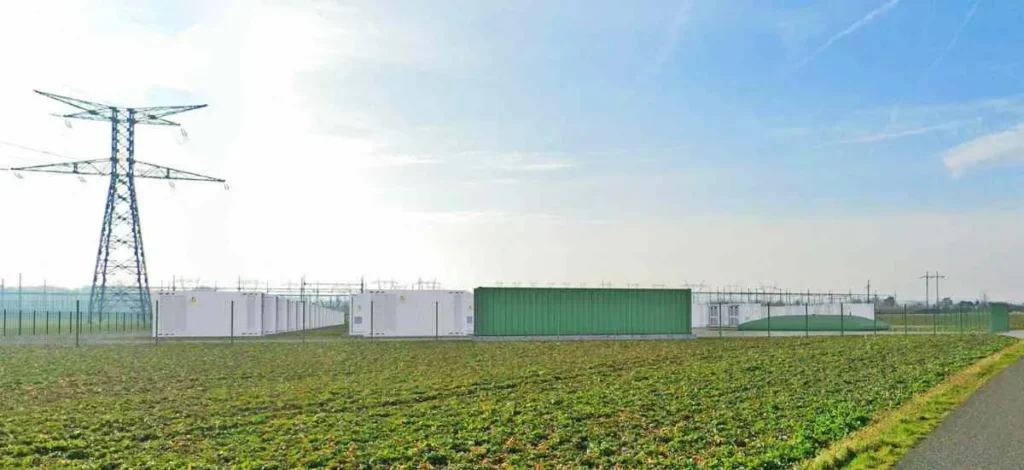
To put these numbers into perspective, a simple country comparison is telling. Türkiye’s annual electricity consumption stands at around 350–360 TWh, while France consumes approximately 450 TWh. This means that by 2040, AI systems alone could consume nearly three times the current total electricity consumption of France and more than four times that of Türkiye today. This comparison underscores that the issue is not merely a concern for technology companies, but a strategic matter that directly affects national energy planning.
This growth in electricity demand is putting pressure not only on generation capacity but also on transmission networks, substations, energy storage systems, and high-voltage infrastructures. In many countries today, the biggest obstacle to data centre projects is not land acquisition or financing, but the lack of available grid connections.
The Invisible Barrier Facing Data Centres
An AI data centre can typically be built within 18 to 24 months. In contrast, constructing high-voltage transmission lines, installing new substations, and expanding grid capacity often takes between five and eight years. This creates a serious timing challenge for technology companies. We are increasingly seeing cases where billions of dollars in data centre investment are ready, but the facilities cannot become operational simply because the power connection has not yet been completed.
This very gap is creating a new market within the energy sector. Temporary but high-capacity energy solutions are becoming a critical enabler, allowing data centres to operate while awaiting grid connections.
APR Energy and the Mobile Power Concept
One of the most notable players in this transformation is APR Energy (APR Super Hold.)—a company specializing in rapidly deployable power plants, which was recently acquired by Elon Musk in July for $1 billion.
Note! APR Energy’s business model differs from that of traditional power generators. Through containerised gas turbines and mobile power plants, the company can deliver dozens or even hundreds of megawatts of electricity within just a few weeks. Although designed as temporary solutions, these systems are filling critical gaps in disaster zones, military operations, large-scale industrial investments, and data centre projects. In today’s fast-paced AI investment environment, mobile energy systems are no longer merely emergency solutions—they have become strategic infrastructures enabling the growth of the new digital economy. This same logic also aligns closely with the energy solutions that the defence industry is developing for forward operating bases and crisis zones, as will be discussed further below.
Why Are New Energy Technologies Gaining Importance?
This surge in electricity demand has sparked a new competitive dynamic in energy technologies. No single energy source can meet all needs anymore. Instead, hybrid energy architectures—where different technologies complement one another—are moving to the forefront.
Natural gas plants continue to be one of the fastest-deployable baseload solutions for large data centres. Their ability to provide high capacity and operate independently of the grid ensures they will remain relevant in the short and medium term.
At the same time, renewable energy investments are proceeding at full speed. Solar and wind power have now become among the lowest-cost electricity generation sources in many parts of the world. However, their dependence on weather conditions makes them insufficient on their own for facilities like AI data centres that require continuous, uninterrupted operation.
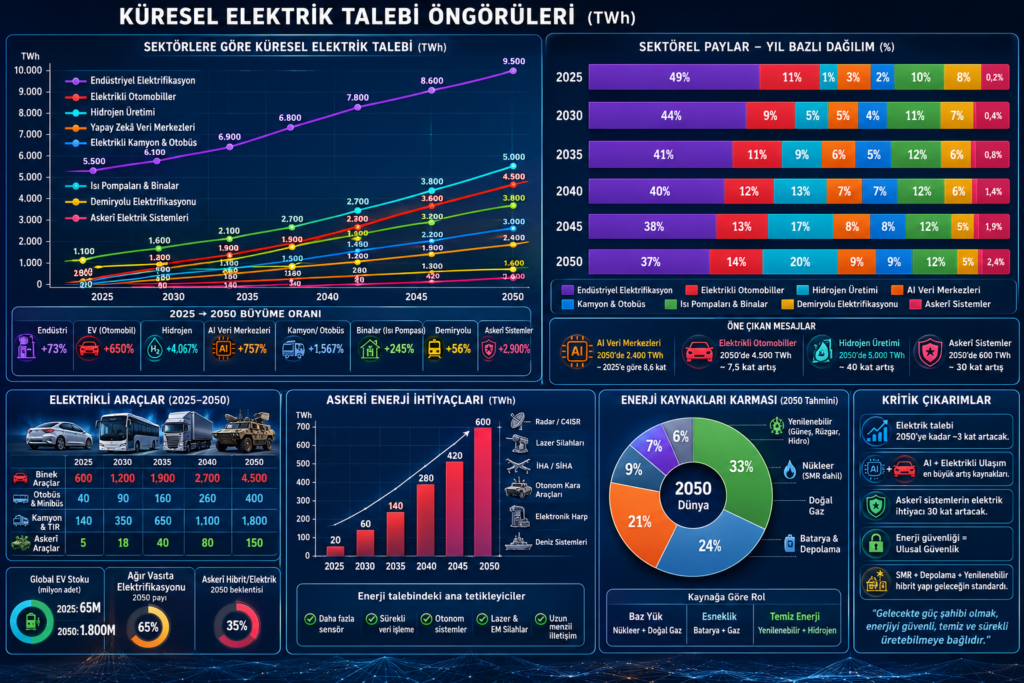
This is why large-scale battery energy storage systems (BESS) are rapidly gaining traction. Batteries are being used not only for energy storage but also to manage sudden load changes, maintain frequency balance, and ensure the uninterrupted operation of data centres. Today, gigawatt-scale battery projects have become technically feasible.
Small Modular Reactors (SMRs): A Long-Term Energy Solution for AI?
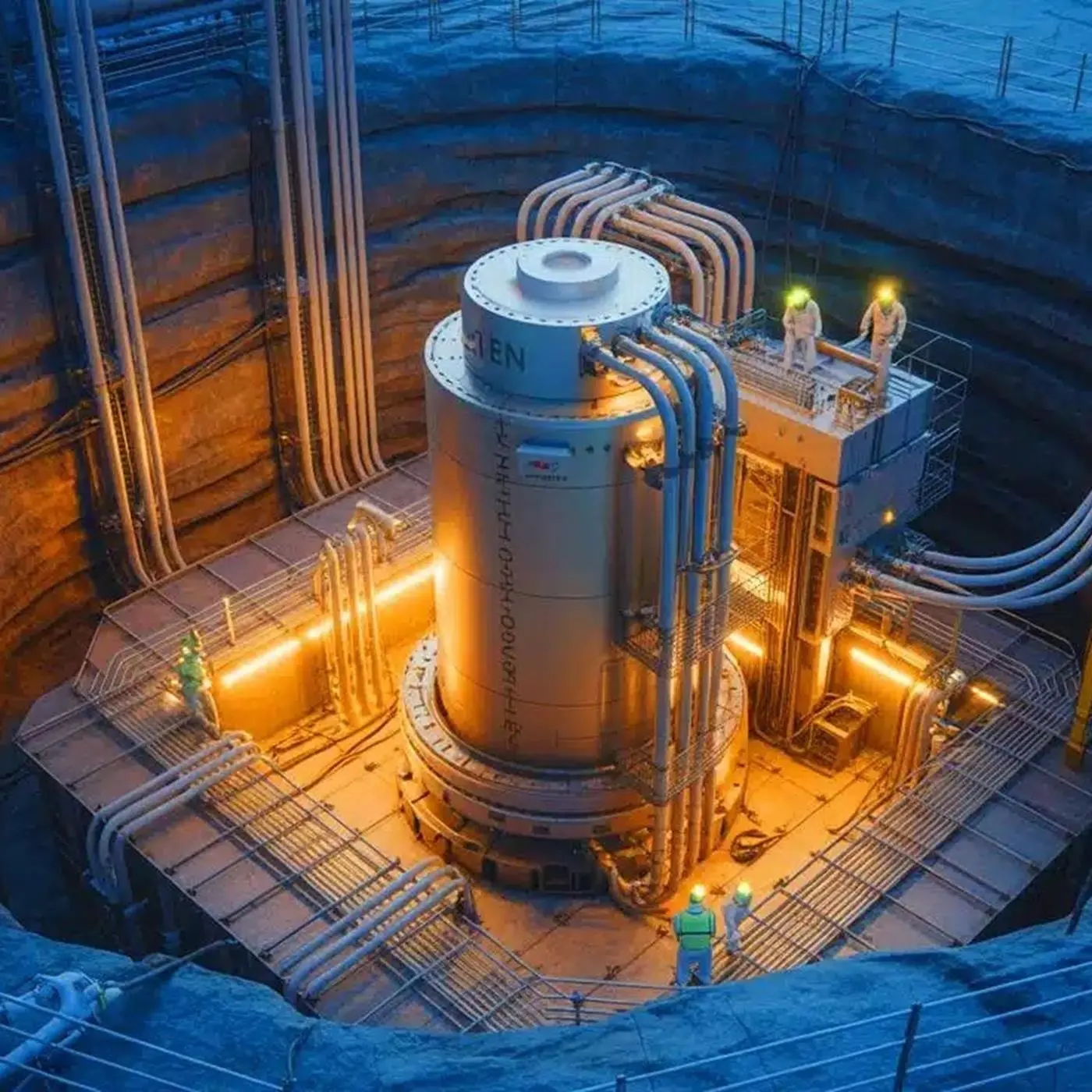
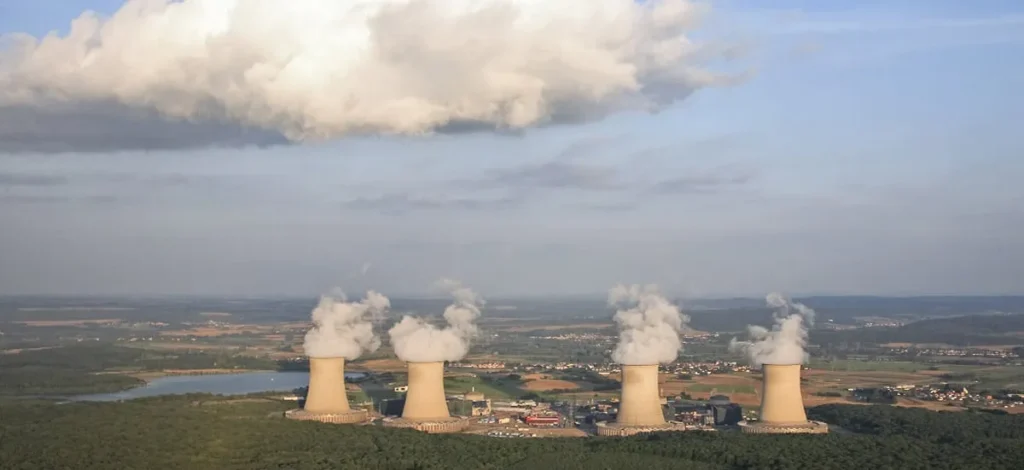
One of the most notable technologies in recent years is the Small Modular Reactor (SMR). Unlike traditional nuclear power plants, these reactors can be manufactured in a modular fashion at factories and are designed to deliver 50–300 MW of continuous power. Their key advantage is that they can provide uninterrupted baseload power 24/7, independent of weather conditions. For this reason, major technology companies such as Microsoft, Google, and Amazon are closely monitoring SMR projects and, in some cases, making direct investments to meet the long-term energy needs of their data centres.
While SMRs are not expected to become widespread in the short term, they are likely to become a significant alternative—particularly for hyperscale AI data centres—after 2035. Microreactors, which are smaller-scale versions of SMRs, address a different need. These systems, with capacities of roughly 1–20 MW, are being designed to operate for years without refuelling. Microreactors are being developed especially for military bases, polar regions, island facilities, and remote operational centres. Their ability to reduce dependence on fuel convoys and operate off-grid has made them a key consideration in defence planning.
Türkiye’s Position: Opportunity or Vulnerability?
This global picture is not an abstract future scenario for Türkiye; on the contrary, it is one of the most tangible planning challenges of the coming decade. Türkiye has the potential to become a significant data centre and digital infrastructure hub in its region. Its geographic location, proximity to intercontinental fibre-optic routes, young and tech-savvy population, and growing software and defence technology ecosystem all support this potential. Notably, the 2026–2030 Artificial Intelligence Action Plan, prepared under the coordination of the Ministry of Industry and Technology and presented to the public at the Türkiye AI Summit, envisages mobilising at least $10 billion for data centre, cloud, and AI infrastructure, with the private sector expected to play a major role. According to the assessments available to us, approximately $10 billion in new investment is planned in the data centre and AI space by 2030, and by 2035, it is expected that at least 1% of Türkiye’s total electricity demand will originate from data centres.
However, realising this potential depends directly on the scale of the country’s electricity generation and transmission capacity. Between 2000 and 2024, Türkiye’s average annual electricity demand growth is reported to have been approximately 4.3%, above the global average of 3%. This means that AI-driven additional load will compound an already rapidly growing demand. Looking at Türkiye’s installed power capacity and generation diversity—hydroelectric, natural gas, coal, solar, wind, and nuclear energy coming online with Akkuyu—the country has a favourable foundation for building a hybrid energy architecture. Upon completion, the Akkuyu Nuclear Power Plant is designed to meet approximately 10% of Türkiye’s electricity needs with its total installed capacity of 4,800 MW.
Additionally, the 2026 Annual Presidential Programme aims to integrate nuclear energy into the electricity generation portfolio, advance projects related to next-generation nuclear reactor, SMR, microreactor, and research reactor design technologies, and prepare a roadmap for the deployment of SMR technologies using domestic capabilities. However, the kind of continuous, uninterrupted, hundred-megawatt to gigawatt-scale loads demanded by AI data centres could strain the capacity of the existing transmission and substation infrastructure. Therefore, for Türkiye to make data centre investments attractive, it must not only increase generation capacity but also adapt its transmission planning, regional substation investments, and grid connection processes to the pace of the AI era. Otherwise, the “investment ready, but no grid connection” problem seen in many other countries could become a significant risk for Türkiye as well.
Defence Industry and Energy: The New Frontier of Strategic Autonomy
The electricity issue is not limited to civilian data centres; it also sits at the very heart of the defence industry. Modern defence systems are now heavily reliant on AI-enabled sensor fusion, autonomous platforms, electronic warfare systems, and real-time data processing capabilities. The training and operation of these systems, much like in the civilian sector, demand immense computational power—and hence, immense electricity. A country’s independence in defence AI is now directly linked to its ability to generate secure and uninterrupted electricity on its own soil.
Over the past two decades, Türkiye’s defence industry has undergone a significant transformation, led by organisations such as ASELSAN, ROKETSAN, TUSAŞ, HAVELSAN, BAYKAR, and STM. It has developed domestic capabilities across a broad spectrum, from unmanned aerial vehicles to radar systems, electronic warfare to satellite technologies. This transformation is now extending directly into the AI field, with the direct involvement of not only the Ministry of Industry and Technology but also the Presidency of Defence Industries and TÜBİTAK—an indication that this has become an institutional and strategic priority, not merely a technical one.
The next stage for these capabilities is the development of large-scale AI models and their integration into command-and-control systems. At this point, energy infrastructure becomes a constraint that, while less discussed than chip supply or software expertise, is equally decisive. Indeed, industry representatives have emphasised in public assessments that energy supply security and defence security are inseparable and deeply intertwined. It is a strategic imperative that data centres hosting defence-oriented AI systems be designed—much like “MİLDATA“-type facilities—to operate largely domestically and, wherever possible, independently from the grid for reasons of confidentiality and resilience.
At this juncture, mobile and containerised power plants such as those offered by APR Energy, along with microreactor technologies, play an even more critical role for the defence industry than for the civilian sector. Forward operating bases, cross-border operational areas, radar and electronic warfare installations, and command centres require grid-independent, rapidly deployable, and adversary-resistant energy sources. Microreactors capable of operating for extended periods without refuelling, and mobile gas turbines, stand out among the technologies that can meet these needs. Academic assessments indicate that Türkiye’s defence industry—with its achievements in technology acquisition and exports—has accumulated a knowledge base that could eventually contribute to SMR and microreactor development processes. In this context, proposals have been put forward for the development of portable, several-megawatt-scale military microreactors under the leadership of institutions such as ASELSAN and TÜBİTAK, and it is being discussed that such systems could be used for forward operating bases and strategic energy facilities. Türkiye’s defence industry strategy should therefore be expected to expand in the coming period—not only to encompass platform and sensor development, but also to ensure resilient and independent energy infrastructure to power them.
The Energy Competition Is No Longer Just About Generation
In the age of artificial intelligence, energy competition is no longer simply about producing more electricity. The real contest now revolves around the capacity to deliver electricity at the right place, at the right time, and without interruption.
This is precisely why energy storage systems, smart grids, AI-powered energy management, mobile power plants, and small modular reactors are all becoming integral parts of the same strategic chain. For data centres, power outages measured in seconds can result in millions of dollars in losses; for military operations, the same interruption can directly affect mission success—or even human lives.
From Türkiye’s perspective, staying competitive in this race is not a matter of choice, but a necessity—first and foremost for the growth of the digital economy and the technological independence of the defence industry. Electricity is no longer merely a public utility; it is the foundational infrastructure of the digital economy, national security, and technological supremacy.
Discover Other Analyses by Sami Atalan
Source: C4Defence