

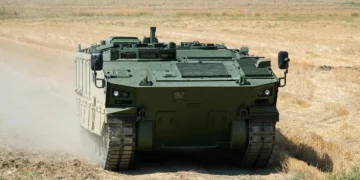



















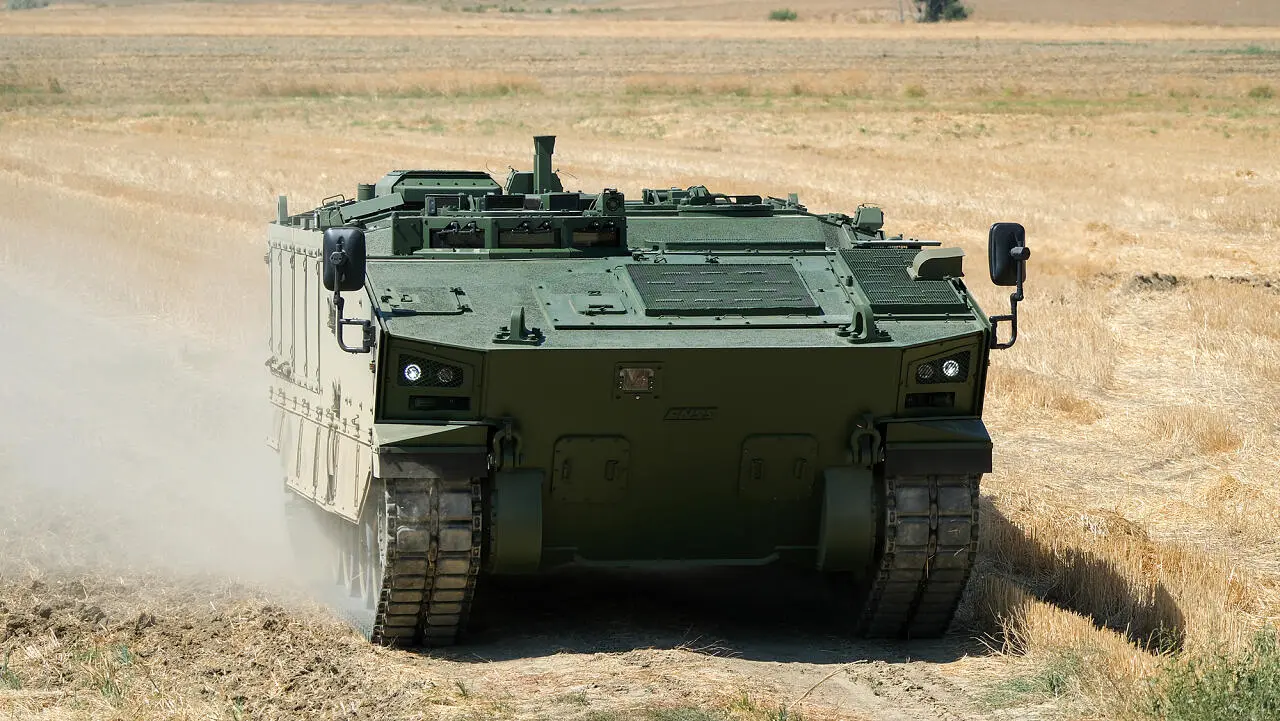
The first KAPLAN APC produced under the “KAPLAN Armoured Personnel Carrier (KAPLAN APC) Development and Production Contract” signed between FNSS and Indonesia’s PT Pindad has passed the preliminary acceptance tests carried out in Türkiye. The tests were conducted in Türkiye with PT Pindad’s participation, following the contract signed between PT Pindad and the Indonesian Ministry of Defence for the Indonesian Army’s 30-tonne class tracked armoured personnel carrier requirement.

After the KAPLAN APC is shipped to Indonesia, final acceptance tests will be carried out together with the end user. Production of the second KAPLAN APC is meanwhile continuing at PT Pindad’s facilities in Indonesia. FNSS describes the project as a continuation of the success achieved with the KAPLAN MT (HARIMAU) project, noting that it once again demonstrates the company’s experience in technology transfer and local production.
KAPLAN APC Payload Capacity and Mobility
According to the design, the vehicle will carry a total of 13 personnel, including the gunner, driver and commander. The KAPLAN APC will be capable of moving at high speed on asphalt and stabilised roads as well as over rough terrain, and is intended to operate in all types of terrain and climate conditions. According to the company’s statement, the advanced suspension system will reduce in-vehicle vibration and increase road grip.
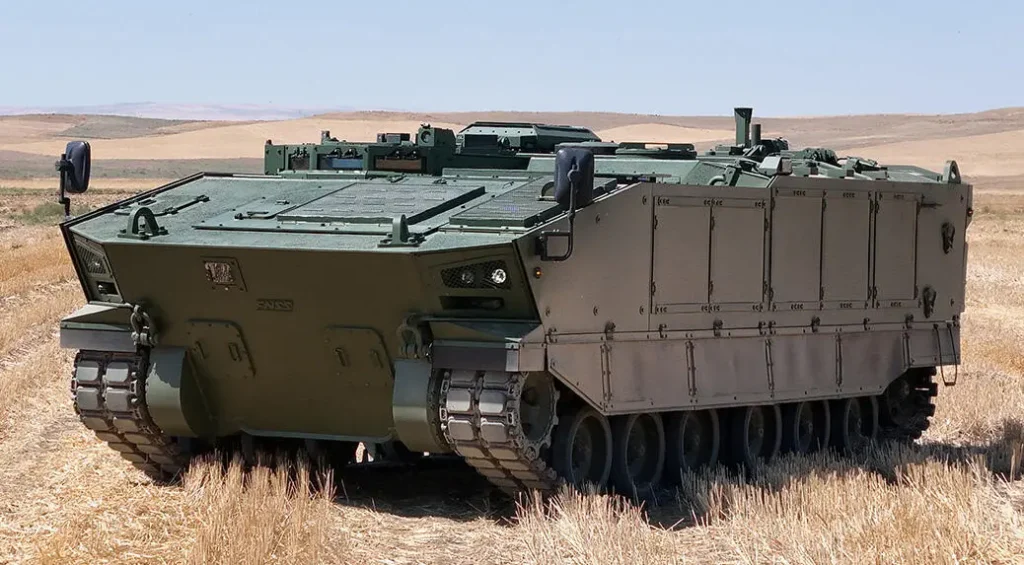
An open-architecture electronic infrastructure will be installed on the vehicle, allowing the integration of equipment such as a Battle Management System and 360-degree situational awareness cameras providing day and night vision.
KAPLAN APC Protection Systems
Modular survivability systems providing protection against ballistic and mine threats will be integrated into the KAPLAN APC. FNSS positions the vehicle as the fastest in its class, in addition to its high personnel capacity. Depending on user requirements, an active protection system option against anti-tank missiles and rocket-propelled grenades can also be offered for the KAPLAN APC.
In addition to an automatic fire suppression system and air conditioning system, CBRN protection measures provided by a sealed interior are intended to enable the crew to survive in a CBRN environment and maintain combat effectiveness.
Weapon Systems and Modular Mission Configurations
The KAPLAN APC is being designed for integration with manned or unmanned turret systems; it will have a modular structure that can be equipped with 30 or 35 mm light-to-medium calibre weapons, as well as 120 mm mortars and guided anti-tank turrets.
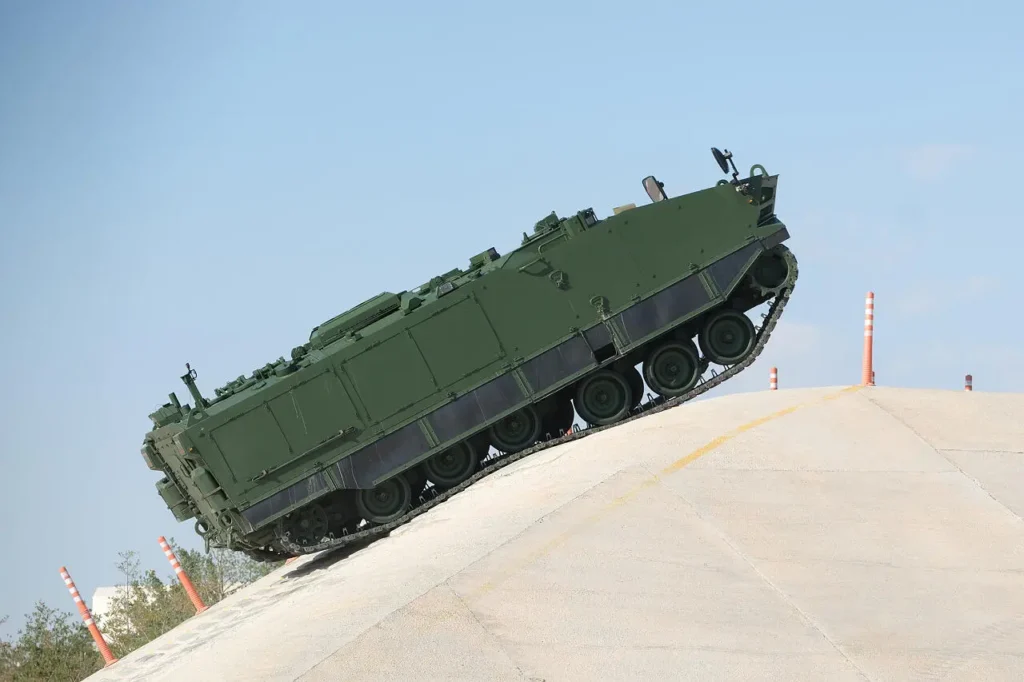
This modularity will allow the KAPLAN APC to be configured for missions such as mechanised infantry, reconnaissance, command and control, force protection, medical evacuation, recovery, engineering, launching bridges, and direct or indirect fire support. All configurations will be built on a platform equipped with a powerful engine and automatic transmission, with mobility compatible with modern main battle tanks.
KAPLAN APC Common Parts Advantage
FNSS states that the KAPLAN APC will share a large proportion of common parts and subsystems with the Armoured Amphibious Assault Vehicle (ZAHA) delivered to the Turkish Naval Forces Marine Brigade, as well as with the KAPLAN MT and other configurations of the ZPTP tracked vehicle family. According to the company, this will provide reliability, logistics commonality and ease of servicing, as it shares the same parts and subsystems as a vehicle family already in the inventories of the Turkish Armed Forces and the Indonesian Army and proven under combat conditions. FNSS also states that this commonality will reduce the logistics burden for users worldwide and increase mean time between failures (MTBF) and the combat readiness rate.
🔍 You may also like
Source: C4Defence– FNSS