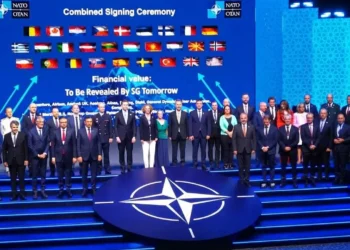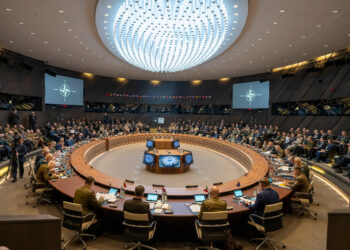











In the hot days of June, The Hague, the symbolic city of the Netherlands, brought together the leaders of the Atlantic Treaty. At this critical time, when security and safety issues are being experienced worldwide, such an important meeting took on a dimension that demands close scrutiny. The decision ultimately taken only foresees an increase in military spending; this does not mean that global security issues will be resolved or ongoing conflicts will end. On the contrary, the uncertainties of the global future may have further increased.

Next year, the NATO Summit to be held in our beautiful city of Istanbul already seems poised to take on an extraordinary dimension. While security issues from the African continent to Eurasia and the Middle East are being swept under the rug, some significant matters among allies are being attempted to resolve through behind-the-scenes bilateral talks. The uncertainties created by the global economic war initiated by the U.S. are bringing delicate balances to the alarm point. In this period, on the brink of water wars, expectations of mass migration and diplomatic and political maneuvers that neutralize international organizations such as the UN come to the forefront. Contested maritime borders in the Pacific and the rapid operational strengthening of the Chinese navy, the economic future of polar mineral resources, and the weaponization of space also create serious security concerns. A rapid shift is occurring from an era of global peace toward the confirmation of directionlessness, reminiscent of the security confusions of the 1900s.
As can be seen, the issues are growing like a mountain, and the uncertainty of approaches that would ensure the safety of roughly a billion people in NATO member countries is far too serious to be solved merely by economic “short passes.” What is needed is a comprehensive geopolitical vision, political sincerity, and military-civil technological cooperation.
Before the summit, small summits and meetings were held this year with the relevant ministers of three important NATO member countries, highlighting the extent of concerns in the preparation process. The final preparatory summit took place in Antalya, and the agenda largely reflected the demands of U.S. President Donald Trump. Typically held over two days with three main sessions, the NATO Heads of State Summit was reduced to a single session this time, and the agenda was limited solely to defense spending. The Ukraine war was deliberately kept in the background, while this issue remained on the agenda of European Union members. Among the declarations I have followed and analyzed for years, I must note that I have never witnessed such a brief and concise text before.
Before discussing the backstage talks, let us share the signed communiqué with you: This text, short enough to fit on a single page, stipulates that each country should direct 5% of its GDP to defense and security expenditures over the next decade. Of these expenditures, 3.5% should be allocated directly to military spending, and the remainder to infrastructure and other auxiliary needs. Additionally, as always, the first paragraph of the communiqué contains indispensable references to Article 5, or collective defense. However, statements suggesting that President Trump and the U.S. have rendered this article open to interpretation are considered concerning.
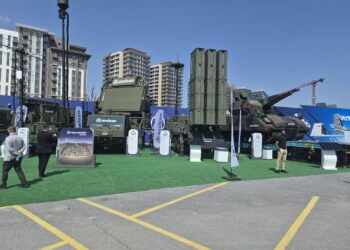
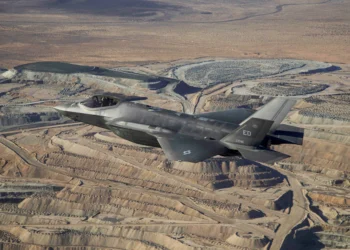
Among the backstage discussions, the determination of defense industry priorities (air defense, space, cyber, and naval elements) and the enhancement of inter-country cooperation stand out. At the NATO Industry Forum held during the summit, military officials from various countries held sessions to determine priorities. Air defense needs topped the list, while the integration of ground-to-air systems into joint defense capabilities, ballistic missile defense capacity, and protection against UAVs were recurring topics. Increasing joint operational capabilities alongside next-generation fighter projects and UAVs was a priority in air platforms. Next-generation helicopter projects were mentioned but were not among the top priorities. Regarding land vehicles, while work began to replace aging vehicles (AMT, ZMA, ZPT, and TZMA) with new ones, the emphasis was on reducing procurement costs and resolving this through joint purchases.
The President of the Republic of Turkey, Recep Tayyip Erdoğan, responded to a NATO-wide question about the defense industry as follows:
“In this context, first of all, we have led the way in reflecting the understanding of the unconditional removal of obstacles to the trade of defense industry products among allies in alliance documents. We hope it will be fully implemented.”
President Erdoğan continued:
“I emphasized that including non-member allies fully in the Union’s defense industry initiatives would be in the interest of all of Europe. Ultimately, increasing defense capabilities in Europe benefits the entire Euro-Atlantic region. Our hope is that this inclusive approach will prevail across the continent.”
NATO Should Focus on Operational Expenditures
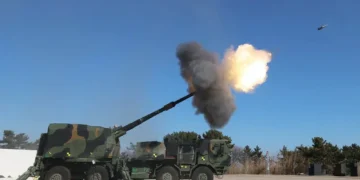
Primarily, when artillery needs are raised, everyone acknowledges the need but remains distant from the subject. This approach is based on assumptions about the superiority of air forces and the belief that UAVs could replace artillery units. The portrayal of guided rockets and systems like CNRA (HIMARS) as “miracles” indicates that land doctrines in this area are still underdeveloped. “Modern” armies that retired Cold War-era CNRA systems now realize they must relearn everything. However, when it comes to artillery units, the need for manpower, heavy logistical requirements, and large ammunition stocks keeps this issue in the background for now. Have NATO countries started a new “105 or 155 mm howitzer” project? Russia and China have.
During peacetime, all ammunition depots were emptied; for ecological reasons, existing ammunition was converted to fertilizer in specialized factories, and steel components were melted. Apart from Turkey, Greece, and Poland, the barrel count of NATO’s artillery across Europe cannot even meet the needs of two corps. Stocks for existing howitzers already look insufficient; a balance must be maintained between the future number of barrels and the ammunition required for daily use (10–15 thousand rounds per day for defense).
We should remind countries promising to fill depots: European defense industry orders and production lines for the next eight years are already full. Therefore, if force enhancement is to be achieved through new acquisitions, this will be a long-term process, and the current weakness will persist for a long time.
Currently, NATO countries are sending political messages: “Look, we political leaders are securing your future safety and taking these steps.” But this means: You will be safer, but you will pay more…
The reality is that in European NATO countries, there is still no increase in troops or formation of new military units. Today, many exceptional alliance members can only be fully ready for war at one or two corps level. Ammunition stocks are only enough for one or two weeks, for a major conflict, and they are dependent on U.S. depots and logistics. The real military power is determined by who is most prepared, determined, and organized.
Turkey’s High State of Readiness
Turkey, through the Presidency of Defense Industries, has made significant financial sacrifices over the years to modernize its army and understands the importance of security issues. Our country has high combat capability; it has never compromised its defense and has always felt the support of its people. It stands out as an active security provider within NATO.
Another feature of our country is the existence of the Turkish Armed Forces Foundation (TSKGV), established with contributions from the public. This foundation ensures that the country’s leading defense firms meet all military needs in peacetime while maintaining MSB/TSK logistical continuity and operational endurance in wartime.
At the IDEF Military Fair to be held in July, we will present our advanced weapon systems and showcase new military projects that will shape the future.