









Today, tensions in the Strait of Hormuz, the conflict dynamics between the United States/Israel and Iran, ongoing instability in the Middle East, and the continuing war in the Black Sea Basin remain at the centre of the military agenda. However, alongside the control of energy routes and resources, another factor is becoming increasingly critical: access to Rare Earth Elements (REEs).

In the period ahead, geopolitical manoeuvres and strategic planning—often carried out behind the scenes but becoming more visible over time—are shaping the future of the defence industry in a lasting and decisive way.
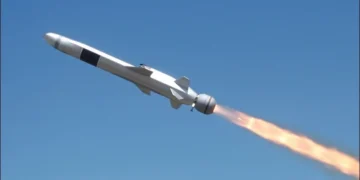
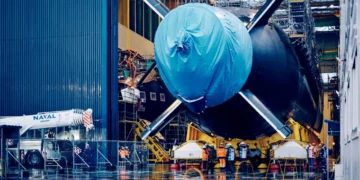
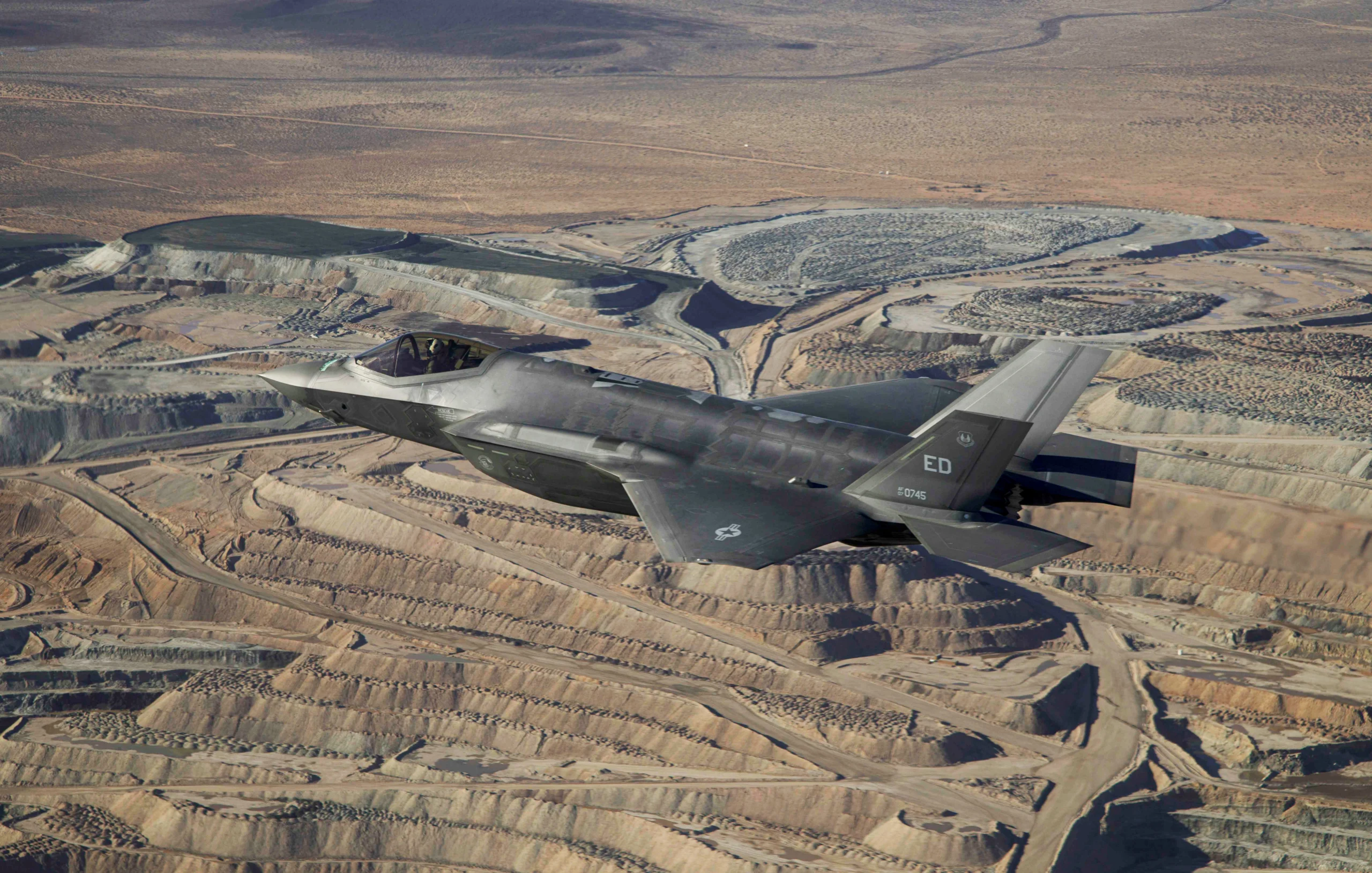
In the United States, which possesses the world’s largest defence industry, the use of REEs in all modern weapons systems and products is unavoidable. Strategic nuclear submarines require approximately 1.5 tonnes of REEs, while fifth-generation F-35 Lightning II aircraft contain around 435 kilograms. An advanced U.S. Navy warship uses roughly 4.5 tonnes of REEs, whereas the construction of an aircraft carrier demands nearly ten times that amount. REEs are also among the essential materials widely used in all types of guided missiles, as well as in electronic and radar systems.
In line with these strategic needs, under the Pentagon’s DFARS 4272 regulation, the use of China-origin minerals and finished products in the domestic defence industry has been banned as of January 2027. This decision is set to impact REE supply conditions on a global scale.
Today, the traditional concept of global security has been eroded, and the need for countries to strengthen their military capabilities has increased. By its very nature, when the modernisation of armed forces comes to the forefront, defence industry orders rise significantly. In the future, intense competition and potential crises seem inevitable even in access to essential materials such as steel, aluminium, explosives, and other commonly used inputs that were once considered readily available.
Dependence on REEs—especially for permanent magnet products widely used in modern weapons systems—has reached an unprecedented level of importance. Over the past three decades, China has effectively monopolised REE production, and any disruption in its supply could impact the global defence industry, including Türkiye, potentially bringing it to a near standstill.
The International Energy Agency (IEA), in its latest report, emphasises that demand for Rare Earth Elements (REEs) is expected to increase by at least 30% within the next five years, and that there is already around 90% global dependence on China. It warns that any potential disruption in supply could create a far greater level of global economic vulnerability than crises related to oil and gas access.
If we recall the decisions taken during the era of U.S. President Donald Trump, the rollback of tariffs imposed on Chinese goods stands out as a notable development. Even statements by Chinese President Xi Jinping indicating the possibility of restricting exports of these materials alone were enough to have a significant impact.
Anticipating this dependency, Japan has been the only country to develop a partial solution by strategically stockpiling enough REEs to cover approximately three years of domestic demand.
From a strategic perspective, the most critical issue is not the raw REE materials themselves, but rather access to the technology required to separate and process these elements into usable forms.

As in the examples mentioned above, political will and state backing are the primary driving forces in this structure. The strategic future of the Turkish defence industry depends on securing and processing raw materials. At this point, a significant advantage exists through the companies operating under the Turkish Armed Forces Foundation (TSKGV), as was also the case in the past. Integrated with the Foundation’s valuable management and structural characteristics, the defence industry continues its defence production investments within the framework of its mission to support the Turkish Armed Forces in both peace and war under all conditions.
Defence Industry Investment Cooperation and the Eskişehir–Beylikova Reserve
The investments to be jointly carried out by ASELSAN, Roketsan, and Turkish Aerospace Industries—which possess the financial capacity and experience needed to access rare earth separation and processing technologies—will significantly strengthen the sustainability of Türkiye’s defence industry.
In particular, this investment, which requires expertise in chemistry and robotics, combined with the 1.3 million-ton reserve of the Eskişehir–Beylikova Rare Earth Elements Site, will increase Türkiye’s strategic global influence. Beyond meeting military and civilian needs, and considering the economic contribution and export potential it could generate, allocating even a small portion of these companies’ revenues to this field would be sufficient.
Rare Earth Elements used in modern defence industries are divided into two main categories: Light Rare Earth Elements (LREEs) and Heavy Rare Earth Elements (HREEs).
Light REEs include more abundant elements such as neodymium (Nd) and praseodymium (Pr). Widely used in both civilian and military applications, these materials are still produced in hundreds of factories in China and are relatively inexpensive, versatile, and easy to obtain.
Heavy REEs, on the other hand, are much harder to access. Elements such as dysprosium (Dy) and terbium (Tb) are used for more specialised military applications, providing high thermal resistance and enabling long-lasting, stabilised materials.
Today, a total of 17 different REEs are used in the defence industry. Since the processing methods for heavy and light elements differ, investment decisions must be made not only based on economic factors but also on strategic priorities.
At this point, rather than a purely private-sector-driven approach, a nationally oriented strategic model is required. The U.S. model is shaped around the goal of zero external dependency. In cooperation with Canada, concrete steps are being taken in the state of Ohio. Within this framework, strategically established facilities are developing new technological methods for separation and processing. Having completed testing phases, these facilities are expected to play a key role next year in North America’s effort to establish a supply chain independent from China.
Türkiye’s choice in such strategic investments—whether to pursue full independence or an integrated model within the global economy—has not yet been clearly defined. However, the fundamental role of political leadership is to set a clear direction and maintain a broad, long-term vision.
In conclusion, these developments will not remain limited to the defence industry and will directly affect civilian production sectors as well. From electric vehicles to household appliances, and from smartphones to other advanced technology products, Rare Earth Elements (REEs) are an indispensable component of modern industry and are expected to make a significant contribution to Türkiye’s economy.
Source: C4Defence