









C4 Defence
Tuesday, July 14, 2026
C4Defence
C4Defence 20. Yıl C4Defence 20th Anniversary
  • Home Page
  • NEWS
    • All
    • Interviews
    • Fairs / Events
    • Latest News
    L3Harris Technologies AMDT3 missile defence satellites providing fire-control quality data for the US Space Force space-based tracking layer.

    US Space Force Awards L3Harris 18 Satellite Missile Defence Contract

    DEUTZ acquires FFG for 1.6 billion Euro to strengthen its position in the European defence sector.

    DEUTZ Makes 1.6 Billion Euro Defence Move

    Live-fire test of the prototype air defence system conducted in Australia.

    Prototype Air Defence System Takes Down a Cruise Missile

    Illustration of nanotechnology and molecular materials science applications in aerospace and defense aviation.

    Nanotechnology in Aerospace Systems

    Taiwanese indigenous missile production line at NCSIST facility developing long range Hsiung Sheng cruise missiles

    US Supply Crunch Forces Taiwan to Boost Indigenous Missile Production

    NASAMS air defense system during a test fire, highlighting the recent procurement collaboration between Belgium and the Netherlands

    Belgium and Netherlands Sign Joint Procurement Deal for 10 NASAMS Systems

    German Navy laser weapon system developed by MBDA and Rheinmetall

    Germany Developing New Laser Weapon System for Its Navy

    AH-64 Apache attack helicopter equipped with M-TADS/PNVS system

    Lockheed Martin Lands 502 Million Dollar Support Deal for Apache Fleets

    Turkish and Egyptian Special Forces units during the Golden Eagle joint military exercise.

    A New Era in Egypt and Türkiye Relations with the Golden Eagle Exercise

  • Defence Industry Systems
    • All
    • Power & Energy Systems
    • NAVAL VEHICLES
    • TURKISH DEFENCE INDUSTRY
    • LAND VEHICLES
    • AIRCRAFT
    • Space
    L3Harris Technologies AMDT3 missile defence satellites providing fire-control quality data for the US Space Force space-based tracking layer.

    US Space Force Awards L3Harris 18 Satellite Missile Defence Contract

    DEUTZ acquires FFG for 1.6 billion Euro to strengthen its position in the European defence sector.

    DEUTZ Makes 1.6 Billion Euro Defence Move

    Live-fire test of the prototype air defence system conducted in Australia.

    Prototype Air Defence System Takes Down a Cruise Missile

    Illustration of nanotechnology and molecular materials science applications in aerospace and defense aviation.

    Nanotechnology in Aerospace Systems

    Taiwanese indigenous missile production line at NCSIST facility developing long range Hsiung Sheng cruise missiles

    US Supply Crunch Forces Taiwan to Boost Indigenous Missile Production

    NASAMS air defense system during a test fire, highlighting the recent procurement collaboration between Belgium and the Netherlands

    Belgium and Netherlands Sign Joint Procurement Deal for 10 NASAMS Systems

    German Navy laser weapon system developed by MBDA and Rheinmetall

    Germany Developing New Laser Weapon System for Its Navy

    AH-64 Apache attack helicopter equipped with M-TADS/PNVS system

    Lockheed Martin Lands 502 Million Dollar Support Deal for Apache Fleets

    Turkish and Egyptian Special Forces units during the Golden Eagle joint military exercise.

    A New Era in Egypt and Türkiye Relations with the Golden Eagle Exercise

  • Modernization Programs
    • All
    • TURKISH ARMED FORCES
    • Turkish SSB Projects
    • Turkish MoD Projects
    • ROBOTIC SYSTEMS
    M1A1 Abrams tank named Lucifer, modified by the Ukrainian 160th Mechanized Brigade with an anti-drone cage armor system

    Ukraine Modifies Its M1A1 Abrams Tanks

    Representative image of the next-generation robotic manufacturing system developed by Intecro and MetalWorm for launch vehicle production.

    Turkish Robotic Technology joins International Space Project

    Israeli Air Force CH-53K helicopter modernization by Elbit Systems

    Israel Shakes Hands with Elbit Systems for the Modernization of CH-53K Helicopters

    Turkish defense and aerospace industry 2025 export record of 10.054 billion dollars with a 48 percent increase - SSB

    Turkish Defense Industry 2025 Panorama

    Royal Air Force (RAF) Eurofighter Typhoon fighter jet on the runway, part of a £650 million radar upgrade and investment program.

    £650 Million Radar Modernization for the UK Typhoon Fleet

    Important Statements from Minister Güler Regarding the F-35 and Eurofighter Procurement Process

    Important Statements from Minister Güler Regarding the F-35 and Eurofighter Procurement Process

    A New Era in Underwater Warfare from Thales: Sonar 76Nano Unveiled

    A New Era in Underwater Warfare from Thales: Sonar 76Nano Unveiled

    KNDS Completes Delivery of 44 Leopard 2A7HU Main Battle Tanks to Hungary

    KNDS Completes Delivery of 44 Leopard 2A7HU Main Battle Tanks to Hungary

    BAE Systems to Modernize the U.S. Navy Destroyer USS Forrest Sherman

    BAE Systems to Modernize the U.S. Navy Destroyer USS Forrest Sherman

  • Articles
    • All
    • Guest Author
    • Country Reports
    • Sami Atalan
    • Prof. Dr. Mesut Hakkı Caşın
    • Prof. Dr. Mehmet Eryılmaz
    Illustration of nanotechnology and molecular materials science applications in aerospace and defense aviation.

    Nanotechnology in Aerospace Systems

    Combined signing ceremony for defense projects at the NATO Summit, highlighting Türkiye's strategic contribution.

    Türkiye’s Rising Share at the NATO Summit

    why aselsan cannot be sold steeldome air defense system c4defence

    ASELSAN Is Not for Sale!

    Polish Air Force F-16 fighter jets flying on a mission, representing Poland as NATO's Baltic fortress.

    NATO’s Baltic Stronghold: Poland

    Trump administration notification to Congress for 80 General Electric F110 engines for Türkiye's KAAN fighter jet program.

    Ahead of the Ankara Summit, Trump Presses the Button for 80 Jet Engines to Türkiye

    US Air Force KC-135 Stratotanker refueling an F-15E Strike Eagle in mid-air`

    Is the US Withdrawing from Europe? The Pentagon’s New Plan and NATO’s Shifting Balance of Power

    US President Donald Trump and Chinese President Xi Jinping during their historic strategic summit in Beijing.

    Trump-Xi Summit: The Final Turn in the Rise and Fall of Great Powers

    Delegates attending the Ankara NATO Summit in 2026 to discuss the new transformation strategy.

    NATO’s Transformation Towards the Ankara Summit

  • ABOUT US
    • Masthead
    • Privacy Notice
  • Türkçe
  • English
No Result
View All Result
C4Defence
No Result
View All Result

Anasayfa » Articles » Is the US Withdrawing from Europe? The Pentagon’s New Plan and NATO’s Shifting Balance of Power

Is the US Withdrawing from Europe? The Pentagon’s New Plan and NATO’s Shifting Balance of Power

Sami Atalan by Sami Atalan
26 June 2026
in Articles, Latest News, Sami Atalan
A A
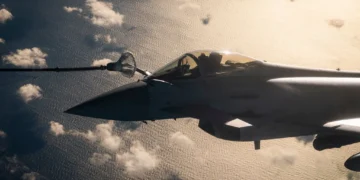
US Air Force KC-135 Stratotanker refueling an F-15E Strike Eagle in mid-air`

European security is undergoing what could be its most profound transformation since the Cold War. With the war in Ukraine reshaping the continent’s defense architecture, recent signals from Washington have ignited a fresh debate in European capitals: is the US about to scale back its military footprint in Europe?

European security is navigating what may well be its most consequential transformation since the Cold War’s end. As the war in Ukraine reshapes the continent’s defence architecture across the Black Sea basin, recent signals from Washington have stirred fresh debate in European chanceries: is the United States preparing to scale back its military footprint on the continent?

The knee-jerk answer might be yes—but the real picture is far more nuanced. A full US withdrawal from Europe features in neither the Pentagon’s current playbook nor NATO’s long-term strategy. Look closer, however, and a different trend emerges: Washington is quietly preparing to shift the burden of Europe’s defence gradually onto its European allies. The real issue is not a few thousand troops heading home—it is the redefinition of America’s air, naval, and logistical role in Europe after three decades.

The Pentagon’s Six-Month Review: Planned Cuts in Air and Naval Assets

The comprehensive six-month review process launched by US Defense Secretary Pete Hegseth in June 2026 is precisely aimed at answering these questions. The Pentagon’s assessment is not limited to troop numbers. The entire spectrum of the US military presence in Europe – from bases to fighter jets, from tanker fleets to naval forces – is being re-evaluated. Initial assessments have brought up the potential withdrawal of approximately five thousand US troops or the cancellation of some planned unit rotations. However, what has caught our attention is the plan to reduce the critical air and naval assets allocated to NATO’s use.
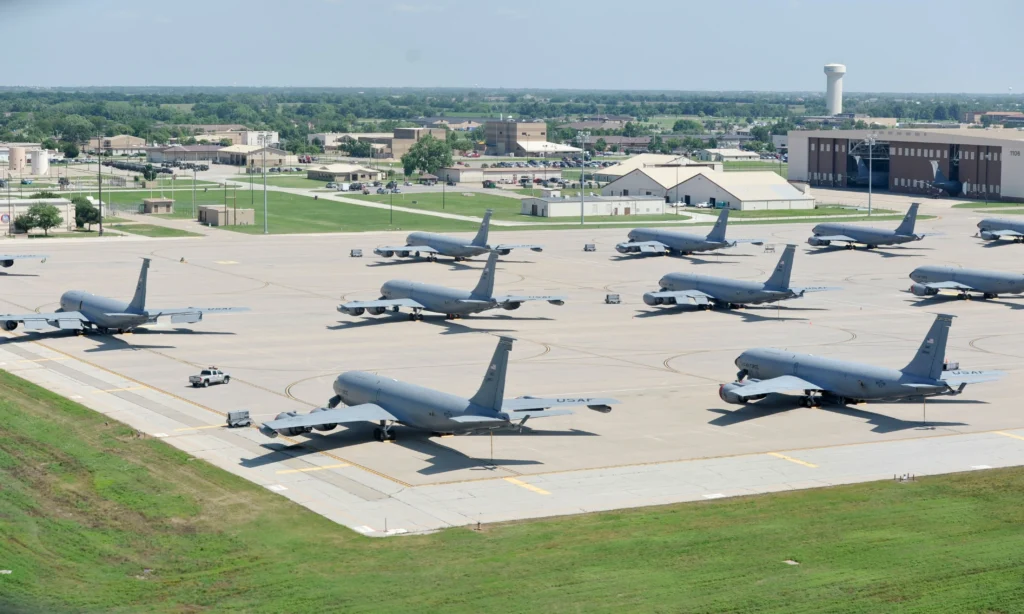
Askeri hava üssünde konuşlu ABD Hava Kuvvetlerine ait KC-135 Stratotanker yakıt ikmal uçakları filosu

In recent years, one of NATO’s greatest advantages in European defense has been American air power. However, under the new plans being assessed by the Pentagon, the number of F-15 and F-15E fighter jets assigned to NATO missions is expected to be reduced from 148 to 99. This means that approximately fifty combat aircraft nearing the end of their airframe lives would be withdrawn from the NATO task pool. Also among the options under discussion are halving the number of MQ‑4 and MQ‑9 unmanned aerial vehicles used for reconnaissance and electronic surveillance—from 24 to 12—cutting NATO’s aerial refueling capacity, a key force multiplier, from 79 to 63 tankers, and significantly downsizing the maritime patrol aircraft fleet.

A similar picture emerges on the naval side. Plans include reducing the number of destroyers maintained at readiness for NATO from 19 to 9, decreasing the number of aircraft carriers allocated to European defense from two to one, and terminating some strategic submarine missions. For this reason, the concern among military planners in Europe is less about the return of a few thousand troops and more about the reduction in strategic capabilities provided by U.S. forces—which could directly affect deterrence capacity in the Atlantic and the North Sea in particular.

In modern warfare, the decisive factor is not merely troop numbers. Areas such as air superiority, early warning, electronic warfare, reconnaissance and surveillance, aerial refueling, and naval power projection are the fundamental elements that determine the outcome of a conflict. And these are precisely the areas where Europe remains most dependent today.

The Backbone of US Air Power in Europe: Ramstein, Lakenheath, and Aviano Bases

It is precisely at this point that the importance of US air bases in Europe becomes clearer. The backbone of American air power still consists of bases in Germany, the United Kingdom, and Italy.

First and foremost, Ramstein Air Base in Germany is regarded as the center of gravity of US air power in Europe. Key elements of US Air Forces in Europe (USAFE) and NATO Air Command are based here. Although Ramstein is often perceived as a combat air base, it is in reality a colossal command and logistics hub from which all US air operations in Europe are managed. While transport platforms such as the C‑130J Hercules, C‑21, and C‑37 are permanently stationed here, during exercises and crisis periods, combat aircraft including the F‑15E Strike Eagle, F‑22 Raptor, F‑35 Lightning II, E‑3 AWACS, and electronic warfare aircraft can also be supported through this base.

Spangdahlem Air Base in western Germany is seen as one of NATO’s gateways to the eastern flank. The base plays a critical role in missions directed towards the Baltic states, Poland, and Romania, and has gained even greater importance in the wake of the Russia‑Ukraine war. The F‑16 Fighting Falcon squadrons stationed there are considered a key component of NATO’s rapid reaction force.
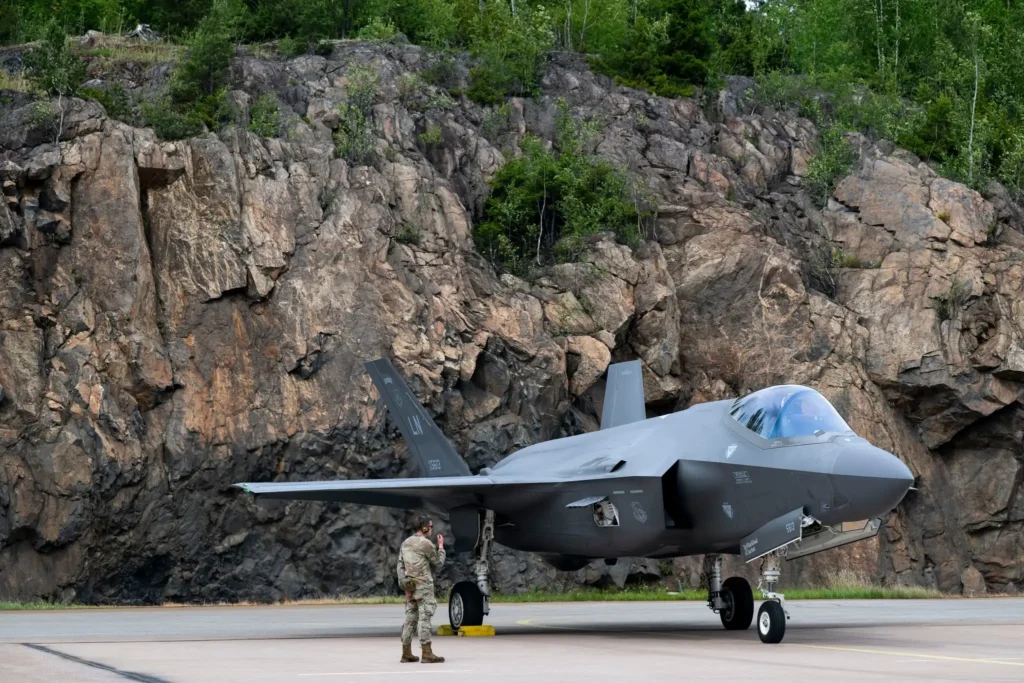
RAF Lakenheath üssüne bağlı ABD Hava Kuvvetleri F-35A Lightning II savaş uçağı ve yer görevlisi
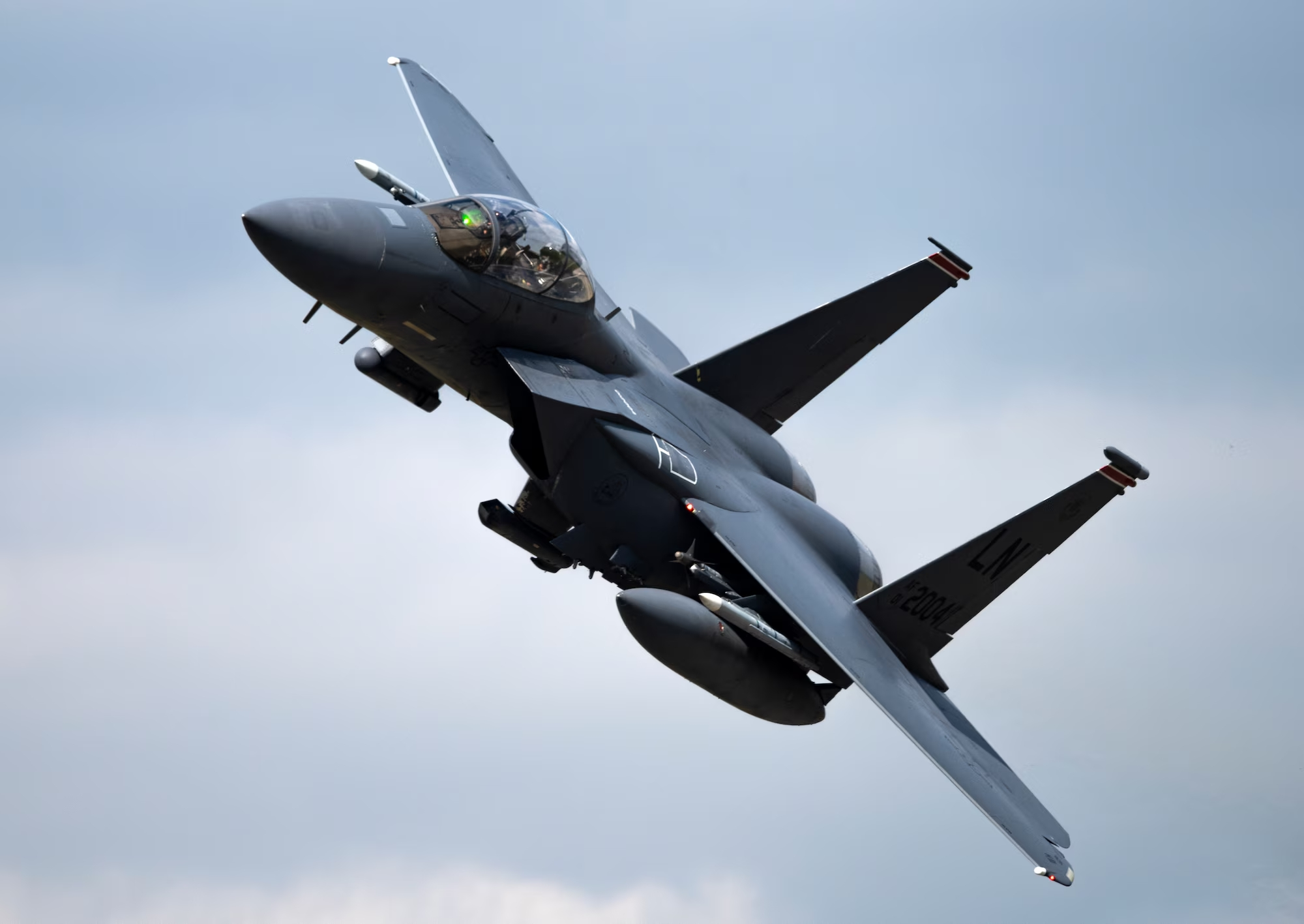
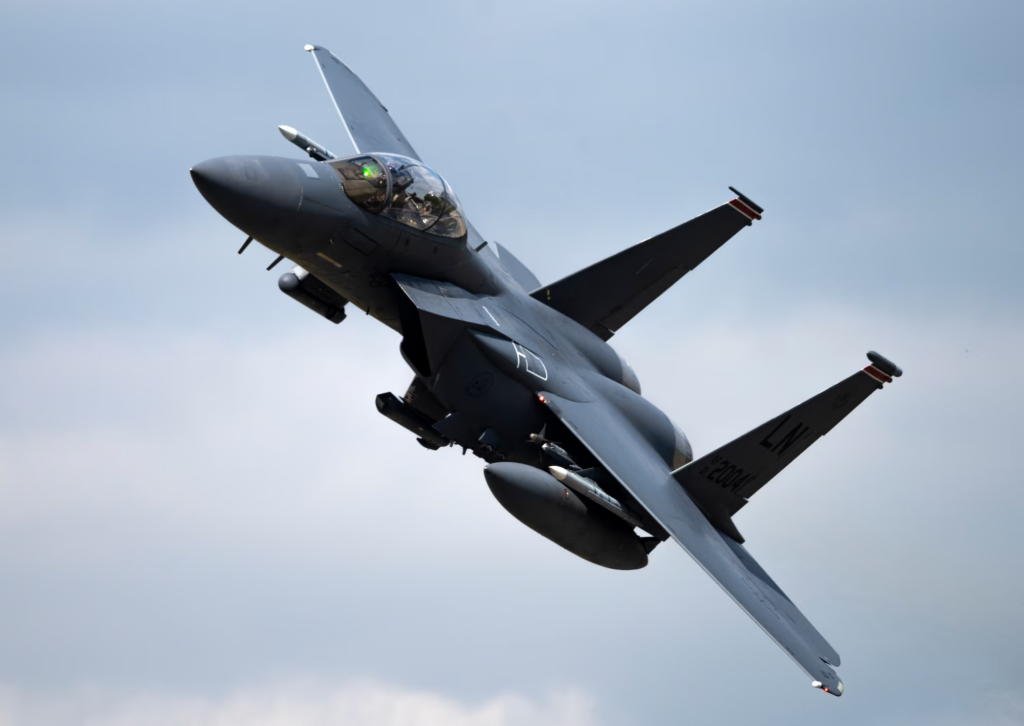
ABD Hava Kuvvetlerine ait F-15E Strike Eagle savaş uçağı gökyüzünde manevra yaparken

In the UK, RAF Lakenheath is today the most powerful US fighter base on the European continent. The first permanent F‑35A Lightning II squadron in Europe is deployed here, alongside F‑15E Strike Eagle units. The base has the capacity to manage a significant portion of NATO’s high‑intensity air operations whenever required. Should the Pentagon proceed with cuts to fighter aircraft numbers, Lakenheath is expected to be one of the first bases affected.

Nearby RAF Mildenhall, though less known to the public, is one of the most strategically critical facilities. This is because, rather than combat aircraft, it hosts the systems that sustain and support them. KC‑135 Stratotanker tankers, MC‑130J Commando II special mission aircraft, and CV‑22 Osprey platforms form the unseen backbone of US operations in Europe. The ability of an F‑35 to conduct missions thousands of kilometres away often depends on aerial refuelling provided by a KC‑135 tanker. For this reason, any potential reduction in the tanker fleet allocated to NATO could have even more serious consequences than a cut in fighter numbers.

On the Mediterranean and Southern European front, Aviano Air Base in Italy stands out. Used for operations toward the Balkans, the Black Sea, and the Eastern Mediterranean, the base hosts F‑16 Fighting Falcon squadrons. Well known to Turkey and frequently used during the Balkan conflicts, Aviano remains one of the most important air bases on NATO’s southern flank.

In reality, US air power in Europe is not merely a matter of F‑35 or F‑15 squadrons. The system operates as a vast network comprising fighters, tankers, unmanned aerial vehicles, early warning platforms, electronic warfare systems, and transport fleets. It is precisely here that the strategic impact of the reductions currently under review by the Pentagon becomes apparent. Europe can, when necessary, produce or purchase its own fighter aircraft. However, in areas such as aerial refuelling, global logistics networks, electronic warfare capabilities, and strategic intelligence, it remains largely dependent on the United States.

For this reason, Washington’s new approach is being read not only as a military restructuring but also as a political signal. The US is making it clear that it no longer wishes to finance Europe’s security single‑handedly. This is one of the key reasons why Germany, France, Poland, and the United Kingdom have increased their defence budgets in recent years. Enhancing Europe’s own defence capacity is now seen not as an option but as a strategic necessity.

Today, approximately 80,000 US troops remain on the European continent. The closure of bases such as Ramstein, Lakenheath, Mildenhall, Spangdahlem, and Aviano is not on the agenda. However, it is clearly apparent that Washington intends to gradually reduce its military burden in Europe over the coming years. The Pentagon review launched in June 2026 is expected to be completed by the end of the year, and the decisions taken will shape not only the future of US forces but also the structure of NATO for decades to come.

The real question for Europe is not “Is the US withdrawing?” Rather, the question is how much of the air superiority, logistics support, intelligence, and naval power capacity that America has provided for years can be filled by Turkey and its European allies. With the exception of nuclear weapons, the balance of power in the NATO of the future will depend less on troop numbers and more on who provides these critical capabilities.

The future of Turkey’s security and that of the continent as a whole largely depends on the answer to this question.

First and foremost, Ramstein Air Base in Germany is regarded as the center of gravity of US air power in Europe. Key elements of US Air Forces in Europe (USAFE) and NATO Air Command are based here. Although Ramstein is often perceived as a combat air base, it is in reality a colossal command and logistics hub from which all US air operations in Europe are managed. While transport platforms such as the C-130J Hercules, C-21, and C-37 are permanently stationed here, during exercises and crisis periods, combat aircraft including the F-15E Strike Eagle, F-22 Raptor, F-35 Lightning II, E-3 AWACS, and electronic warfare aircraft can also be supported through this base.

🔍 You may also like

  • All Content on NATO

Source:C4Defence

Previous Post

DESAN Lays Keel for Malaysia’s Largest Coast Guard Vessel, MPMS 2

Next Post

Ahead of the Ankara Summit, Trump Presses the Button for 80 Jet Engines to Türkiye

Sami Atalan

Sami Atalan

Next Post
Trump administration notification to Congress for 80 General Electric F110 engines for Türkiye's KAAN fighter jet program.

Ahead of the Ankara Summit, Trump Presses the Button for 80 Jet Engines to Türkiye

Most Popular

L3Harris Technologies AMDT3 missile defence satellites providing fire-control quality data for the US Space Force space-based tracking layer.
Latest News

US Space Force Awards L3Harris 18 Satellite Missile Defence Contract

14 July 2026
DEUTZ acquires FFG for 1.6 billion Euro to strengthen its position in the European defence sector.
Defence Industry Systems

DEUTZ Makes 1.6 Billion Euro Defence Move

13 July 2026
Live-fire test of the prototype air defence system conducted in Australia.
Defence Industry Systems

Prototype Air Defence System Takes Down a Cruise Missile

13 July 2026

Recommended

An archival image from the ADEX Azerbaijan International Defence Exhibition held at the Baku Expo Center.

More than 150 Companies Secure Their Spots for ADEX 2026

1 July 2026
Otokar Romania Medias Automecanica factory COBRA II wheeled armored vehicle production line

Otokar completes Company Acquisition Process in Romania

3 June 2026
C4Defence

‎ ‎ ‎ ‎ ‎ ‎ ‎ ‎ ‎‎ Mildata Ltd. © 2026‎ ‎ ‎ ‎ ‎‎

Türkiye’nin ilk online savunma dergisi. Türkiye’s first online defence magazine.

  • Türkiye’s first online defence industry magazine.”

Bizi Takip Edin Follow Us

No Result
View All Result
  • Home Page
  • News
    • Agenda
    • Fair
  • Defence Industry
    • Turkish Defence Industry
    • Land Vehicles
    • Aircraft
    • Naval Vehicles
    • Projects
  • Modernization Programs
    • Turkish Armed Forced
    • Turkish SSB Projects
    • Turkish MoD Projects
    • Military Projects
    • Robotic Systems
    • Auxiliary and Subsystems
  • Articles
    • Sami Atalan
    • Prof. Dr. Mesut Hakkı Caşın
    • Prof. Dr. Mehmet Eryılmaz
  • About Us
    • Masthead
    • Privacy Notice
  • Menü ögesi
  • Menü ögesi
  • Türkçe
  • English

‎ ‎ ‎ ‎ ‎ ‎ ‎ ‎ ‎‎ Mildata Ltd. © 2026‎ ‎ ‎ ‎ ‎‎