



















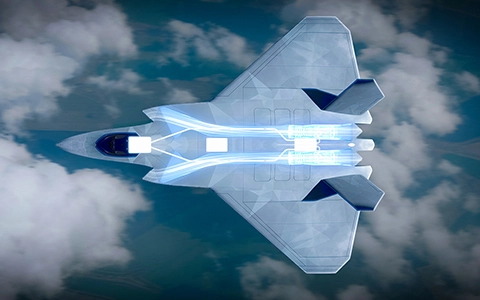
The heart of the world’s most advanced next-generation combat aircraft is getting ready to beat. The engine demonstrator prototype being developed under the Global Combat Air Programme (GCAP)—a partnership between Avio Aero, IHI Corporation, and Rolls-Royce—has moved a step closer to ground testing following over 100 sub-scale component tests. Announced on 20 July 2026, the development marks a fundamental transformation in GCAP’s power and propulsion systems.

The consortium, advancing under a shared vision between the three companies, is driving the radical shift in power and propulsion required by GCAP. Strengthened collaboration and the technological milestones achieved so far are contributing to the development of capabilities that will guarantee the future security of the partner nations.
For more on the programme’s funding and contractual aspects, you can read our article titled: £4.6 Billion Contract for the GCAP Programme.
Collaboration Hub Comes Online for GCAP Propulsion System
The trilateral partnership between the three nations is deepening through reinforced consortium collaboration, with the parties now operating as a truly unified international team. One tangible sign of this closer alignment was the opening of the Collaboration Hub in Reading, UK, last year. This hub strengthens coordination between the GCAP Agency and Edgewing, allowing joint engineering teams to work under one roof while also serving as a concrete demonstration of confidence in the programme’s long-term partnership.
Progress is also being made on the technology development front: consortium reviews are moving toward final approval of the completely new centreline engine demonstrator prototype design, while component manufacturing continues uninterrupted. The more than 100 sub-scale component tests completed to date have brought the engine demonstrator prototype—jointly developed by the three nations—closer to ground testing. This prototype will collect critical data that will shape the design and development process for GCAP’s full-scale power and propulsion system.
The engine demonstrator prototype plays a crucial role in de-risking the programme and proving the maturity of innovative technologies and integrated architecture. It also serves to test and refine processes, tools, and working methods, helping to shorten GCAP’s design and development cycle.
“Flying Power Plant” Emphasis
Edoardo Curti, Managing Director of Avio Aero’s Defence Business Unit, emphasised that the progress made by the teams on the engine demonstrator prototype marks a significant milestone in the shared commitment to delivering next-generation capabilities and meeting the evolving needs of customers.
Noriyuki Nakamura, Senior Technical Advisor of IHI Corporation’s Space, Aerospace and Defence Business Unit, noted that Japan is combining its cutting-edge engine technologies with the expertise of Avio Aero and Rolls-Royce to shape the system that will form the “heart” of tomorrow’s combat aircraft.
Phil Townley, Director of Future Programmes at Rolls-Royce Defence, describes the system being developed not merely as a propulsion engine, but as a “flying power plant” capable of managing the electrical and thermal loads of next-generation sensors and weapon systems. Townley added that by working with Avio Aero and IHI as a single trilateral team, they are transcending geographical and industrial boundaries to deliver this capability at speed.
Economic and Employment Contributions
The GCAP power and propulsion consortium is not only supporting economic growth in the partner nations but also leading the development of highly skilled human capital. The programme supports the employment of over 9,000 highly skilled aerospace workers worldwide and continues to invest in training the engineers and specialists of the future across the partner countries.
🔍 You may also like
Source: C4Defence-Rolls-Royce