













As a transcontinental state, the majority of Egypt’s territory lies in northeastern Africa, while the Sinai Peninsula—extending into southwestern Asia—forms a land bridge. The country has coastlines on both the Mediterranean Sea and the Red Sea. Understanding the geography of the region is crucial for analysing the Egypt Defense Strategy.

In the modern era, Egypt’s political framework was shaped by British occupation and formal protectorate status. The United Kingdom ended this status in February 1922. Following the 1952 coup, the monarchy was abolished, and the Republic was declared in June 1953. Egypt’s current constitutional order is based on the 2014 Constitution, adopted by referendum. While the Constitution states that the political system rests on a multi-party and pluralistic structure and the principle of peaceful transfer of power, it also imposes certain restrictions on party formation. Administratively, Egypt consists of 27 governorates, with Cairo as the capital. Abdel Fattah el-Sisi, in office since June 2014, began his third six-year term in 2024. Internationally, Egypt stands out primarily for controlling the Suez Canal—one of the world’s busiest maritime trade routes.
Covering approximately 1,001,450 square kilometers, Egypt is one of Africa’s largest countries and shares long land borders with its neighbors: about 1,150 km with Libya to the west, 1,273 km with Sudan to the south, and roughly 266 km with Israel and toward Palestine in the northeast. Its access to the Mediterranean in the north and the Red Sea in the east provides a coastline of approximately 2,450 kilometers. Much of the country’s interior consists of desert, divided by the Nile River Valley.
The Suez Canal and Maritime Security
Egypt’s strategic objectives are shaped by the constraints imposed by its geography. The Suez Canal, as the shortest maritime route between the Mediterranean and the Red Sea, is not only geopolitically vital but also a major source of national revenue. Official sources frequently emphasize transforming this advantageous position into a broader transportation and trade platform. Accordingly, steps have been taken to expand the canal and develop its surrounding areas, with the explicit goal of turning Egypt into an international logistics hub. This orientation is also articulated in the national “Sustainable Development Strategy: Egypt Vision 2030.” Under this framework, Egypt aims to improve infrastructure, stimulate and attract domestic and foreign investment, intensify anti-corruption efforts, and strengthen public participation.
The Red Sea–Suez Corridor is a strategic priority for Egypt. According to recent UN trade estimates, the Suez Canal accounted for approximately 15% of global trade in 2023 and a substantial portion of containerized maritime commerce. Disruptions to maritime security can therefore quickly evolve into broader supply chain disturbances, creating direct pressure on Egypt. The 2023–2024 Red Sea security crisis exposed this vulnerability. The United Nations Conference on Trade and Development (UNCTAD) documented sharp declines in traffic and tonnage passing through Suez and reported a serious blow to canal revenues. Later reports indicated partial stabilization and a gradual recovery in traffic as conditions improved.
Egypt does not confine maritime security concerns solely to the canal itself but also considers the sea lanes that provide access to it, including the Bab el-Mandeb Strait connecting the Red Sea to the Gulf of Aden. The U.S. Energy Information Administration (EIA) identifies this strait as a critical chokepoint for oil and natural gas flows linked to the Suez and related routes.
The Nile Basin and the GERD Disput
Operationally, Egypt has invested in both national maritime infrastructure and the posture of its naval forces in the Red Sea. It has also advanced multilateral maritime security cooperation through partnerships such as the Combined Maritime Forces (CMF) and assumed command of the CMF’s Red Sea-focused task force in 2025.
Institutionally, Egypt’s regional agenda is shaped by its Arab and African environment. A member of the African Union, Egypt joined COMESA and ratified the African Continental Free Trade Area (AfCFTA) agreement in 2019. In January 2020, Egypt joined the Council of Arab and African Coastal States of the Red Sea and Gulf of Aden, declared in Riyadh with eight littoral members and presented as a mechanism for coordination and cooperation, including security.
Beyond maritime security, Egypt’s primary objective regarding the Horn of Africa is ensuring regional stability through the management of Nile waters. Egypt has repeatedly brought the Grand Ethiopian Renaissance Dam (GERD) dispute before the UN Security Council, arguing that unilateral filling and operational steps undermine stability. Negotiations on filling and operating rules have been conducted, with Egypt demanding a legally binding agreement. In parallel, Egypt has drawn closer to Somalia in the context of regional tensions and security cooperation.
Military Doctrine and Force Structure
Egypt’s military objectives directly support its economic security. Since the Suez Canal and Red Sea trade routes are vital national assets, protecting them is a priority in defense strategy. The Egyptian Armed Forces—one of the largest in the region—are tasked with safeguarding coastal waters, strategic infrastructure, and critical chokepoints. Egypt also maintains strong defense partnerships. Under the Egypt-Israel peace treaty, it hosts the Multinational Force and Observers (MFO) peacekeeping contingent in Sinai. It regularly conducts joint exercises with the United States, Gulf Arab states, and NATO allies. These relationships expand Egypt’s security umbrella without requiring it to lease territory to foreign powers. In addition to conventional elements, Egypt has invested in new naval bases and air defense systems to protect the line extending toward Yemen.
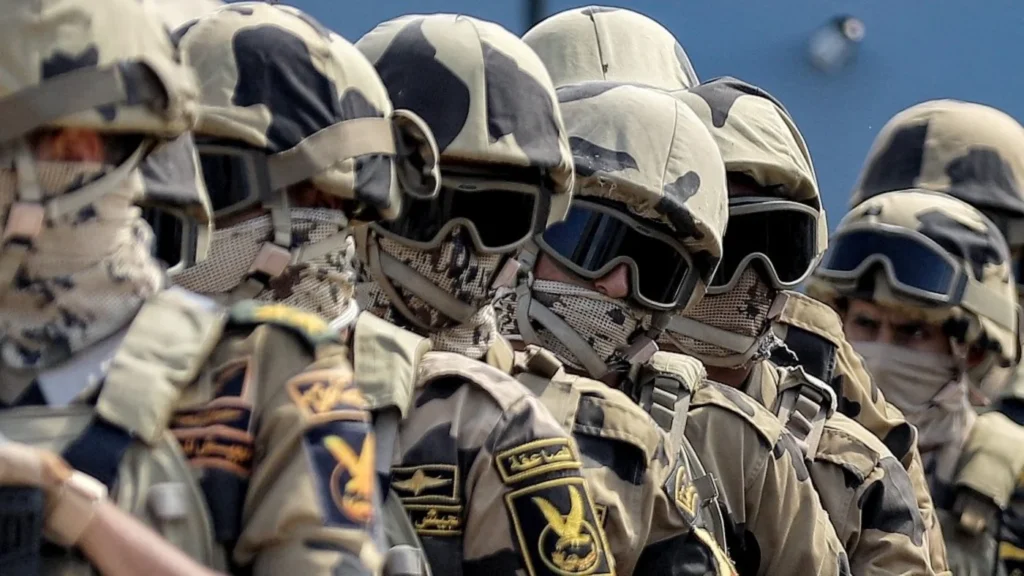
This military posture also has an economic dimension. In 2023 and 2024, Suez transit fees generated approximately $10.2 billion in revenue, serving as an important funding source for infrastructure and defense expenditures.
Egypt concentrates its forces around the exits of the Suez Canal and the Nile Delta, ensuring relatively strong protection of these chokepoints. However, monitoring and protecting the extensive Red Sea coastline and the Sinai region at the same intensity is more challenging. Strategically important ports such as Port Said and Suez benefit from strong military deployment and surveillance capacity, while more remote bases such as Berenice and tourist centers like Hurghada are more exposed to unexpected attacks. Although the Nile Valley’s flat terrain is guarded by garrisons, its protection against air and missile threats remains limited.
Egypt maintains a strong military presence at both the northern and southern entrances of the Suez Canal, with coastal defenses, naval patrols, and air bases surrounding the canal corridor, complicating amphibious assaults. Nevertheless, past incidents—such as the reported and thwarted rocket attack on a vessel transiting the canal in 2013—demonstrate that asymmetric threats have not been entirely eliminated. Red Sea ports, by contrast, are dispersed along a vast coastline.
Constitutionally, the President—bearing the title of “Supreme Commander”—is the official commander-in-chief of the Egyptian Armed Forces. Operational command and control, however, are exercised through the Ministry of Defense and the General Staff. The Ministry oversees four main service branches: Land Forces, Navy, Air Force, and Air Defense Forces. The Republican Guard, an elite unit responsible for presidential security, and military intelligence units are also part of this structure. Civil security elements (police, border guards, and gendarmerie-type formations) fall under the Ministry of Interior.
Egypt’s foreign relations primarily encompass Africa and the Middle East but also extend to major international actors. Although Egypt maintains economic ties with Ethiopia, the dam dispute strains relations. France has long been a key partner, with President Emmanuel Macron emphasizing Egypt’s strategic importance and pledging new investments and support for its stability. The European Union elevated Egypt to a “strategic and comprehensive partnership” level, pledging assistance in reform and trade. The United States, Egypt’s most significant ally, provides over $1.3 billion annually in military aid and cooperates on counterterrorism. Saudi Arabia and other Gulf countries are close economic and political partners. In 2016, Egypt and Saudi Arabia reached an agreement transferring control of the Tiran and Sanafir islands to Saudi Arabia. China, one of Egypt’s largest arms suppliers, also invests in infrastructure.
Defense Industry and Modernization
Egypt’s economy has grown significantly in recent years, becoming Africa’s second-largest economy. Nominal GDP nearly doubled from around $270 billion in 2013 to approximately $450 billion in 2023, with an average growth rate around 5%. There was a notable contraction during the COVID-19 pandemic. GDP per capita stands at approximately $4,000. Under Vision 2030, Egypt targets annual growth of 6–7%. Inflation, which surged to 20–30% following currency depreciation, is expected to decline over time. The economy is driven largely by services and trade, with the Suez Canal and tourism as major revenue sources. Despite domestic energy and agricultural production, Egypt continues to import significant amounts of food and fuel.
Defense spending has risen from relatively low levels in the early 2000s to approximately $4 billion annually by 2023 (around 0.9% of GDP). Personnel costs and extensive procurement programs have driven the budget upward, financed largely through domestic revenues and external loans—particularly French and Gulf credit lines for equipment. However, official figures exclude certain off-budget items (such as paramilitary elements and pensions), making the true total difficult to assess.
Egypt’s strategic geography has produced a doctrine centered on maritime security and border defense. While ground forces secure Sinai and the Libya/Gaza borders, naval and air assets monitor and protect lines extending through the Red Sea to Bab el-Mandeb. Egypt values international cooperation—hosting the MFO in Sinai and conducting joint exercises with the U.S., France, and Gulf states—and leverages foreign facilities to meet logistical needs.
Egypt’s defense industrial base is expanding. State institutions such as the Arab Organization for Industrialization (AOI) and the Ministry of Military Production play leading roles. Joint ventures and technology transfers with partners including China, the UAE, and Russia enable the development of new capabilities.
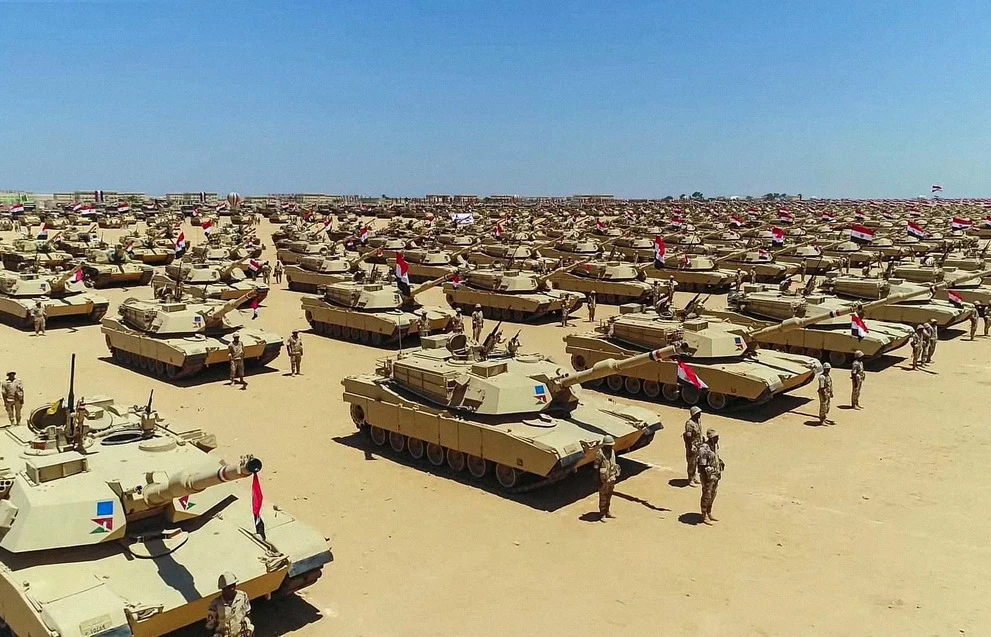
While AOI and the Ministry of Military Production manufacture small arms, ammunition, artillery systems, and armored vehicles, they are increasingly striving to produce more advanced systems. The Hamza-3 loitering munition (kamikaze UAV) introduced by AOI exemplifies this effort. Although some subsystems are reportedly of Chinese origin, the ultimate goal is full domestic production. Local firms also produce rocket launchers and electronic jammers, as well as relatively simple naval platforms such as patrol boats. Egypt also manufactures certain systems under license, most notably the U.S.-origin M1 Abrams tank. However, more advanced systems—such as aircraft, major naval vessels, and missiles—are largely imported.
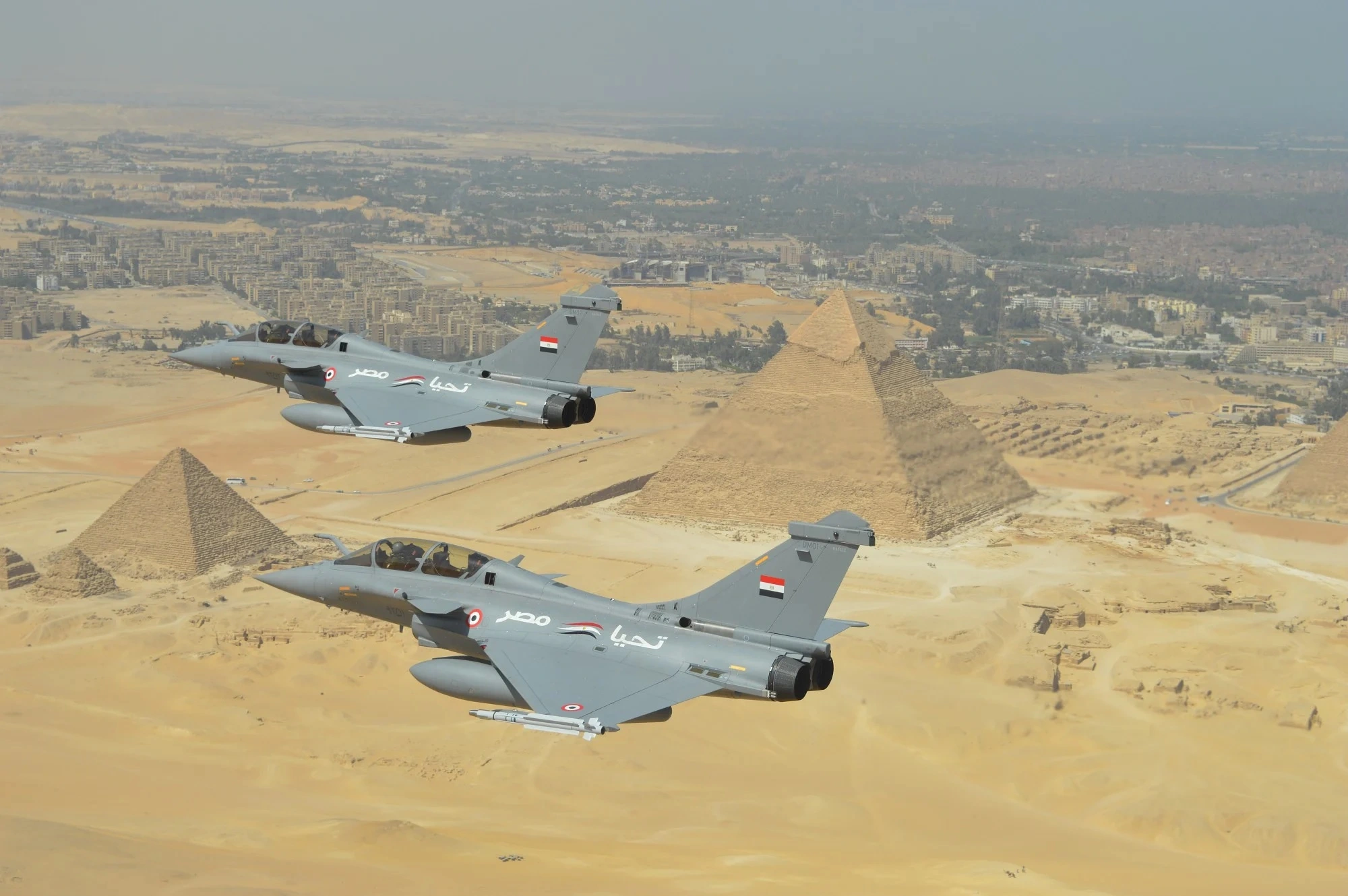
Arms exports remain relatively limited, with most production directed toward domestic needs. Egypt’s procurement portfolio is international: recent agreements include Rafale fighter jets from France, submarines from Germany, air defense systems from Russia, and radar systems from China. These contracts often include offset or industrial participation arrangements. For example, the Rafale deal included French credit financing and industrial cooperation clauses.
At the strategic level, Egypt aims to localize critical technologies to reduce import dependence. Vision 2030 and recent agreements with China and European partners suggest a gradual and pragmatic industrial approach rather than a pursuit of complete self-sufficiency. In the short term, even if Egypt expands ammunition and vehicle production, it is likely to remain dependent on imports for major systems.
SOURCE: C4Defence