








C4 Defence
Wednesday, September 16, 2026
C4Defence
C4Defence 20. Yıl C4Defence 20th Anniversary
  • Home Page
  • NEWS
    • All
    • Latest News
    • Interviews
    • Fairs / Events
    • Latest News
    The Patria TREMOS mortar system on a SISU vehicle belonging to the Finnish Defence Forces

    Finland to Buy Over 100 TREMOS Mortar Systems from Patria

    F-15EX Eagle II fighter jet flying over the Gulf of America

    F-15EX Program Expands from 98 to 268 Aircraft

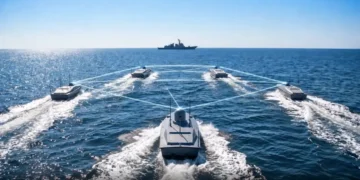
    CTech's hybrid communications concept for a swarm of unmanned surface vessels

    CTech Brings Hybrid Communications Concept to Its Swarm

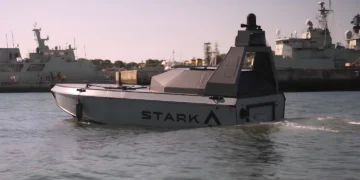
    The STARK unmanned surface vessel tested by NATO under BOMA 26

    BOMA 26 NATO Tests Unmanned Systems for Naval Special Forces

    Hermeus Ramjet-X test vehicle on wheeled dolly inside hangar

    Ramjet-X to Reach High-Mach Speeds Without a Rocket Booster

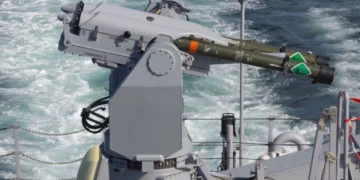
    MBDA SIMBAD RC anti-missile system mounted on a warship's deck

    MBDA to Equip Spanish Navy with SIMBAD RC Anti-Missile System

    The memorandum of understanding signed between MKE and PGZ in the field of air defence systems.

    MKE PGZ Agreement Takes TOLGA to Its Second European Country

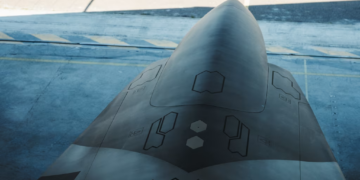
    Close-up image showing the nose and fuselage design of a next-generation fighter aircraft concept

    Saab to Develop New Technologies for Next-Generation Fighter Aircraft

    Leclerc tank and SCORPION fleet's GRIFFON, JAGUAR, and SERVAL armored vehicles lined up in the field

    French Army’s SCORPION Fleet Reaches 1,110 Vehicles

  • Defence Industry Systems
    • All
    • Power & Energy Systems
    • NAVAL VEHICLES
    • TURKISH DEFENCE INDUSTRY
    • LAND VEHICLES
    • AIRCRAFT
    • Space
    The Patria TREMOS mortar system on a SISU vehicle belonging to the Finnish Defence Forces

    Finland to Buy Over 100 TREMOS Mortar Systems from Patria

    F-15EX Eagle II fighter jet flying over the Gulf of America

    F-15EX Program Expands from 98 to 268 Aircraft

    CTech's hybrid communications concept for a swarm of unmanned surface vessels

    CTech Brings Hybrid Communications Concept to Its Swarm

    The STARK unmanned surface vessel tested by NATO under BOMA 26

    BOMA 26 NATO Tests Unmanned Systems for Naval Special Forces

    Hermeus Ramjet-X test vehicle on wheeled dolly inside hangar

    Ramjet-X to Reach High-Mach Speeds Without a Rocket Booster

    MBDA SIMBAD RC anti-missile system mounted on a warship's deck

    MBDA to Equip Spanish Navy with SIMBAD RC Anti-Missile System

    The memorandum of understanding signed between MKE and PGZ in the field of air defence systems.

    MKE PGZ Agreement Takes TOLGA to Its Second European Country

    Leclerc tank and SCORPION fleet's GRIFFON, JAGUAR, and SERVAL armored vehicles lined up in the field

    French Army’s SCORPION Fleet Reaches 1,110 Vehicles

    Frontline Armoured Combat Vehicle Unveiled at MSPO 2026

    Frontline Armoured Combat Vehicle Takes the Stage with Its 40‑Tonne Hull

  • Modernization Programs
    • All
    • TURKISH ARMED FORCES
    • Turkish SSB Projects
    • Turkish MoD Projects
    • ROBOTIC SYSTEMS
    TCG Anadolu and Turkish Navy ships displayed at the TEKNOFEST Mavi Vatan event in Gölcük

    The Foundation of Independence: The Turkish Navy at Mavi Vatan

    K9 Mobile Howitzer during a live-fire test

    K9 Mobile Howitzer Gets Green Light From U.S. Army

    Oshkosh Delivers Point-of-Need Manufacturing for Military Spare Parts

    Oshkosh Delivers Point-of-Need Manufacturing for Military Spare Parts

    U.S. Army FGM-148 Javelin at Yuma Proving Ground

    US Army Munitions Contract Brings KBR $208 Million

    CH-47 helicopter avionic modernization flight test

    Chinook Fleet Modernization Brings New Capabilities to CH-47F

    2026 YAŞ decisions announced at the Presidential Complex

    2026 Supreme Military Council Decisions: Full Text and New Appointments

    MKE has delivered the lightweight MPT-76 MH rifle to the Turkish Land Forces.

    MKE Delivers New MPT-76 MH Rifles to the Turkish Land Forces Command

    M1A1 Abrams tank named Lucifer, modified by the Ukrainian 160th Mechanized Brigade with an anti-drone cage armor system

    Ukraine Modifies Its M1A1 Abrams Tanks

    Representative image of the next-generation robotic manufacturing system developed by Intecro and MetalWorm for launch vehicle production.

    Turkish Robotic Technology joins International Space Project

  • Articles
    • All
    • Guest Author
    • Country Reports
    • Sami Atalan
    • Prof. Dr. Mesut Hakkı Caşın
    • Prof. Dr. Mehmet Eryılmaz
    A Eurofighter Typhoon aircraft conducting an aerial refuelling mission in flight.

    New Playbook for the Turkish Defence Industry as Cards Are Redealt in Global Aviation

    Secret Summit in Moscow: An Alarm Signal for NATO?

    Secret Summit in Moscow: An Alarm Signal for NATO?

    Nano synthetic diamond technology used in quantum defense systems and advanced military hardware applications

    From Atomic Flaws to Quantum Power

    Polish Armed Forces and military structure analysis in C4Defence.

    Poland’s Military Structure and Defence Capabilities

    Time-critical defence logistics and container transport for military component management

    The Strategic Importance of Time-Critical Logistics in the Defence Industry

    Nuclear power plant providing continuous baseload power for AI data centers and defense energy requirements

    The Electricity Race in the Age of AI

    Illustration of nanotechnology and molecular materials science applications in aerospace and defense aviation.

    Nanotechnology in Aerospace Systems

    Combined signing ceremony for defense projects at the NATO Summit, highlighting Türkiye's strategic contribution.

    Türkiye’s Rising Share at the NATO Summit

  • ABOUT US
    • Masthead
    • Privacy Notice
  • Türkçe
  • English
No Result
View All Result
C4Defence
No Result
View All Result

Anasayfa » Defence Industry Systems » Is Artificial Intelligence writing the New Rules of War?

Is Artificial Intelligence writing the New Rules of War?

Newsroom by Newsroom
5 June 2026
in Defence Industry Systems
A A
AI systems and military personnel analyzing digital warfare data on a tactical battlefield.

Highlights

The RAND Corporation report reveals how artificial intelligence (AI) is reshaping four critical competition areas on the modern battlefield:

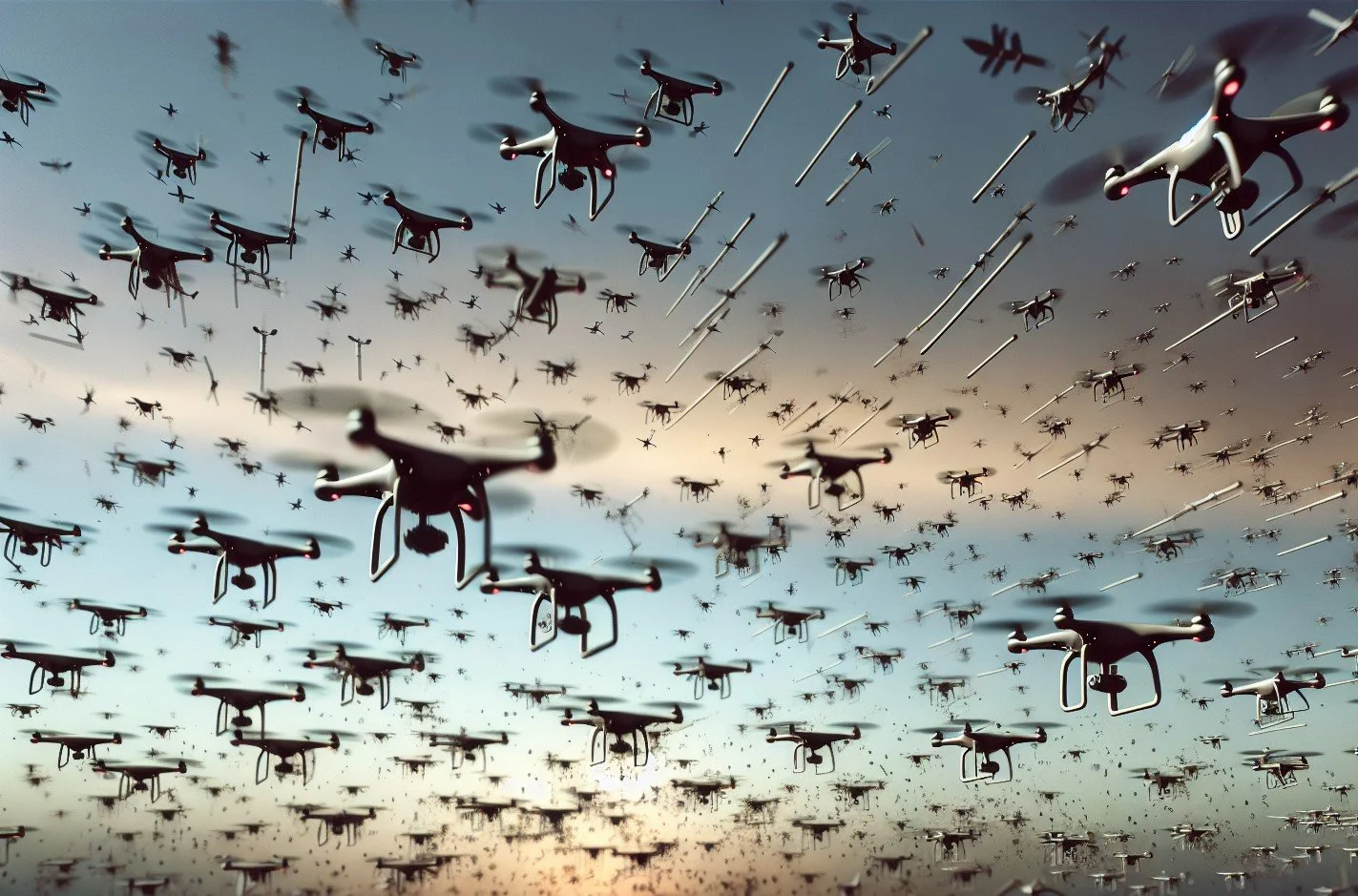
  • Quantity-Quality Balance: The proliferation of cost-effective autonomous systems is fundamentally transforming force balances on the battlefield and the cost structure of warfare.
  • Concealment and Detection Race: AI-powered advanced sensor and analysis capabilities are making traditional concealment methods increasingly difficult, rendering detection far more complex.
  • Cybersecurity Dynamics: While AI holds the potential to strengthen defense systems, it is simultaneously becoming a sophisticated and dangerous tool for attackers.
  • Organizational Transformation: AI is not merely a technological innovation — it is a fundamental organizational challenge that tests the operational structures, doctrines, and decision-making processes of modern militaries.
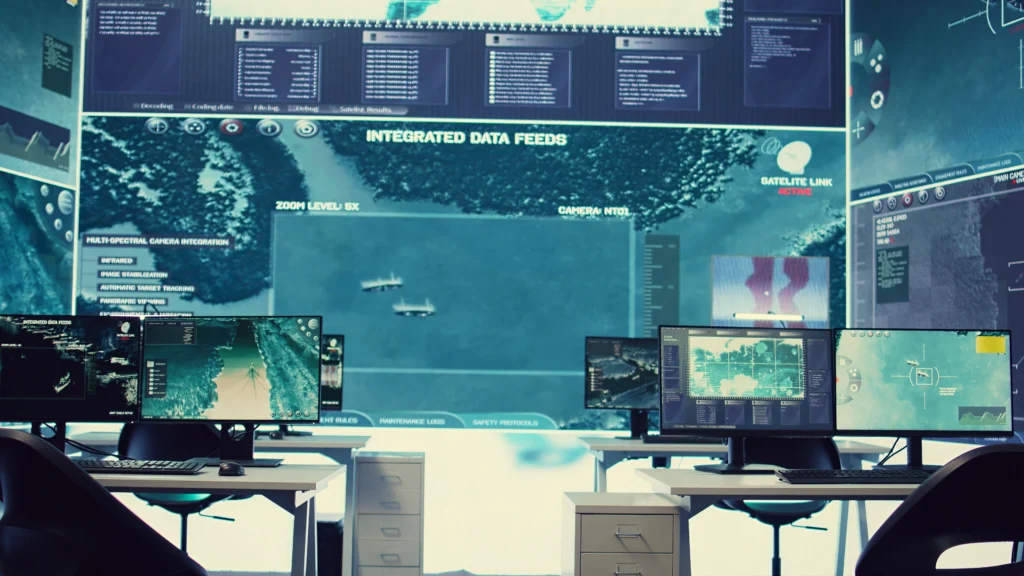
"Komuta kontrol" (Command and Control) görseliniz için İngilizce olarak kullanabileceğiniz, hem SEO dostu hem de erişilebilirliği destekleyen alt metin (Alt Text) önerilerim aşağıdadır:

Öneri 1 (Sistem Odaklı): "Modern military command and control system interface showing tactical data for future warfare operations

A single platform worth billions of dollars, or hundreds of low-cost autonomous systems? With artificial intelligence entering the battlefield, this question is no longer theoretical. The findings of a RAND Corporation report examining four competitions that will define the wars of the future carry a serious warning for conventional defense doctrines.

Authored by seven researchers and titled “How Artificial Intelligence Could Reshape Four Key Competitions in Future Wars,” the RAND Corporation report focuses on U.S. military strategy while offering a framework with genuinely global relevance.

The study takes a notably realistic approach, steering well clear of the “AI solves everything” narrative so commonly heard in military circles. The answer is neither a straightforward yes nor a flat no. While the report acknowledges that AI will transform warfare, it cautions that this transformation is far from automatic — and centers its analysis on four key axes: the quantity-quality balance, the concealment-detection race, centralized versus distributed command-and-control, and the cyber offense-defense struggle.

Book cover of 'Artificial Intelligence and Future Warfare', an analytical report on defense technologies

The Quantity-Quality Balance

As AI-enabled unmanned systems become cheaper and more capable, the relative cost-effectiveness of quantity increases. These systems — precise in targeting and economical to produce — offer a clear cost advantage over exquisite but prohibitively expensive platforms.

While high-end and niche systems will still have a role in future conflicts, armies that shift toward larger numbers of expendable swarm autonomous systems and can deploy them as an integrated mass appear likely to gain a decisive edge on the battlefield.

The Concealment-Detection Race

AI will dramatically enhance detection capabilities by rapidly fusing and analyzing intelligence from an ever-expanding network of sensors. At the same time, militaries can also leverage AI to develop sophisticated deception campaigns and countermeasures designed to offset — or neutralize — an adversary’s advanced detection abilities.

The likely end result is a persistent measure-countermeasure competition between those who hide and those who seek.

Centralized and Distributed Command-and-Control

The report emphasizes that mission command — a hybrid of centralized and decentralized models — will remain the optimal approach. AI does not alter the fundamental reasons why mission command holds advantages over other paradigms, since those advantages rest on having the right information in the right place to make time-sensitive decisions.

The primary constraint in command-and-control approaches is not cognitive capacity alone, but access to information — and AI does not change that equation.

The Cyber Offense-Defense Struggle

Warfighting networks can, over time, be made significantly more resilient against cyberattacks by leveraging AI. AI could help overcome the scale, speed, and effectiveness constraints that currently limit cyber defense, providing a structural advantage to the defensive side.

That said, cyber attackers will also maintain their ability to penetrate networks with AI’s assistance. However, if militaries invest serious resources in AI-enabled cybersecurity over the long term, the technology will reduce the magnitude of the advantages attackers currently hold relative to today’s balance.
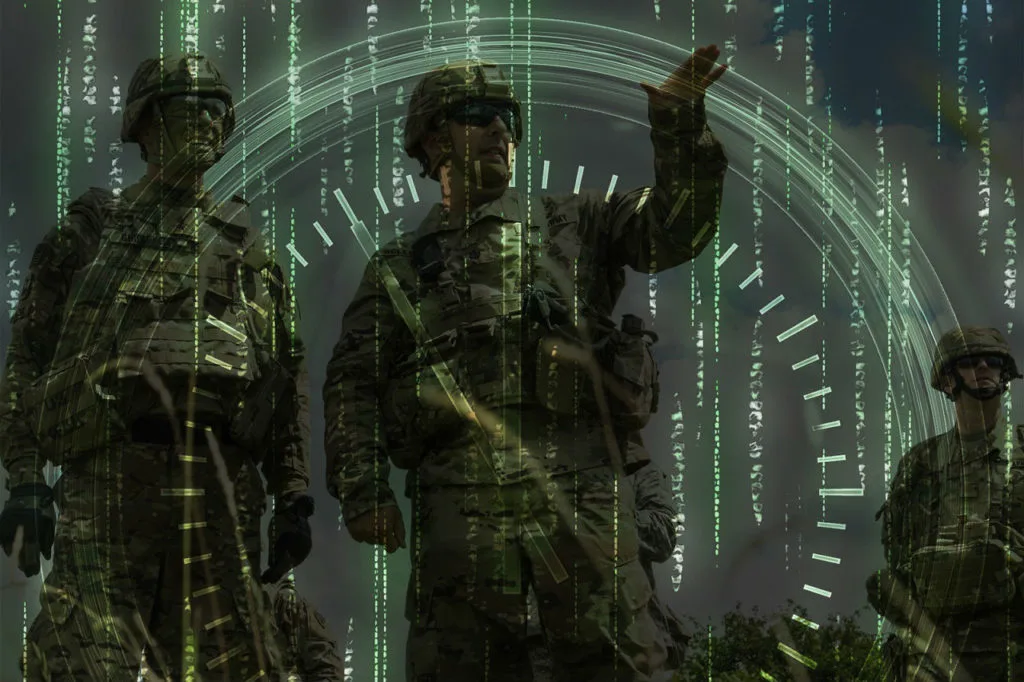
Summary of findings regarding the impact of artificial intelligence on future military warfare and strategy.

Conclusions and Assessment

Read together, the four axes paint a clear picture. The advantage AI confers will go not to whoever possesses the technology, but to whoever integrates it into their organizational structure the fastest and most intelligently. The report highlights three concrete priorities: investing now in mass and deception capacity, allocating resources under the assumption of sophisticated and adaptive adversaries, and developing a concrete plan for transitioning to an AI-enabled force. These priorities apply not only to the United States, but to any military seeking to remain competitive in the age of AI.

Given that AI’s development is far from complete, the conclusions drawn from this research may well evolve in new directions over time. The most striking takeaway from the report is its finding on the resilience of command-and-control paradigms — an observation that, through a lens of technological determinism, amounts to a serious challenge to the billions being invested in autonomous decision-making systems.

On the cyber front, the picture is somewhat more complex. While AI gives the defense side greater scale, the complete elimination of cyber threats is not a realistic prospect — attackers have access to the same tools, and no network can be made fully impenetrable.

So how will this technological transformation manifest within the structure of modern militaries? The research underscores that harnessing AI’s potential is not merely a technical matter, but a profound organizational challenge. Based on the report’s analysis with reference to the U.S.: it is clear that armies which fundamentally reshape their operational concepts and force structures will gain the advantage over those that use AI only to incrementally improve existing methods of warfare.

Artificial intelligence is rewriting the rules of war — but it will not be the technology itself that determines the winners of this transformation. It will be how quickly, and how wisely, we choose to embrace it.

 🔍 You may also like

  • More AI News

Source: C4Defence– RAND Corporation – Artificial Intelligence and the Future of Warfare

Previous Post

Raytheon has received a 515 million dollar SPY‑6 radar contract from the US Navy

Next Post

MKE Carries Out Large-Scale Ammunition and System Deliveries to the Turkish Armed Forces

Newsroom

Newsroom

Next Post
Firtina self-propelled howitzer systems delivered by MKE to the Turkish Armed Forces.

MKE Carries Out Large-Scale Ammunition and System Deliveries to the Turkish Armed Forces

Most Popular

The Patria TREMOS mortar system on a SISU vehicle belonging to the Finnish Defence Forces
Defence Industry Systems

Finland to Buy Over 100 TREMOS Mortar Systems from Patria

15 September 2026
F-15EX Eagle II fighter jet flying over the Gulf of America
AIRCRAFT

F-15EX Program Expands from 98 to 268 Aircraft

15 September 2026
CTech's hybrid communications concept for a swarm of unmanned surface vessels
Latest News

CTech Brings Hybrid Communications Concept to Its Swarm

14 September 2026

Recommended

The STARK unmanned surface vessel tested by NATO under BOMA 26

BOMA 26 NATO Tests Unmanned Systems for Naval Special Forces

13 September 2026
MBDA SIMBAD RC anti-missile system mounted on a warship's deck

MBDA to Equip Spanish Navy with SIMBAD RC Anti-Missile System

11 September 2026
C4Defence

‎ ‎ ‎ ‎ ‎ ‎ ‎ ‎ ‎‎ Mildata Ltd. © 2026‎ ‎ ‎ ‎ ‎‎

Türkiye’nin ilk online savunma dergisi. Türkiye’s first online defence magazine.

  • Türkiye’s first online defence industry magazine.”

Bizi Takip Edin Follow Us

No Result
View All Result
  • Home Page
  • News
    • Agenda
    • Fair
  • Defence Industry
    • Turkish Defence Industry
    • Land Vehicles
    • Aircraft
    • Naval Vehicles
    • Projects
  • Modernization Programs
    • Turkish Armed Forced
    • Turkish SSB Projects
    • Turkish MoD Projects
    • Military Projects
    • Robotic Systems
    • Auxiliary and Subsystems
  • Articles
    • Sami Atalan
    • Prof. Dr. Mesut Hakkı Caşın
    • Prof. Dr. Mehmet Eryılmaz
  • About Us
    • Masthead
    • Privacy Notice
  • Menü ögesi
  • Menü ögesi
  • Türkçe
  • English

‎ ‎ ‎ ‎ ‎ ‎ ‎ ‎ ‎‎ Mildata Ltd. © 2026‎ ‎ ‎ ‎ ‎‎