

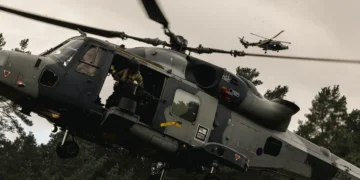















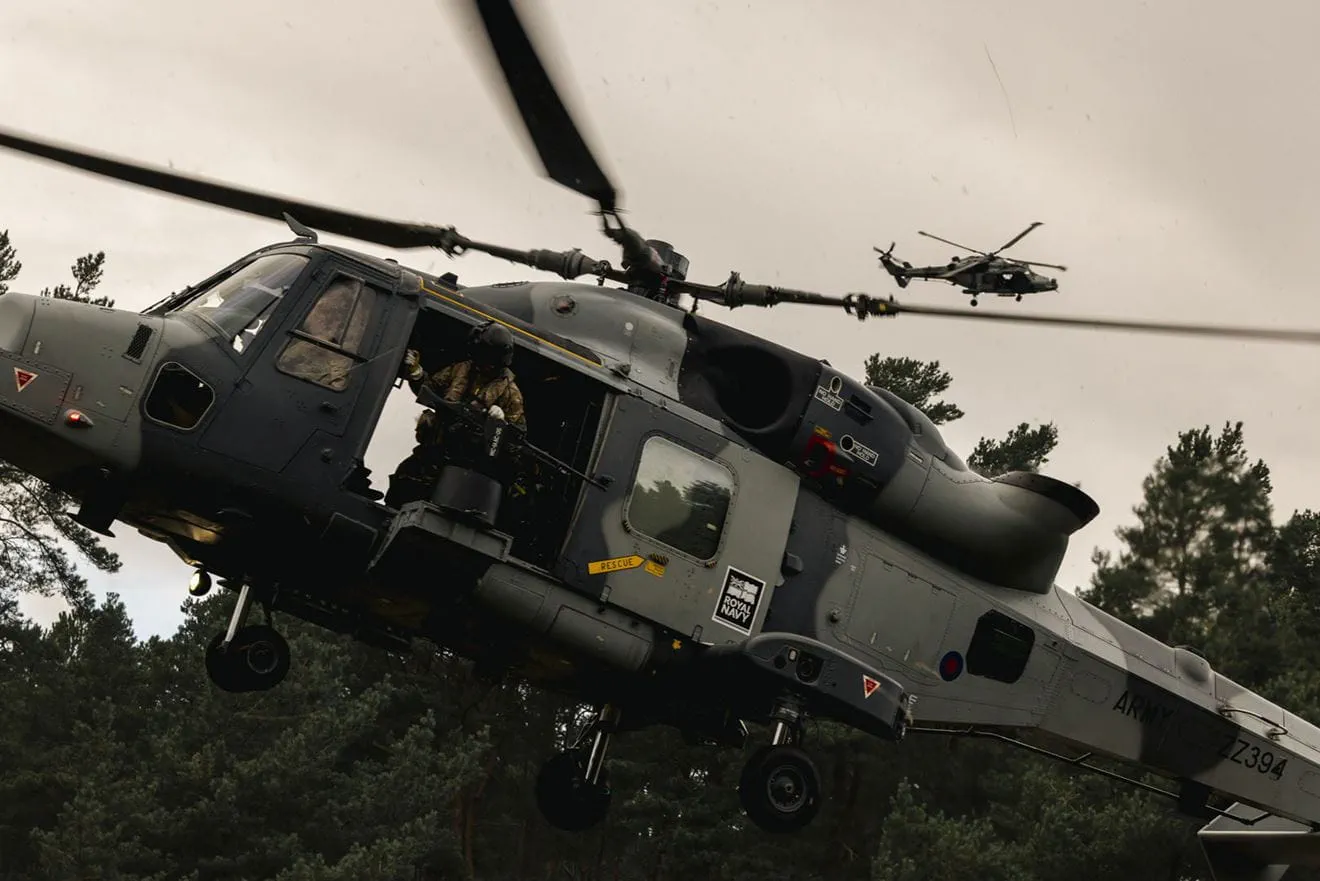
The Wildcat helicopter took part in live-fire, air assault and casualty evacuation exercises during the Royal Navy’s month-long training in Scotland.
The Royal Navy’s 847 Naval Air Squadron participated in combat training at firing ranges in Scotland alongside Royal Air Force (RAF) and US military personnel. Deployed from their base in Somerset to the Cromarty Firth area, the aircrews and ground crews of Commando Wildcat helicopters conducted live-fire exercises against targets using helicopter-mounted weapons, directed artillery and air support, and carried out activities related to air assault operations.
Live-Fire Training at Tain Range
Personnel from 847 Naval Air Squadron, which supports the UK Commando Force and maintains a constant state of operational readiness, returned to the Commando Helicopter Force base at RNAS Yeovilton following the completion of the training. The exercises took place at the Tain Air Weapons Range, located north of Inverness in Scotland. Pilots and aircrews from 847 Naval Air Squadron enhanced their firing proficiency with the M3M Heavy Machine Gun and General Purpose Machine Gun (GPMG) systems.
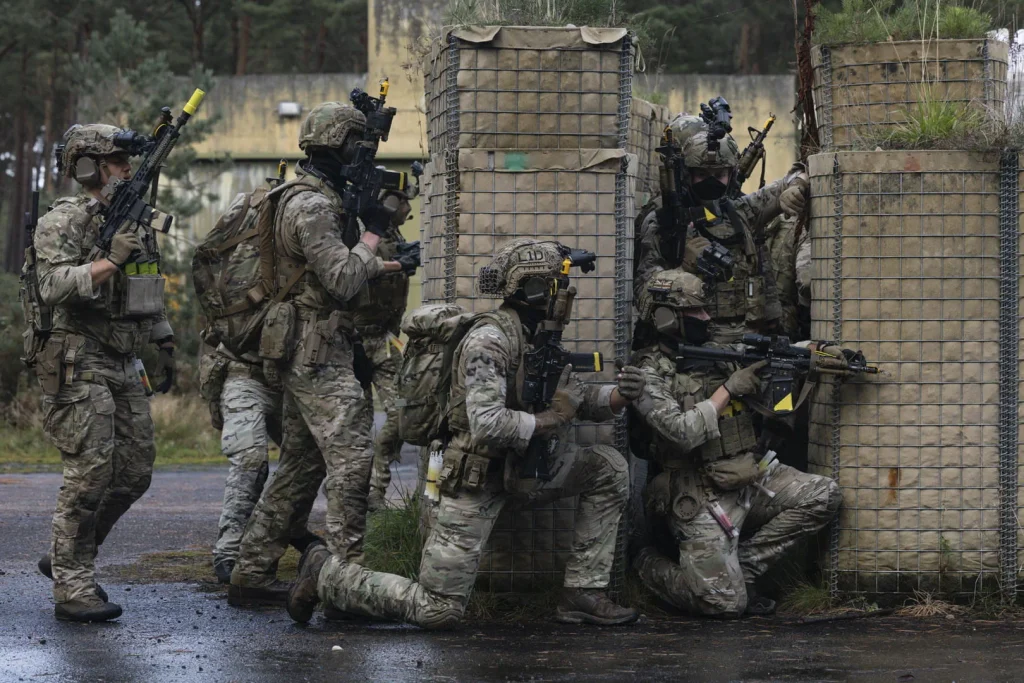
The range, located at a former RAF airbase, enabled live-fire training under challenging weather conditions. During the training, which also included personnel firing these weapons for the first time, the crews achieved the Qualified Crew – Own Weapon (QC(OW)) qualification.
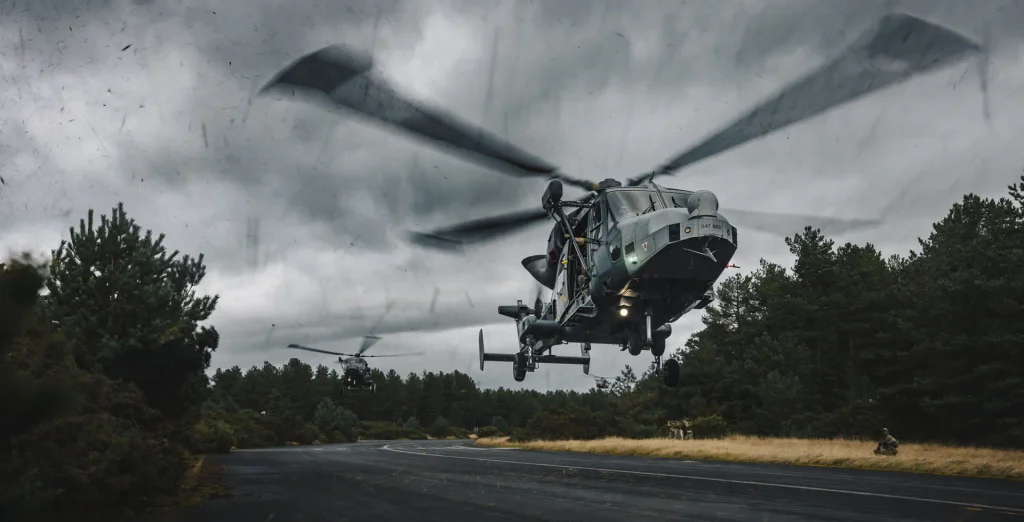
During the live-fire exercises, pilots directed weapon operators, coordinating target identification and engagement. Aiming adjustments were made by observing the impact points of tracer rounds. More than 4,000 rounds were fired on intensive training days, while Wildcat helicopters spent an average of eight hours in the air each day, conducting both day and night flights.
Fire Support Coordination
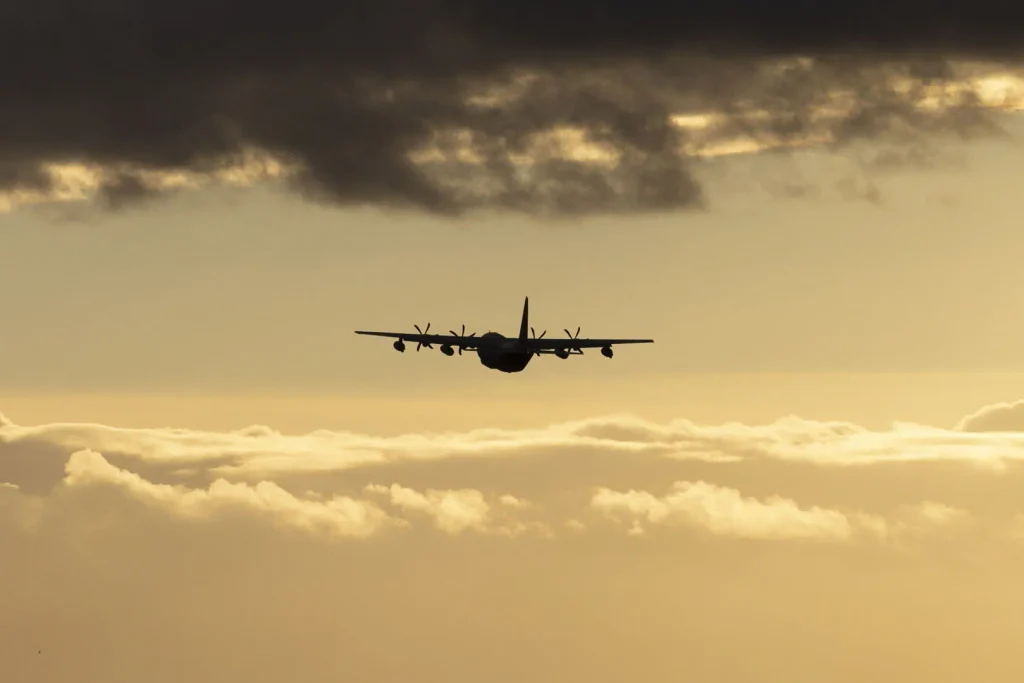
An MC-130 aircraft from the US Air Force’s 67th Special Operations Squadron and Typhoon fighter jets from the Royal Air Force’s II(AC) Squadron also participated in the training. Joint Terminal Attack Controllers (JTACs) embedded with ground forces and Forward Air Controllers (Airborne) (FAC(A)) aboard Wildcat helicopters coordinated fire support among helicopters, fighter jets and artillery units.
Lieutenant James Parker, a pilot with 847 Naval Air Squadron, emphasised the importance of coordination, noting that seconds are critical when troops are in contact with the enemy. He stated that communication and precision are essential to delivering fire support quickly and accurately. Parker explained that during firing exercises with the M3M machine gun aboard the Wildcat helicopter, the recoil of the .50-calibre ammunition could be felt throughout the entire aircraft, making the experience one that engaged all the crew’s senses.
Air Assault and Rapid Evacuation Exercise
In the final phase of the training, an air assault operation was conducted to neutralise a simulated surface-to-air missile (SAM) position at RAF Kinloss and enemy forces defending the area. Royal Marines from 42 Commando surrounded an area where two armed group leaders were believed to be located as part of the exercise.
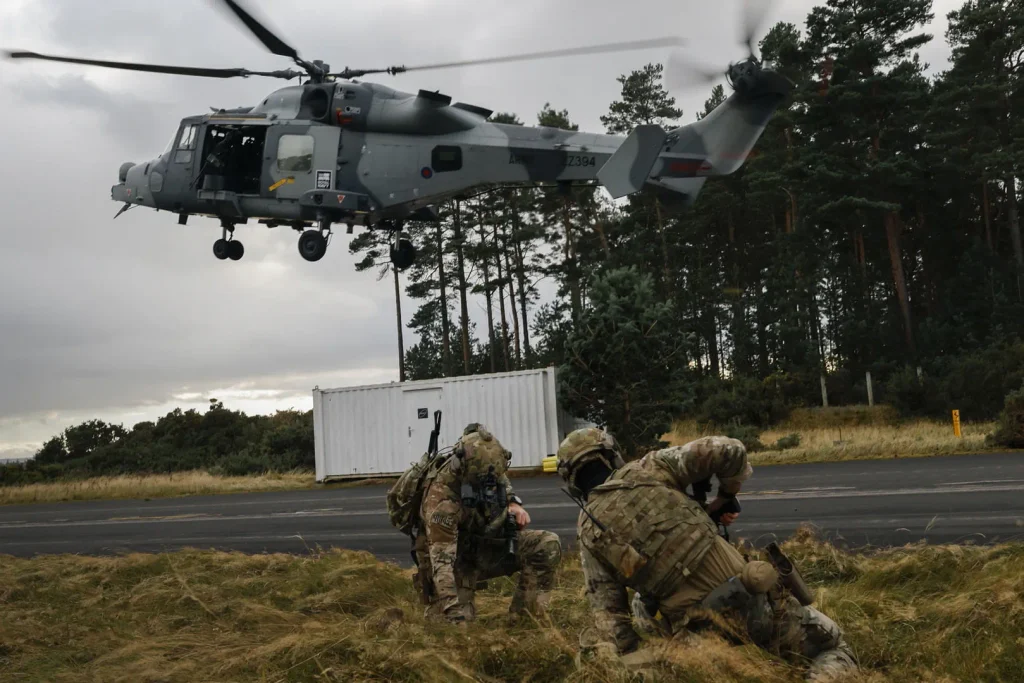
Three Wildcat helicopters deployed assault forces into the area, enabling them to seize the position and capture the targeted individuals. Typhoon fighter jets were then directed to conduct strikes against simulated air defence systems and enemy mortar positions. A casualty evacuation scenario was also carried out as part of the exercise. While one Wildcat helicopter provided aerial cover, another landed in the area to evacuate the casualty. The evacuation was completed in less than 60 seconds.
🔍 You may also like
Source: C4Defence –Royal Navy