






























During NATO’s Neptune Strike 26-4 exercise, F-35Bs launched from HMS Prince of Wales to intercept a Russian Tu-95 Bear bomber. The Royal Navy’s flagship returned to Portsmouth after completing Operation Firecrest.
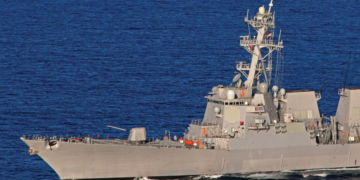
HMS Prince of Wales operated alongside the Type 45 destroyer HMS Dauntless in the North Atlantic and High North over the past month as part of Operation Firecrest, aimed at defending NATO’s northern flank.
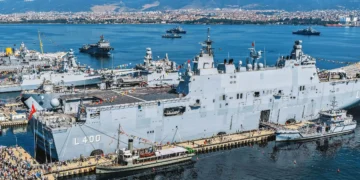
During missions aimed at defending the North Atlantic, F-35B Lightning fighter jets conducted flights over the Baltic Sea, while joint air operations were carried out with Norwegian Air Force F-35A fighters and a U.S. Air Force B-52 bomber. Meanwhile, naval task groups led by Türkiye and Italy continued their operations in the Mediterranean.
HMS Prince of Wales in Oslo
During the operation, HMS Prince of Wales visited Oslo, where it hosted the Atlantic Future Forum and the International Sea Power Conference. European military and political officials discussed issues related to collective security in Northern Europe at the events. The return of HMS Prince of Wales to Portsmouth marked the completion of Operation Firecrest, which was conducted in two phases over a six-month period in 2026.

HMS Prince of Wales Commanding Officer Captain Ben Power stated that the ship and its crew had experienced an intense period of operations, expressing their satisfaction at serving as the flagship of the UK Carrier Strike Group throughout Operation Firecrest. Highlighting the importance of operations in the High North and North Atlantic, Power noted that the International Sea Power Conference and Atlantic Future Forum held in Oslo demonstrated the strategic significance of these activities. He added that, following NATO operations and exercises aimed at deterring Russian military activity in the North Atlantic, the ship had hosted a major maritime defense diplomacy event. Power expressed pride in the crew’s professionalism and dedication to duty and thanked their families for their support.
HMS Prince of Wales and the Two Phases of Operation Firecrest
During the first phase of Operation Firecrest, which ran from April to July, the UK Carrier Strike Group conducted joint activities with 19 allies from NATO and the Joint Expeditionary Force (JEF). These activities focused on deterring Russian military operations in the region, ensuring the security of NATO airspace, and conducting joint training among allied forces.
HMS Prince of Wales returned to the UK for routine maintenance at the end of July before deploying again in mid-October for the second phase of the operation. The carrier strike group conducted joint operations involving warships and aviation assets in Arctic and sub-Arctic waters to support the defense of the North Atlantic, including the Greenland-Iceland-UK Gap (GIUK Gap).
During the operation, F-35B fighter jets embarked aboard HMS Prince of Wales provided air cover for a U.S. Air Force B-52 bomber alongside Norwegian Air Force F-35As. HMS Prince of Wales subsequently joined NATO’s Neptune Strike 26-4 exercise after departing Hammernesodden. The ammunition resupply marked the first time a Queen Elizabeth-class aircraft carrier had received ammunition at a port outside the United Kingdom. Norway also provided logistical support for an allied country’s ammunition resupply for the first time.
17 Countries Participate in Neptune Strike 26-4
After completing ammunition resupply at Hammernesodden, HMS Prince of Wales participated in NATO’s Neptune Strike 26-4 exercise. The carrier’s aviation assets included F-35 fighter jets from 617 Squadron (The Dambusters), as well as Merlin helicopters from the Commando Helicopter Force and 820 Naval Air Squadron. The Norwegian Navy frigate KNM Fridtjof Nansen and HMS Dauntless provided protection for the carrier strike group, while the Type 23 frigate HMS St Albans, a French frigate, and the Norwegian Navy replenishment ship HNoMS Maud also took part in the exercise.
A total of 20 warships and 40 aircraft from 17 countries participated in Neptune Strike 26-4. During the exercise, two naval task groups led by Türkiye and Italy operated in the Mediterranean, while a third group led by HMS Prince of Wales conducted operations off the coast of Norway. During NATO operations in the region, F-35 fighter jets were scrambled from HMS Prince of Wales to intercept a Russian Tu-95 Bear long-range bomber.
F-35B Lightning II fighter jets also conducted live-fire training with Paveway IV bombs during the exercise’s strike operations. Following the program, the aircraft carrier returned to Portsmouth, marking the conclusion of Operation Firecrest.
Joint Operations on NATO’s Northern Flank
Commodore Richard Hewitt, Commander of the UK Carrier Strike Group, stated that Operation Firecrest strengthened coordination among NATO forces and demonstrated the importance of maintaining a naval presence in the North Atlantic and High North. Hewitt noted that HMS Prince of Wales, HMS Dauntless, and HMS St Albans conducted joint operations with allied forces during the second phase of the operation. He added that these activities supported the defense of NATO’s northern flank, enhanced deterrence against potential threats, and improved collective operational readiness.
Referring to air operations conducted with Norwegian and U.S. forces and discussions held with military and political officials in Oslo, Hewitt stated that these activities demonstrated the carrier strike group’s ability to operate at both military and strategic levels. He emphasized that the operation reinforced the UK’s commitments to NATO and strengthened interoperability among allied forces, adding that the professionalism and dedication of personnel played a key role in the successful execution of the missions.
🔍 You may also like
Source: C4Defence – Royal Navy