





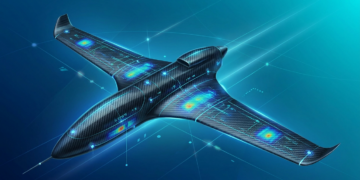





















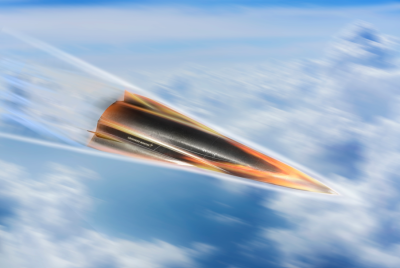
Lockheed Martin has announced that it will conduct the first flight demonstration of its new hypersonic glide body, NXGB (Next Generation Glide Body), in 2027. The company has completed the Preliminary Design Review (PDR) phase—thus setting a clear timeline in the global race. Developed from the design stage with the goal of reducing production costs and enhancing scalability, the platform aims to achieve longer range and higher speeds compared to existing models. In turn, this will shift operational dynamics.

The NXGB is designed to meet the growing demand for mass production in response to national security needs. In addition, the hypersonic glide vehicle features a versatile architecture capable of being launched from various platforms and across multiple operational domains. As a result, it reduces risk exposure for battlefield elements while increasing operational flexibility.
Johnathon Caldwell, Vice President and General Manager of Lockheed Martin’s Strategic and Missile Defence Systems, shared the following insights on the project: “NXGB demonstrates our commitment to developing next‑generation deterrent systems that are not only effective but also cost‑efficient and suitable for large‑scale production. We designed this capability from the outset to deliver greater value to our customers while providing warfighters with operational superiority.”
MOSA Architecture and Infrastructure Investments
Built upon the company’s more than 60 years of missile development experience, NXGB employs innovative Modular Open Systems Architecture (MOSA) and modern design methodologies. As a result, this open architecture approach facilitates future modernisation processes for the new hypersonic glide system while reducing development risk and costs.
Caldwell summarised the production model as follows: “The future of deterrence belongs to solutions that combine innovative MOSA architecture and modern design methods with proven performance. By embracing a design‑for‑production philosophy, NXGB brings to life our decades of experience in developing, manufacturing, and delivering mission systems.”
Lockheed Martin has invested in dedicated production facilities and advanced manufacturing technologies to meet high‑volume production requirements in a timely manner. Furthermore, supported by a robust supply chain and partnerships, this infrastructure will enable rapid scaling of the system’s production process when needed.
Future Timeline
Following the PDR phase, which confirmed that the design meets performance, producibility, and cost‑effectiveness criteria, the program’s next focus will be prototype production and field testing. According to the development schedule, Lockheed Martin will validate all operational and technical capabilities of the new hypersonic glide body NXGB through the 2027 flight demonstration.
🔍 You may also like
Source: C4Defence- Lockheed Martin