









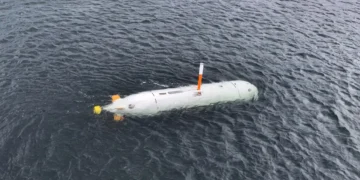














The long‑awaited historic modernisation of the Polish Navy has finally reached the signing stage, with the fifth‑generation A26 submarine project, valued at approximately 50 billion Swedish Kronor (SEK), officially getting underway. The procurement of three A26‑class submarines—equipped with stealth technology that allows them to operate in near‑silence, undetectable by radar in the shallow and challenging waters of the Baltic Sea—carries immense significance. Moreover, this acquisition represents a strategic turning point. It will shift the entire naval balance in NATO’s northern flank in Poland’s favour.

The foundations of this deal, a historic milestone in the Polish Navy’s modernisation process, were laid last year. As you may recall, C4Defence was the first publication to bring this strategic decision to the sector’s agenda in 2025. In its news report titled “Poland Selects Saab for Submarine Programme.“
First Delivery in 2031!
According to the official timeline signed between the Polish Armament Agency and Sweden’s Saab in Gdynia, the first A26 submarine is scheduled for delivery in 2031, with the entire project expected to be fully completed by 2038. One of the most prominent details of the agreement is the gap‑filler model designed to maintain the Polish Navy’s operational continuity. Under this arrangement, Polish sailors will begin their training in Sweden as of August 2026. Following the completion of training, the Swedish Navy’s HMS Södermanland submarine will be transferred to Poland in 2027 and will remain in active service until the new submarines are commissioned.

In a statement following the signing, Poland’s Deputy Prime Minister and Defence Minister emphasised that this moment had been awaited for generations and that today was a great day for both Poland and its sailors. He also stressed that the gap‑filler step was critical. This would ensure the transition from the training phase to full operational capability as quickly as possible.
“It Will Become One of NATO’s Most Powerful Naval Forces”
Sweden’s Prime Minister emphasised that this long‑term and massive deal would transform the Polish Navy into one of NATO’s most powerful naval forces. He also stated that the two countries’ joint use of the most advanced underwater capabilities in the Baltic Sea would maximise deterrence in the region. Furthermore, he noted that a strong Polish submarine fleet would solidify security along shared maritime borders and across NATO as a whole.
Saab’s President and CEO, Micael Johansson, added that the A26 submarine platforms—with their high manoeuvrability, advanced stealth capabilities, and network‑centric Multi‑Domain Operations ability—would fully meet Poland’s future multi‑dimensional defence needs.
€100 Million Investment in Polish Industry and Major Employment Boost
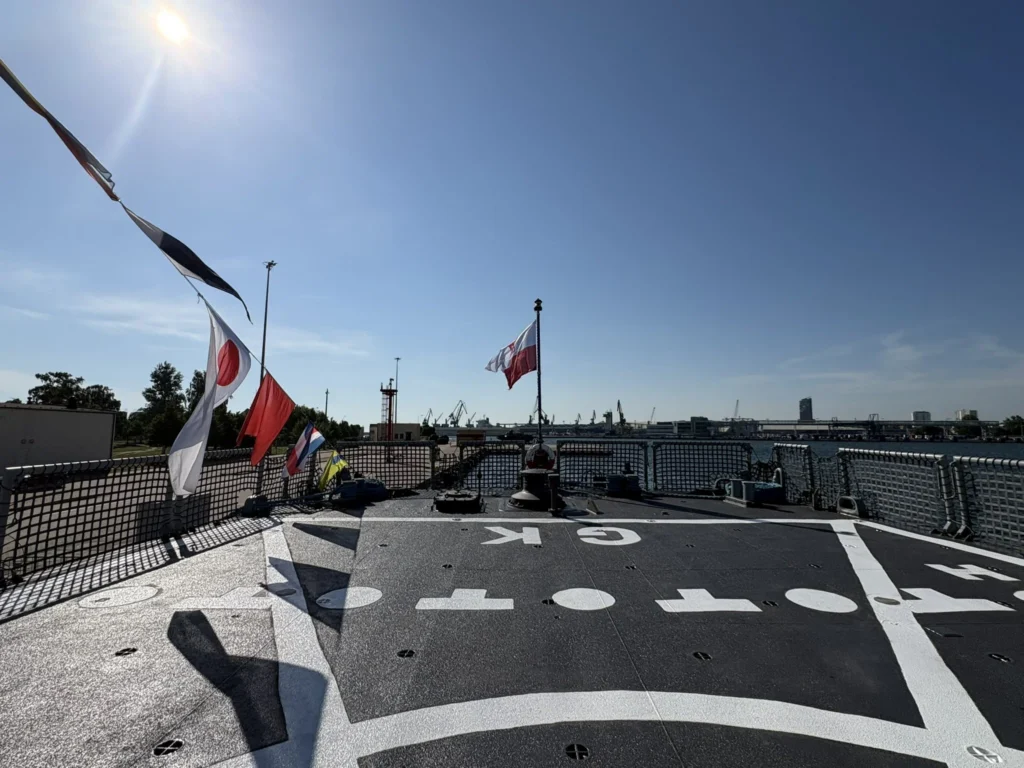
Beyond being a military procurement, the deal encompasses a massive industrial partnership that will create new job opportunities for more than 7,000 people in the Polish local market. Under the project, Saab plans to make direct investments of up to €100 million into Poland’s domestic industry. Meanwhile, hundreds of Polish companies will be brought into this strategic ecosystem as subcontractors to the firm.
Additionally, the Maintenance, Repair, and Modernisation (MRO) capability to be established in Poland will grant the Polish Navy full independence in lifecycle support for its vessels. On the Swedish side of the project, numerous new jobs will be created at the Landskrona and Karlskrona shipyards, where the main construction of the submarines will take place. In this way, the defence industries of the two countries will be structurally brought even closer together.
Technical Highlights of the A26 Submarine
The fifth‑generation A26 submarine (Blekinge class), developed by Saab, is equipped with a network‑centric warfare architecture and boasts superior intelligence, surveillance, and reconnaissance (ISR) capabilities. The platform also stands out for its advanced stealth features. These allow it to operate completely silently underwater and remain undetected for extended periods. Furthermore, its modular design is tailored to the challenging operational conditions of shallow waters. This positions it as an asymmetric force multiplier.
🔍 You may also like
Source: C4Defence