



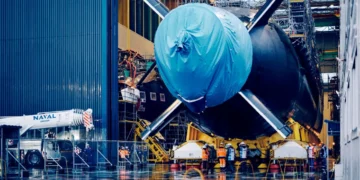
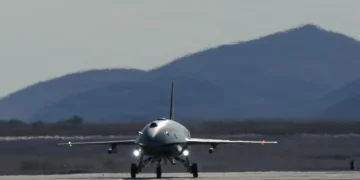
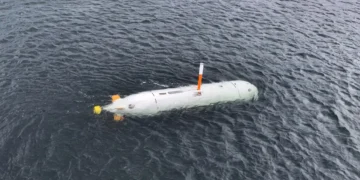
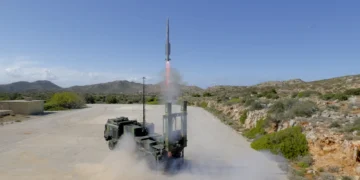








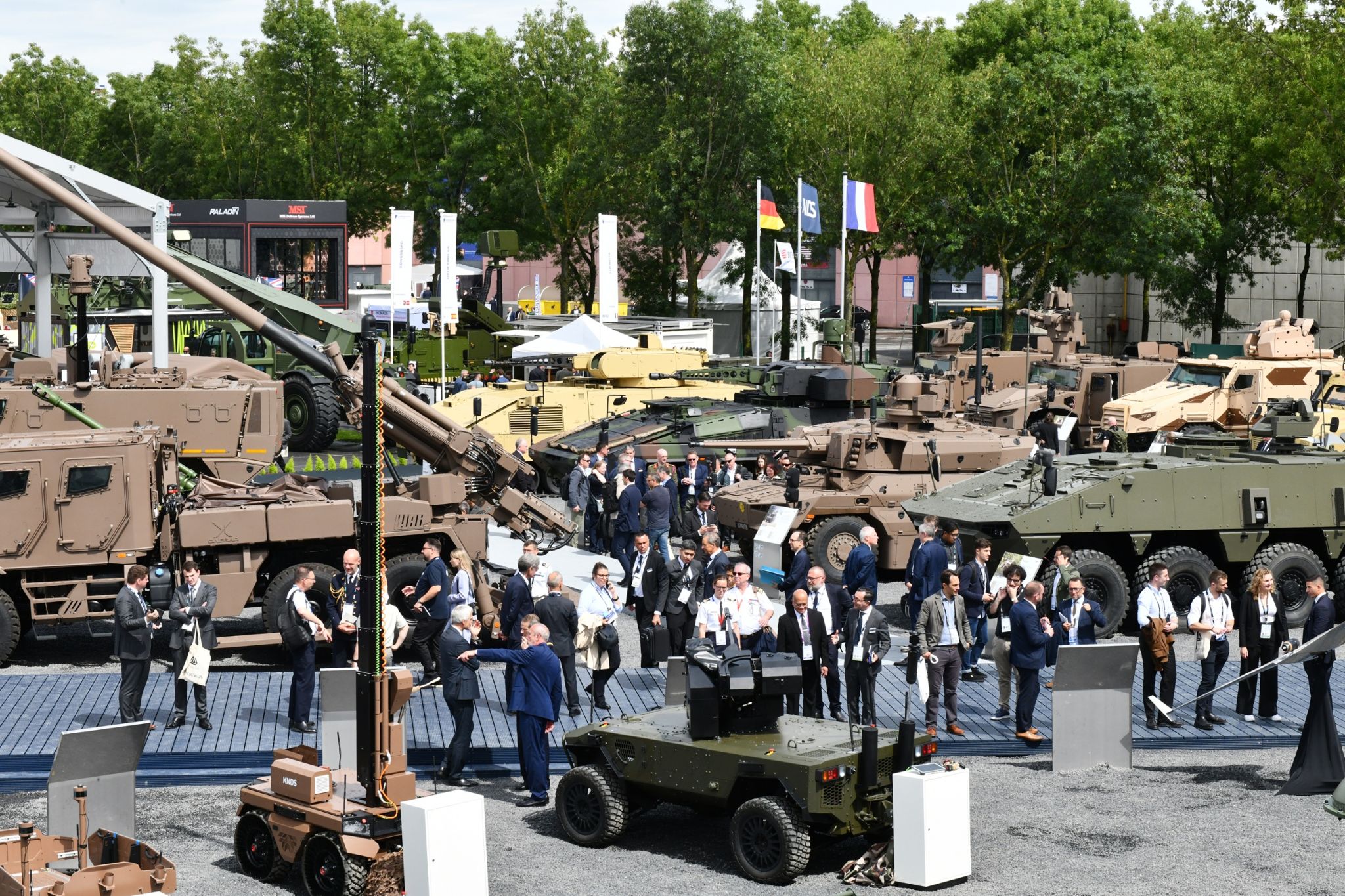
The Paris-Nord Villepinte exhibition centre hosted the most crowded edition in Eurosatory’s history between June 15-19: over 2,600 companies from 68 countries and more than 350 official delegations from 100 nations. The CEO of Coges Events, the organising body, retired General Charles Beaudouin, described this year’s event as Europe’s “last chance” to procure ready‑to‑deploy weaponry. Perhaps the most striking indicator of the shift was Ukraine: having participated with just 10 companies in 2024, the country set up a pavilion with over 80 firms this time around.

The fair’s agenda was shaped by unmanned systems, anti‑drone solutions, and the concept of “Multi‑Domain Superiority.” The drive to shift supply chains into Europe, in line with the EU’s “ReArm Europe” initiative, also emerged as a common denominator for this year’s industrial partnerships. With 56 stands, including that of the Presidency of Defence Industries, Türkiye mounted one of the largest national representations at the fair—going beyond product display to seek a permanent production foothold within Europe. President Haluk Görgün described the Turkish defence industry as a “globally competitive ecosystem” with over 4,000 companies and more than 100,000 qualified employees.
Production Moves to Europe

Through a framework agreement signed with CSG Defence, FNSS has decided to establish the Trenčín‑based joint venture Danube Defence Systems. The new company’s flagship will be the CFL‑120 Karpat Medium‑Class Tank, developed from FNSS’s Kaplan platform and first unveiled at the IDEB fair in Slovakia in May. Under the agreement, design and licensing rights are to remain in Türkiye, while a portion of production is expected to be moved to Europe.

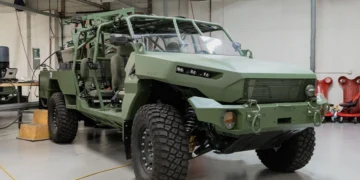
Along similar lines, Otokar moved a step closer to its goal of having its own factory on the continent by initiating the process of incorporating its Romanian production partner, Automecanica, within this year. Meanwhile, the focus at Otokar’s exhibition stand had also shifted—the centrepiece was the Tulpar tracked armoured vehicle, presented in a light tank configuration with a 105 mm turret; the Cobra II MRAP fitted with the MIZRAK 25L turret, along with the classic Cobra II, were among the other vehicles that drew attention. Following the sale of 200 Cobra IIs to Morocco, ongoing talks with Ecuador indicated that the company’s export momentum continues.


Alongside the search for production partnerships, the fair’s second major theme was the UAV threat—and in this field, the most visible Turkish company was ASELSAN. DRONEDEF, the anti‑drone component of the Steel Dome architecture, took centre stage at the company’s stand; systems such as İhtar, the Gökberk laser weapon, Korkut, and Ejderha were brought together under this umbrella. Presenting its portfolio spanning air, land, sea, and the electromagnetic domain, ASELSAN signed agreements with Daimler Truck for system integration onto Mercedes‑Benz Truck platforms, and with Latvia’s VIC TEC for similar capabilities. MKE also responded to the same threat from its own front: the weapon module of the Tolga Short‑Range Air Defence System was displayed integrated onto a Hungarian unmanned ground vehicle, while a mortar barrel group was mounted on a Slovenian tracked vehicle. Another highlight at MKE’s stand was its CBRN systems—the company showcased these products at an overseas fair for the first time. The Bora 12 sniper rifle, the Boran light towed howitzer, the Piranha kamikaze unmanned surface vessel, and the Denizhan national naval gun were among the other items completing the display. A powder export agreement signed with Uzbekistan was also announced on this occasion.
Multi‑Layered Partnerships and the Munitions Push in the Global Market


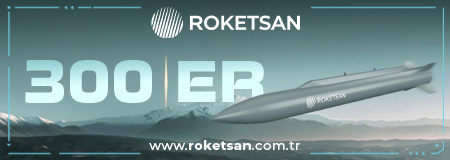
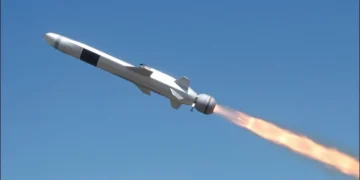
On the ammunition front, ROKETSAN took the stage. Its stand featured MAM‑C, MAM‑L, and MAM‑T mini smart munitions, the EREN High‑Speed Multi‑Purpose Loitering Munition system, and the İHA‑230 ballistic missile, alongside Teber and Laçin guidance kits, Karaok, Omtas, and Umtas‑GM anti‑tank systems, and the Çakır cruise missile. The company also appeared as a strategic partner in the multi‑layered Trident air defence system introduced by CSG Group at the fair—meaning it was visible not only at its own stand but also as part of another European firm’s offering.
In the small arms category, CANiK stood out. The company showcased the Prime Radian, a next‑generation service pistol developed in collaboration with RADIAN, on an international stage of this scale for the first time, and shared its stand with group companies AEI Systems and Unirobotics. Other items at the stand included MT‑X conversion kits adapting pistols to training scenarios, domestically produced 12.7 mm machine guns, and the M3 Falcon weapon station integrated onto rotary‑wing aircraft; Unirobotics’ TRAKON remotely controlled weapon system was also displayed as part of the layered architecture developed against the UAV threat.

Beyond hardware, HAVELSAN stood out in the software and training systems domain. Showcasing multi‑domain operations and AI‑driven operational integration solutions, the company signed a memorandum of understanding with Belgium’s EURAMEC in the field of simulation and training systems; the signing ceremony was also attended by Belgian Defence Minister Theo Francken, lending the agreement diplomatic weight.
Official Engagements
At a ceremony held at the SSB stand, with Deputy President Gökhan Uçar attending as an observer, two protocols were signed between Türkiye and Spain: one on trade fair cooperation between NGF Fuarcılık and Feria Valencia, and the other a letter of intent between the OSTİM Defence and Aerospace Cluster (OSSA) and the Valencia Government aimed at accelerating the integration of defence SMEs; the signatures lay the groundwork for joint events to be organised in Ankara and Valencia in the coming period. Minister of Industry and Technology Mehmet Fatih Kacır paid a surprise visit to the Eurosatory Fair following his attendance at VivaTech 2026 in Paris. During his tour of Turkish companies’ stands, the Minister met with France’s Delegate Minister for Industry Sébastien Martin; he also held talks with officials from nuclear energy company Framatome and TotalEnergies to assess cooperation opportunities in energy, green transition, and climate finance.
Several key themes emerge from the fair: permanent production partnerships within Europe, layered systems developed against the UAV threat, and deepening state‑level collaborations. How many of the signatures made at Eurosatory 2026 will translate into firm orders will become clearer in the months ahead.
🔍 You may also like
Source C4Defence