
















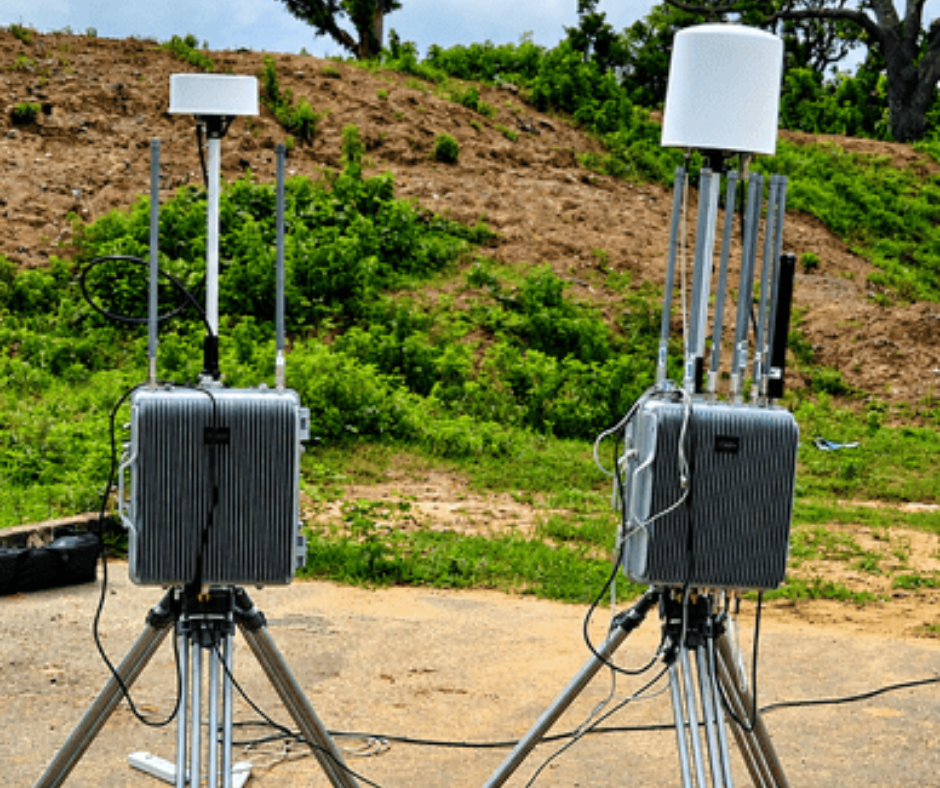
Nigeria anti-drone system technology doesn’t just detect drones — it tracks down the pilots controlling them. Demonstrated before senior officials from the Nigerian Army, the Nigerian Air Force and intelligence agencies during a field exercise, the system can also jam drones using radio frequency interference from the same platform.

The system was developed by Babasky Technologies, the defense subsidiary of UNICCON Group.
How the Nigeria Anti-Drone System Works?
According to the company, the Nigeria anti-drone system unveiled during the exercise uses a multi-sensor setup to instantly detect small and medium multi-rotor drones at ranges of up to 8 kilometers. Its capabilities go beyond simple signal detection: the system also pinpoints the precise geographic coordinates of the ground operator controlling the drone, enabling real-time response against — or apprehension of — hostile pilots.
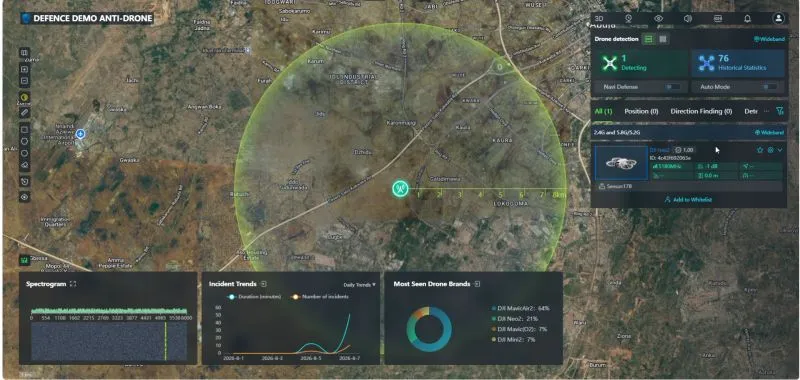
On the software side, the platform dynamically maps protected airspace perimeters, creating an instant digital shield around sensitive assets and military installations. Once an unauthorized drone breaches that perimeter, the system deploys focused directional radio-frequency jamming to sever the drone’s control and telemetry links, forcing it into an emergency landing or bringing it down entirely.
The system combines detection radar, RF spectrum analysis and electronic countermeasures within a single mobile framework. Officials from the Nigerian Armed Forces who observed the exercise highlighted the seamless integration of these three components.
A Growing Drone Threat Across West Africa
Non-state actors are increasingly turning to unmanned aerial systems across a range of security challenges in West Africa — from counter-insurgency operations in the North-East to pipeline protection in the Niger Delta. African militaries have so far relied heavily on expensive, imported anti-drone hardware, which reportedly lacks localized support and struggles to adapt to the continent’s rugged terrain.
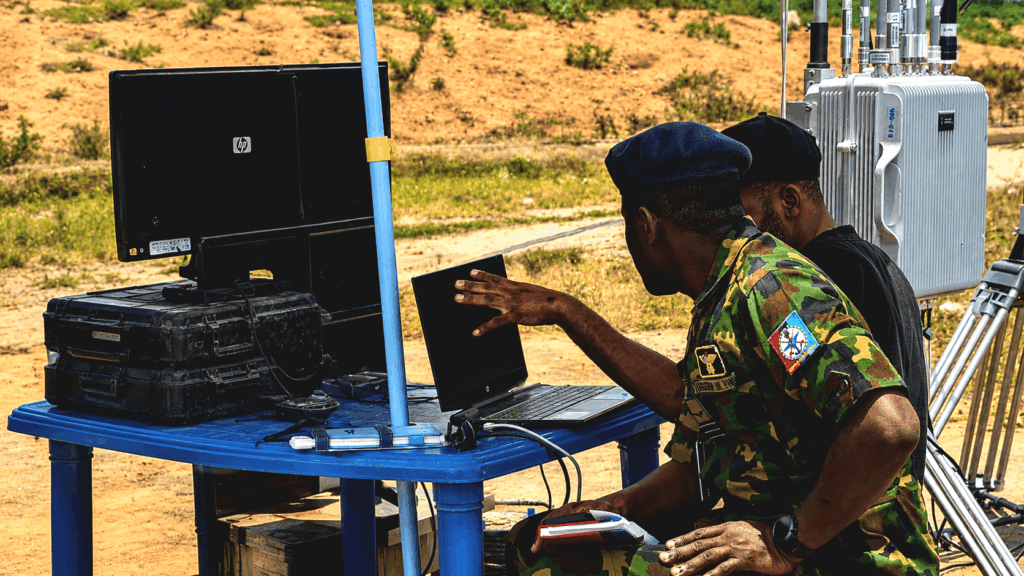
Babasky Technologies says its indigenously built C-UAS system aims to change that picture, eliminating dependency on foreign defense contractors’ supply chains. By locating the pilot rather than just the drone, the company says the system gives military commanders actionable intelligence to neutralize threats at their source. It also offers scalable perimeter security for military cantonments, forward operating bases, government buildings, oil installations and public venues.
Nigeria Anti-Drone System Follows Babasky’s UNIKAM-FO1
According to the company, this demonstration comes just weeks after Babasky Technologies made international defense headlines with the UNIKAM-FO1. Billed as Africa’s first fiber-optic-guided, jam-proof loitering munition, the UNIKAM-FO1 offered an offensive drone solution built to operate under enemy electronic warfare. The new anti-drone system now completes that picture by delivering the defensive side of the equation.
Operating under UNICCON Group, Babasky Technologies says the two products together are positioning Nigeria not just as a buyer of defense technology, but as a hub for advanced military engineering across the African continent.
🔍 You may also like
Source: C4Defence-Babasky Technologies