








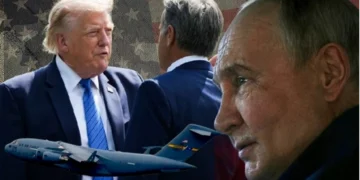





“If they don’t make a deal quickly, I’m thinking about blowing everything up and taking over the oil. You’re going to see bridges and power plants leveled all across their country.”
US President Donald Trump [1]
US President Donald Trump seeks a “victory” for the United States in the conflict with Iran. Modern warfare increasingly involves threats to civilian infrastructure, raising complex questions regarding international legal boundaries. President Trump appears to have extended the deadline for halting Iranian attacks on vessels transiting the Strait of Hormuz until April 7 at 8:00 PM ET, amidst ongoing discussions with Iranian officials. Iranian Supreme Leader Mojtaba Khamenei stated on April 5 that Iran would continue to attack shipping via the Strait. After Iran downed a US aircraft and US forces conducted a high-risk ground operation to rescue a stranded aviator, both sides claimed victory. [2] US Central Command (CENTCOM) confirmed on April 4 that US forces successfully rescued both F-15E crew members after Iran shot down their aircraft during a combat mission. CENTCOM had not previously acknowledged the earlier rescue of an F-15E pilot on April 3. US Special Operations forces successfully secured the F-15E Weapons System Officer (WSO) on April 4. In response, Iran slightly modified its attack packages targeting Gulf countries to include more cruise missiles; however, it remains unclear whether this is an experiment with new tactics, an effort to manage remaining missile reserves, or something else entirely. [3]

The energy sector has long been targeted as a leverage point in geopolitical conflicts. Historically, energy disruptions focused on logistics and supply chain interruptions to exert economic pressure—such as through sanctions, oil embargoes, and restrictions on vital shipping lanes. Recently, however, direct physical attacks on energy infrastructure have increasingly been utilized as a core military strategy. In the context of the Russia-Ukraine conflict, attacks on Ukrainian energy systems serve as a negative precedent, increasing threefold compared to previous years and leading to the near-collapse of the country’s electrical grid. When political leaders make statements regarding the targeting of power grids, water systems, or communication networks, these declarations operate within a web of International Humanitarian Law (IHL) that has significantly evolved since the Geneva Conventions. Recent threats by Trump regarding an attack scenario on Iran’s power grid exemplify these complex legal and diplomatic dynamics.
The United States and Israel launched strikes against Iran over a month ago, on February 28, 2026. The conduct of the war and statements by US officials raise serious concerns regarding violations of International Humanitarian Law and potential war crimes. The continuous bombardment of Iran by the US and Israel, and Iran’s response—targeting not only these states but others in the region—has raised several questions about how the Law of Armed Conflict (LOAC) governs hostilities. [4] The US, Iran, and regional mediators are discussing a possible 45-day ceasefire as part of a two-phase agreement that could lead to a permanent end to the war. Iran has warned that if Trump carries out threats to attack the country’s energy infrastructure, the Bab-el-Mandeb Strait could be closed alongside the Strait of Hormuz. [5]
War Crime Criticisms from US Universities and International Law Experts
Attacks and counter-attacks continue across the Middle East; dozens of casualties were reported in Lebanon over the weekend following Israeli strikes targeting the south and the capital, Beirut. As the conflict enters its second month, humanitarian needs are rising, critical infrastructure is under strain, and the broader global economic impacts of the crisis continue to emerge. Global food supply chains are under pressure. The UN World Food Programme (WFP) warns that the Middle East crisis has severely disrupted global food supply chains; approximately 70,000 metric tons of food—enough to feed nearly four million people for a month—face delays, increased costs, and rerouting. Rising fuel prices and disruptions to sea lanes, particularly through the Strait of Hormuz, are driving up freight, insurance, and fertilizer costs, which negatively impacts global food prices. The WFP notes that reduced fertilizer availability could affect upcoming harvests, and if the crisis persists, up to 45 million people worldwide could fall into acute hunger. [6]
Despite these negative developments, Trump, other senior US officials, and supporters appear to have embraced attacks—and threats of attacks—on Iranian civilian infrastructure, which is regarded as a serious war crime under international law. The United Nations mission criticized Trump’s speech as a display of “ignorance, not strength.” Following President Donald Trump’s threat to destroy critical infrastructure in Iran, oil prices in Asia traded volatilely; Brent crude rose above $110 per barrel (£83.38), though these gains slowed following reports of possible ceasefire talks between the US and Iran. [7]

The Iranian Deputy Foreign Minister claimed that Donald Trump’s threats to destroy Iranian power plants and bridges could constitute a war crime. US Congresswoman Yassamin Ansari criticized the reported bombing of Sharif University of Technology in Tehran, stating: “Sharif University is Iran’s MIT. They have produced numerous engineers who went to Silicon Valley and founded some of America’s most successful tech companies.” Ansari found no answer to the question: “Why are we bombing a university in a city of 10 million people?” [8] As is known, under the Hague and Geneva Conventions and the Rome Statute, civilian structures such as schools, hospitals, and places of worship are protected unless they become “military objectives”; intentionally targeting these sites is considered a clear war crime under international humanitarian law.
Protection of Civilians: The 1949 Geneva Conventions and the 1907 Hague Conventions are based on the protection of civilians. Schools hold civilian property status and are exempt from attack unless used for military purposes.
What Are War Crimes: The Rome Statute of the International Criminal Court classifies targeting civilians not taking part in hostilities, striking civilian structures like schools, and attacking buildings dedicated to cultural or educational purposes as war crimes. Accordingly, an attack on energy infrastructure may be considered a war crime in the following cases:
Direct Attacks on Civilian Targets: Intentionally attacking civilian energy facilities that do not serve a military purpose.
Violation of the Principle of Proportionality: When the expected military advantage is less than the direct or indirect harm (such as hospitals losing electricity) to the civilian population.
Terror Attacks: Attacks whose primary purpose is to spread terror among the civilian population or break public morale.
Grave Breaches: Willful attacks on nuclear power plants resulting in civilian casualties are considered grave breaches/war crimes under the Geneva Conventions and the Rome Statute. [9]
More than 100 international law experts from US-based universities including Harvard, Yale, Stanford, and the University of California signed an open joint letter condemning the US and Israeli military attacks on Iran as a violation of the UN Charter and potentially as “war crimes.” The scholars noted that the US-Israeli operation, which began on February 28, was launched without UN Security Council authorization and without credible evidence of an imminent Iranian threat. The letter stated: “The use of force against another state is permitted only in self-defense against an actual or imminent armed attack, or when authorized by the UN Security Council. The Security Council did not authorize the attack. Iran did not attack Israel or the United States.”

Possible Scenarios of US Attacks on Iran’s Critical Energy Infrastructure
Expert concerns are categorized into four primary areas: the legality of the decision to go to war; the conduct of hostilities; threatening rhetoric from senior officials; and concerns that the principle of civilian protection is being abandoned within the US government under Secretary of Defense Pete Hegseth’s “gloves off” approach to warfare. [10] President Donald Trump has threatened to attack Iran’s power grid, while Iran has vowed to retaliate against energy and water systems across the Gulf. Currently, Iran lacks long-range weapons capable of inflicting physical damage on US domestic energy infrastructure.

Expert concerns are categorized into four primary areas: the legality of the decision to go to war; the conduct of hostilities; threatening rhetoric from senior officials; and concerns that the principle of civilian protection is being abandoned within the US government under Secretary of Defense Pete Hegseth’s “gloves off” approach to warfare. [11] President Trump has threatened to attack Iran’s power grid, while Iran has vowed to retaliate against energy and water systems across the Gulf. Currently, Iran lacks long-range weapons capable of inflicting physical damage on US domestic energy infrastructure. However, a physical risk persists; Iran is increasingly utilizing unmanned aerial systems (UAS) to target critical assets, and pro-Iranian entities within the United States possess the capacity to use drones as weapons—a threat that infrastructure finds difficult to counter. Furthermore, the threat is not limited to physical attacks; in recent years, the energy sector has become increasingly vulnerable to and targeted by cyber threat actors.

For several years, there has been strong evidence that foreign adversaries, particularly countries like the People’s Republic of China (PRC), have successfully infiltrated and pre-positioned themselves within US critical infrastructure, including energy systems. Although these incidents have not caused immediate disruptions, they significantly demonstrate the PRC’s strategic interest in targeting critical infrastructure for disruption, including during future conflicts. The United States itself has become more vocal regarding its cyber capabilities for attacking power grids. In January, it was reported that US Cyber Command strategically shut down electricity in Venezuela to support the mission to capture Nicolás Maduro; President Trump asserted that the power outage surrounding the raid was due to “certain expertise that we have.” [12] Currently, specialized operations targeted Tofigh Darou, one of Iran’s largest pharmaceutical companies. The following day, the Israeli military claimed the targeted company was a primary supplier of fentanyl to the SPND (Iran’s nuclear program with potential military dimensions) for use in the research and development of chemical weapons. According to the Iranian government, separate strikes occurred on March 31 regarding cancer medicine and anesthetic production; furthermore, on April 2, the B1 suspension bridge connecting Tehran to Karaj along the Karaj Road toward the Caspian Sea in the north was bombed twice by US aircraft. According to Iranian media, at least eight people were killed and nearly 100 were injured. [13]

US President Trump has threatened to strike Iran’s power plants if Iran does not reopen the Strait of Hormuz. Trump stated, “Tuesday will be both Power Plant Day and Bridge Day in Iran. There will never be anything like it again! Open the damn strait, you crazy folks, or you will live in hell.” [15] Before the deadline for Iran to either reopen the Strait or face heavy bombardment, Trump mentioned he believed there was a “good chance” of reaching an agreement with Iran. He put forward the view that “if they don’t make a deal quickly, I’m thinking about blowing everything up and taking over the oil.” [16] Iran characterized the US demands as ‘irrational.’ Indeed, in its statement, Iran described Washington’s demands as “maximalist and irrational,” denying that any ceasefire talks to end the war were ongoing. Iranian Foreign Minister Abbas Araghchi claimed that while Iran had received messages from the US, trust in potential negotiations was at “zero.” The UK Foreign Secretary stated that at a meeting led by the UK and attended by approximately 40 countries, a call was made for the immediate reopening of the Strait of Hormuz. The Secretary-General of the Gulf Cooperation Council (GCC) urged the UN Security Council to “take all necessary measures” to protect the Strait of Hormuz from Iranian attacks. [17]
As is well known, when Trump launched the “maximum pressure” campaign in 2018 to limit Iranian oil exports, Iran labeled it “economic warfare” and sought to reduce the oil exports of US allies—first through attacks on tankers and a Saudi pipeline in May and June 2019, and subsequently with the Abqaiq attack in September 2019, which temporarily halved Saudi oil exports. When the United States struck an Iranian bridge on April 2, the semi-official Fars News Agency immediately published a list of bridges in Arab countries and Israel. All of this suggests that attacking Iran’s oil exports, generators, and water facilities may not be a winning strategy.
From a military standpoint, such attacks would almost certainly be successful. Seizing Kharg Island or disabling its production would have immediate effects. Tehran is already facing water shortages, and cutting off electricity and water would force the internal displacement of millions of people. Many would likely head toward Türkiye, potentially triggering a massive refugee crisis. [18] World Health Organization (WHO) Director-General Tedros Adhanom Ghebreyesus also sounded the alarm regarding the safety of Iran’s nuclear facilities in the face of US and Israeli strikes, stating: “Joining the International Atomic Energy Agency, I am again sounding the alarm over the safety of nuclear facilities in Iran. The recent incident involving the Bushehr nuclear power plant is a stark reminder: an attack could lead to a nuclear accident and have health impacts that would devastate generations.” [19]
Legal Basis of Attacks on Critical Energy Infrastructure within the Framework of the UN Charter, Geneva Conventions, and the Law of Armed Conflict
As explained above, according to US legal experts, these attacks constitute a clear violation of the United Nations Charter. The conduct of the war and the statements made by US officials raise serious concerns regarding the violation of international humanitarian law, including potential war crimes. The Law of Armed Conflict (LOAC) limits the manner in which all parties to an ongoing conflict conduct hostilities. We are concerned that these fundamental rules may have been violated in the context of reported attacks on civilians, political leaders with no military role, and civilian targets such as oil and natural gas infrastructure—including South Pars—as well as water treatment plants. On March 19, UN High Commissioner for Human Rights Volker Türk condemned the attacks on energy infrastructure, highlighting their “catastrophic” impact on civilians. [20] Israeli strikes on Iranian oil facilities also raise concerns under international humanitarian law, particularly regarding the prohibition of acts aimed at terrorizing civilians, even when targeting dual-use infrastructure. [21] Indeed, Erika Guevara Rosas, Senior Director of Research, Advocacy, Policy, and Campaigns at Amnesty International, stated: “Deliberately attacking civilian infrastructure such as power plants is generally prohibited. Even in the limited circumstances where they are qualified as military objectives, a party cannot attack power plants if it would cause disproportionate harm to civilians.”

“…Considering that such power plants are vital for meeting the basic needs and livelihoods of tens of millions of civilians, attacking them would be disproportionate and therefore illegal under international humanitarian law, and could amount to a war crime,” she stated. Kuwaiti officials reported that Iranian drones struck a desalination plant in Kuwait and also noted an attack on an oil refinery. The Iranian Revolutionary Guard Corps (IRGC) accused Israel of attacking Kuwait’s electricity and desalination facilities. The United Arab Emirates shut down a gas facility following reports of a fire caused by debris from an intercepted missile. More than a month into the war, US intelligence indicates that approximately half of Iran’s missile launch vehicles remain intact. On the other hand, Amnesty International has accused Iran of recruiting child soldiers—a war crime—alleging that it is attempting to involve children as young as twelve in the war effort. Separately, US-based international law experts released a joint letter yesterday; raising concerns that the conduct of the three parties to the war—Israel, Iran, and the United States—has increased concerns regarding “serious violations of international law” and pointing to US actions they stated could constitute war crimes. [22]
The legal basis for the protection of civilian infrastructure primarily rests on Additional Protocol I to the Geneva Conventions, adopted in 1977. As a reminder, this principle was underscored in 2024 when the International Criminal Court issued arrest warrants for Russia’s former Defense Minister Sergey Shoigu and Russian General Valery Gerasimov, who were accused of directing widespread attacks on Ukraine’s energy infrastructure and causing excessive harm to civilians. According to Article 52 of the first additional protocol to the 1977 Geneva Conventions, “civilian objects” such as infrastructure are defined by what they are not: they are not military objectives whose destruction offers a definite military advantage. In other words, Article 52 establishes the principle of distinction between military objectives and civilian objects and requires attackers to demonstrate a clear military necessity. Correspondingly, Article 54 specifically addresses objects indispensable to the survival of the civilian population, such as food supplies, water installations, and electrical energy systems. This provision creates a higher standard of protection for infrastructure that supports civilian life, though it includes exceptions for military necessity.
At the heart of the question of which targets constitute—or do not constitute—a legitimate target for attack lies the principle of distinction between civilians and combatants. Article 10 of the customary rules of international humanitarian law—concerning both international and non-international armed conflicts—explicitly states: “Civilian objects are protected against attack, unless and for such time as they are military objectives.” This imposes a requirement on all parties: attackers must refrain from targeting civilian objects, while the party that is the target of the attack must not “intermingle” military and civilian assets. As codified in international law, the Statute of the International Criminal Court clearly states that intentionally directing attacks against civilian objects is a war crime, provided they are “not military objectives.”
Security of Critical Infrastructure under the Rome Statute and International Criminal Court Jurisprudence
Even if a civilian object is considered a military objective, international law requires the attacking party to balance the military advantage against the harm caused to the civilian population. International law permits attacks on power plants and other seemingly civilian targets only if it is determined that they primarily support military activities. [23] The 1998 Rome Statute, which established the International Criminal Court, further criminalizes attacks on civilian infrastructure. Article 8 (2)(b)(v) specifically prohibits intentionally launching an attack in the knowledge that such attack will cause incidental loss of life or injury to civilians or damage to civilian objects which would be clearly excessive in relation to the concrete and direct military advantage anticipated. Historical precedents from international criminal tribunals have shaped how these laws are applied in practice. In the Prosecutor v. Kupreškić et al. (2000) case, the International Criminal Tribunal for the former Yugoslavia examined the targeting of civilian infrastructure and established that dual-use infrastructure requires case-by-case proportionality assessments, demonstrating that the military advantage outweighs the civilian consequences.
How Infrastructure Threats Function in Coercive Diplomacy
Infrastructure targeting serves as a diplomatic tool through various psychological and economic mechanisms. The threat of disrupting essential services creates immediate pressure while demonstrating resolve, but does not necessarily escalate into kinetic warfare.
Economic Leverage Through Critical Dependencies
Power grid disruption affects multiple economic sectors simultaneously, creating ripple effects throughout the target country’s economy. Oil export facilities, such as Iran’s Kharg Island terminals, require reliable electricity for loading operations, safety systems, and navigational support.
Recent conflict data demonstrates these dependencies in practice:

During the February-April 2026 period, Iran’s selective application of restrictions in the Strait of Hormuz demonstrated that infrastructure control creates opportunities for diplomatic signaling. Iran’s exemption of Iraqi vessels while maintaining restrictions on the shipping of US allies illustrates targeted economic pressure as a negotiating tool.
Escalation Control Through Graduated Threats Trump’s April 2026 statements established specific timelines and conditions, revealing what strategists call “escalation ladders.” The 10-day negotiation period ending on April 6 represented classic ultimatum diplomacy with pre-defined consequences.
Main Elements of Infrastructure Threat Diplomacy: Specific targeting (energy grids vs. general military assets), Timeline (48-hour warnings, specific deadlines), Conditional nature (threats contingent upon behavioral changes), Graduated escalation (increasing intensity over time). Iran’s counter-signaling through the selective reopening of the Strait shows how target countries can respond with their own infrastructure-based diplomatic moves. Furthermore, these interactions create complex patterns between coercive threats and partial compliance, influenced by broader economic factors, including Trump’s tariff policies.
What makes Iran’s energy infrastructure strategically vulnerable? Iran operates a largely centralized, state-controlled electrical grid, which creates potential single points of failure that enhance the coercive value of infrastructure threats. This centralization differs significantly from distributed grid architectures that offer greater resilience against targeted strikes.
Critical Infrastructure Dependencies The link between Iran’s electrical grid and its oil export capabilities creates strategic vulnerabilities that extend beyond local utility services. Kharg Island and FPSO Soroosh, which managed significant crude oil exports prior to current restrictions, rely on reliable power connections for: Loading terminal operations, Security and monitoring systems, Navigation and communication equipment, Environmental protection systems. Water treatment and desalination systems in Iran’s arid regions require a constant power supply, potentially turning power grid attacks into humanitarian and economic weapons. These dependencies raise moral hazard concerns under international humanitarian law.
Weaknesses in Regional Economic Integration Iran’s energy infrastructure is linked to broader regional systems, meaning disruptions can also affect neighboring countries. The Gulf Cooperation Council (GCC) operates interconnected power grids that could be impacted by major Iranian energy system failures. Economic modeling suggests that sustained power outages would force Iran into greater reliance on backup generators and alternative energy sources, significantly increasing operational costs across multiple sectors. Industrial facilities, particularly those supporting oil and gas operations, face production halts during prolonged power outages.
How power grid attacks can reshape global energy markets Infrastructure warfare against major oil producers creates immediate market volatility and potentially leads to the restructuring of long-term supply relationships. Iran’s position as a major crude oil exporter ensures that power grid disruptions impact global energy security beyond US-Iran bilateral tensions.
Strait of Hormuz Operations Under Grid Disruption The connection between Iran’s domestic energy infrastructure and its operations in the Strait of Hormuz creates global energy security implications. Maritime traffic data from the February-April 2026 conflict period illustrates these relationships:
Vessel Transit Patterns During Infrastructure Threats: Iranian VLCCs: 14+ departures since March 1, 2026 (primarily to China), Non-Iranian crude exports: First VLCC departures on April 2, 2026, Container ship traffic: Major delays and rerouting, Regional defense responses: Kuwait intercepted 500+ drones and 300+ missiles. The fact that China was the destination for over 90% of Iran’s crude oil exports in 2025 demonstrates how infrastructure threats affect specific bilateral trade relationships. The rerouting of the vessel Ping Shun, returning from India to China in March 2026, shows how sanction compliance concerns interact with infrastructure vulnerability assessments.
Regional Refinery Impact Assessment Kuwait’s refinery attacks during the same period provide data on how regional infrastructure warfare affects energy processing capabilities:

These attacks demonstrate that infrastructure warfare creates regional ripple effects, increasing the defense expenditures of neighboring countries and disrupting normal refining operations. Consequently, the impact of the US-China trade war on global markets becomes more pronounced during such infrastructure conflicts.
Historical Examples of Civilian Power System Targeting Previous conflicts involving infrastructure targeting provide important legal and strategic precedents for understanding current threats. These cases have established international legal standards while demonstrating the practical consequences of power grid warfare.
NATO Kosovo Operation Infrastructure Strategy The 1999 Kosovo campaign involved the systematic targeting of Yugoslavia’s electrical infrastructure as part of a broader coercive strategy. NATO justified these attacks under the dual-use targeting doctrine, arguing that power systems supported military command and control functions.
Legal and Strategic Consequences: Campaign duration: 11 weeks (March–June 1999), Legal review: International Criminal Tribunal examination, Civilian impact: Prolonged power outages lasting until winter reconstruction, Military effectiveness: Contributed to political pressure for settlement. The International Committee of the Red Cross documented civilian hardships resulting from energy infrastructure damage, affecting hospitals, water treatment, and heating systems, particularly during reconstruction periods. These humanitarian consequences influenced subsequent legal interpretations of proportionality requirements.
Lessons from Iraq Infrastructure Targeting The 1991 Gulf War and the 2003 invasion of Iraq involved extensive targeting of electrical infrastructure, providing data on the long-term consequences of energy system warfare.
1991 Gulf War Infrastructure Impact: Immediate effects: Nationwide power grid collapse, Health consequences: Water treatment system failures, Economic impact: Industrial production halt, Reconstruction timeline: Multi-year international effort. World Health Organization studies documented how energy infrastructure damage contributed to disease outbreaks due to the failure of water treatment systems. These health impacts became central to post-conflict legal accountability discussions.
2003 Invasion Reconstruction Costs: The United Nations Development Programme estimated infrastructure reconstruction costs in the billions of dollars; rebuilding energy systems required continuous international funding and technical expertise. These precedents shape current cost-benefit analyses of infrastructure warfare strategies.
International Organizational Response Mechanisms When infrastructure threats emerge, international organizations activate specific legal and diplomatic frameworks against attacks on civilian facilities. These mechanisms operate through both formal legal processes and diplomatic pressure systems.
United Nations Security Council Procedures The UN Security Council addresses infrastructure threats through Chapter VII authorization procedures under the UN Charter. Article 42 permits military actions following the Security Council’s determination of threats to international peace, yet requires complex multilateral consensus.
Historical Authorization Patterns: Iraq (1990-1991): Resolution 678 authorized force; infrastructure targeting proceeded within this framework, Kosovo (1999): NATO acted without explicit authorization due to Russian/Chinese opposition, Libya (2011): Resolution 1973 approved “all necessary measures” but triggered scope controversies. These precedents show that Security Council paralysis can lead to unilateral infrastructure targeting decisions, raising questions about legal authority and international legitimacy. For instance, how tariffs affect markets during such geopolitical tensions requires careful analysis.
International Criminal Court Jurisdictional Framework The International Criminal Court holds jurisdiction over infrastructure attacks through the war crimes provisions of the Rome Statute. The principle of complementarity requires demonstrating that national courts are unwilling or unable to prosecute such cases.
Evidentiary Challenges for Infrastructure Cases: Documentation of civilian harm during active conflicts, Military necessity assessments for dual-purpose targets, State cooperation requirements for evidence gathering, Complexity of proportionality analysis. ICC investigations require comprehensive documentation of civilian casualties, infrastructure damage assessments, and military advantage calculations. These evidentiary requirements often exceed available documentation from active conflict zones. [24]

Conclusion
President Trump has repeatedly threatened to destroy civilian infrastructure, including desalination plants vital for Iran’s drinking water, if Iran does not come to the negotiating table and reopen the Strait of Hormuz. As explained in this brief analysis, intentionally attacking civilian critical energy infrastructure is a war crime under international law. We are witnessing the damage and destruction of energy, fuel, water, and health infrastructure. This disturbing trend is not limited to the Middle East or the last five weeks; it has been prevalent in conflicts across various regions.
Iran’s Ambassador to the United Nations stated that over 1,500 civilians have lost their lives so far—at least 175 of whom died in a US strike on a primary school in Iran—and up to 3.2 million people have been displaced. Intentionally attacking civilian infrastructure, such as power plants, is generally prohibited. Even in the limited circumstances where they are characterized as military objectives, a party cannot attack power plants if it would cause disproportionate harm to civilians. This pattern, combined with an escalating rhetoric that ignores the limits set by international humanitarian law, normalizes a mode of warfare that erases our shared humanity.