






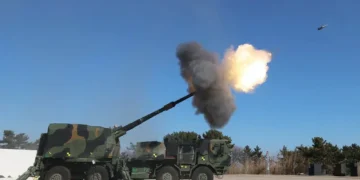











The long‑range ER02A1 B/B ammunition, used in the most modern NATO‑standard howitzer systems and critical for frontline logistics sustainability, is set to become the new striking force of Ukrainian artillery units. A new contract signed with Rheinmetall secures the supply of 155 mm artillery shells to the Ukrainian army in the high double‑digit million euro range. The deal also covers the delivery of tens of thousands of M203 propelling charges.

The Düsseldorf‑based company has announced that revenue from this strategic order will be recorded in the second quarter of 2026, while production lines at its Spanish facilities are already up and running. Deliveries are expected to be completed by the first quarter of 2027, depending on logistics and production scheduling.
Spanish‑Produced Ammunition Meets NATO Standards
The ammunition covered by the contract is being manufactured at Rheinmetall Expal Munitions, the company’s Spanish facility specialised in ammunition technologies. The ER02A1 B/B projectiles and M203 propelling charges, which deliver operational superiority on the battlefield, are fully compatible with all modern 155 mm artillery systems developed by various manufacturers. Already actively in service within NATO inventories, this ammunition combination offers significantly longer range and higher precision compared to standard artillery rounds, directly enhancing the Ukrainian army’s firepower.
Rheinmetall Expands Global Production Capacity
🔍 Related News: Rheinmetall’s Multi-Billion NATO Pledge
The surge in global demand for artillery ammunition following the war in Ukraine has pushed Rheinmetall toward an aggressive capacity expansion strategy. Since the war began in 2022, the technology group has been modernising its existing production lines and building new factories, and appears determined to maintain its position at the centre of the global supply chain. As a result of these investments, the company aims to reach an annual production capacity of approximately 1.5 million 155 mm artillery shells by 2030.
🔍 You may also like
Source: C4Defence– Rheinmetall