


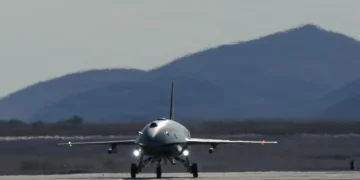











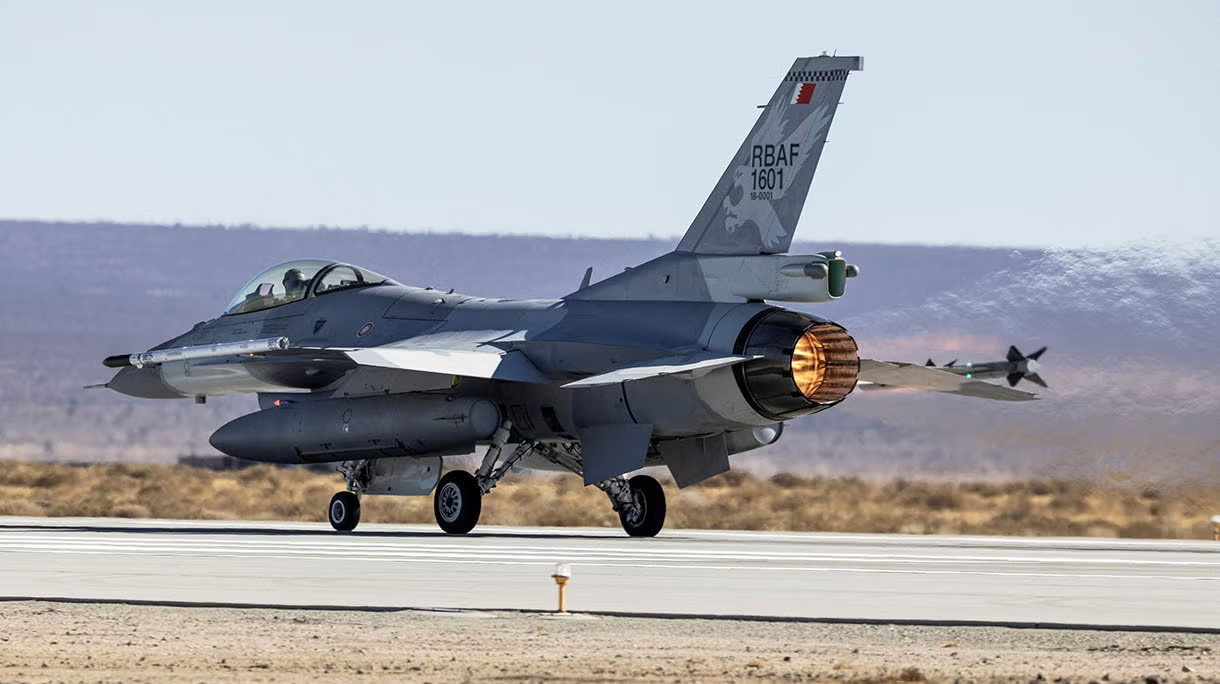
Competition in the F-16 electronic warfare market is heating up. L3Harris’ Viper Shield system has completed a series of two-ship flight tests at Edwards Air Force Base in the United States, moving a step closer to operational delivery after the F-16C and F-16D flew together with the hardware for the first time.

Demand for Viper Shield Is Growing: Eight Nations, 233 Systems
Interest in Viper Shield has already moved well beyond the testing phase. Eight nations have selected Viper Shield so far, and L3Harris is ramping up efforts to move to full-rate production of the 233 systems currently planned. The company says additional partner nations will also benefit from an active production line backed by robust supply chains and quality assurance processes capable of meeting the demands of large-scale manufacturing. Viper Shield stands out as the only small-form-factor electronic warfare system in production today that can be adapted across different F-16 blocks.
What was Tested at Edwards

The California test campaign centered on Viper Shield’s ability to detect, identify and counter modern electromagnetic threats in real time. Test teams also assessed how seamlessly Viper Shield operates alongside the aircraft’s existing avionics. Pairing the F-16C and F-16D for these tests was no coincidence: the F-16C, the primary combat variant, allowed engineers to put Viper Shield through realistic combat loadouts and sensor configurations, while the F-16D — typically used for training and multi-crew missions — helped validate the system’s maturity across a wider range of flight conditions.
Lauren Barnes, President of Spectrum Superiority, Communications & Spectrum Dominance at L3Harris, said the tests once again confirmed Viper Shield is performing as expected, noting the system showed “exceptional threat awareness and rapid reaction capability” throughout the campaign at Edwards.
Pod or Integrated
Another factor setting Viper Shield apart from its competitors is its flexibility. The system can be installed internally or mounted as a self-contained pod, and either way it wraps the aircraft in a layer of digital protection. Its software-defined architecture, built on commercial-off-the-shelf technology, reduces pod weight while making future upgrades easier.
Barnes highlighted that close collaboration with the U.S. Air Force test community was key to putting Viper Shield through comprehensive testing in realistic environments. The team, she added, is already looking ahead to the next phases of integration and full-rate production.
🔍 You may also like
Source: C4Defence–L3Harris