

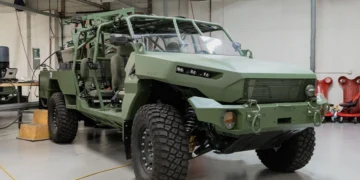

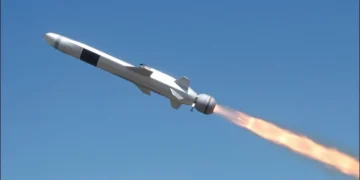
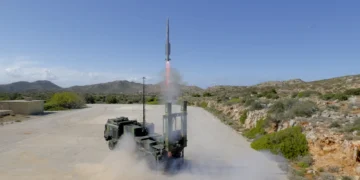







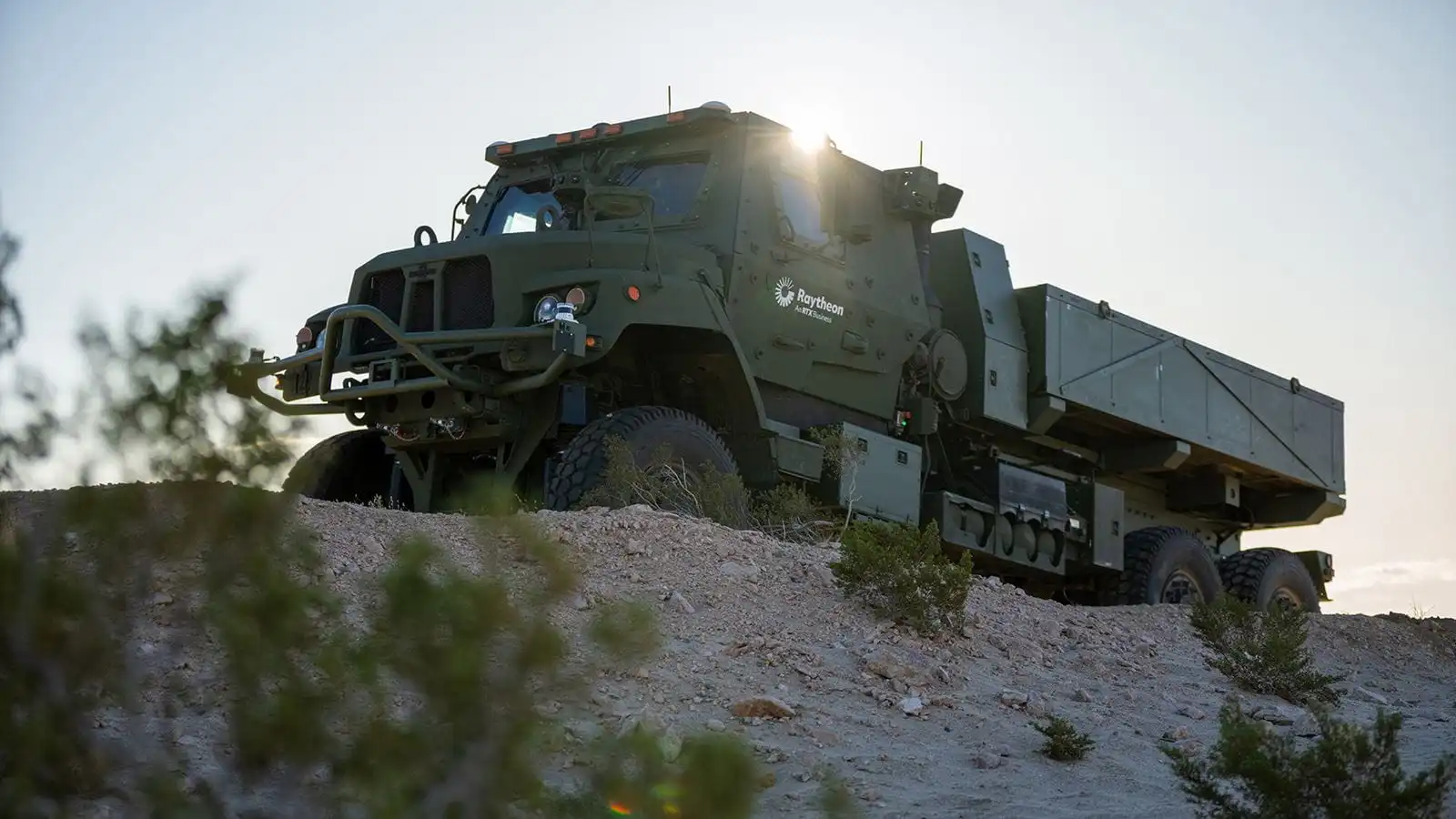
DeepFires became the first system to be operated directly by U.S. Army soldiers during the PCC6 exercise using an autonomous and remotely controlled vehicle equipped with a Tomahawk launcher. During the trial in the Mojave Desert, one soldier drove the lead vehicle while two soldiers in the rear remotely controlled the other vehicles.

Raytheon had previously demonstrated the launcher, integrated onto an autonomous or remotely driven vehicle, during a U.S. Army trial last year. During Project Convergence Capstone 6 (PCC6), however, the system was operated directly by soldiers. A total of 24 RTX employees also worked alongside the soldiers in the field throughout the exercise.
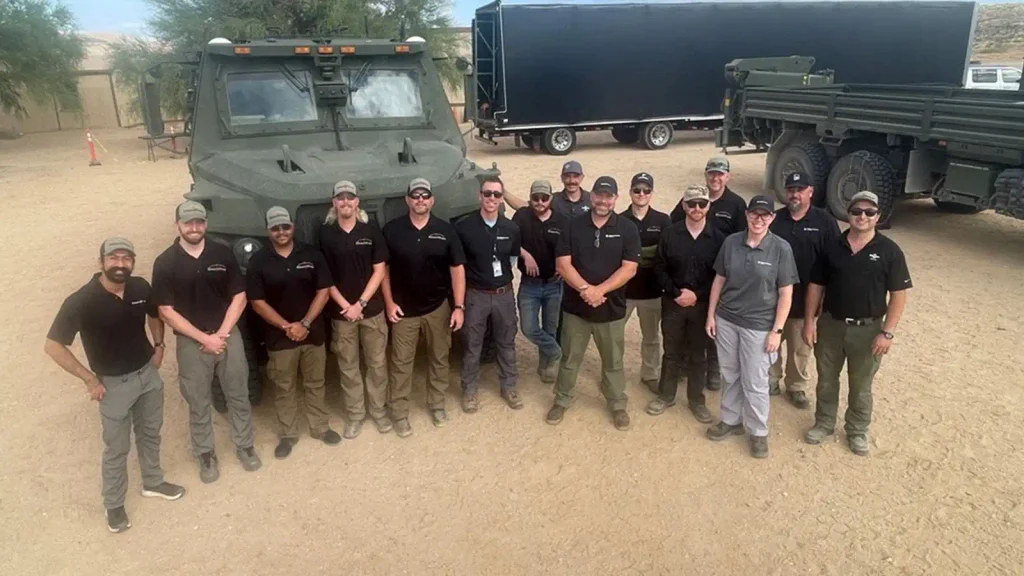
Raytheon Vice President for Precision Fires and Maneuver Brian Burton highlighted the importance of DeepFires for the Army’s human-machine integrated force structure, describing it as a “game-changing moment” for the U.S. Army.
Under the DeepFires programme, an autonomy kit and a Tomahawk cruise missile launcher were integrated onto a medium tactical vehicle. The system enables the vehicles to be operated autonomously or remotely, while allowing soldiers to remotely control both the vehicles and their onboard weapon systems.
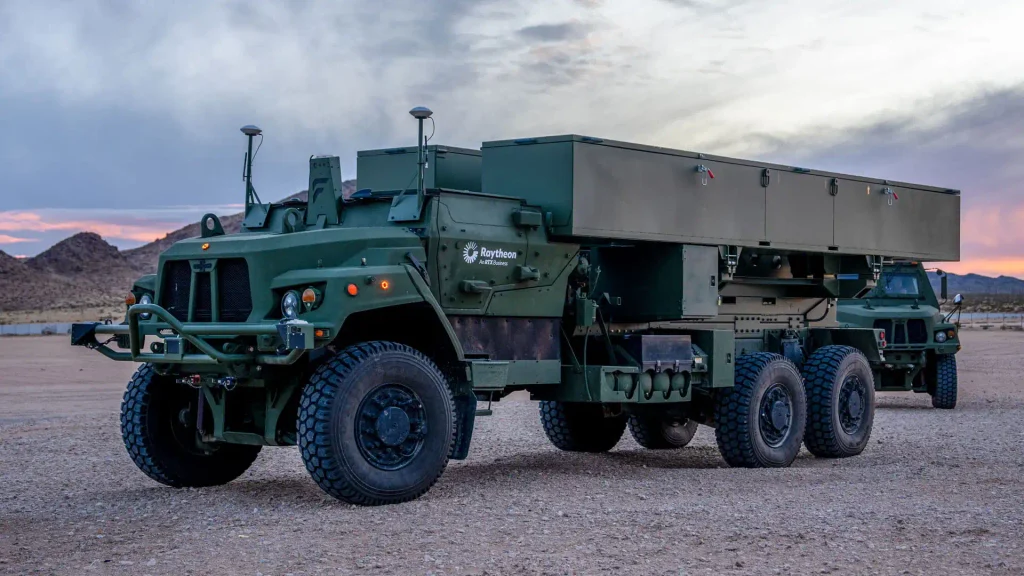
Raytheon DeepFires Program Manager Jessie Polanco stated that as soldiers used the system, they gained a better understanding of its capabilities and refined the way it was operated accordingly. Polanco added that the team is continuing its efforts to make the systems lighter, more transportable and more effective.
Over a six-month preparation period, the Raytheon team modified a new medium tactical vehicle by cutting its roof, integrating an autonomy kit and installing a Tomahawk cruise missile launcher. The system also incorporated features such as 360-degree infrared cameras. The rapid prototypes, developed entirely with Raytheon funding, were shaped through continuous feedback from soldiers.
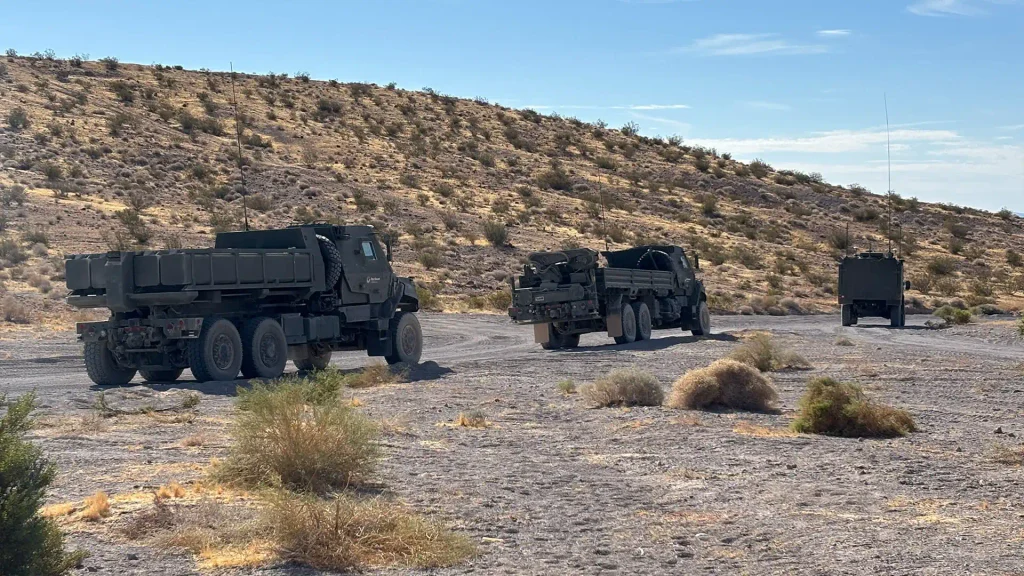
Under the DeepFires programme, Oshkosh Defense vehicles were equipped with Forterra’s autonomous driving technology. Collins Aerospace communication systems were also integrated to enable the vehicles to operate as secure command-and-control platforms.
Collins Aerospace Associate Director David Duran stated that field work conducted with industry partners and soldiers contributed to a better understanding of user requirements and improved the system’s mission effectiveness.
As part of the integration effort, the authorization process, which normally takes six to nine months, was reduced to approximately six weeks.
🔍 You may also like
Source: C4Defence – RTX