


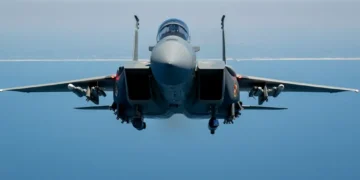




















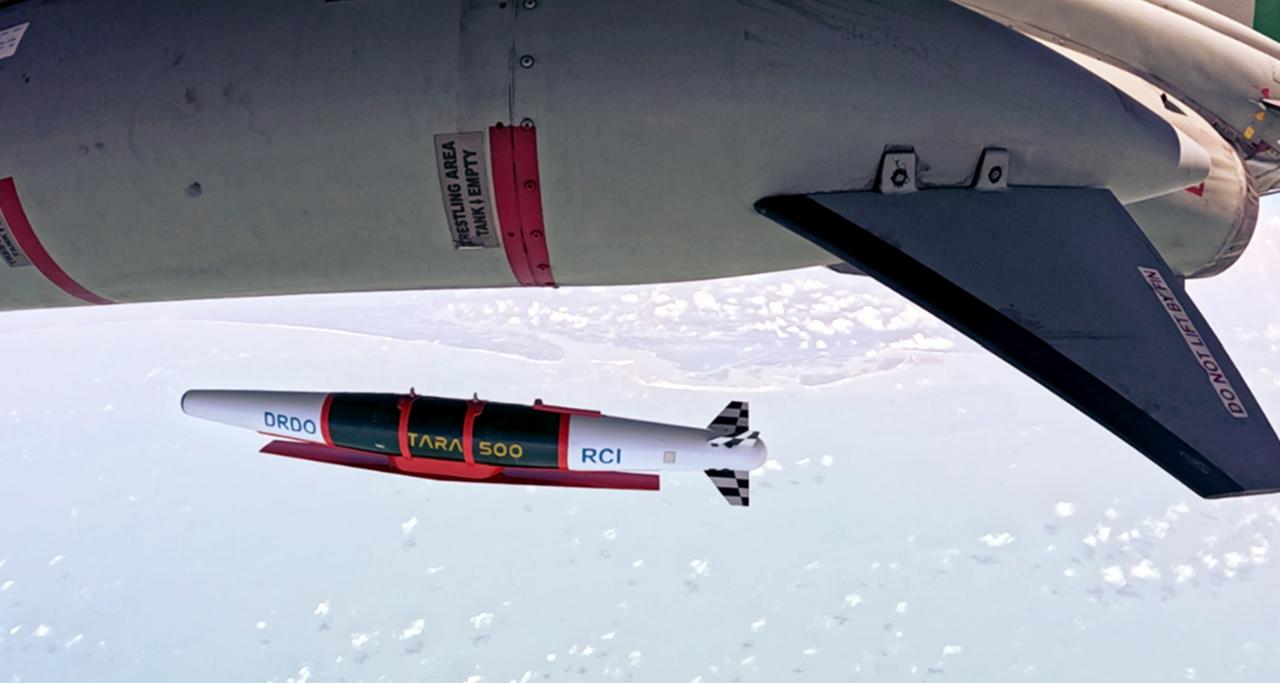
India has carried out its first airborne test of the indigenous TARA (Tactical Advanced Range Augmentation) weapon system, which turns the country’s stockpile of unguided munitions into low-cost smart weapons. During a flight test off the coast of Odisha on May 7, 2026, the modular glide kit was confirmed to have hit its target with high precision.

The test, conducted jointly by India’s Defence Research and Development Organisation (DRDO) and the Indian Air Force (IAF), marks an operational milestone in India’s plan to modernize conventional bombs for the modern battlefield.
Technical Architecture and Indigenous Production Process of the TARA System
TARA works as a glide kit that converts standard aircraft bombs into stand-off range munitions. Designed by the Hyderabad-based Research Centre Imarat (RCI), the system is India’s first homegrown glide technology. The design offers a budget-friendly alternative to high-cost missile systems while providing the precision needed to take out ground targets from a safe distance. The development phase uses the “Development cum Production Partners” (DcPP) model, bringing the private sector into the process, and it’s noted that the design has been tailored for direct mass production.
Related: India Unveils Advanced Armoured Platform (AAP)
Following the flight test, Defence Minister Rajnath Singh said the project is a major gain for indigenous defence capabilities. Samir V. Kamat, Secretary of the Department of Defence R&D and Chairman of DRDO, confirmed that the system has passed the prototype phase and that the production line has already been activated. The TARA kits are expected to be integrated into Indian Air Force fighter jets and enter operational use in the near future.
Latest Defence News
Defence Industry Systems |Air Platforms
Source: C4Defence-Pib