








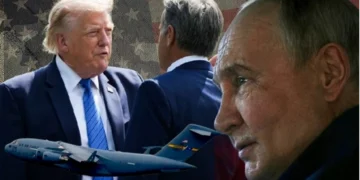





“The Fake News Media does not want to report how successful the United States military has been against Iran. Iran has been totally defeated and wants an agreement, but not the kind of agreement that I will accept! The U.S. has ‘completely destroyed’ the military targets on Khark Island, which manages almost all of Iran’s crude oil exports; ‘there is almost nothing left to target.’ One of the most intense bombardments in the history of the Middle East.”
“Donald Trump / President of the United States”
On 28 February 2026, the “Epic Fury – Operation Destansı Öfke”, followed by the de facto closure of the Strait of Hormuz, created the most significant disruption in the global energy order since the 1973 Arab Oil Embargo and led to the most serious interruption in international maritime trade since the end of the Cold War. As the war with Iran enters its second week, the most immediate and tragic costs are measured in the loss of human lives.

The regional conflict has continued to escalate following the downing of a U.S. aerial refueling aircraft in Iraq, while Iran reportedly succeeded in striking five U.S. aircr“The Fake News Media doesn’t want to report how successful the United States military has been against Iran. Iran is completely defeated and wants a deal, but not the kind I would accept! The U.S. has ‘completely destroyed’ military targets on Kharg Island, which handles nearly all of Iran’s crude oil exports—‘there’s almost nothing left to target.’ This is ‘one of the heaviest bombardments in Middle Eastern history.’” – U.S. President Donald Trump
On February 28, 2026, following the “Epic Fury Operation,” the effective closure of the Strait of Hormuz created the most significant disruption in the global energy order since the 1973 Arab oil embargo and the most important interruption in international maritime trade since the post–Cold War period. As the war with Iran entered its second week, the most urgent and tragic costs were measured in lives lost. The regional conflict escalated further after a U.S. refueling aircraft was shot down in Iraq, while Iran succeeded in hitting five U.S. aircraft in Saudi Arabia during its latest attacks. Both sides intensified missile and airstrikes.[1]
Iran continues widespread missile and drone attacks against Israel and neighboring Gulf states while effectively closing the Strait of Hormuz, through which one-fifth of global oil trade passes. An armed group operating in Iraq, calling itself the “Islamic Resistance,” announced that it had carried out eight separate attacks on U.S. military bases in Iraq and the region.[2] Meanwhile, U.S. and Israeli warplanes continue bombing military and other targets across Iran.[3]
President Trump stated that the U.S. military had “completely destroyed every military target on the island” but decided to leave the oil infrastructure intact. Kharg Island serves as the export terminal for roughly 90% of Iran’s oil shipments and is located about 483 kilometers northwest of the Strait. “However, if Iran or any other country interferes with the free and safe passage of ships through the Strait of Hormuz, I will immediately reconsider this decision,” he added. Trump also issued a temporary exemption for certain purchases of sanctioned Russian oil—a move that drew criticism from U.S. allies in Europe, who argued it could potentially help finance Russia’s war in Ukraine.[4]

The United States has carried out one of the most intense bombings in its history on Kharg Island, the center of Iran’s oil exports. Under the plan that Trump mentioned 40 years ago, military targets on the “Forbidden Island” were destroyed.[5] Trump described the operation as “one of the heaviest bombardments in Middle Eastern history,” claiming that all military targets on the island were completely destroyed.[6]
Pentagon spokesperson Kingsley Wilson stated that more than 50,000 U.S. military personnel are supporting operations against Iran. According to the U.S. Department of Defense, U.S. Central Command reported that approximately 6,000 targets had been hit and that more than 60 ships, along with 30 mine-laying vessels, were damaged or destroyed. The Pentagon reportedly deployed the amphibious assault ship USS Tripoli and roughly 2,500 Marines to the Middle East. It is expected to take one to two weeks for these forces to join other U.S. military units already in the region.[7] In our assessment, all of these developments clearly indicate that the U.S. is preparing for a ground operation in the Persian Gulf region to control energy shipments.
Targeting this strategic location, through which a large portion of Iranian oil is shipped, has raised the prospect of a new crisis for global energy markets and Strait of Hormuz security. Gasoline prices in the U.S. rose to a national average of $3.68 per gallon on Saturday, representing a 23.5% increase since the start of the conflict. Over the same period, global oil prices rose 40%, reaching $103.14 per barrel on Friday.[8] The Iranian Islamic Revolutionary Guard Corps (IRGC) warned that it would “set fire” to regional oil and gas if attacks were carried out on Iran’s energy infrastructure and ports. As economic consequences deepen and supply chain concerns persist, oil prices remain elevated.[9]
Economists also need to consider another dimension: economic impacts. Rising energy prices threaten to fuel inflation and slow economic growth worldwide. Missile attacks, reciprocal threats between the sides, and insurance companies withdrawing coverage forced operators to suspend commercial tanker traffic through the Strait of Hormuz, effectively collapsing this vital passage. While the Middle Eastern conflict continues to shake global financial markets, high oil prices are intensifying inflationary concerns. U.S. markets closed in negative territory under pressure from rising oil prices. The S&P 500 dropped by 0.5% to the year’s lowest level, while Brent crude prices more than doubled compared to a month ago, surpassing $100 per barrel. Investors reacted to the latest developments and expectations regarding the Middle East conflict, resulting in a volatile week.[10]
Since the conflict began, at least eight commercial vessels have been hit in the Gulf, the Gulf of Oman, and nearby waters, including a missile strike targeting a rescue tug near Khasab. Over 1,100 ships experienced GPS and AIS interference, reducing navigational reliability throughout the region. As operators bypass Gulf transit routes and use alternative paths, traffic congestion increased at the Cape of Good Hope, while activity in the Red Sea and Suez Canal fluctuated. Geopolitical disruptions have exposed critical vulnerabilities in global supply chains, putting pressure on energy markets worldwide. Recent incidents, including the burning of tankers near Hormuz, demonstrate how shipping chokepoints can quickly transform from routine transport corridors into strategic battlefields with extensive economic consequences, driving oil prices upward once again.[11]

Momentum accelerated after Trump—facing both domestic and international political backlash as well as growing concerns over fuel affordability—hinted that the war with Iran might end sooner than previously feared. He also indicated that oil-related sanctions, potentially including Russian exports, could be lifted, and that the U.S. Navy would escort tankers through the Strait of Hormuz. Despite these developments, the conflict shows no clear signs of easing. Iran has so far demonstrated little willingness to halt retaliatory actions, while military strikes and counterstrikes across the region have directly or indirectly involved more than a dozen countries. As a result, the crude oil market continues to fluctuate, with traders attempting to balance the risk of further escalation against the possibility that diplomatic pressure may eventually stabilize the situation.[12]

The Most Critical Shock Point of Global Energy: The Strait of Hormuz
Disruption indicators have begun to rise at major Gulf port hubs, including Jebel Ali Port and Khalifa Port. Maritime conflict expanded geographically after a United States Navy submarine sank the Iranian frigate IRIS Dena near Sri Lanka, spreading risk into the Indian Ocean and exposing major energy importers such as India to potential supply disruptions.[13]
The halt of energy exports through the Persian Gulf has forced global logistics routes to shift toward the Cape of Good Hope, adding approximately fifteen days to Asia–Europe transit times. Global financial markets have also faced extreme instability, with stock indices in South Korea and Japan recording losses approaching crash levels and triggering emergency trading halts. The suspension of operations at major aviation hubs across the Gulf region, combined with the reported death of Ali Khamenei, signals the beginning of a prolonged period of regional instability and fragmentation of global supply chains.
The continued rise in energy prices is expected to increase the cost of everyday consumer goods worldwide. Unlike artificial waterways such as the Suez Canal, the Strait of Hormuz is naturally deep enough to accommodate the world’s largest oil tankers, known as Very Large Crude Carriers (VLCCs). The deep-water channels required by these vessels pass largely through the territorial waters of Oman, adding another layer of strategic complexity to the geography of the region.
The true significance of the strait becomes evident when economic data are examined. On average, approximately 20 to 21 million barrels of crude oil and petroleum products pass through the Strait of Hormuz every day. This represents roughly 20 percent of global oil consumption and nearly 30 percent of all seaborne oil trade worldwide. In addition to oil, the strait also plays a central role in the global liquefied natural gas (LNG) market. Around 20 percent of global LNG trade, primarily originating from Qatar and the United Arab Emirates, passes through these waters.
From a financial perspective, the annual value of energy flows transiting this corridor is estimated at between 500 and 600 billion U.S. dollars. The vulnerability of this region is not a new phenomenon. During the Iran–Iraq War in the 1980s, the Persian Gulf became the stage for what later came to be known as the Tanker War. During that period, both sides systematically targeted oil infrastructure and commercial shipping.

During the conflict, more than 400 vessels were attacked, over 60 percent of which were oil tankers, and approximately 400 sailors lost their lives. In response, the international community began implementing measures to protect commercial shipping.[14] Central banks are also likely to increase borrowing costs in order to control inflation, a move that would reduce consumer spending and slow economic growth.[15]
In our assessment, however, the most critical question concerns how long the disruption to maritime traffic through the Strait of Hormuz will persist, and whether the destruction caused by United States aircraft and naval forces will result in the physical destruction of ports, energy terminals, and other critical infrastructure assets in the region. Secondly, the consequences of the Hormuz crisis will not be evenly distributed across the global economy. Some countries will bear substantial costs, while for others the impact may prove surprisingly modest.[16]
One week after the outbreak of the war with Iran, the United States appears to have converged on four core objectives:
- The destruction of the Iranian navy;
- The elimination of Iran’s missile capabilities;
- Preventing Iran from developing nuclear weapons;
- Preventing Iran from supporting proxy groups such as Hezbollah in Lebanon and the Houthis in Yemen.[17]
However, contradicting these claims, Rafael Grossi, head of the International Atomic Energy Agency, stated: “There is no evidence that Iran has produced a nuclear bomb.” This statement suggests that the legitimacy of the war may become highly contested in the future, much like the debates surrounding the 2003 Iraq War.[18]
Meanwhile, according to reports in the U.S. press, the U.S.–Israeli attacks that ignited the current crisis in the Middle East may continue until September. In contrast, Iranian media outlets have declared that Iran is prepared for a prolonged war until the aggressors are punished, claiming that several new Iranian initiatives and weapons systems have not yet been deployed on the battlefield and could be introduced gradually.[19]
Regardless of the justification, the sudden outbreak of conflict has endangered a critical trade route passing through the Persian Gulf, severely disrupting the flow of oil and natural gas and driving benchmark prices upward in major global markets. The longer the conflict continues, the greater the threat will be both to global energy prices and to countries dependent on resources from the Gulf region.[20]
Since the United States and Israel launched their attacks on Iran one week earlier, maritime traffic through the Strait of Hormuz has nearly come to a complete halt. The resulting trade disruptions will be felt globally, but China’s response is particularly significant due to its heavy dependence on energy imports from the region and the fact that Iran remains one of its few remaining international partners. Despite Beijing’s calls to keep the strait open to international trade, ship-tracking data indicate that Chinese tankers and container vessels have almost completely halted their transits since the conflict began, leaving dozens of Chinese ships stranded in the Persian Gulf.
These developments highlight that even China’s ability to shape the course of the conflict in order to protect its own strategic and commercial interests remains limited.[21]
The macroeconomic consequences of the closure of the Hormuz energy corridor are unfolding along three distinct but interconnected dimensions:
- an immediate energy price shock,
- cascading supply chain disruptions extending far beyond the oil sector, and
- what analysts describe as a “toxic combination” of structural macroeconomic dynamics—namely supply-driven inflation occurring simultaneously with declining demand, a situation that central banks are institutionally ill-equipped to address.
Major shipping companies reacted almost immediately. Maersk, Hapag-Lloyd, Mediterranean Shipping Company, and CMA CGM issued directives suspending transit through the strait. Ship-tracking data from Kpler show that commercial operators, major oil companies, and insurers have effectively withdrawn from the corridor, causing tanker traffic to collapse by approximately 70 percent.
Although the strait has not been formally closed in a legal sense, a small number of Iranian- and Chinese-flagged vessels have continued to move. For the global maritime community, however, the route has effectively become non-operational. War-risk insurance premiums—already at six-year highs prior to the attacks—rose sharply overnight. Maritime insurance costs increased by 50 percent, and many major insurers issued cancellation notices for war-risk coverage effective 5 March 2026.[22]
Lessons from the Forgotten Tanker War in the Persian Gulf: Could the Global Energy Crisis Be Repeated?
Fueled by intense religious and political rivalries, the Iran–Iraq War—one of the longest interstate wars of the twentieth century—spread into the Persian Gulf in 1987. Beginning in 1984, the conflict intensified not only on land fronts but also at sea. In what became known as the Tanker War, Iran and Iraq began targeting each other’s oil exports.
Initially, Iraq bombed Iranian oil facilities on Kharg Island. Iran retaliated by attacking oil tankers passing through the Gulf, particularly those associated with Gulf states that were supporting Iraq. As a result, NATO and Soviet Navy naval forces—tasked with protecting vital oil shipments—faced both new and longstanding maritime threats from Iran and Iraq in the Gulf.[23]
Throughout the war, Turkey maintained a policy of neutrality and continued to preserve good-neighborly relations with both countries. Meanwhile, the United States, the Soviet Union, Saudi Arabia, and other Gulf states generally supported Saddam Hussein, while Syria and Libya took positions favorable to Iran. The economic assistance Iraq received from Arab states played a decisive role in enabling Baghdad to sustain the war effort.[24]
For much of the 1980s, the Iran–Iraq War remained one of the bloodiest conflicts of the late twentieth century. Casualties on both sides reached hundreds of thousands. At times, the battlefields resembled those of World War I, with extensive trench systems stretching for kilometers, massive infantry assaults launched across trenches, and the increasing use of chemical weapons as both offensive and defensive tools. In essence, it was primarily a large-scale land war, and naval operations were clearly a secondary theater.
Nevertheless, the maritime dimension of the war—particularly the decision by both sides to attack enemy commercial shipping—has become the element most resonant today, as tensions once again escalate between Iran and the United States and its regional allies.[25]
It should also be noted that the fear of losing influence in the Gulf to the Soviet Union was a major factor driving intervention. The United States gradually entered a scenario in which withdrawing would become politically impossible. Even before serious discussions of intervention began in 1984, American officials had already recognized the danger of losing face with Arab states.
Under a section titled “Low Probability/High Risk Options,” a memorandum from the United States Department of State examined the possibility that Iran might decide to mine the Strait of Hormuz or attempt to halt shipping through naval and air operations. The memorandum warned that:
“Iranian military actions would likely be designed to demonstrate that the United States cannot protect its interests or defend the Gulf states.”
It further suggested that Iran might attempt to conduct a prolonged, low-intensity campaign aimed at disrupting Gulf shipping, largely based on its own strategic perceptions. Within this context, analysts concluded that the United States might lack the political will necessary to sustain a long-term military commitment in the Gulf region.

American officials were clearly concerned about their credibility with Gulf states both before and after the Iran–Contra affair became public in 1986. In a memorandum addressed to Frank Carlucci, written prior to a conference of foreign ministers in Kuwait, reference was made to Iraq’s inability to expel Iranian forces from the Fao Peninsula. The memo noted that Iraq’s difficulties:
“…provide further public reason for our friends’ anxieties and to hold us accountable for Iran’s successes—something that will become evident once the current conflicts conclude…”
It also concluded that the Gulf states’ concern over Iran’s gains would likely soon translate into requests for our assistance.[26]
On 15 June 1987, President Ronald Reagan warned that if the United States refused to reassert its flag, it would “abandon its role as a maritime power,” while reiterating the threat of Soviet expansion into the Gulf. This rhetoric left very few options for avoiding conflict if Iran attempted to test American resolve.

For the Iraq government, the war was a matter of territory and prestige: Saddam Hussein’s army invaded Iran to gain full control over the Shatt al-Arab waterway and two additional Iranian ports along the river. For the Iran leadership, the conflict represented an extension of the Islamic Revolution, in part because many Shia holy sites were located in the more secular territory of Iraq.
Both sides targeted each other’s maritime commerce, particularly oil shipping, in an effort to weaken the opponent’s ability to finance the war. Iraq’s tactics focused primarily on air-to-surface attacks. Supported by Kuwait and Saudi Arabia, the Iraqi Air Force had overflight rights through neighboring territories, allowing aircraft to fly southward. Iraqi planes would then turn east over the Persian Gulf, locate an Iranian oil tanker, and destroy it with Exocet missiles.
In response, the Iranian Navy and the Islamic Revolutionary Guard Corps Navy attacked tankers trading with Iraq, including those from Kuwait. On some occasions, they used Chinese-made Silkworm land-to-sea missiles launched from locations such as the Fao Peninsula, targeting tankers anchored or moored in Kuwait with long-range strikes. Iran also secretly laid mines in Kuwait’s Mina al-Ahmadi port, further threatening maritime operations.[27]

In response, the Reagan administration reacted strongly against Iran and implemented a plan to reflag Kuwaiti tankers, allies of Iraq, under the United States flag to provide them with American protection.
In the early stages of the war, Iran trapped or destroyed numerous Iraq vessels in port. However, in 1981, Iraq initiated attacks on ships entering or leaving Iranian ports at the northern end of the Gulf, thereby launching the Tanker War. Iraq continued these attacks without an immediate maritime response from Iran until March 1984, when it accelerated the pace of its attacks and expanded their geographic scope, targeting vessels serving more southern Iranian locations, particularly those operating to and from the Kharg Island oil-loading complex. Two months later, Iran initiated its own retaliatory strikes, making the tanker war a two-way conflict.[28]
The first phase of the tanker war formally began in May 1981, when Iraq declared that all vessels traveling to or from Iranian ports in the northern Gulf were legitimate targets. To implement its threats, Iraq primarily deployed Super Frelon helicopters, as well as F-1 Mirage and MiG-23 fighter jets armed with Exocet anti-ship missiles, thereby leveraging air power.
As summarized above, Iran has the longest coastline among the eight countries bordering the Persian Gulf, and its exclusive economic zone (EEZ) in the Gulf is nearly twice the size of the next largest country. Iran’s extensive coastline along the Persian Gulf, combined with its military capabilities, provided it with the potential to project power across the region, including the ability to threaten the free flow of energy resources. Iran’s threats and actual interventions to disrupt energy trade in the Gulf offered strategic advantages and risks, occasionally bringing Iran into direct confrontation with the United States.
By the late 1980s, toward the end of the Iran–Iraq War, Iranian forces had mined the entire Persian Gulf, including the Strait of Hormuz, as part of operations referred to as the tanker war. As land conflicts increasingly reached stalemate, both Iranian and Iraqi forces attacked each other’s energy infrastructure in the Gulf, as well as tankers carrying oil for other countries or third parties.[29]

Between 1981 and 1983, Iran forces generally avoided firing at sea. However, in 1984, Iraq escalated its efforts, initiating the second phase of the Tanker War. The arrival of French Super Étendard fighter jets armed with Exocet missiles provided Iraq with extended strike range, prompting Iran to finally retaliate.
From 1984 to 1986, Iran lacked effective anti-ship cruise missiles, so it had to employ creative tactics when targeting vessels. For example, Iran used air-to-surface missiles such as the Maverick and AS-12, originally designed to attack armored ground vehicles. These missiles were much smaller targets than even relatively small ships, and armor-piercing warheads were intended to penetrate thick tank armor, making them largely unsuitable for striking ships. While Iran’s attacks caused minimal physical damage to vessels, successful hits on crew areas sometimes killed or injured sailors and disrupted maritime transit.
In the later stages of the tanker war, Iran expanded its missile inventory to include relatively ineffective Sea Killer anti-ship cruise missiles. By 1987, Iran deployed Chinese-made CSSC-2 “Silkworm” missiles with significantly larger warheads, marking the first truly effective anti-ship cruise missiles in Iran’s arsenal.[30]

The Iranian Navy imposed a maritime blockade on Iraq, using British-built frigates to stop and inspect vessels suspected of trading with Iraq. Because Iraqi pilots had limited training in striking naval targets, Iranian forces operated with near impunity. Some Iranian warships launched ship-to-ship missile attacks on tankers, while others used radar to guide shore-based anti-ship missiles to their targets.
Iran increasingly relied on the new Revolutionary Guard naval units, which deployed Boghammar speedboats armed with rocket launchers and heavy machine guns. These fast attack craft executed surprise strikes on tankers, inflicting significant damage. Iran also used F-4 Phantom II fighter jets and helicopters to launch Maverick missiles and unguided rockets against tankers.
Iranian speedboat attacks on Kuwait’s vessels ultimately prompted Kuwait to formally request foreign protection for its ships on 1 November 1986.[31] In response, Operation Earnest Will represented the U.S. response to Kuwait’s request for maritime protection in the seventh and final year of the Iran–Iraq War.
In 1984, Iraq expanded the war into the Gulf by attacking Iranian vessels to force Iran to accept a ceasefire and disrupt its main source of foreign currency—oil exports. Iran, unwilling to agree to a ceasefire, retaliated, but generally responded proportionally to Iraqi attacks on shipping, preferring to limit the conflict to land areas where it held a significant advantage.
By December 1986, Kuwait had requested protection for its tankers from Soviet Union, and the U.S. government began seriously considering a similar request in spring 1987. Iran, perceiving Kuwait as almost an ally of Iraq due to its economic assistance to Iraq and the use of Kuwaiti ports for arms shipments, viewed Kuwait’s requests with suspicion.[32]

The U.S. Navy helicopter carrier, along with an escorting warship, protected an oil tanker, while U.S. military personnel on duty aboard both the tanker and the warship maintained operational readiness and security during the transit.
In response to the increasing effectiveness of Iranian attacks in 1987, Kuwait invited the United States into the region to protect its oil tanker traffic. The U.S. reflagged Kuwaiti tankers so they could be escorted by the U.S. Navy, ensuring safe passage for ships traveling to and from neutral Gulf states.
President Ronald Reagan authorized a military response: U.S. forces destroyed two Iranian oil platforms, Sassan and Sirri, which were key preparation bases for the IRGC Navy (IRGCN). Sassan, Iran’s largest offshore platform, actually consisted of seven interconnected platforms. Additional air or cruise missile strikes against selected IRGCN targets near Bandar Abbas were proposed, but Washington rejected any attacks on Iran’s mainland. Nevertheless, Admiral Crowe insisted, and CENTCOM was ordered to sink an Iranian naval combatant, as it had deliberately attacked a U.S. warship; the U.S. response aimed to demonstrate resolve without escalating beyond measured limits.[33]
The United States carried out a series of operations to deter Iranian attacks and guarantee the free flow of energy trade through the Gulf, including:
- Operation Earnest Will (July 1987 – September 1988) – U.S. Navy ships escorted tankers reflagged under the U.S. flag along the Gulf (one tanker struck a mine during the first convoy).
- Operation Prime Chance (September 1987) – U.S. special forces captured an Iranian vessel laying mines (the ship was later sunk).
- Operation Nimble Archer (October 1987) – U.S. naval forces and SEALs destroyed inactive Iranian oil platforms in retaliation for Iranian attacks on vessels using captured Iraqi Silkworm coastal defense cruise missiles.
- Operation Praying Mantis (April 1988) – U.S. forces attacked multiple Iranian oil platforms in retaliation for a mine attack that heavily damaged a U.S. frigate, engaging the IRGC Navy in the largest U.S. surface combat operation since World War II.[34]
Since the primary goal of the war was to deprive the enemy of revenue sources, tankers and other oil carriers were the main targets. The proportion of attacks targeting such vessels was consistently above 50%—57% in 1984, 70% in 1985, 93% in 1986, and 74% in 1987. Overall, 59% of attacks were carried out by Iraq, 41% by Iran. Iraqi attacks were more lethal: 21% of Iraqi attacks resulted in ships sinking, compared to only 10% for Iran. Consequently, the destruction balance strongly favored Iraq (75% vs. 25%), although this shifted over time. While Iraq dominated most of the war, by the end the ratio had moved to 4:3 in Iran’s favor.
From a financial perspective, the war cost Iran $350 billion and Iraq $160 billion in lost oil revenues. Despite the availability of various weapon systems, their use followed distinct operational patterns, shaped by tactical conditions, target types, and strategic objectives.açıklanabilir.

Because Iranian Navy dominated the Gulf, the Iraqi Navy was effectively blockaded in its ports by the enemy, forcing Iraq to rely heavily on its air force. However, Iraqi aircraft lacked the range and suitable munitions to strike deep into Iranian territory.[35]
Attacks by Iran and Iraq in the Persian Gulf sank 8 million tons of shipping, equivalent to one-third of all merchant shipping sunk during World War II, highlighting the extreme intensity of the Gulf “eye for an eye” assaults on vessels.[36]
In July 1987, the United Nations Security Council unanimously adopted Resolution 598, calling on both Iraq and Iran to accept a ceasefire, withdraw forces to internationally recognized boundaries, and resolve border disputes through UN-mediated negotiations. Iraq agreed to comply if Iran responded in kind. Iran, however, demanded amendments declaring Iraq the aggressor (which would obligate them to pay war reparations) and insisting that all foreign navies withdraw from the Gulf. Military operations in the Gulf resumed.
In April 1988, Iraq recaptured the Faw Peninsula using chemical weapons against Iranian forces. Later, in July 1988, Iran Air Flight 655, a passenger flight, was mistaken for a military aircraft and shot down by a U.S. missile cruiser, killing 290 people. This tragedy further underscored the severe impact of the war on Iranian civilians.
On 3 July 1988, Flight 655, traveling from Tehran to Dubai, was shot down by the U.S. Navy guided-missile cruiser USS Vincennes while flying its planned route over Iranian territorial waters in the Persian Gulf. The Airbus A300 B2-203 carried 16 crew members and 66 children among a total of 290 people. The SM-2MR surface-to-air missiles fired from USS Vincennes struck the aircraft, and no one survived. This incident ranks as the seventh deadliest in aviation history.[37]
Exhausted from years of conflict, Iran finally accepted UN Security Council Resolution 598 on 20 July, and the ceasefire took effect on 20 August 1988.[38]
Differences Between the 1988 Tanker Wars and the 2026 Gulf Conflict
The energy infrastructure in the region was damaged, leading to the suspension of production at facilities including Iraq’s Rumaila oil field and Qatar’s Ras Laffan LNG complex. Shockwaves have already echoed through global markets, and the longer these disruptions continue, the greater their impact will be. The crisis has highlighted the fact that the U.S. now rivals Russia and Saudi Arabia combined as a major oil and gas producer. Over time, it could play a role in alleviating congestion in global oil and LNG markets, though its ability to leverage this production power to shape conditions in its favor is extremely limited.
As summarized above, the last period of active threats to shipping in the Gulf was during the Iran–Iraq War of the 1980s. President Ronald Reagan deployed U.S. warships to protect tankers and other vessels and to clear mines Iran had laid to close the Strait of Hormuz.[39]
This comparison is instructive both for its illuminating parallels and its equally revealing differences, and a careful analysis of both events is essential to properly assess the current strategic situation. The Tanker War emerged as a secondary theater of the Iran–Iraq War, which had entered its fourth year of systematic attacks on commercial vessels. Iraq was the initial aggressor, targeting Iranian oil terminals and tankers to deprive Tehran of export revenues supporting the war effort. Iran retaliated by striking vessels serving ports in Kuwait and Saudi Arabia, which were supplying Baghdad. Over four years, more than 500 vessels were attacked in Gulf waters, around 63 ships were sunk, and an estimated 430 sailors were killed.
At the peak of the conflict in 1987, the Reagan administration took dramatic action: Kuwait’s tankers were re-flagged under the U.S. flag and escorted through the Gulf, in what became the Earnest Will Operation, the largest U.S. Navy convoy operation since World War II. Iran’s mining of international waters, including the mine strike on the Bridgeton tanker, and the near-sinking of the USS Samuel B. Roberts frigate, escalated the conflict into direct U.S. military intervention against the Iranian Revolutionary Guard Navy in April 1988 during Operation Praying Mantis, in which the U.S. Navy destroyed two Iranian oil platforms in a single day and sank or damaged six Iranian ships.
The most significant difference between that conflict and the current crisis lies in the identities and motivations of the combatants. In the 1980s, Iran was fighting for survival against an Iraq backed by American intelligence and Gulf state financing; naval attacks were a means within a broader conventional-economic war, not a primary strategic tool. Critically, Iran had a strong incentive to keep the Strait open: its own oil exports were the primary source of war funding, so disruptions harmed Iran as much as its adversaries.
Today, the situation is reversed. Iran’s exports are effectively suppressed by sanctions, its economy is in structural crisis following the December 2025 protests, and the regime faces an existential military threat. The Strait is no longer Iran’s commercial lifeline—it is now its most powerful weapon.
The second key difference concerns the role of the United States. In the 1980s, the U.S. entered the maritime conflict as a third-party protector of neutral shipping, enjoying significant international legitimacy and the implicit support of most Gulf states. Today, the United States is a primary belligerent, fundamentally changing the diplomatic environment in which any resolution must be negotiated. In 1988, Iran could accept a ceasefire mediated by the U.S. without paying the political cost of direct defeat. That option no longer exists. Any ceasefire today would require concessions to a power that has killed Iran’s highest leader, representing a completely different scale of political and symbolic obstacle.[40]
The U.S.–Israel–Iran conflict, even if it ends quickly, could leave consumers and businesses worldwide facing higher fuel prices for weeks or even months due to damaged facilities, disrupted logistics, and increased shipping risks. The market is shifting from pricing purely geopolitical risk toward dealing with tangible operational disruptions, as refinery shutdowns and export restrictions begin to interrupt crude oil processing and regional supply flows. Since the outbreak of the conflict, global oil prices have risen by more than 25%, pushing fuel costs higher for consumers worldwide.
The near-total closure of the Strait of Hormuz means that the region’s major oil producers—Saudi Arabia, the United Arab Emirates, Iraq, and Kuwait—are forced to suspend approximately 140 million barrels of oil shipments to global refineries, equivalent to roughly 1.4 days of global demand. As a result, petroleum and natural gas storage in the Middle East Gulf is rapidly filling, leading to production reductions in Iraq and Kuwait’s oil fields, and analysts, traders, and sources suggest that the United Arab Emirates may be the next to take similar measures. Some sources argue that if tankers fail to arrive, all operators could eventually halt operations.[41]
Kuwait Petroleum Company has already started reducing production and declared force majeure. This comes after eight consecutive days of Iranian interference with Gulf exports, compounding previous production cuts announced by Iraq and Qatar, and further intensifying supply pressures. The ongoing conflict has effectively blocked the Strait of Hormuz, one of the world’s most critical oil arteries, through which approximately 20% of global oil and LNG flows. Analysts predict that once storage in the UAE and Saudi Arabia is depleted, these countries will also likely reduce production.[42]
The immediate impact on energy prices has been significant. On the morning of March 2, crude oil prices rose roughly 8%, while European natural gas prices jumped about 20%. The long-term impact will depend on the duration of the conflict and its effect on shipping through the Strait of Hormuz. A short-term conflict will add a geopolitical risk premium to oil and gas markets. A prolonged disruption—potentially lasting several weeks—will begin to erode inventories, constrain logistics, tighten global oil and gas balances, and exert a far greater influence on prices.
Iran’s blockade of the Strait of Hormuz has removed 20 million barrels of oil and 20% of global liquefied natural gas from the market, resulting in a $3.2 trillion decline in global stock market value within 96 hours. Immediate threats include the collapse of maritime insurance in the region and a forced transition toward inflationary wartime financing in major economies. The suspension of energy exports from the Gulf has shifted global logistics to the Cape of Good Hope, adding 15 days to Asia-Europe transit times. The collapse of major South Korean and Japanese stock indices, coupled with emergency trading halts, has exposed global financial markets to extreme instability. The suspension of operations in major Gulf aviation hubs and the death of Iran’s Supreme Leader signal a prolonged period of regional instability and supply chain disruption.
The International Energy Agency estimated global oil demand at 104.87 million barrels per day in February 2026, with Asian economies—led by China, India, Japan, and South Korea—accounting for over 80% of crude oil passing through the Strait. In 2025, China’s crude oil imports reached an all-time high of 11.6 million barrels per day. Alternative transit routes lack the capacity to replace the maritime route. Saudi Arabia’s East–West Pipeline has a daily capacity of 7 million barrels, and the UAE delivers 1.5 million barrels per day to Fujairah, covering less than 40% of regional export traffic.[43]
President Trump has stated that the U.S. Navy will escort tankers through the Strait of Hormuz if necessary to restart oil exports.
However, hundreds of vessels remain stranded in the Gulf, raising questions about whether sufficient U.S. naval forces are present to ensure safe passage. Analysts note that shipowners need extended periods free from attacks to safely transit the Strait. The longer the Strait remains closed, the greater the disruption to oil supply.[44]
Krizin Avrupa Pazarına Etkisi
Although Europe is far less dependent on Gulf oil and LNG than China, India, Japan, or South Korea, it is not completely insulated. Oil and LNG are global commodities: any disruption of the Strait of Hormuz can trigger sudden price spikes in Europe, even if physical imports are limited. Europe’s most pronounced vulnerability is LNG. If LNG flows through the Strait are restricted, global spot supply tightens immediately. Europe would then have to compete with Asian buyers for flexible cargoes on the spot market—a scenario observed during the 2021–2023 energy crisis.
This is especially concerning given that Europe entered 2026 with much lower natural gas storage levels than in recent years: by the end of February 2026, storage stood at 46 billion cubic meters, compared with 60 billion in 2025 and 77 billion in 2024.[45] Reduced storage and refilling operations would place additional pressure on industrial energy costs. High natural gas prices directly affect electricity prices and industrial profit margins, particularly in gas-intensive sectors. Simultaneous increases in oil and gas prices would make fuel substitution more difficult, potentially increasing coal demand and putting further strain on demand-side energy savings. Achieving Europe’s goal of lowering industrial energy costs—a central concern of EU leaders regarding competitiveness—would become more complex.
Careful analysis shows that a critical supply line to Europe has effectively disappeared due to this crisis. Almost simultaneously, Russian leadership signaled that it could immediately halt any remaining gas flows to Europe if desired—another lever hanging over the continent. And then there is the Strait of Hormuz. Iran has effectively closed the gate through threats and military pressure. Normally, about 20% of the world’s oil and LNG passes through this narrow strait. Meanwhile, threats from Houthi forces in the Red Sea are forcing vessels to avoid Bab el-Mandeb, narrowing another critical artery for global energy and trade.
Regarding oil, OPEC+’s decision on March 1 to increase production is certainly significant to calm markets. The International Energy Agency (IEA) will decide whether member states can collectively tap their 90-day emergency oil reserves in the event of severe supply disruptions. For now, the U.S. is not considering releasing oil from its large strategic reserves (which exceed IEA requirements), signaling Washington’s belief that any price spike can be contained. European policymakers should prepare contingency plans if they have not already, in case of a prolonged stalemate in the Middle East.
For natural gas, the European Commission must coordinate with EU governments on energy security measures in case of extreme price spikes or supply shortages. These measures could include:
- Monitoring LNG markets to assess potential rerouting of cargoes to Asia and implementing all possible options to secure supply;
- Developing strategies to reduce EU natural gas demand;
- Coordinating natural gas storage and refill operations over the coming months to ensure cost-effective and secure supply for the next winter (with refilling beginning in spring).[45]
For Europe, the renewed U.S./Israeli-Iran conflict underscores the high costs of disruption in a structurally tighter and more globalized gas market. Precautionary measures deployed during the energy crisis—including coordinated refilling of EU-level gas storage and joint efforts to strengthen supply security—must not be dismantled.
This situation also reinforces a fundamental point: Europe’s vulnerability to geopolitical shocks stems not from a single supplier, as reliance on Russia has declined, but from persistent dependence on imported fossil fuels traded in volatile global markets. New tensions highlight the need to accelerate the use of clean, domestically produced energy sources rather than slowing the low-carbon transition. Europe can only permanently shield its economy from recurring external shocks by structurally reducing its dependence on oil and LNG imports.[45]
Military attacks in the Middle East and the effective closure of the Strait of Hormuz have caused some of the sharpest fluctuations in European gas markets in the past year. Disruptions to liquefied natural gas (LNG) flows have sent TTF (Title Transfer Facility) benchmark prices surging. These shocks are directly transmitted to European electricity markets, with price reactions varying according to national gas exposure. Beyond short-term volatility, the market response highlights the structural link between global LNG supply, European electricity pricing, and Europe’s broader energy security trajectory. The escalation of this conflict strengthens the structural rationale for accelerating the energy transition.[45]

Changes in natural gas prices are not limited to commodity markets; through the market’s price formation mechanism, they also directly affect wholesale electricity prices in Europe.[46] Although the European Commission has stated that there is no immediate gas shortage, the Dutch Title Transfer Facility (TTF) wholesale price, which serves as the primary price benchmark for natural gas across Europe and is used by traders, energy companies, and governments to set contracts, has recently risen, reflecting market concerns over tightening global LNG supply.[47]
Çin Enerji Politikasinda Hürmüz
China has acted very deliberately to minimize its dependence on Middle Eastern oil and gas. It has diversified both suppliers and supply routes, which in recent years has led to a growing partnership with Russia and, until last year, an expanded energy trade relationship with the United States. Reducing overall demand for energy imports by promoting alternative fuels and technologies has also been a core part of China’s strategy. Efforts to support electric vehicles, solar power generation, and a range of other initiatives generally considered part of its green industrial strategy are motivated partly by industrial leadership ambitions, but they are also heavily driven by the fundamental desire to reduce domestic reliance on imported energy. Despite these efforts, China remains highly vulnerable to disruptions in global oil and gas markets, especially in the Middle East. The Chinese government’s lack of publicly available data on oil stocks and similarly limited information on natural gas storage levels make it unclear how prepared China is to fill potential gaps if alternative supply routes fail.[48]
It is important to note that global energy supply, particularly in the last decade, has become more diversified than ever before, especially with new LNG producers and increased production in North America. In a rational scenario, this would imply a low-price environment for energy. China has been the biggest beneficiary of this low-price environment due to its enormous energy demand. While taking advantage of the significant price benefits on the fossil fuel side, China has also emerged as the sole actor with technological and critical raw material (including rare earth elements) dominance and market control on the renewable energy side.
The Paris Agreement, as designed under U.S. Democratic administrations for global governance, essentially aimed to erode China’s position and slow its advancement under the banner of environmental protection. However, China could not be bound to the global climate finance mechanisms in a way that would enforce compliance, because the system was reduced to a highly technical and multilayered framework understandable only by climate negotiators. The U.S., unable to fully include China, eventually withdrew from the Paris Agreement. During this process, in Trump’s first term, energy-based bilateral trade links with China were leveraged to potentially encourage steps toward liberal political reforms in China, in parallel with economic gains from the global liberal system. China participated in the ~$50 billion Alaska LNG Project through four state-owned companies, and a series of $250 billion economic agreements were signed during Trump’s China visit.
However, during the Biden administration, these agreements did not generate the expected momentum in U.S.-China relations. Despite asymmetric positions in global trade, resulting trade wars (Trump’s first term, Biden administration, and the early part of Trump’s second term) did not cause a significant shift in China’s policies. Building on the observation that the existing economic order allowed China to advance quietly and patiently, the Trump administration in the second year of its second term adjusted its strategy. The 2025 U.S. National Security Strategy emphasized eroding China’s energy supply and price security—an area in which China had historically maximized benefits—and rapidly integrating actors prominent in global energy supply and stability into a new U.S.-led geopolitical-economic order. In this context, the U.S. aims to incorporate leading actors in the global energy market into its sphere of influence. The core objective of negotiations with Iran was essentially aligned with this strategy. It is apparent that Iran preferred China as its strategic partner in this regard.[49]
Conclusion and Expectations
- This war will teach everyone a lot! Iran’s strikes on U.S. bases in Arab countries demonstrate that:
- The U.S. provides protection for no Arab country—except Israel.
- The U.S. lacks the power to protect any Arab country—except Israel.
- The U.S. could not even protect its own military bases in the region.
- Although they attacked Iran, they could not prevent attacks on Israel.
- Events are occurring that upend all of the assumptions of the U.S. and Israel.
- Iran’s targeting capabilities are extraordinary. No one anticipated this.
- Military bases, CIA/Mossad personnel locations, radar and communications equipment, Netanyahu’s residence, Israel’s nuclear facilities, Amazon data centers, Mossad headquarters in Israel, U.S.-Israel logistics centers across the region, and many more…[50]
- It is important to emphasize that this ongoing, critical, and open-ended war in the Middle East will refocus policy attention on energy security. Compensating for the massive volume of around 20 million barrels of oil passing through the Strait of Hormuz is extraordinarily difficult. While some countries, such as China, have sufficient oil reserves to weather a temporary production disruption, others do not.

- Oil and gas prices will rise. More than 20 million barrels of crude oil and petroleum products pass through the Strait of Hormuz every day. Any disruption in tanker traffic due to military activity, shipping restrictions, or insurance limitations could sharply and quickly push oil prices higher. Such an increase would have immediate consequences for global energy costs.
- Global Inflation May Rise Again: Energy prices play a central role in inflation dynamics. High oil prices increase transportation costs, production expenses, and food prices, spreading inflationary pressure across economies worldwide.
- Shipping and Global Trade May Slow: The Persian Gulf remains one of the world’s most important maritime corridors. If security risks increase, shipping companies may reroute vessels or face dramatically higher war-risk insurance premiums. These developments would raise freight costs and slow the movement of goods between Asia, Europe, and the Middle East. Already strained global supply chains could face further disruptions due to geopolitical tensions and trade realignments. Uncertainty itself is likely the most dangerous factor, as supply chains are negatively affected by unpredictability.
- Air Routes May Become Longer and More Costly: Air transport is another sector vulnerable to geopolitical conflict. Missile activity and airspace security concerns in parts of West Asia have forced airlines to reroute some long-haul flights connecting Asia and Europe. Longer routes increase fuel consumption, tighten scheduling constraints, and ultimately result in higher ticket prices for international passengers.
- Financial Markets May Fluctuate: Geopolitical shocks often trigger turbulence in financial markets. Periods of uncertainty tend to push investors toward safer assets such as gold, government bonds, and the U.S. dollar. Stock markets in emerging economies can experience significant volatility as investors reassess geopolitical risk.[51]
- President Trump’s strikes on Iran increased uncertainty in global markets, and a prolonged conflict could boost profits in some sectors. Defense and energy companies are likely to benefit from rising demand and higher oil prices, while travel, luxury consumption, and transportation sectors could be pressured by higher costs and uncertainty. Since the conflict in the Middle East affects regional oil and gas production and shipments, major petroleum companies like Exxon and Chevron could benefit from already elevated oil prices. The oil and gas sector has also seen gains in the stock market during the conflict.[52]
- We are moving on a slippery slope where further instability will be tested. Countries in the Gulf with critical energy infrastructure heavily damaged will gradually recover, benefiting from the high-price environment. Developing nations and countries with high energy demand will be most negatively affected. Disruptions in passage through the Strait of Hormuz worry the world, while stability hubs with modern infrastructure, like Turkey—which facilitates roughly 5% of global oil trade—may assume even more significant roles.
- A prolonged conflict will almost certainly cause a deeper economic wound. Production will be disrupted, investments postponed, and tourism restricted. Iran’s economy will suffer further. Based on the impact of wars elsewhere, GDP could drop by more than 10%—although Iran last published official GDP data in 2024.[53]
- The war, and the escalating conflict in the Middle East, is indirectly harming the EU economically. Qatar’s super-chilled fuel supply will not reach European ports in the near term. As the Strait of Hormuz becomes a geopolitical battlefield, Russia could unexpectedly benefit. Indeed, considering Europe’s need to replenish strategic gas reserves, some EU member states may request delays or exemptions for Russian gas imports.[54]
- Azerbaijan, connected to Europe via the Southern Gas Corridor, is a reliable non-Russian supplier and an important component of the EU’s diversification strategy, accounting for 4% of EU imports in 2025 according to EU data. Imports through TANAP and via Turkey will gain prominence.
- If the conflict continues and supply disruptions become permanent, the consequences will go beyond short-term volatility. Higher price levels, especially in gas-dependent markets, will increase forward electricity price curves, enhancing revenue expectations and improving the economics of renewable energy projects.
- China’s pursuit of economic and scientific independence, coupled with its efforts to expand international influence—especially in the Global South—makes competition between the two sides likely to intensify. Another potentially significant intervention could come from China, Iran’s ally and major buyer of its oil exports. Reports indicate China is negotiating with Iran to allow safe passage of oil tankers and Qatar LNG vessels through the Strait of Hormuz.
- China’s continued crude oil purchases now depend heavily on its main supplier, Russia, as neither Iran nor Venezuela can meet this demand.
- While it remains possible that U.S. President Donald Trump could claim victory by accepting a limited nuclear deal with Iran, a more likely scenario is an attempt to replicate his recent success in Venezuela. But there is a key difference: Iran is not Venezuela.[55]
- Experts also note that if the conflict persists, the renewable energy sector could benefit.[56]
Source: C4Defence
References
[1] https://gazeteoksijen.com/dunya/korfeze-tam-imha-sevkiyati-5000-abd-deniz-piyadesi-iran-hattina-gonderiliyor-268745
[2] https://anlatilaninotesi.com.tr/20260314/savasin-15-gununde-yogun-bombardiman-devrim-muhafizlari-500-noktaya-saldirdi-abd-iranin-kalbi-hark-1104248990.html
[3] https://www.wfsb.com/2026/03/13/trump-threatens-iran-following-new-wave-attacks-gulf-states-israel/
[4] https://www.newarab.com/news/trump-says-us-struck-military-targets-irans-kharg-island?amp
[5] https://gazeteoksijen.com/dunya/1988-yilindan-beri-trumpin-hayaliydi-abd-ve-israilin-kara-harekatina-hazirlandigi-harg-adasina-saldiri-basladi-268731
[6] https://www.cnnturk.com/dunya/abdden-iranin-stratejik-hark-adasina-agir-bombardiman-tahrandan-sert-misilleme-uyarisi-2406272
[7] http://english.news.cn/20260314/25e07660420e48c685ac1a8e52377d0e/c.html
[8] https://www.nytimes.com/live/2026/03/14/world/iran-war-trump-oil-israel
[9] https://edition.cnn.com/world/live-news/iran-war-us-israel-trump-03-13-26?post-id=cmmod6yqj000c3b6rmy63y8c6
[10] https://www.aljazeera.com/amp/news/liveblog/2026/3/14/iran-war-live-pentagon-vows-to-ramp-up-us-military-campaign-against-iran
[11] https://discoveryalert.com.au/strait-hormuz-global-energy-chokepoint-2026/
[12] https://www.home.saxo/content/articles/macro/middle-east-conflict-puts-worlds-most-critical-energy-chokepoint-in-focus-11032026
[13] https://windward.ai/blog/one-week-into-the-iran-war/
[14] https://www.infobrokerworld.com/the-strait-of-hormuz-the-most-sensitive-chokepoint-in-the-global-energy-economy/
[15] https://www.aljazeera.com/economy/2026/3/7/iran-war-is-latest-threat-to-a-global-economy-rattled-by-trump
[16] https://www.chathamhouse.org/2026/03/how-will-iran-war-affect-global-economy
[17] https://www.washingtoninstitute.org/policy-analysis/assessing-us-progress-iran-war
[18] https://x.com/populergazetetr/status/2029099776629698921?s=43&t=PuhjqETdsDy7fjF2lBxOqA
[19] https://www.hurriyet.com.tr/dunya/live-iran-abd-israil-savasi-son-dakika-iran-dorduncu-misilleme-saldirisini-baslatti-israilde-alarm-sesleri-43121601#post-6
[20] https://www.cfr.org/articles/strait-jacket-global-energy-flows-the-war-with-iran
[21] https://www.csis.org/analysis/no-one-not-even-beijing-getting-through-strait-hormuz
[22] https://atlasinstitute.org/the-strait-that-moves-the-market-the-2026-strait-of-hormuz-crisis-and-the-anatomy-of-a-global-energy-shock/
[23] https://www.usni.org/magazines/proceedings/1988/may/tanker-war
[24] https://www.aa.com.tr/tr/dunya/uzerinden-45-yil-gecen-iran-irak-savasi-modern-tarihin-en-yikici-bolgesel-savaslarindan-biri-oldu/3694595
[25] https://www.historytoday.com/history-matters/first-tanker-war
[26] Christian Richer: ”“No Sense in Military Terms:” Reconsidering the Surprising Use ofForce in a Gray Zone Conflict”, Journal of Military and Strategic Studies, Vol. 23, 2024.
[27] https://warontherocks.com/2024/03/revisiting-the-tanker-war/
[28] Ronald O’Rourke: “The Tanker War”, May 1988, Proceedings of the USNI. 114 (5),1023.
[29] https://www.congress.gov/crs-product/R45281
[30] https://www.strausscenter.org/strait-of-hormuz-tanker-war/
[31] https://www.navybook.com/no-higher-honor/timeline/operation-earnest-will/
[32] https://ndupress.ndu.edu/Media/News/News-Article-View/Article/3106465/deterrence-without-escalation-fresh-insights-into-us-decisionmaking-during-oper/
[33] David B. Crist: ”Gulf of Conflict A History of U.S.-Iranian Confrontation at Sea”, Washington Institute for Near https://www.congress.gov/crs-product/R45281East Policy, 2009.
[34] https://www.congress.gov/crs-product/R45281
[35] https://securityanddefence.pl/An-easy-target-nTypes-of-attack-on-oil-tankers-by-state-actors,118147,0,2.html
[36] https://www.joc.com/article/tanker-war-ship-losses-total-8-million-tons-5647077
[37] https://www.mapsofworld.com/around-the-world/air-attacks.html
[38] https://www.britannica.com/event/Iran-Iraq-War
[39] https://www.woodmac.com/blogs/energy-pulse/iran-conflict-a-test-of-us-energy-supply-response/
[40] https://eismena.com/en/article/the-aorta-of-the-world-economy-the-2026-strait-of-hormuz-crisis-2026-03-05
[41] https://www.reuters.com/business/energy/iran-war-threatens-prolonged-hit-global-energy-markets-2026-03-07/
[42] https://www.wionews.com/world/iran-war-impact-kuwait-declares-force-majeure-announces-crude-oil-output-reduction-1772912837854?utm_campaign=Iran+War+impact%3A+Kuwait+declares+force+majeure%2C+announces+crude+oil+output+reduction&utm_source=izooto&utm_medium=push_notifications
[43] https://www.specialeurasia.com/2026/03/05/geoeconomics-us-israel-iran-war/
[44] https://www.cnbc.com/2026/03/06/trump-navy-strait-hormuz-iran-oil-tanker.html
[45] https://www.bruegel.org/first-glance/how-will-iran-conflict-hit-european-energy-markets
[46] https://www.rystadenergy.com/insights/gas-spike-after-middle-east-strikes-lifts-european-power-prices
[47] https://www.euronews.com/business/2026/03/06/which-eu-countries-are-most-exposed-to-the-lng-supply-disruption
[48] https://www.cfr.org/articles/strait-jacket-global-energy-flows-the-war-with-iran
[49] https://x.com/hcanercan/status/2028427862638821704
[50] https://x.com/ibrahimkaragul/status/2028445848942547181
[51] https://tnsnews.com.my/analysis-iran-us-war-five-ways-the-conflict-could-shock-the-global-economy/
[52] https://www.forbes.com.tr/ekonomi/trump-in-iran-savasindan-fayda-saglayabilecek-sirketler
[53] https://www.chathamhouse.org/2026/03/how-will-iran-war-affect-global-economy
[54] https://www.euronews.com/business/2026/03/06/the-country-likely-winning-from-irans-hormuz-gambit-russia
[55] ttps://www.project-syndicate.org/commentary/trump-iran-gamble-geopolitical-military-energy-economic-risks-by-ian-bremmer
[56] https://gazeteoksijen.com/ekonomi/forbes-iran-savasinin-kazananlarini-inceledi-lockheed-martin-exxon-chevron-ve-dahasi-267881