









From the natural protection of the Alps to Turkish drones stationed on aircraft carriers: a strategic transformation. As Italy balances Europe’s defence autonomy with pragmatic alliances in the Mediterranean, which power dynamics will Rome’s new defence architecture disrupt?

Italy is located in Southern Europe on the Apennine Peninsula, stretching into the Mediterranean. To the north, it shares land borders with France, Switzerland, Austria, and Slovenia. Historically, after the fall of the Roman Empire, the peninsula was divided into numerous kingdoms, duchies, and city-states. In the 19th century, the Risorgimento movement led to reunification as the Kingdom of Italy in 1861. Between 1922 and 1943, the country was ruled by Benito Mussolini’s fascist regime. On 2 June 1946, a referendum abolished the monarchy and established a republic, and the constitution enacted in 1948 created a democratic parliamentary system. During the Cold War, the Christian Democracy party dominated the political scene. In the 1990s, the Tangentopoli corruption scandals triggered a political transformation.
Italy has a bicameral legislature. Following a 2020 constitutional referendum, the Chamber of Deputies was reduced from 630 to 400 members, and the Senate from 315 to 200 elected representatives. The government is formed based on the parliamentary majority. Administratively, the country is divided into 20 regions (five with special autonomous status), 107 provinces, and metropolitan cities. President Sergio Mattarella has been in office since 2015 and was re-elected in January 2022. Prime Minister Giorgia Meloni has led the government since October 2022. Italy is a founding member of both NATO and the European Union, and its weight within the G7, combined with its geopolitical position in the Mediterranean basin, makes it a decisive actor on the international stage.
Mediterraneo Allargato: Strategic Goals and Operational Capability
Italy’s strategic goals are shaped by its geography. Sitting at the centre of the Mediterranean with 7,600 kilometres of coastline (the longest in the EU), Italy defines its national security within the framework of the Mediterraneo Allargato (Expanded Mediterranean), stretching from Gibraltar to the Red Sea and the Sahel.
Italy’s strategic goals are shaped by its geography. Sitting at the centre of the Mediterranean with 7,600 kilometres of coastline (the longest in the EU), Italy defines its national security within the framework of the Mediterraneo Allargato (Expanded Mediterranean), stretching from Gibraltar to the Red Sea and the Sahel.
This vision was adopted in the 2015 International Security and Defence Document, Italy’s first comprehensive strategic paper since 1985. That document identified the Euro-Mediterranean region as the priority area for national intervention and, notably, moved away from Italy’s traditionally cautious diplomatic language by emphasising the deployment of armed forces abroad to protect and advance national interests.
The document set out four core themes: support for multilateral institutions, deepening European integration (including its defence dimension), maintaining a strong transatlantic relationship, and active engagement in the Expanded Mediterranean. These goals are implemented through the annual Multi-Year Defence Planning Document (Documento Programmatico Pluriennale della Difesa). The latest version, DPP 2025–2027, acknowledges the structural changes in the European security environment following the war in Ukraine but reaffirms that the Mediterranean remains the primary area of national interest.
Economic and security objectives are closely linked. Italy aims to position itself as Europe’s southern energy gateway, using pipeline infrastructure from Algeria, Libya, and Azerbaijan. This plan combines energy security, development cooperation, and military engagement across 14 African partner countries.
The Mediterranean is the world’s busiest corridor for trade and migration between Europe, Africa, and Asia, and its security is a direct national interest for Italy. Italy’s regional strategy is pursued through membership and active leadership in a dense network of multilateral organisations.
Military Presence and Alliance Architecture in the Mediterranean
Italy has been a founding NATO member since 1949. It also leads all three active EU naval operations: EUNAVFOR MED IRINI, enforcing the UN arms embargo on Libya; EUNAVFOR ASPIDES, providing defensive maritime security in the Red Sea and Gulf of Aden; and EUNAVFOR ATALANTA, counter-piracy in the Indian Ocean.
🔍 Related Article: Egypt: Suez-Based Defence Strategy
Italy is a founding partner of the 5+5 Western Mediterranean Forum, established in Rome in 1990, which brings together five northern and five southern Mediterranean countries on defence, migration, and energy. It is also part of the MED7/MED9 group of southern EU members.
In Libya, Italy maintains the West’s deepest engagement through the 2017 migration cooperation Memorandum of Understanding and critical energy infrastructure like the GreenStream gas pipeline. In Kosovo, Italy leads NATO’s Regional Command-West. In Lebanon, it is the largest Western contributor to the UNIFIL mission, with around 1,100 troops.
Italy’s engagement in the Sahel includes around 350 troops deployed in Niger under the bilateral MISIN mission. Managing the balance between Mediterranean stability goals and the growing influence of external actors like Russia, Türkiye, and the UAE—particularly in Libya and the Sahel—is one of Italy’s most critical regional challenges.
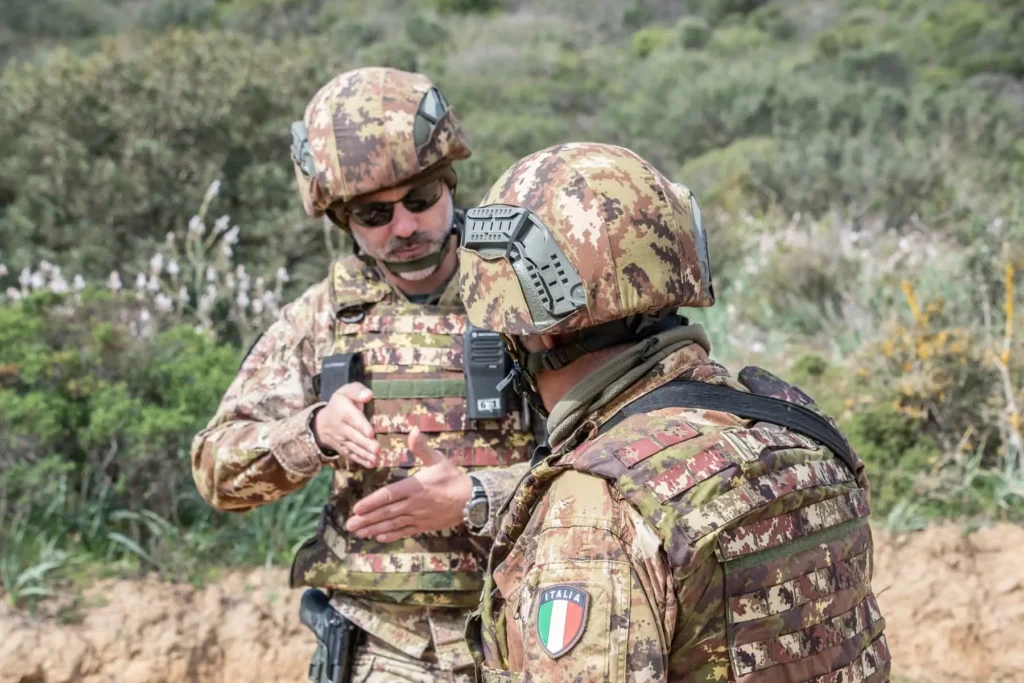
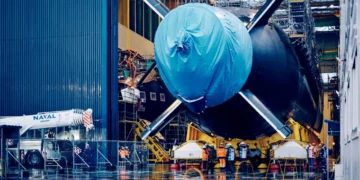
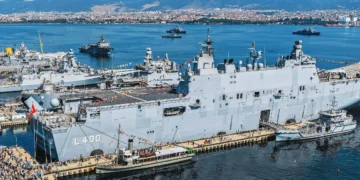
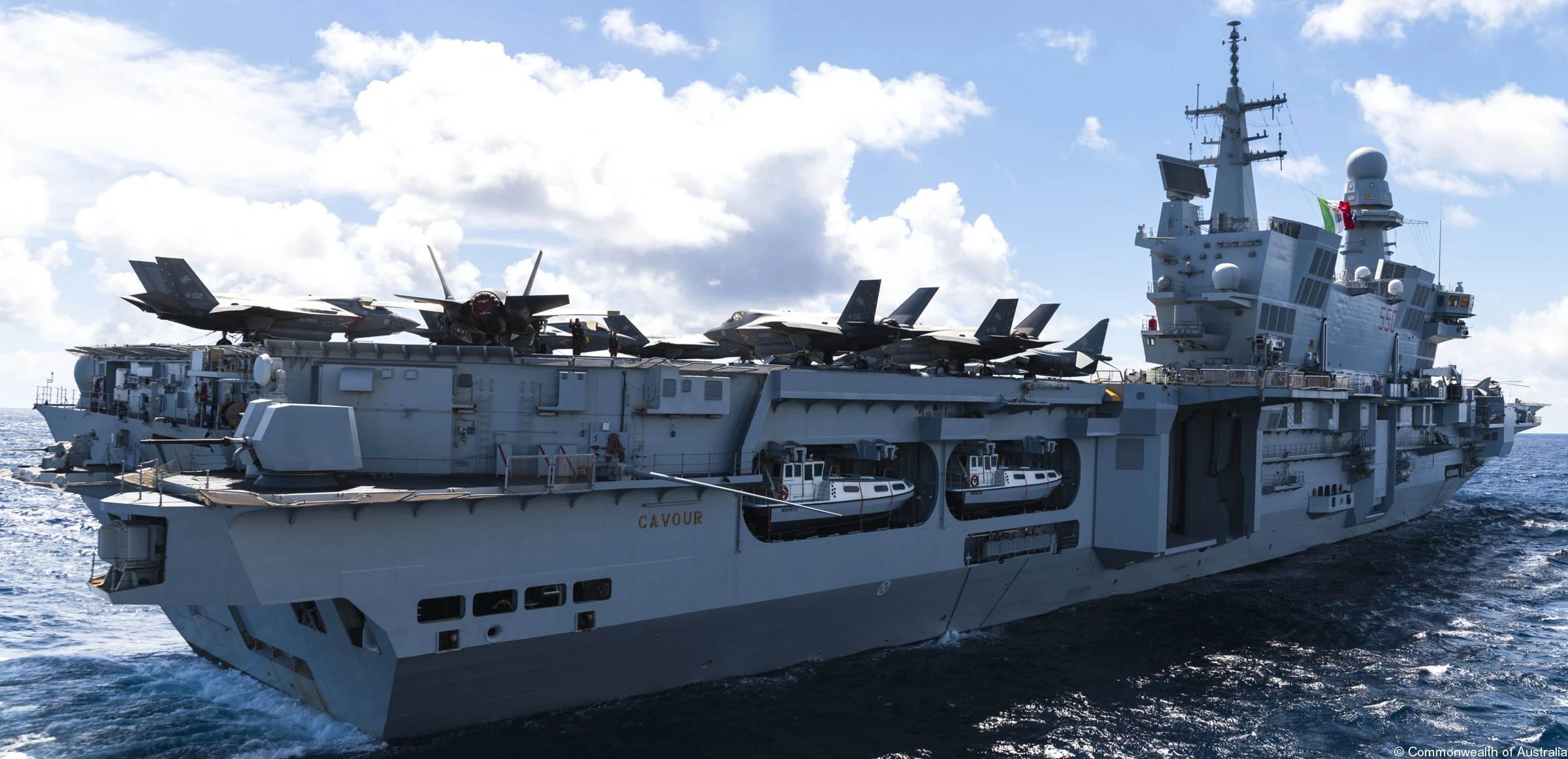
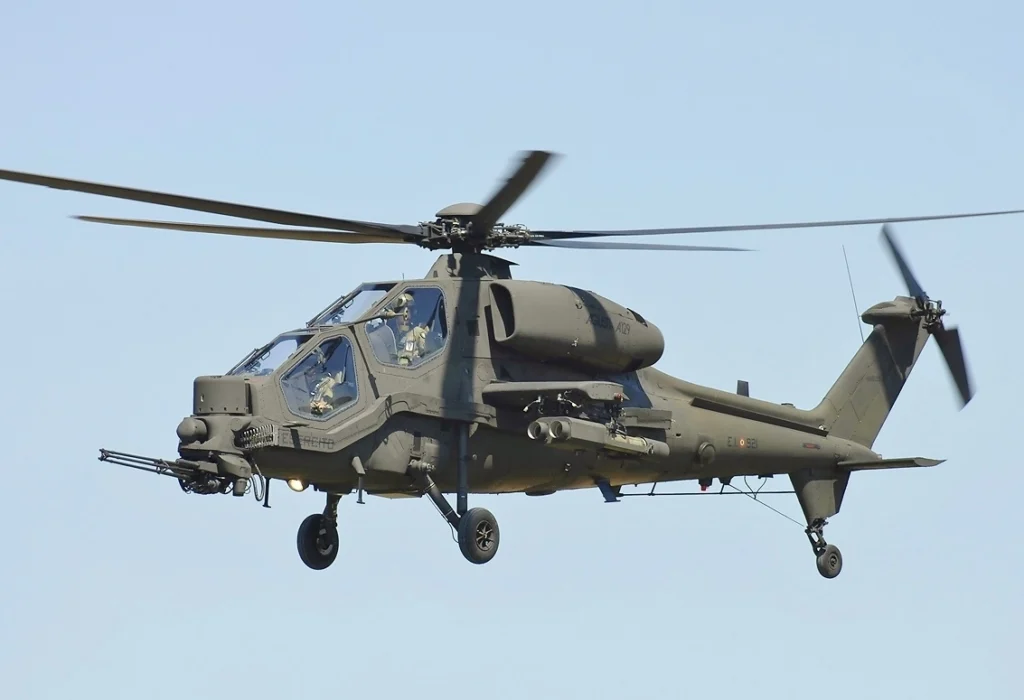
Italy’s military strategy and its economic and energy interests reinforce each other. External security is provided through allied burden-sharing within NATO and the EU rather than unilateral capacity, while Italy’s own armed forces focus on power projection, maritime security, and crisis management in the Mediterranean. The Italian Navy is the cornerstone of this strategy, with the aircraft carrier ITS Cavour and the amphibious assault ship ITS Trieste providing genuine power projection capability. Italy also hosts significant NATO and US military infrastructure, including Naval Air Station Sigonella, Aviano Air Base, and Camp Darby, which manages about 20% of Mediterranean logistics.
Defence spending reached €31.3 billion in the 2025 defence budget, and Italy has officially stated that it has met NATO’s 2% of GDP threshold for the first time. However, this figure of €45.3 billion reported to NATO is criticised for including reclassified items such as military pensions and Carabinieri expenses. Italy’s defence industry is a major pillar of this strategy. Leonardo S.p.A. and Fincantieri form the backbone of a sector that generates around €40.7 billion in revenue and authorised over €7.6 billion in arms exports in 2024. Major ongoing modernisation programmes include the Global Combat Air Programme (GCAP) with the UK and Japan, aimed at developing a sixth-generation fighter, and the expansion of Italy’s F-35 fleet from 90 to 115 aircraft.
Geographical Defence Analysis and Border Geopolitics
To the northwest, Italy borders France (476 km); to the north, Switzerland (698 km) and Austria (404 km); and to the northeast, Slovenia (218 km). San Marino (37 km) and Vatican City (3.4 km) are enclaves within Italian territory. The country covers about 301,340 square kilometres and has 7,600 km of coastline—the longest in the EU—bordered by the Tyrrhenian Sea to the west, the Adriatic to the east, the Ionian Sea to the south, and the Ligurian Sea to the northwest. Approximately 76.8% of the national territory is mountainous or hilly, with an average elevation of 538 metres. This makes Italy one of Europe’s most naturally defensible countries from the landward side, but its long coastlines leave it vulnerable to amphibious assault.
The landscape is shaped by two major mountain ranges. The Alps form an unbroken arc along the northern border, with average elevations of 2,000–3,000 metres, creating a difficult natural barrier that funnels all available ground manoeuvre routes through a few high-altitude passes. This gives defending forces a significant advantage, as any advancing army must pass through predictable chokepoints that can be easily observed, engaged, and interdicted from the air. Italy exploited this defensive advantage with the Vallo Alpino system—1,475 bunkers built along the entire Alpine border between 1931 and 1942. The most critical and most vulnerable of these passes is the Brenner Pass on the Austrian border, at just 1,370 metres. As the lowest crossing of the main Alpine chain, it has historically been the primary corridor for both trade and military invasions from the north, and it served as Germany’s only supply line into Italy during World War II. Passes on the French border, such as Montgenèvre (1,854 m) and Mont Cenis (2,081 m), are at much higher elevations and are therefore easier to defend, with movement effectively halted by snow from November to April. The Swiss border consists of the highest terrain, including Monte Rosa (4,634 m), making it the least suitable for large-scale military operations and strategically unusable for most of the year except for low-altitude valleys. The Slovenian border is the most open land route. This corridor was Italy’s main vulnerability during the Cold War against a hypothetical Warsaw Pact advance, and it was the site of twelve major battles along the Isonzo River during World War I.
Maritime Geopolitics and Defence Organisation
Italy’s 7,600 km coastline is the country’s greatest strategic vulnerability. Without naval and air superiority, comprehensive defence of such a long shoreline is impossible. The Sicily Strait, about 145 km wide between Sicily and Tunisia, is the most critical naval chokepoint in the central Mediterranean. It divides the sea into eastern and western basins and controls the main maritime routes between the Atlantic Ocean and the Suez Canal. Control of this strait effectively determines whether the Mediterranean can be used as a transit route. The Strait of Messina, located between Sicily and Calabria and just 3.1 km wide at its narrowest point, connects the Tyrrhenian and Ionian seas. By contrast, the Strait of Otranto, less than 72 km wide, controls all naval access to the Adriatic.
The Ministry of Defence is responsible for implementing national defence policy, which is set by the President of the Republic, who is commander-in-chief under Article 87 of the Constitution and chairs the Supreme Defence Council. The ministry, in coordination with the Ministry of Economy and Finance, prepares and oversees the defence budget. The armed forces, the Carabinieri, and the Military Pension Fund fall under the Ministry of Defence’s authority. The Ministry of the Interior is responsible for public security and border control.
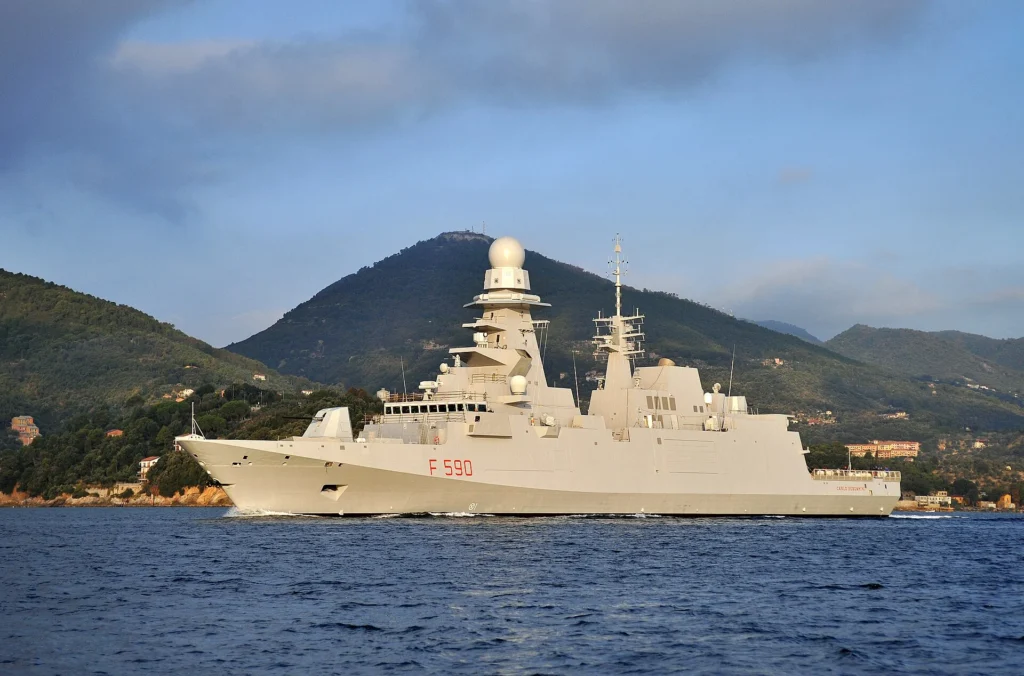
Italy’s armed forces consist of four services: the Italian Army (Esercito Italiano), the Navy (Marina Militare), the Air Force (Aeronautica Militare), and the Carabinieri, which have constitutional status as the fourth service under Law 78/2000. The Carabinieri also operate under the Ministry of the Interior for public order duties. Italy’s Chief of Defence Staff is General Luciano Portolano, who took office in October 2024.
After conscription was abolished in 2005, the country maintains approximately 165,000 active-duty military personnel and about 18,000 reservists.
Regional Alliances and Strategic Integration in Defence Industry
Türkiye
Italy’s relationship with Türkiye is one of its most important and structurally complex bilateral partnerships, combining NATO solidarity, trade interdependence, and a growing defence industrial cooperation that operates outside the EU’s institutional frameworks. Bilateral trade reached 32.2billion in2024,making Türkiye Italy’s second−largest trading partner in Europe. At the 4th Türkiye−Italy Inter governmental Summit in Rome on 29 April 2025,attended by President Erdoğan and Prime Minister Meloni,a new target of 40 billion was set. The summit saw the signing of over a dozen cooperation agreements, including in defence. Both countries are NATO allies with overlapping interests in the Mediterranean, the Sahel, and migration management. Meloni has stated that joint Italy-Türkiye measures have been effective in reducing irregular migration from Türkiye to nearly zero as of 2025.
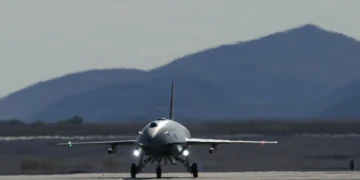
The defence industrial dimension has accelerated since 2022. A key step is the LBA Systems joint venture, agreed in principle between Leonardo and Baykar in March 2025 and formally signed at the Paris Air Show in June 2025. Based in Italy, the company is responsible for the design, development, production, and maintenance of unmanned aerial systems targeting the European market. The most concrete and short-term outcome of the joint venture, as explained by Navy Commander Vice Admiral Berutti Bergotto before the Senate Defence Committee, is Italy’s desire to procure Baykar’s TB3 drone, which can operate from aircraft carriers. With the TB3 deployed on ITS Cavour, Italy aims to become the first European navy to operate armed drones taking off from a carrier. Industrial cooperation extends beyond the Baykar-Leonardo axis. Baykar’s acquisition of Piaggio Aerospace has given Türkiye a direct foothold within Italy’s defence industrial base and European certification infrastructure. Turkish ammunition manufacturer ARCA Defense has acquired Italian company Esplodenti Sabino, while agreements have been signed between Türkiye’s MKE and Italy’s MES for the production of heavy weapon ammunition. Cooperation also covers rotary-wing platforms, with TAI, TEI, and Aselsan working alongside Italy’s Avio Aero on the T625 Gökbey helicopter programme.
The relationship is not free of friction or strategic ambiguity. Türkiye’s exclusion from PESCO, the European Defence Fund, and EU procurement frameworks means that Italy’s deepening industrial integration with Ankara structurally contradicts the EU defence autonomy goals that Rome also advocates. Greece has explicitly expressed concern over Italy-Türkiye rapprochement, particularly regarding the carrier drone and naval cooperation dimensions. An older point of tension is the SAMP/T air defence system: although both leaders announced their intention to sign a cooperation agreement under this programme in July 2022, Türkiye’s position within NATO’s air defence architecture and its simultaneous use of the Russian-made S-400 system have made any formal transfer complicated. Italy’s pragmatic approach—continuing defence industrial partnership with Türkiye despite these complexities—reflects a broader calculation that Türkiye’s NATO membership, control over the straits, role in migration management, and growing defence industrial capacity are too strategically important to be confined solely to EU frameworks.
United States
Italy and the United States maintain one of the deepest bilateral defence relationships within NATO. It rests on a layered legal framework shaped by the 1951 NATO Status of Forces Agreement and the 1954 secret Bilateral Infrastructure Agreement. Approximately 13,000 US personnel are permanently stationed in Italy across about five bases, making it the third-largest US military presence in Europe. Aviano Air Base in Friuli hosts F-16 squadrons. Naval Air Station Sigonella in Sicily is the main US surveillance and maritime patrol hub for the Mediterranean and sub-Saharan Africa, hosting P-8A Poseidon aircraft and MQ-4C Triton drones. NSA Naples in Naples hosts the US Naval Forces Europe-Africa Command and the Sixth Fleet headquarters. Camp Darby near Livorno manages pre-positioned logistics for three US combatant commands and provides about 20% of Mediterranean theatre supply. Caserma Ederle and Caserma Del Din in Vicenza host the 173rd Airborne Brigade, the rapid reaction force for Europe and Africa commands. Italy also hosts around 35 US B61 tactical nuclear weapons under NATO’s nuclear-sharing arrangements, at Aviano and Ghedi air bases. However, Italy has retained its sovereign rights over base usage and refused to allow the use of Sigonella for a US Middle East support mission in March 2026.
European Union
The European Union recognises Italy as a strategic partner in defence integration. Under the Permanent Structured Cooperation (PESCO), Italy participates in 37 projects and leads around 14 of them, making it the second-largest coordinator after France. Italy is the operational hub for EU naval activities in the Mediterranean: the headquarters for EUNAVFOR MED IRINI, which enforces the UN arms embargo on Libya, is at Centocelle Air Base in Rome, and Italy has held command of the operation since its launch in 2020, with its mandate extended until March 2027. Italy also led EUNAVFOR Atalanta’s counter-piracy mission in 2024. Despite these operational contributions, assessments by the Istituto Affari Internazionali note that Italy is “underperforming its potential” under the European Defence Fund, allocating far less research funding compared to France and Germany.
France
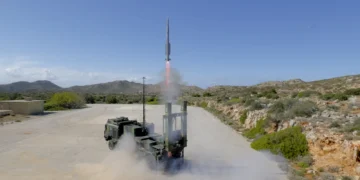
The France-Italy defence relationship is Italy’s most institutionalised bilateral partnership. Under the Quirinal Treaty, signed on 26 November 2021 and effective from 1 February 2023, the two countries hold quarterly ministerial consultations, coordinate within the EU and NATO, and cooperate explicitly on European defence sovereignty. Major joint programmes include the FREMM multipurpose frigate, used by both navies; the Horizon destroyer, undergoing a €1.5 billion mid-life modernisation through the Naviris-Eurosam consortium; and the SAMP/T NG air defence system, which uses the Aster 30 B1NT missile that successfully completed its first intercept in October 2024 and has entered serial production. The relationship is not without friction: serious diplomatic tensions arose in 2018–2019 over Libya and migration.
Germany
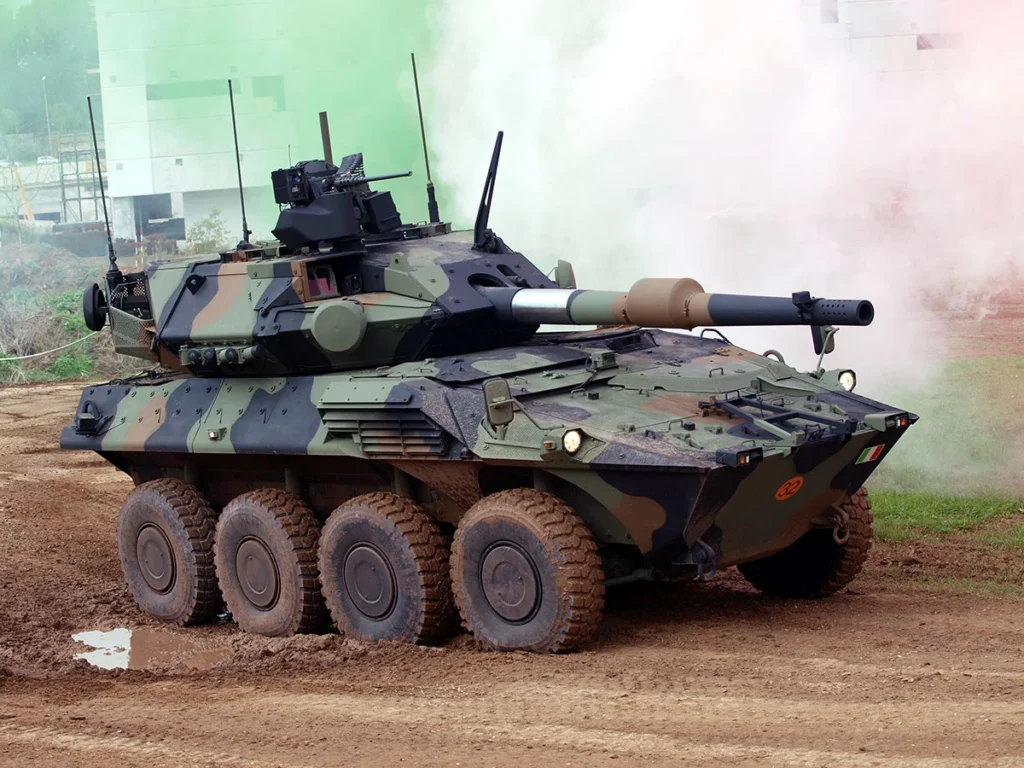
Italy and Germany deepened their cooperation framework with a Political Action Plan signed in November 2023, though this is a non-binding political document rather than a formal treaty. The most significant concrete development is the Leopard 2A8IT order approved in February 2024: an €8.246 billion programme for 132 main battle tanks and 140 support variants, extending to 2037. The programme is supported by an industrial agreement between Leonardo and KNDS to localise the platform with Leonardo’s fire control systems. Italy is a core member of the Eurofighter programme alongside Germany, the UK, and Spain. Italy has not joined Germany’s European Sky Shield Initiative, preferring the SAMP/T NG system as its primary air defence solution.
United Kingdom
Italy’s bilateral defence relationship with the United Kingdom has advanced significantly after Brexit through the trilateral Global Combat Air Programme (GCAP), a sixth-generation fighter project also involving Japan. The programme was formally launched in December 2022 and given a legal framework with the GIGO Convention signed in Tokyo in December 2023. The international organisation’s headquarters is in Reading, UK. A broader Memorandum of Understanding signed in April 2023 covers cooperation in cyber, space, and land domains. Italy’s investment in GCAP has exceeded €8.8 billion, surpassing its total F-35 commitment and making GCAP the most expensive defence programme in Italian history and the core of the country’s post-2035 air combat strategy. Italian F-35B aircraft are also planned to be deployed alongside Royal Navy carrier strike groups.
Socio-Economic Indicators and Demographic Challenges
According to ISTAT, Italy’s resident population as of 1 January 2025 is approximately 58,934,000, of which about 48.9% are male and 51.1% female. The working-age population (15–64) makes up about 63.4% of the total, and the median age of 49.1 is the highest in the European Union. The population is overwhelmingly ethnically Italian, although Italy does not collect ethnic data in its censuses. Approximately 5.56 million foreign residents account for 9.4% of the total population. The main countries of origin are Romania, Albania, Morocco, China, and Bangladesh.
Italy has been in continuous demographic decline since 2013, primarily due to fertility rates falling to historic lows. In 2025, the total population stabilised for the first time in over a decade, but this was only possible due to ongoing migration flows. ISTAT has clearly stated that without sustained migration, the population will resume its decline.
Economic Performance and the Role of Defence Exports
According to World Bank data, Italy’s GDP has followed a fluctuating trend over the past decade. While GDP was approximately $2.14 trillion in 2013, it declined to $1.91 trillion in 2020 during the COVID pandemic, representing a contraction of about 9.0%. GDP rose to $2.18 trillion in 2021 (+8.9% growth), then reached $2.31 trillion in 2023 and $2.37 trillion in 2024. However, annual growth slowed significantly thereafter, remaining at around 0.7% in both 2023 and 2024. GDP per capita was approximately $40,385 in 2024.
Italy’s arms export performance has increased markedly in recent years. According to SIPRI data, Italy ranked sixth in global arms exports for the 2020–2024 period, with export volumes up 138% compared to the previous five-year period. Parliamentary-reported export authorisations exceeded €7.6 billion in 2024, destined for 90 countries. Major buyers include Qatar, Egypt, Kuwait, and Saudi Arabia. Arms exports function as a clear instrument of foreign and energy policy across the Expanded Mediterranean: FREMM frigates to Egypt, Eurofighters and corvettes to Qatar, and Eurofighters to Kuwait serve both commercial and diplomatic goals.
Source: C4Defence