


























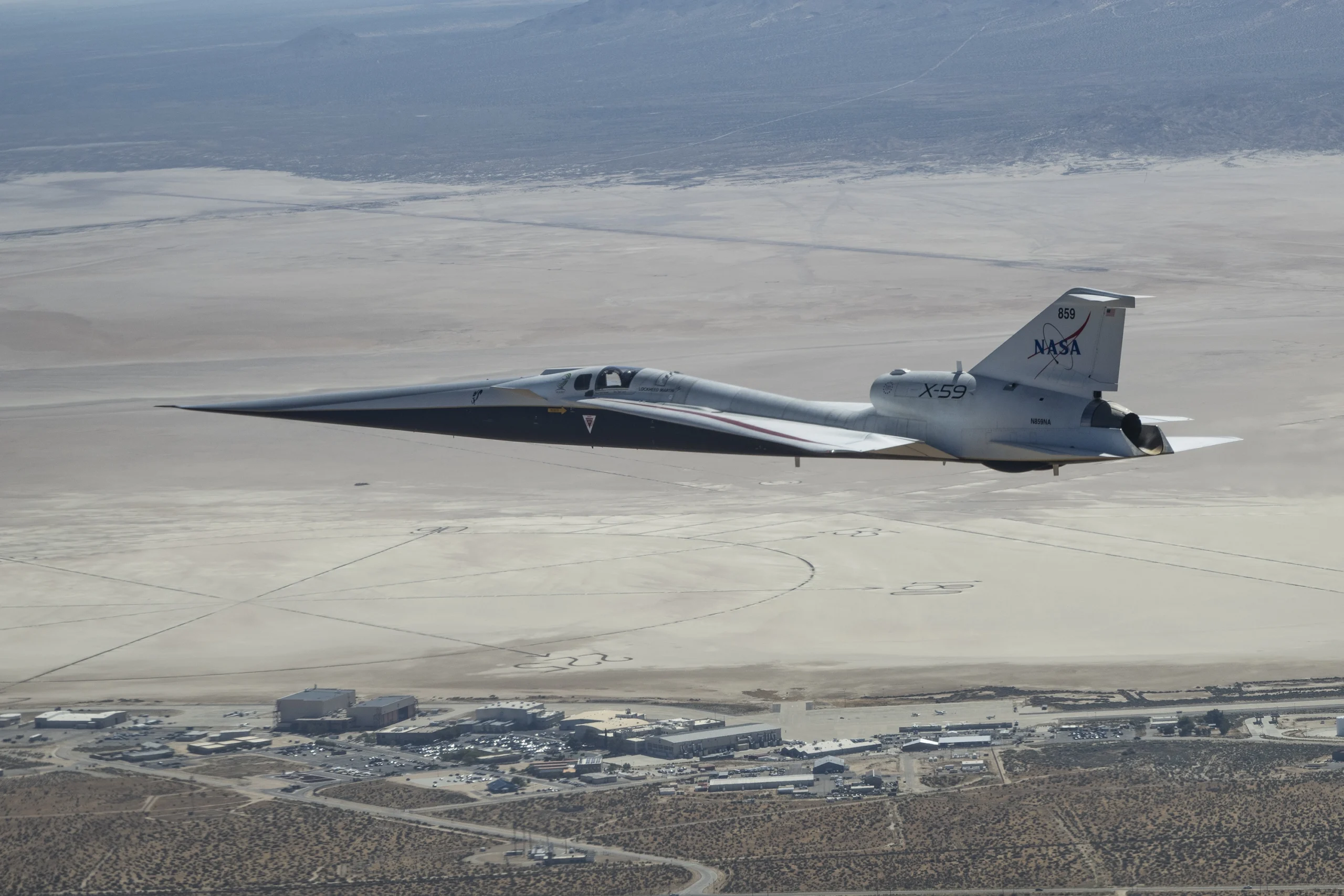
NASA’s experimental aircraft, designed to revolutionise commercial aviation, has started low altitude flights just 150 metres above the runway. The goal is to measure the critical flutter risk that threatens the plane’s structural integrity after high risk tests near supersonic speeds.

Having already pushed past the most dangerous limits of the aerodynamic flight envelope during development, the NASA X-59 team has shifted the test programme’s focus to lower speeds. They want to verify the platform’s real strength in takeoff and landing configurations. These operations, carried out under the Low Boom Flight Demonstrator project as part of the Quesst mission, aim to prove that the aircraft displays stable flight characteristics at all altitudes.
Structural Load Analysis with Landing Gear Down
During ongoing tests at NASA’s Armstrong Flight Research Center in California, engineers are examining the structural loads on the airframe with the landing gear both down and up. Understanding how a fuselage geometry optimised for supersonic speeds behaves in dense air masses at low altitude is essential for the project’s next phases. The sorties being flown at different speed and altitude combinations are generating high precision engineering data on how the aircraft responds across its entire operational range.
Project Manager Cathy Bahm explained this shift in flight strategy with the following technical details. She said, “Our priority was to get to high altitude and high speed as quickly as possible so we could examine the high risk part of the flight envelope. While our team works on the aerodynamic findings from that phase, we have simultaneously moved on to testing the low altitude and low speed region.”
Strain Gauge Sensors Active at 500 Feet
During flights planned for air data system calibration, the NASA X-59 is performing precise manoeuvres just 500 feet above the runway. Strain gauge sensors integrated into the airframe are actively collecting data during these close proximity flights. The real time data from the sensors feeds directly back to engineering teams about the stresses that dynamic air pressure at low altitude creates on the wings and structural connection points.
Operational Tempo: Double Sorties Per Day
Even though the speed and altitude limits being tested have been lowered, the project’s operational tempo has actually increased. Engineering and flight crews are flying double sorties on some days with the same platform to optimise the data collection process.
The structural data being gathered during this phase will enable the transition to the low boom stage, which is the ultimate goal of the NASA X-59 project. At the same time, all the parameters being collected will form the scientific basis that civil aviation authorities need to relax or completely lift commercial supersonic flight bans over populated areas.
The original report and comprehensive flight data are available on the NASA Armstrong Flight Research Center official blog.
Latest Defence News
Defence Industry Systems |Air Platforms
Source: C4Defence– NASA