









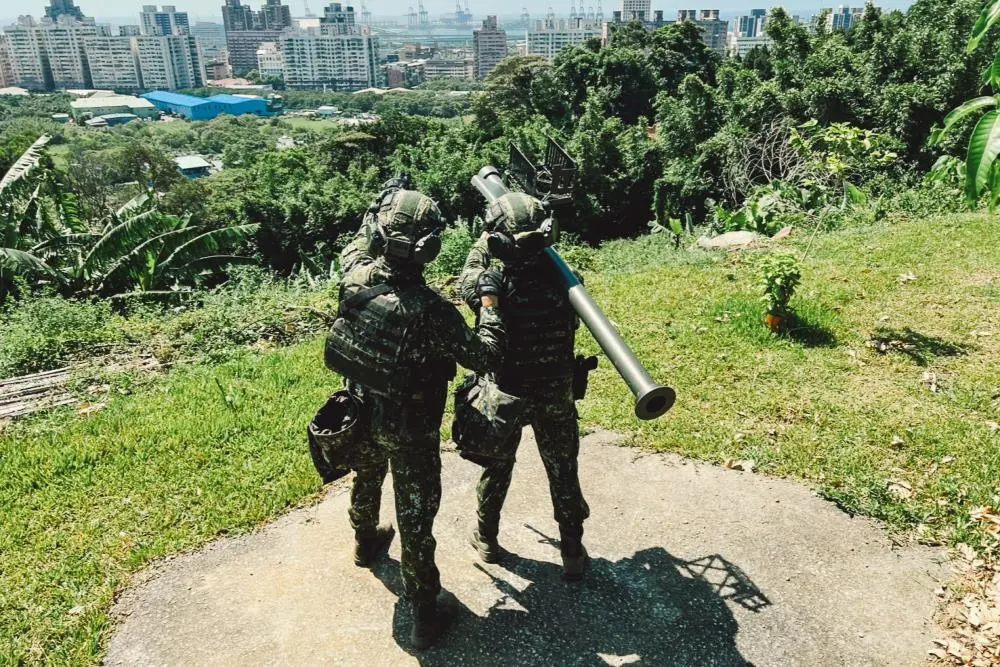
Taiwan is set to integrate 500 additional Stinger missiles into its inventory by the end of the year. This move is designed to significantly modernize the island’s low-altitude air defence capabilities. With a top speed of Mach 2.5 and an effective range of 4,800 meters, these systems represent a critical upgrade. The decision to procure Taiwan Stinger missiles demonstrates the island’s commitment to adaptable air defence.

The Defence Minister Wellington Koo confirmed the procurement progress during a legislative session. He cited budget reports and data from the state-run Central News Agency (CNA). The delivery marks a critical phase in the ongoing air defence modernization program coordinated with the United States. This is especially significant in the context of Taiwan Stinger missiles acquisition.
Optimized for regional air threats, these Stinger missile configurations provide high-precision interception at low altitudes. Within the framework of Taiwan’s “Porcupine” strategy, these systems will be integrated into the island’s broader air defence architecture. They will be combined with other asymmetric defence solutions. Furthermore, the scale of the Taiwan Stinger missiles program positions the country among regional leaders in mobile air defence.
The comprehensive procurement program, valued at $2.2 billion and encompassing a total of 2,621 man-portable air-defence systems (MANPADS), was structured to meet the urgent operational requirements of frontline units. While recent budget packages announced by Premier Cho Jung-tai have emphasized heavy systems such as M109A7 self-propelled howitzers and HIMARS rocket systems, other packages include various anti-tank munitions. Nevertheless, the Stinger deliveries remain a core element of Taiwan’s active defence strategy.
🔍 Related: Escalation in China’s Incursions into Taiwan’s Airspace
According to military sources, the initial batch of the newly arrived missiles is expected to be distributed evenly between Army and Navy units. This will enhance inter-service readiness. Certainly, Taiwan Stinger missiles will play a vital role in strengthening joint operational capability.
Strategic Distribution Plan
Under the strategic roadmap, the remaining 2,121 missiles will be deployed incrementally to the Army, Navy, and Military Police units. By 2031, the Army is slated to receive the bulk of the procurement: 1,985 missiles, 549 launchers, and 549 IFF (Identification Friend or Foe) systems. The Navy will integrate 45 missiles along with 15 launchers and IFF systems by the same deadline. The Military Police will begin receiving their allocation in 2028. They will start with 63 missiles, 21 launchers, and 21 IFF systems, with a final shipment of 28 missiles in 2030.
Operational Readiness in Urban Centers
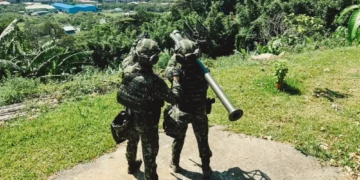
The high effectiveness of Stinger missiles against low-flying aircraft and UAVs sits at the core of Taiwan’s defence doctrine. The system’s combat efficacy was recently validated during the “Han Kuang 41” live-fire exercises. Notably, the deployment of Military Police personnel with Stinger systems at critical infrastructure points, such as the Taipei Metro and Wanban Bridge, demonstrates the military’s intensified focus on urban defence capabilities.
Related News
🔍 You may also like
Source: C4Defence