






























The U.S. Department of the Air Force (DAF) has identified Buckley and Malmstrom as the first two strategic sites where nuclear microreactors will be installed under the “Advanced Nuclear Power for Installations” (ANPI) program.

The Department of the Air Force (DAF) and the Defense Innovation Unit (DIU) have announced that Buckley Space Force Base (SFB) in Colorado and Malmstrom Air Force Base (AFB) in Montana have been selected as suitable sites for nuclear microreactor technology. This decision, made under the Advanced Nuclear Power for Installations (ANPI) program, was finalized following comprehensive site analyses based on the bases’ infrastructure conditions, land availability, and critical mission requirements. Furthermore, within this context, the importance of nuclear microreactor technology is steadily increasing.
Energy Security and Operational Continuity
The ANPI program aims to ensure operational continuity by minimizing military installations’ dependence on local energy grids. Microreactors are expected to provide uninterrupted power to energy-intensive systems such as radar installations, cybersecurity infrastructure, and AI-driven data centers. In this context, the use of nuclear microreactors is increasingly seen as critical for maintaining both security and energy resilience at military facilities.
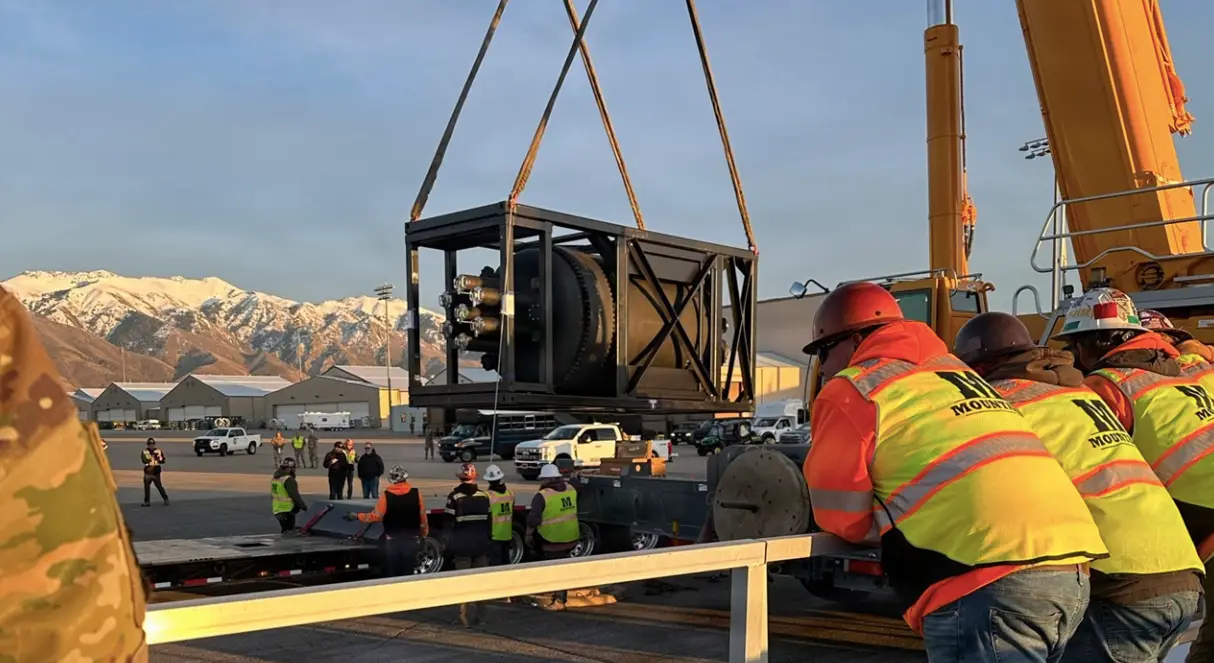
According to technical details reported by The National Interest, these microreactors can operate continuously for up to 15 years without the need for fossil fuels. Designed to be significantly smaller than conventional nuclear reactors, these systems incorporate passive safety features. These features provide physical protection mechanisms against overheating and accident risks. Additionally, the ability to transport nuclear microreactor systems via C-17 Globemaster III aircraft offers a significant logistical advantage.
Contractor-Owned and Operated Model
Under the model adopted by the Air Force, ownership and operation of the reactors will remain with contractor companies. Commercial nuclear energy firms will be responsible for licensing and construction. They will also handle operation and decommissioning at the end of the systems’ lifecycle. In this framework, the safe operation and maintenance of nuclear microreactor systems fall under contractor responsibility.
Nancy Balkus, Assistant Secretary of the Air Force for Installations, Energy, and Environment, stated that this initiative will enhance the energy security of DAF power projection platforms and strengthen strategic defense capabilities.
2030 Timeline and Strategic Expansion
The Air Force plans to match the selected bases with the most suitable reactor technologies tailored to their specific needs in the coming months. According to the current roadmap, the microreactors are expected to become fully operational by 2030. During this process, nuclear microreactor technologies will be prioritized as part of strategic expansion efforts.
This initiative is being carried out separately from the ongoing independent pilot program at Eielson Air Force Base in Alaska. Meanwhile, the U.S. Army is also known to be pursuing a similar plan. This plan incorporates nine bases into its nuclear modernization efforts. Overall, nuclear microreactor projects are becoming increasingly widespread as part of the United States’ broader strategy to enhance energy independence and defense capabilities.
Read more defence news
Source: C4Defence– af.mil