



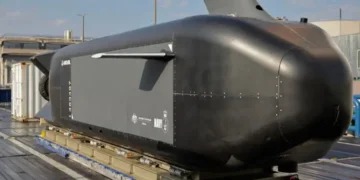
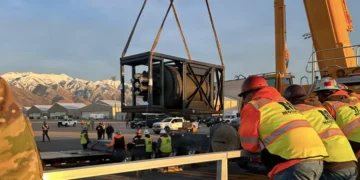
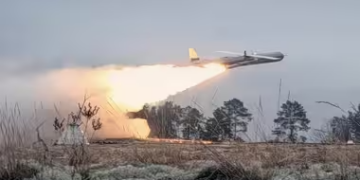
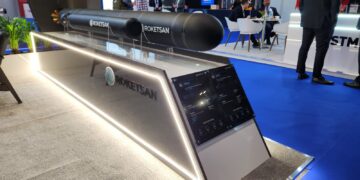
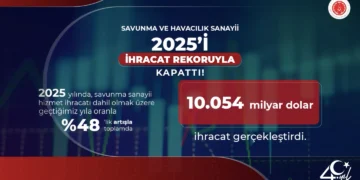






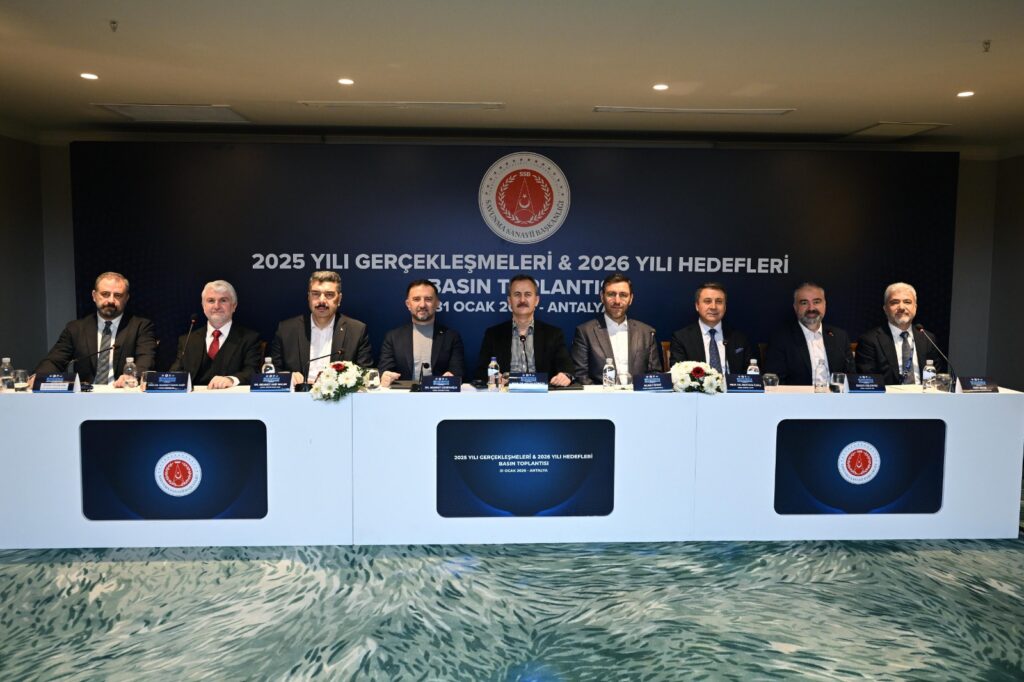
The Turkish defense and aerospace industry concluded 2025 by surpassing a record export threshold of $10.054 billion, demonstrating an intense operational pace across a wide range of areas—from naval platforms to ballistic missiles, and from unmanned systems to satellite projects. This historic performance, shared at the 5th Global Strategies in Defense and Aerospace Industry Conference held in Antalya on January 30–31, 2026, lays the foundation for the new vision for 2026, centered on competence-based transformation, unmanned combat aircraft deliveries, and network-centric capabilities.

First Quarter of the Year: Naval Platforms, Testing Activities, and Inductions
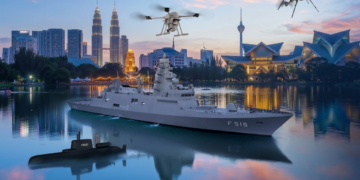
In January, significant developments occurred in naval platforms, unmanned systems, and land vehicles. The MİLGEM 6 – İZMİR (F-516), built at Anadolu Shipyard, and the MİLGEM 7 – İZMİT (F-517), built at Sedef Shipyard, were launched following intensive construction activities, under the TAIS OG and STM partnership. ANKA III conducted a firing at 20,000 feet altitude and 180 knots speed using ASELSAN TOLUN munitions; meanwhile, the Air Force Information System HvBS, developed by HAVELSAN, completed the fourth stage of NATO’s six-step technical analysis process at both operational and strategic levels. On the land side, a delivery ceremony was held for 100 VURAN and KİRPİ vehicles produced by BMC, which will be handed over to the Land Forces Command and the Gendarmerie General Command. The Bayraktar TB3 hit a designated target with two ROKETSAN-produced MAM-T munitions, guided by the ASELSAN ASELFIR-500 electro-optical system.
In February, testing activities in ballistic missiles, air defense, and space gained prominence. The TAYFUN Ballistic Missile, developed by ROKETSAN, completed its third test launch. The GÖKSUR Air Defense System conducted its first firing in a maritime environment. Turkey’s first national communications satellite, TÜRKSAT 6A, successfully completed its first test broadcast and finalized its testing process in its final mission orbit at 42° east longitude. Within the scope of the GÖKTAN Project, TOLUN, launched by the DELTAV Rocket, separated from the rocket and deployed its fins, hitting the target with precision. The first vessel of the New Type Landing Craft (YLCT) Project was also launched into the sea.
In March, cruise missiles, air defense systems, and laser weapon technologies were tested. The SOM-J Cruise Missile, developed by TÜBİTAK SAGE, conducted its first test firing against a surface platform; ROKETSAN’s land-based ATMACA missile completed its longest-range and longest-duration flight, setting a new record. The LEVENT Short-Range Air Defense System, produced by ROKETSAN, carried out its live-fire test in the Black Sea. The GÖKBERK Mobile Laser Weapon System completed its target destruction test. ATMACA’s underwater capsule launch was successfully executed. The Bayraktar AKINCI UAV performed its first flight equipped with the ASELSAN MURAD AESA Radar, while ANKA III fired the ASELSAN LGK-82 munition, hitting its target.
Second Quarter: Space Program, Jet Trainer Aircraft, and Export Milestones
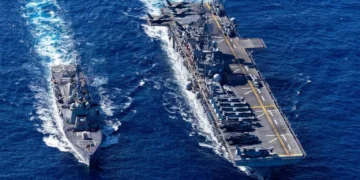
In April, simultaneous advancements were achieved in space, jet engine, and unmanned platform capabilities. Turkey’s first indigenous satellite, TÜRKSAT 6A, was commissioned. Bayraktar TB3 conducted fully automated takeoff and landing tests on the TCG Anadolu Multi-Purpose Amphibious Ship. Turkey’s first jet-powered supersonic trainer aircraft, HÜRJET, reached a speed of Mach 1.2. Bayraktar TB2 demonstrated its “Advanced Maneuver Autonomy” and “Autonomous Recovery from a Spin Maneuver” capabilities. KALE Jet Engines signed a contract for the export of the KTJ-3200 Turbojet Missile Engine, marking Turkey’s first military jet engine export. TUSAŞ AKSUNGUR reached an altitude of 40,000 feet equipped with the national TEI-PD170 engine, ASELSAN AF500 camera, and ASPİLSAN’s national heater-equipped battery.
In May, exercise grounds and unmanned system performances stood out. The Bayraktar TB2T-AI UCAV, equipped with advanced artificial intelligence and a turbo engine, reached an altitude of 37,096 feet, setting a new record. Domestic and national platforms participated in the DENİZKURDU-II/2025 Exercise. The ATMACA guided missile, developed by ROKETSAN, was fired for the first time during the DENİZKURDU-II 2025 exercise following its induction into the inventory. The KARGU UAV, developed by STM and equipped with an armor-piercing warhead, achieved its first export.
In June, naval platforms, aerial systems, and export developments took the spotlight. The KARGUFPV drone hit its target in its first test firing. An agreement was signed between TUSAŞ and the Indonesian Ministry of Defense for the sale of the National Combat Aircraft KAAN. The third Reis-class submarine, MURATREİS, under construction at Gölcük Shipyard Command, was launched. The F-16 EDPOD, developed by TÜBİTAK BİLGEM, was inducted into the Air Force Command’s inventory. Bayraktar AKINCI carried out a low-altitude and autonomous target identification firing test with the ROKETSAN-produced ÇAKIR Cruise Missile.
Third Quarter: From Fairs to Integrations, Inventory, and List Performance
In July, activities spanned international defense fair diplomacy, deliveries, and live-fire exercises. IDEF 2025, the 17th International Defense Industry Fair, concluded with over 120,000 visitors and 270 signing ceremonies; 65% of contracts were export-oriented. Within the scope of the MİLGEM Fifth Ship Supply Project, live firings were conducted from TCG İSTANBUL. The first acceptance process of the AKINCI UAV System for the Gendarmerie General Command was completed. MKE made the fifth delivery of the 76/62mm National Naval Gun DENİZHAN. The 14th ATAK helicopter, tail number “J-924 Hürkuş” produced by TUSAŞ, was delivered to the Gendarmerie Aviation Command inventory.
In August, facility inaugurations, naval platform integrations, and missile firings were on the agenda. With the presence of President Recep Tayyip Erdoğan, the ASELSAN Gölbaşı Campus hosted the deliveries of the Steel Dome, facility inaugurations, and the groundbreaking ceremony for Oğulbey. A HİSAR-D RF missile was fired from TCG İSTANBUL via the National Vertical Launch System (MİDLAS) developed by ROKETSAN. The ROKETSAN ÇAKIR Cruise Missile was integrated into the MARLİN SIDA, developed by ASELSAN and Sefine. The Bayraktar TB3 UCAV conducted a firing using the Bayraktar KEMANKEŞ Mini Smart Cruise Missile. HAVELSAN signed its first contract with DESAN Shipyard for the deployment of VTOL-capable UAVs on naval platforms. The ŞİMŞEK K, developed by TUSAŞ, took off from the ground for the first time using a RATO system.
In September, developments focused on naval platforms and air defense systems. The eighth ship of the MİLGEM Project, TCG İÇEL, under construction at Sefine Shipyard, was launched. The SANCAR Armed Unmanned Surface Vehicle entered service. The domestically developed SİPER 1-D guided missile was test-fired via MİDLAS. On the Defense News Top 100 list, ASELSAN ranked 43rd, TUSAŞ 47th, ROKETSAN 71st, ASFAT 78th, and MKE 80th. As part of the General Purpose Helicopter Project, the fourth T-70 helicopter was inducted into service.
Fourth Quarter: Air Defense, Laser Class, and Multi-Domain Programs
In October, air defense, laser, and naval platform projects were in the testing phase. The GÖKSUR IIR Infrared Seeker Missile, launched from the GÖKSUR 100-N Vertical Launch System, struck a low-altitude, near-sea target. TÜBİTAK BİLGEM’s “IŞIK” High-Power Laser System completed its critical acceptance tests. HÜRJET completed its 300th test flight. The TÜBİTAK SAGE-produced SOM-J cruise missile completed its firing test. The first block of the National Attack Boat, built by STM, was launched onto the slipway.
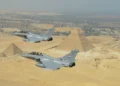
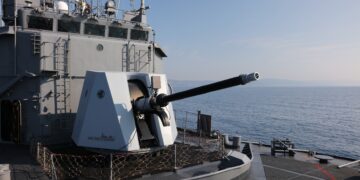
In November, armored vehicle production, air defense, and unmanned combat aircraft tests were highlighted. BMC inaugurated its Tank and Next-Generation Armored Vehicle Production Facility in Ankara Aerospace and Space Specialized Organized Industrial Zone, and new ALTAY tanks were delivered. The SİPER 1 Long-Range Air Defense Missile hit its target during an autonomous battery firing. The LEVENT Short-Range Air Defense System conducted a seeker-guided test firing. Bayraktar KIZILELMA flew in formation with two F-16s, completing GÖKDOĞAN munition integration and MURAD AESA radar performance tests. The 127 mm/54-caliber barrel developed by MKE was integrated and tested on TCG Fatih. Fergani Uzay’s FGN-100-d2 satellite began its space journey.
In December, naval platform projects, unmanned combat aircraft, ballistic missiles, and space activities were prominent. The Istanbul Shipyard Command hosted the commissioning, flag-raising, and first steel-cutting ceremonies of naval platforms. Bayraktar KIZILELMA destroyed a target aircraft using the MURAD AESA Radar and GÖKDOĞAN Air-to-Air Missile. ASELSAN’s LUNA-1 Low Earth Orbit IoT satellite was launched via SpaceX Falcon-9, with telemetry received from the ground station in Ankara. Turkey’s first hybrid-engine orbital transfer vehicle, FGN-TUG-S01, began its space mission. The first test block of the National Submarine MİLDEN began construction at Gölcük Shipyard Command. ANKA-III completed its 46th sortie. ROKETSAN’s TAYFUN Ballistic Missile conducted a warhead test firing. Two Bayraktar KIZILELMA UCAVs performed autonomous close-formation flights. A €2.6 billion contract was signed for the export of 30 HÜRJET aircraft to Spain. The 2025 export performance of Turkey’s defense and aerospace industry was recorded at $10.054 billion.
2026 Agenda: Competence, Deliveries, and Critical Capability Thresholds
Within the scope of the 5th Global Strategies in Defense and Aerospace Industry Conference, the Presidency of Defense Industries (SSB) outlined its priorities for 2026, focusing on human capital architecture, competence-based sector transformation, and critical platform–capability thresholds. The Presidency announced that the institutional framework of the National Competence Initiative, conducted through the Deputy Presidency for Corporate Development and Talent Management, would be strengthened; and that the talent management system for the defense industry would be structured more systematically and measurably within the 2030–2050 perspective.
It was stated that the talent management organization conducted last year for professionals will be carried out this year with engineers as the focus; and that, based on the feedback received, the fundamental “cornerstones” of the implementation will be identified and realized. With the “private sector competence network” planned to be launched in 2026, the goal is to establish competence standards, institutionalize measurement and evaluation processes, and bring development mechanisms onto a more manageable basis. In line with the 158,000-employment target outlined in the Development Plan, it was emphasized that the human capital dimension of sectoral transformation will be built on a competence-based architecture.
As part of defense industry–academic collaborations, the training portfolio will be updated according to field needs, digital learning models will continue to scale, and the Defense Industry Vocational School model is planned to be implemented in 2026. Expanding career and development applications to a wider user base and increasing the scale of the “learning ecosystem” were also highlighted as priorities. SSB additionally drew attention to the sector’s young workforce profile, noting an average age of approximately 30, and in some companies 28–29; this profile is expected to provide long-term momentum to the sector with a 30–35-year career perspective. Strengthening connections with overseas talent and maintaining joint engineering networks under the “brainpower approach” are also among the prominent items on the 2026 agenda.
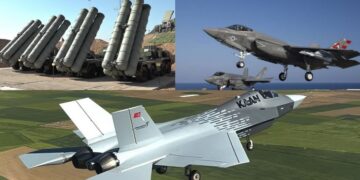
The 2026 programs were defined around aviation, naval, rocket/missile systems, and network-centric capabilities. In aviation, the year is expected to surpass critical thresholds in platforms, engines, and unmanned systems; and unmanned combat aircraft deliveries are planned to begin to end users in 2026. Work continues on prototype production and serial production decision processes within the KAAN program; it was stated that TB3, with its ship-based takeoff–landing capability, could enter a new phase in international mission concepts. Testing activities on the Gökbey helicopter with the TS1400 engine will continue, 22 Hürkuş deliveries are planned for 2026, and 2026 will be a critical year for KAAN’s indigenous engine.
For rocket and missile systems, infrastructure investments have been initiated to accelerate delivery schedules under existing contracts; high-volume deliveries are planned in air defense and missile systems, with MKE expected to play a supporting role. In naval capabilities, serial production of the Akya Torpedo, the completion of MİDLAS integration on combat ships, and the serial production of various-caliber gun systems are among the 2026 targets.
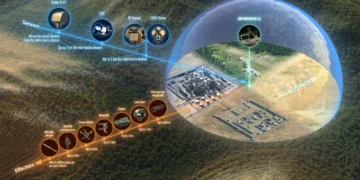
In high-power laser systems, the contract phase will begin, marking the entry into the “high-power laser class”; in the Bulut program, design work will be completed, and cloud infrastructure will be deployed at the first center via a pilot application. Within network-centric capabilities, a project targeting military 5G/6G communication infrastructure will be launched. Early warning radar delivery targets were announced in radar and electronic warfare, and the KORAL system is planned to be inducted in 2026.
Additionally, 650 delegation-led test and acceptance activities will be carried out in 2026; these activities will be coordinated among SSB, companies, and the Ministry of National Defense. Within the EYDEP framework, at least 300 companies will be evaluated, with over 100 new companies expected to be included in the category of product-developing firms. The Financial Health Index and Early Warning System will monitor sector cash flows and indebtedness indicators; risk reporting and support mechanisms will be activated via an integrated structure with the Ministry of Treasury and Finance and banks.
Prime Contractors’ 2025 Performance and 2026 Targets
TUSAŞ described 2025 as a year in which critical milestones were achieved across its platform and product portfolio. Cold-weather testing for the Gökbey helicopter was completed, with progress on civil certification expected within 2026. High-altitude performance with the PD-170 engine on the Aksungur platform was highlighted as a success. For the KAAN program, the production process involving numerous subcontractors will transition to a delivery-focused phase in 2026, while 22 Hürkuş deliveries are planned for the year.
ROKETSAN evaluated 2025 as a strong year in terms of exports and order volume. Existing orders were doubled, and the company closed the year with more than a 55% increase in both exports and turnover. Throughout 2025, 850 days of test activities were conducted, with simultaneous work on new system development and capability enhancements for existing products. As part of its global growth strategy, production steps have been initiated in certain markets alongside product sales.
HAVELSAN completed 2025 with over $500 million in sales, with a significant portion of backlog orders coming from international contracts. The ADVENT combat management system was exported to three new countries, including Indonesia and Chile. Contracts for NATO data link management systems and simulation projects in the UAE also stood out. With the induction of the Sanjar unmanned surface vehicle, the air–land–sea unmanned system architecture was strengthened, aiming for an “interoperable” framework where different autonomous systems can operate together.
ASFAT described 2025 as a “year of firsts” regarding shipyard and military factory operational capacity. Delivery of PNS Hayber corvette under the Pakistan MİLGEM program was completed. With the export of a corvette to Romania, Turkey delivered a warship to a NATO country for the first time. Contract and production steps continued in the TF-2000 and MİLDEN projects. On land, the induction process for the 8×8 tactical wheeled howitzer project was shared. Investments in Afyonkarahisar, A400M maintenance activities in Kayseri, and operations at Yunuseli Airport were among 2025 outputs.
TEI reported that 2025 sales approached $700 million, mostly from exports, and shared a new order performance of $3.4 billion. The high-altitude performance of the PD-170 and the marine-adapted development process of the PD-200 were highlighted. Certification for the TS1400 engine supply chain was completed, and the first engine assembled with compliant parts was successfully produced. The KAAN engine reached the Critical Design Review (CDR) phase.
STM conducted intensive activities in 2025 on I-class frigates, Reis-class submarines, and modernization projects. Projects in Ukraine and Malaysia continued, while production steps began under the contract with Portugal, including the first keel-laying ceremony. Product diversity on the tactical UAV side increased, and the number of export countries exceeded 15. Unmanned submarine projects reached the finalization stage.
ASELSAN reported a total export contribution of $978 million in 2025 and signed $2.069 billion in new export contracts across 58 countries. The total number of export countries rose to 95. The program won with Poland in electronic warfare was noted as a critical threshold for high-technology sales to a NATO country. A framework agreement with NATO was signed for shoulder-launched air defense systems under the IFF standard. More than 100 elements were delivered under the Steel Dome program.
MKE reached $1.2 billion in turnover in 2025 and rose to 80th place in the Defense News Top 100 list. Approximately $1 billion was invested during 2024–2025. Ammunition production capacity increased from 4,000 units to 65,000 units per year, with a target of 1 million units per year by the end of 2028. Five technology centers were established in R&D. Exports were made to 105 countries, with assembly lines activated in some locations. In 2026, new facilities are planned to be commissioned under an estimated $2 billion investment program.
2025 Defense and Aerospace Industry Export Performance: Volume, Efficiency, and Strategic Depth
The export data for 2025, announced during the Global Strategies in Defense and Aerospace Industry Conference, revealed that the Turkish defense industry reached a new threshold not only in total volume but also in efficiency, product diversity, and global competitiveness indicators.
By the end of 2025, the sector’s total goods exports reached $10.054 billion, with the defense and aerospace industry’s share of Turkey’s total goods exports rising from 1.7% in 2022 to 3.6%. In terms of regional distribution, Europe ranked first with $4.3 billion, followed by the Middle East with $1.6 billion. The countries with the highest export volumes included the United States, the United Kingdom, and Slovakia.
2025 also witnessed a methodological expansion. For the first time, service export data was systematically collected, adding $184 million in service exports to goods exports. Additionally, 185 firms in the sector recorded exports exceeding $1 million, demonstrating that export activity extended beyond large-scale companies to a broader ecosystem.
Structural Leap in Efficiency
Another critical indicator of export performance, the average export revenue per employee, showed a significant increase over the last four years. Rising from $45,000 in 2021 to $100,000 in 2025, this figure highlights that productivity improvement is positioned as a strategic goal for the sector, considering that global defense companies average around $300,000 per employee.
The most notable example in this area was ARCA Savunma in the munitions segment. The company achieved an average of $750,000 export per employee, surpassing both the sector average and global benchmarks, establishing a distinct efficiency threshold.
Strategic Export Moves in 2025
The year stood out not only for volume growth but also for the diversification of high-tech and platform-based exports. Export contracts for the jet trainer HÜRJET to Spain and the National Combat Aircraft KAAN to Indonesia signaled a new era in platform exports. Baykar’s comprehensive collaboration agreement with Italy’s Leonardo and its acquisition of Piaggio demonstrated the strengthening of international partnership models.
In motor technologies, Kale Jet’s turbojet engine for cruise missiles exported to Brazil showed that indigenous engine capabilities found demand in international markets. In naval platforms, STM’s production of a sea supply and logistics support ship for Portugal, TAIS’s frigate export to Indonesia, and ASFAT’s sale of a naval platform to Romania reinforced the sector’s positioning in the European market.
Contracts signed by ASELSAN with Poland in electronic warfare and radar systems stood out, while high-volume sales by ARCA Savunma and Roketsan in ammunition and missile segments broadened the geographical spread of product diversity.
2025 Export Champions: Sectoral Performance Recognition
During the awards ceremony for 2025 defense and aerospace export performance, the top exporting firms were announced. Held within the 5th Global Strategies in Defense and Aerospace Industry Conference, the evaluation based on the previous year’s export data named ARCA Savunma as the 2025 export leader. The results highlighted not only total export volume but also competition balance across product groups and firm-level performance intensity, reflecting the sector’s global standing.
ARCA Savunma also ranked first in the Weapons and Ammunition Product Group, finishing the year at the top in two categories. Its high-volume munitions sales and export efficiency of $750,000 per employee placed the company in a distinguished position both within its segment and across the sector.
Baykar, ranked second overall, led the Unmanned Aerial Vehicles Group, maintaining its leadership in UAV exports. High-volume platform sales strengthened its global positioning, with TUSAŞ second and STM third in the same category, showcasing the performance of the three major unmanned system manufacturers.
TUSAŞ, third overall, topped the Aircraft and Engines Product Group, reflecting its dominance in platform and aircraft exports. Within the same category, TUSAŞ Engine Industries (TEI) ranked second and Alp Aviation third, highlighting the increasing share of engines and subsystems in the export composition.
TEI maintained its rise in motor technologies, ranking fourth overall and second in the aircraft and engine category. The contribution of turbojet and turbodiesel engine programs to exports was a key factor supporting its performance.
Roketsan strengthened its top-five position by ranking first in the Rocket and Missile Product Group. Its increasing Europe-focused sales volume propelled it to the category’s top, also reflecting the growing share of missile and ammunition segments in total exports.
ASELSAN, ranked sixth overall, led the Military Electronics, Radar, and Simulators Group. Contracts in electronic warfare and radar systems reinforced its export performance, with Boğaziçi Savunma taking second place in the same category.
In naval platforms, ASFAT ranked first, with European market expansion and new contracts driving its top position. HAVELSAN and Meteksan Savunma followed in second and third place, respectively. At the SME level, AKANA Deniz Teknolojileri was also among the awarded firms.
In the land vehicles segment, Otokar ranked first, Nurol Makina second, and BMC third, reflecting a steady rise in armored land vehicle exports.
SSTEK Defense Industry Technologies, ranked ninth overall, stood out with activities across different product segments. Alp Aviation, ranked tenth, reinforced its third place in the Aircraft and Engines category with its overall ranking, closing the year with a strong performance.
In Summary
2025 was not only a record-breaking year in numerical terms for the Turkish defense industry but also a turning point where operational capabilities were recognized on a global scale. The 2026 roadmap outlined in Antalya confirms that these achievements will be translated into a sustainable power projection through a “competence-based transformation.”
Source: C4Defence