
































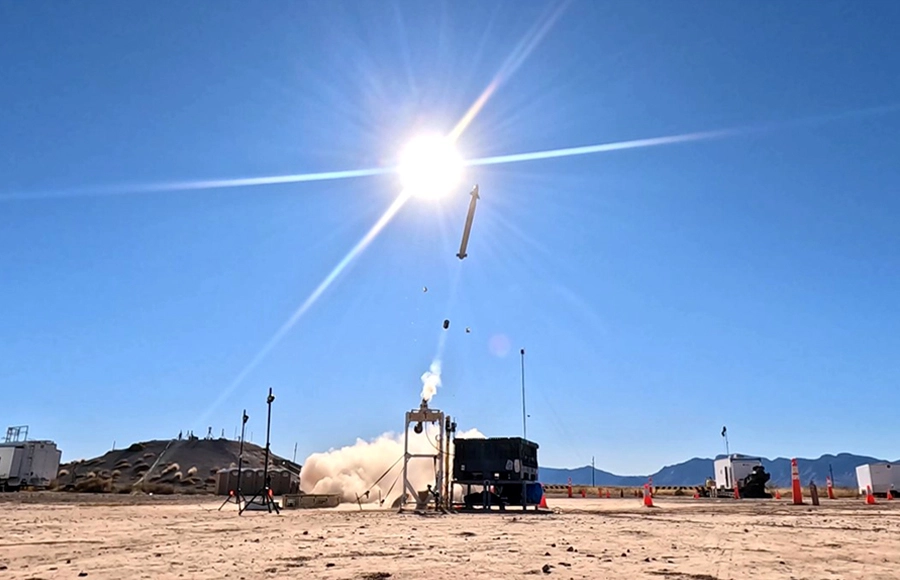
Lockheed Martin has successfully conducted the first flight test of the Next Generation Short-Range Interceptor (NGSRI) missile, which is being developed to replace the U.S. Army’s long-serving Stinger missiles. Carried out at the White Sands Missile Range in New Mexico, this critical test validated the system’s operational performance and demonstrated that a strategic milestone has been achieved for the future air defense architecture of the U.S. Army.

From Conceptual Phase to the Skies: Twice as Powerful and Rapid Development
Despite only 26 months having passed since the contract was signed in 2023, Lockheed Martin has moved NGSRI from the conceptual phase to flight testing, achieving a remarkable development speed in the defense industry. Developed in line with the company’s 21st Century Security® vision, this solution increases the capabilities of existing legacy systems by more than twofold across many operational scenarios. Thanks to its modern open-systems architecture and modular design, the system can continuously evolve, aiming to maximize soldier safety by delivering superior effectiveness against unmanned aerial vehicles (UAVs), rotary-wing aircraft, and fixed-wing aircraft.
Artificial Intelligence–Enabled Next-Generation Defense
Combining its deep-rooted experience in air and missile defense with advanced technologies such as artificial intelligence and machine learning, Lockheed Martin offers a truly innovative solution with NGSRI. The data obtained during the first flight test forms the foundation for the missile’s performance in complex threat environments. Designed to respond to the rapidly changing dynamics of the modern battlefield, NGSRI is set to strengthen allied forces’ air defense umbrella with its advanced sensor capabilities and high lethality.
Source: C4Defence / Lockheed Martin